
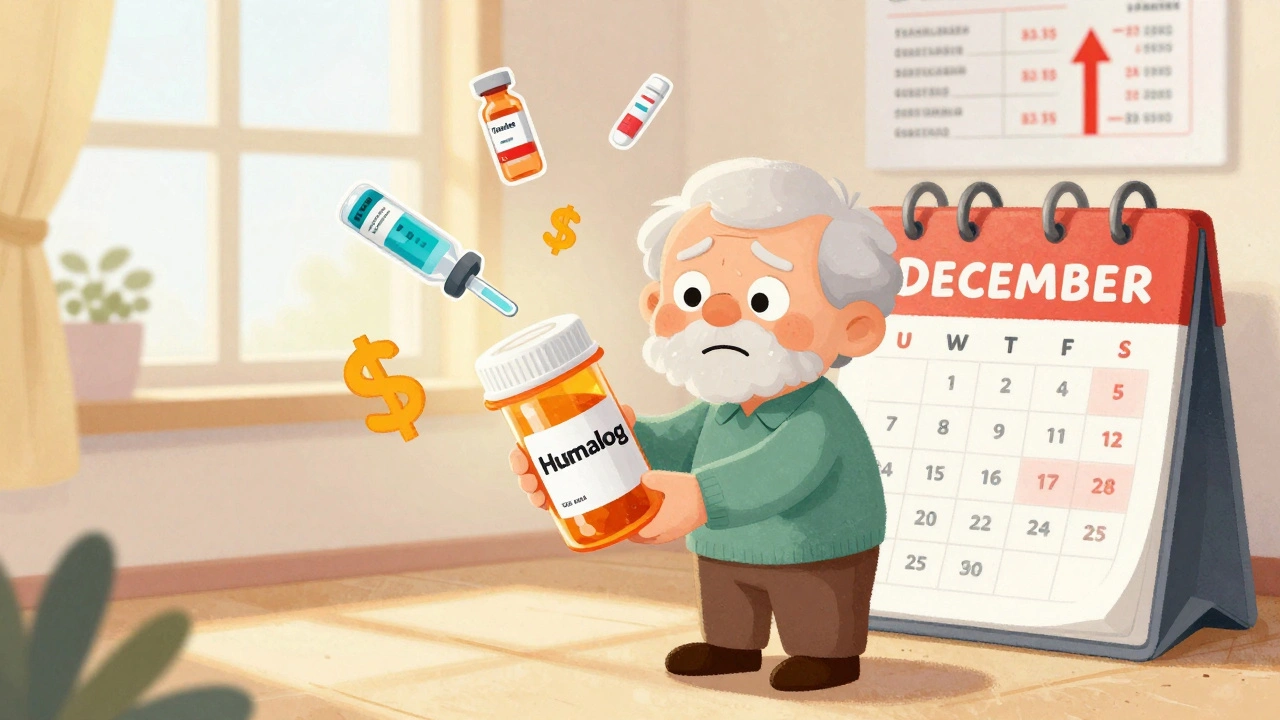
Every January, millions of people on Medicare Part D get a surprise: their medication suddenly costs more, or worse - it’s no longer covered at all. This isn’t a mistake. It’s a formulary update. These are the yearly changes insurance companies and pharmacy benefit managers (PBMs) make to decide which drugs they’ll pay for, and at what price. In 2025, these changes are bigger than ever - and if you’re taking a chronic condition medication like insulin, rheumatoid arthritis drugs, or heart pills, you need to know what’s coming.
What’s Actually Changing in 2025?
The biggest shift isn’t just about which drugs are covered. It’s about how much you pay out of pocket. Thanks to the Inflation Reduction Act of 2022, Medicare Part D plans now have a $2,000 annual cap on what you pay for prescriptions. That means if your meds normally cost $5,000 a year, you’ll only pay $2,000 - no matter how high the list price climbs. About 3.2 million people will save an average of $1,500 in 2025, with some saving over $3,000. But here’s the catch: insurers aren’t lowering prices. They’re shifting you to cheaper alternatives. That’s where generic switching comes in.How Formularies Work - And Why You’re Being Switched
Every drug plan has a list - called a formulary - that sorts medications into tiers. The lower the tier, the less you pay.- Tier 1: Preferred generics - $1 to $10 copay
- Tier 2: Non-preferred generics and some brands - around $47
- Tier 3: Non-preferred brands - $113 or more
- Specialty tier: High-cost drugs - $113 or 25% coinsurance
Real Stories: When Switching Goes Wrong
One user on Reddit, ‘MedicareWarrior87’, posted that UnitedHealthcare moved Humalog insulin from Tier 1 to Tier 3 overnight. Their copay jumped from $35 to $113. They didn’t get a warning. They found out when they went to refill. Another person, ‘ArthriticMom’ on HealthUnlocked, switched from Humira to Amjevita - a biosimilar - and saved $450 a month. No side effects. Same results. She called it a win. The difference? One switch was forced without notice. The other was planned, monitored, and approved by a doctor. That’s the line between a good change and a dangerous one.What Drugs Are Being Targeted?
PBMs like CVS Caremark, OptumRx, and Express Scripts are aggressively moving away from expensive brand-name drugs - especially in diabetes, rheumatoid arthritis, and asthma. In 2025, CVS excluded nine specialty drugs and added 11 new biosimilars, including Kanjinti and Trazimera, which replace older, pricier options like Herzuma and Ogivri. Insulin, GLP-1s like Ozempic, and biologics like Humira are the top targets. Why? Because they’re the most expensive. A single vial of Humira can cost over $2,000. A biosimilar version? Around $400. And insurers are pushing hard. Milliman found that 78% of standalone Medicare drug plans (PDPs) now require patients to try a generic or biosimilar before getting the brand-name version. That’s step therapy - and it’s becoming the norm.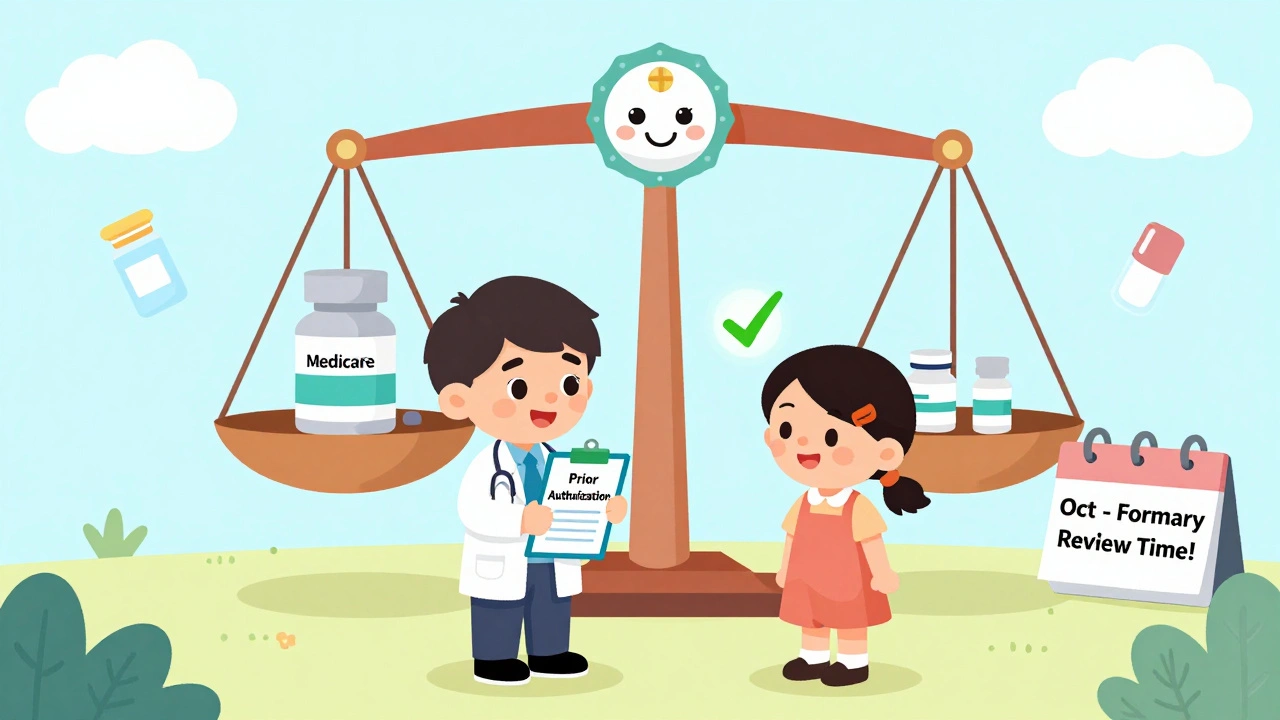
What You Can Do - Before January 1
You don’t have to wait for a surprise bill. Here’s what to do now:- Check your plan’s formulary - Every insurer sends a Summary of Benefits by October 1. Don’t ignore it. Look up every drug you take. If it’s missing, or moved to a higher tier, act.
- Call your pharmacist - They see formulary changes daily. Ask: “Is my medication staying the same in 2025? Is there a cheaper alternative?”
- Ask your doctor for a prior authorization - If your drug is being removed, your doctor can file a request to keep it covered. Approval rates for tiering exceptions are high - 82% - but only if you file early.
- Request a 30-day transitional supply - If your drug is being cut, you’re legally entitled to a 30-day supply at the old price. Use that time to appeal or switch safely.
The Biosimilar Advantage - And the Risks
Biosimilars are not generics. They’re not exact copies. They’re highly similar versions of complex biologic drugs, made from living cells. The FDA has approved 17 new ones in 2024 alone - and they’re growing fast. The good news? Studies show they work just as well as the originals for most people. And they’re cheaper. The bad news? Some patients - especially those with autoimmune diseases - report subtle differences in how their body reacts. That’s why switching should never be rushed. If you’re being switched to a biosimilar, ask your doctor: “Can we monitor my response? Should I start with a small dose? What signs should I watch for?”What’s Coming in 2026 - And Why It Matters
The real game-changer isn’t 2025. It’s 2026. That’s when the Medicare Drug Price Negotiation Program kicks in. For the first time, the government will negotiate prices on 10 high-cost drugs - including Stelara, Prolia, and Xolair. By law, all Part D plans must cover them - no exceptions. That means if your plan dropped Stelara in 2025 to push you to a biosimilar, they’ll have to bring it back in 2026. But here’s the twist: they’ll still try to push the biosimilar first. Because even with negotiated prices, biosimilars are cheaper still.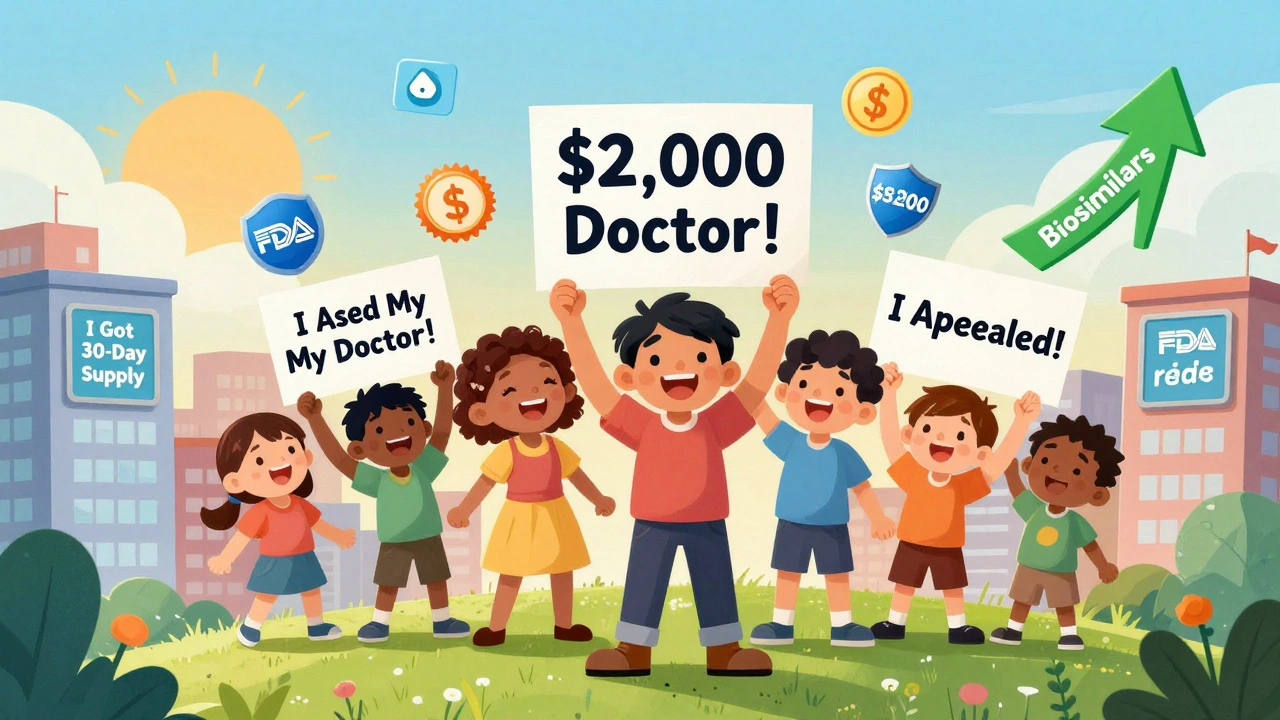
What If You Get Denied?
If your request for an exception is denied, you have rights:- Standard appeal: 72 hours to respond
- Expedited appeal: 24 hours - if your health is at risk
- External review: If your plan says no, you can ask an independent third party to review
Final Advice: Don’t Wait for the Letter
Insurers aren’t required to notify you until 60 days before a change. But if your drug is newly approved as a generic or biosimilar, they can switch you with only 30 days’ notice. That’s not enough time to appeal. Start now. Review your plan’s formulary. Talk to your doctor. Know your options. The system is designed to save money - not to make your life harder. But if you don’t speak up, you’ll be the one paying the price.2025 isn’t just another year of insurance changes. It’s the year the rules shifted. The cap on out-of-pocket costs is real. The push for generics is real. And your voice - your questions, your requests, your persistence - is the only thing standing between you and a medication you can’t afford or can’t tolerate.
What’s the difference between a generic and a biosimilar?
Generics are exact chemical copies of brand-name drugs, usually made from synthetic ingredients. Biosimilars are highly similar versions of complex biologic drugs made from living cells - like Humira or Enbrel. They’re not identical, but they work the same way for most people. Biosimilars are typically 15-35% cheaper than the original biologic.
Can my insurance force me to switch to a generic?
Yes, if your drug is on a formulary that requires step therapy or has been removed. But you can request an exception if your doctor says the change would harm your health. Approval rates for tiering exceptions are high - 82% - but only if you file before your current supply runs out.
Why am I getting a new drug I’ve never heard of?
Your insurer is likely switching you to a biosimilar or a cheaper generic version of your current medication. Common examples: Amjevita instead of Humira, Kanjinti instead of Herzuma, or a generic insulin like insulin glargine instead of Lantus. These drugs are clinically equivalent for most patients - but not all. Always check with your doctor before switching.
What if my drug is completely removed from the formulary?
You can still get it through an exception request, but approval rates are lower - only 47% for completely excluded drugs. Your doctor must prove medical necessity. If denied, you can appeal to an external reviewer. You’re also entitled to a 30-day transitional supply at your old price while you appeal.
When should I check my formulary?
Between October and December each year. That’s when insurers release their updated formularies for the next year. Don’t wait for a letter - log into your plan’s website or call customer service. If your drug is changing, you have time to act before January 1.
Will the $2,000 cap cover all my drugs?
Yes - but only for drugs covered by your plan. The cap applies to what you pay out of pocket for covered medications. If your drug is excluded, you pay the full price - and that doesn’t count toward the cap. Always confirm your drug is on the formulary before assuming you’re protected.
Next Steps: What to Do Right Now
- Log into your Medicare plan’s website and download your 2025 formulary.
- Make a list of every drug you take - including doses and frequency.
- Check each one against the formulary. Highlight any that are moved up, down, or removed.
- Call your doctor and pharmacist. Ask: “Is my medication staying the same? What are my alternatives?”
- If anything’s changing, file a prior authorization request before December 15.
- Keep a copy of your formulary and all correspondence - you’ll need it if you appeal.
Insurance changes aren’t personal. But your health is. Don’t let a formulary update catch you off guard. Take control now - before January 1.
Let me guess - the government’s ‘$2,000 cap’ is just a trap to make you think you’re getting help while they quietly hand over your healthcare to Big Pharma’s shell companies. They don’t care if you die. They just want you to take the biosimilar so they can keep raising the price of the original. Wake up. This isn’t healthcare reform. It’s asset stripping.
i just hope people realize that even if the system feels rigged, small steps matter. checking your formulary, calling your doc, asking questions - it’s not glamorous, but it’s power you still have. 🤝
Respected author, your comprehensive analysis reflects profound insight into the structural dynamics of pharmaceutical policy. I commend the clarity with which you have delineated the procedural rights of beneficiaries under Medicare Part D. It is imperative that citizens exercise their entitlements with diligence and informed resolve.
They don’t notify you until 60 days before. That’s illegal.
so like… the government says ‘hey we capped your costs’ but then the insurance company swaps your insulin for a ‘biosimilar’ that’s basically a knockoff of a knockoff of a drug made in a lab that one guy in Belarus invented? and you’re supposed to be grateful? lmao. my cat gets better meds than i do.
This is exactly why we need more people speaking up. You’re not alone in this. If you’re reading this, you’re already ahead of most. Keep checking your formulary. Keep asking questions. And if you’re scared - tell someone. We’re all in this together.
It’s interesting how the system frames ‘cost savings’ as progress, but never asks whether the human cost is being measured. If a biosimilar works for 90% of people, what about the 10% who get worse? Who’s tracking them? Who’s accountable? The math adds up - but the humanity doesn’t always.
Why are we letting foreign drug manufacturers dictate our medicine? The FDA approves these biosimilars like they’re toys. I bet 80% of them are made in China or India. Our veterans, our seniors - they’re getting Chinese generics. This isn’t innovation. It’s surrender.
Let me be clear: this entire system is a moral failure. You are not a number. You are not a line item on a spreadsheet. And yet, they treat you like one. They push you to switch drugs because it’s cheaper - not because it’s better. That’s not healthcare. That’s corporate cruelty dressed in policy.
generic = cheap
biosimilar = expensive cheap
brand = rich people drug
the system is designed to make you feel lucky if you get a 10 dollar copay
congrats you’re not dead yet
they’re all in on this. the doctors, the pharma, the insurances - they all get paid the same no matter what you take. just don’t die. if you die, they just replace you with someone else. that’s the real plan.
you people are so naive. you think filing an appeal helps? i did. they denied me. i appealed again. they ignored it. i went without my med for 11 days. my kidneys started failing. they only put me back on when i showed up at the ER. they don’t care. they’re waiting for you to break.
Let us not forget the deeper philosophical implications: the commodification of biological life. When a living cell-derived molecule - the product of decades of scientific research, of human suffering, of medical breakthroughs - is reduced to a cost-per-dose metric on a PBM’s Excel sheet… we have lost something fundamental. The biologic was never merely a drug - it was a covenant between science and suffering. Now it’s a line item. And we, the patients, are the collateral.
okay you got this. you’re not alone. log into your plan today. make that list. call your doc. even if you’re scared - do it anyway. you’ve survived 100% of your worst days so far. this is just another one you’re gonna beat.
The structural asymmetry between patient agency and institutional power in formulary governance is a critical area of inquiry. The epistemic authority vested in PBMs, coupled with the temporal constraints imposed on patient response windows, creates a phenomenological vulnerability that is rarely acknowledged in policy discourse. One must consider not only the pharmacological equivalence, but the hermeneutics of trust in clinical decision-making under systemic coercion.