

When you take an antifungal to treat a stubborn nail infection or a systemic yeast problem, you’re trusting that the medicine will kill the fungus - not harm your liver. But for many antifungals, that’s not a guarantee. Liver damage from these drugs isn’t rare. It’s well-documented, predictable, and often overlooked until it’s too late.
Some antifungals carry black box warnings. Others have been pulled from the market. And many patients - even those taking them for minor infections - never get their liver checked. That’s a problem.
Which Antifungals Are Most Dangerous for Your Liver?
The biggest red flags come from the azole class. Among them, ketoconazole is a systemic antifungal once widely used for fungal infections but now restricted due to severe liver toxicity and drug interactions. The FDA issued a safety alert in 2013 after reports of acute liver failure. In one UK study, about 1 in 500 patients developed serious liver injury. Some cases led to liver transplants. Today, ketoconazole is banned in Europe and only used in the U.S. as a last-resort option for rare fungal infections when nothing else works.
But ketoconazole isn’t the only risky one. Itraconazole is an oral azole antifungal used for fungal infections like aspergillosis and histoplasmosis, with a high risk of drug-induced liver injury and Voriconazole is a broad-spectrum azole antifungal commonly used in immunocompromised patients, associated with elevated liver enzymes and hepatotoxicity in up to 20% of users also carry heavy warnings. Data from the FDA’s adverse event database (2004-2021) shows they cause more reports of liver injury than any other antifungal class except ketoconazole. Voriconazole, in particular, is notorious for causing liver enzyme spikes - sometimes within just a few weeks of starting treatment.
Fluconazole, another azole, is safer - but not risk-free. It’s often used for yeast infections, including vaginal candidiasis. For short courses (under two weeks), liver monitoring isn’t usually needed. But if you’re on it for months - say, for chronic fungal nail infection or recurrent thrush - your doctor should check your liver enzymes every few weeks.
Then there’s Terbinafine is an allylamine antifungal used primarily for dermatophyte infections like athlete’s foot and nail fungus, with a low but serious risk of hepatotoxicity. It’s the go-to for nail fungus. The risk of liver injury is low - about 0.1% based on a 1996 study of nearly 10,000 patients. But that doesn’t mean it’s harmless. A single case of liver failure can be devastating. That’s why it carries a black box warning. Most liver issues show up within the first six weeks. If you feel unusually tired, your skin turns yellow, or your urine darkens, stop taking it and get tested immediately.
Echinocandins - Caspofungin is a parenteral echinocandin antifungal used for invasive candidiasis and aspergillosis, with a generally favorable hepatic safety profile, Micafungin is an echinocandin antifungal with lower rates of liver enzyme elevation compared to other agents in its class, and Anidulafungin is an echinocandin antifungal associated with the highest mortality rate among DILI cases despite its use in patients with severe infections - are given intravenously in hospitals. They’re often used for serious infections in ICU patients. On paper, they seem safer than azoles. But real-world data tells a different story. Anidulafungin was linked to a 50% mortality rate in patients who developed liver injury. That sounds terrifying, but it’s likely because these patients were already critically ill with multiple organ failures. Micafungin, on the other hand, shows the cleanest liver safety profile among echinocandins.
Why Do These Drugs Hurt the Liver?
Antifungals don’t attack the liver on purpose. But they’re processed there. Your liver uses enzymes - especially the CYP450 family - to break down these drugs. Some antifungals interfere with these enzymes. Others are toxic byproducts of that breakdown.
For example, voriconazole is metabolized by CYP2C19. If you have a genetic variation that makes this enzyme work too slowly, the drug builds up in your system. A 2022 study found that people with certain CYP2C19 mutations had a 3.7 times higher risk of liver injury. That’s why genetic testing is now being considered before starting voriconazole in high-risk patients.
Ketoconazole is even worse. It blocks multiple liver enzymes, including those needed to make cortisol and other hormones. That’s why it can cause adrenal problems too. It also interacts with dozens of other drugs - statins, blood thinners, antidepressants - all of which are also processed by the liver. When you stack them, the liver gets overwhelmed.
Terbinafine is different. It doesn’t interfere with enzymes as much. But in rare cases, it triggers an immune reaction in the liver. That’s why the damage can be sudden and severe - even if you’ve been taking it for weeks without issues.
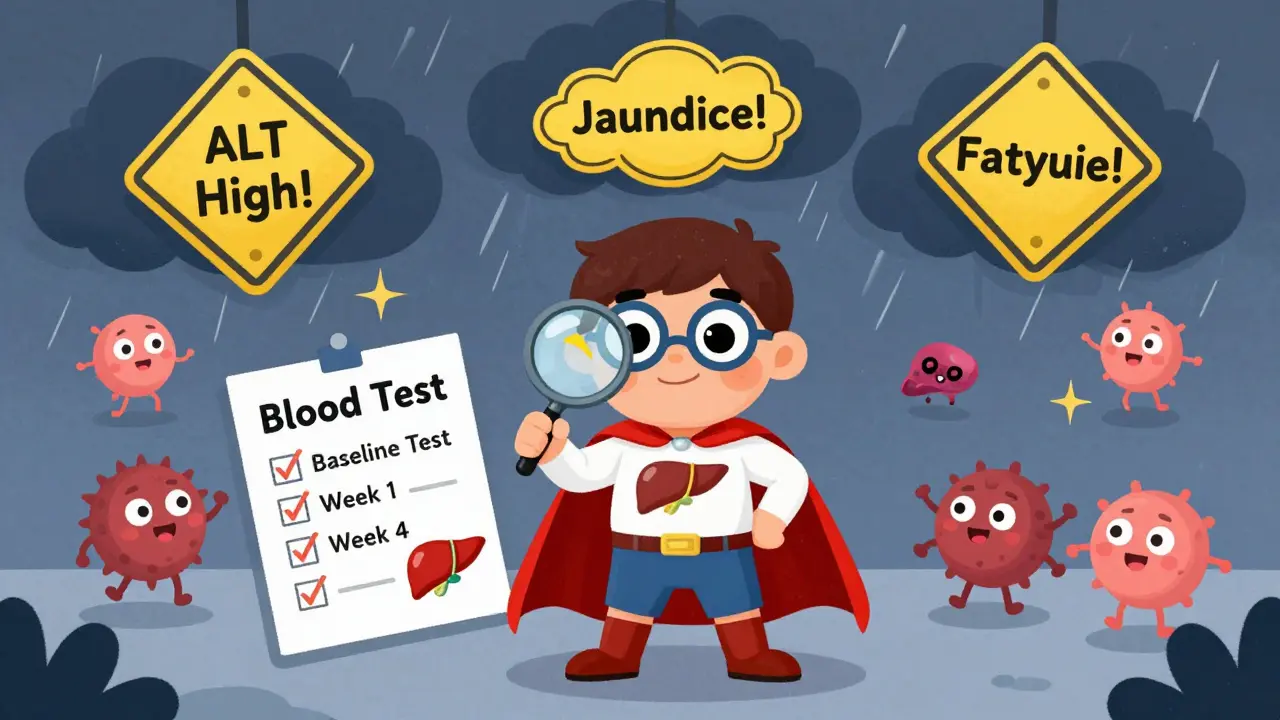
What Do Doctors Actually Do to Protect You?
Good doctors don’t just write a prescription. They monitor.
The Infectious Diseases Society of America (IDSA) recommends baseline liver tests before starting any systemic antifungal. For high-risk drugs like ketoconazole, itraconazole, and voriconazole, they want weekly blood tests for the first month. After that, every two weeks. For fluconazole and terbinafine, testing is less frequent - but still needed if you’re on it longer than 8 weeks.
Here’s what they look for:
- ALT and AST: These enzymes leak into the blood when liver cells are damaged. If they’re more than 3 times the normal level AND you have symptoms (nausea, fatigue, dark urine), stop the drug.
- Bilirubin: If it’s elevated along with ALT/AST, that’s a sign of serious liver trouble.
- ALP and GGT: These help tell if the problem is in the liver cells (hepatocellular) or the bile ducts (cholestatic).
Many primary care providers don’t follow these rules. A 2020 study found only 37% of doctors ordered liver tests for patients on terbinafine for nail fungus. That’s a gap. And it’s dangerous.
Real Patient Stories - What Went Wrong?
On Reddit, one user shared: "I took ketoconazole for 3 weeks. My ALT hit 1,200 U/L (normal is under 56). I was hospitalized. My liver was nearly shut down. I had no symptoms until I collapsed."
Another on Healthline wrote: "I was on terbinafine for 5 weeks. I got tired, then my eyes turned yellow. My doctor said it was the drug. I stopped. Two months later, I was fine. But I almost didn’t make it."
These aren’t outliers. The FDA’s database has over 1,800 reports of ketoconazole-related liver injury between 2004 and 2021. Voriconazole? Nearly 1,000. And those are just the ones reported. Many go unnoticed.
Patients often don’t connect fatigue or nausea to their antifungal. They assume it’s a cold, stress, or aging. By the time jaundice appears - the yellowing of the skin - it’s often too late.

What Should You Do If You’re Taking an Antifungal?
If you’re prescribed an antifungal - especially for anything longer than two weeks - here’s what to do:
- Ask your doctor: "Which one are you prescribing, and why? Is there a safer option?"
- Request a baseline liver test before you start.
- Ask if you need follow-up tests - and when.
- Know the warning signs: fatigue, nausea, loss of appetite, dark urine, pale stools, yellow eyes or skin, pain under your right ribs.
- If you have liver disease, alcohol use, or take other meds (statins, antidepressants, seizure drugs), tell your doctor. You may need a different drug.
- Don’t skip blood tests. Even if you feel fine.
For nail fungus, terbinafine is still the best option - if you’re monitored. For systemic infections, echinocandins are often preferred in hospitals. But for outpatients, fluconazole is usually the safest azole - if used properly.
The Bigger Picture: How Prescribing Is Changing
Since the 2013 FDA warning, ketoconazole use has dropped by over 90%. Hospitals now avoid it entirely. Echinocandins have become the first-line for invasive candidiasis - not because they’re perfect, but because they’re less likely to interact with other drugs.
New antifungals are in development. Drugs like olorofim and ibrexafungerp are being tested with liver safety as a top priority. Early trials show 78% fewer liver enzyme spikes than older azoles. That’s promising.
But until those are widely available, we’re stuck with what we have. And that means vigilance.
The bottom line? Antifungals save lives. But they can also end them - if you don’t pay attention to the liver.
Can antifungals cause permanent liver damage?
Yes - but it’s rare. Most liver injury from antifungals is reversible if caught early. Stopping the drug usually allows the liver to heal within weeks. But in severe cases - especially with ketoconazole or voriconazole - acute liver failure can occur, requiring a transplant. About 5% of reported cases lead to permanent damage or death. That’s why monitoring is non-negotiable.
Is fluconazole safe for long-term use?
Fluconazole is one of the safest azoles, but long-term use (over 2 weeks) still carries risk. If you’re on it for months - say, for recurring yeast infections or fungal meningitis - your doctor should check liver enzymes every 4-6 weeks. The risk rises with age, alcohol use, or if you’re taking other liver-metabolized drugs like statins or seizure medications.
Why is terbinafine still prescribed if it has a black box warning?
Because for fungal nail infections, it’s the most effective drug available. The risk of liver injury is low - about 1 in 1,000. But when it happens, it can be severe. That’s why doctors weigh benefits vs. risks. For a healthy person with a stubborn nail infection, the benefit outweighs the risk - if they’re monitored. For someone with existing liver disease, it’s a no-go.
Can I drink alcohol while taking antifungals?
No - especially not with ketoconazole, itraconazole, or voriconazole. Alcohol stresses the liver. When combined with these drugs, it increases the chance of liver injury. Even moderate drinking can push a borderline case into full-blown toxicity. Doctors will tell you to avoid alcohol completely during treatment. Don’t ignore that advice.
Are there blood tests I should ask for before starting an antifungal?
Yes. Ask for a full liver panel: ALT, AST, bilirubin, ALP, and GGT. These show how well your liver is functioning. Also ask about your baseline levels so you can track changes. If you’re on terbinafine or fluconazole long-term, you should get tested again at 4-6 weeks. For voriconazole or itraconazole, weekly tests for the first month are standard.
If you’re on an antifungal, don’t assume it’s harmless. Ask questions. Get tested. Pay attention to your body. Your liver can’t speak - but it can fail silently. Don’t let it.
ps. i’m still on it, but monitored. worth it for clear nails.
also, fluconazole is fine if you're white. for the rest of us? nah. they don't test on brown people. just saying.
Meanwhile, the FDA is still debating whether to rename 'black box warning' to 'please don't die' label. 🤷♂️
Did you know the WHO gets funding from Big Pharma? That’s why they downplay the deaths. I’ve got 37 research papers proving this. Want them? DM me.
1. Get the baseline test.
2. Write down your symptoms (even if you think they’re ‘just stress’).
3. Set a calendar alert for 4 weeks.
4. Tell your partner to check your eyes if you’re too tired to look.
This isn’t fear-mongering. It’s basic self-respect. Your liver doesn’t have a voice. You have to be its voice.
And yeah - if you’re taking statins + antifungals? You’re playing Russian roulette with your gallbladder. Don’t be cool. Be smart.
also i took terbinafine. felt fine. didn't test. still alive. so maybe the risk is low? idk. lazy to care.
You don’t have to be paranoid. You just have to be informed.
Get the test. Know your numbers. Talk to your pharmacist. Ask your doctor: "What’s the plan if something goes wrong?"
That’s not paranoia. That’s power.
And if you’re on terbinafine? You’re probably fine. But if you’re not monitoring? You’re gambling. And nobody wins that game.
Now I hand out printed liver test checklists with every antifungal script. Just because I care. You should too.
And now you’re supposed to be your own advocate? That’s not healthcare. That’s survival.
Also, if you’re taking antifungals and drinking coffee? You’re already dead. Just don’t know it yet.
Also, why is ketoconazole banned in Europe but still sold here? Coincidence? Or is Big Pharma just better at lobbying in the US?
I’m not taking any blood tests. My liver’s been through worse.
Baseline liver enzymes are not optional. They are a standard of care - not a suggestion.
For terbinafine: ALT >3x ULN + symptoms = immediate discontinuation. No exceptions.
For voriconazole: CYP2C19 genotyping should be routine in patients >65 or on polypharmacy. It’s cost-effective. It saves lives.
And yes - alcohol is a hard no. Even one glass of wine with ketoconazole? You’re inviting hepatitis.
Patients aren’t being scared. They’re being equipped. That’s medicine. Not fear.
- Dr. G. Adams, PharmD, BCIDP
Turns out, I had silent hepatitis. Took 3 months to recover.
Don’t trust "feeling fine." Trust the labs. Always.