
Penicillin Allergy Assessment Tool
Is Your Allergy Label Accurate?
Many people labeled as penicillin-allergic are actually not allergic. This tool helps you assess your risk based on your reaction history.
Describe Your Reaction
Your Assessment Result
Why this matters: Studies show 95% of people labeled penicillin-allergic don't actually have a true allergy. Many have only had non-allergic reactions like viral rashes, which aren't dangerous and don't require avoiding antibiotics.
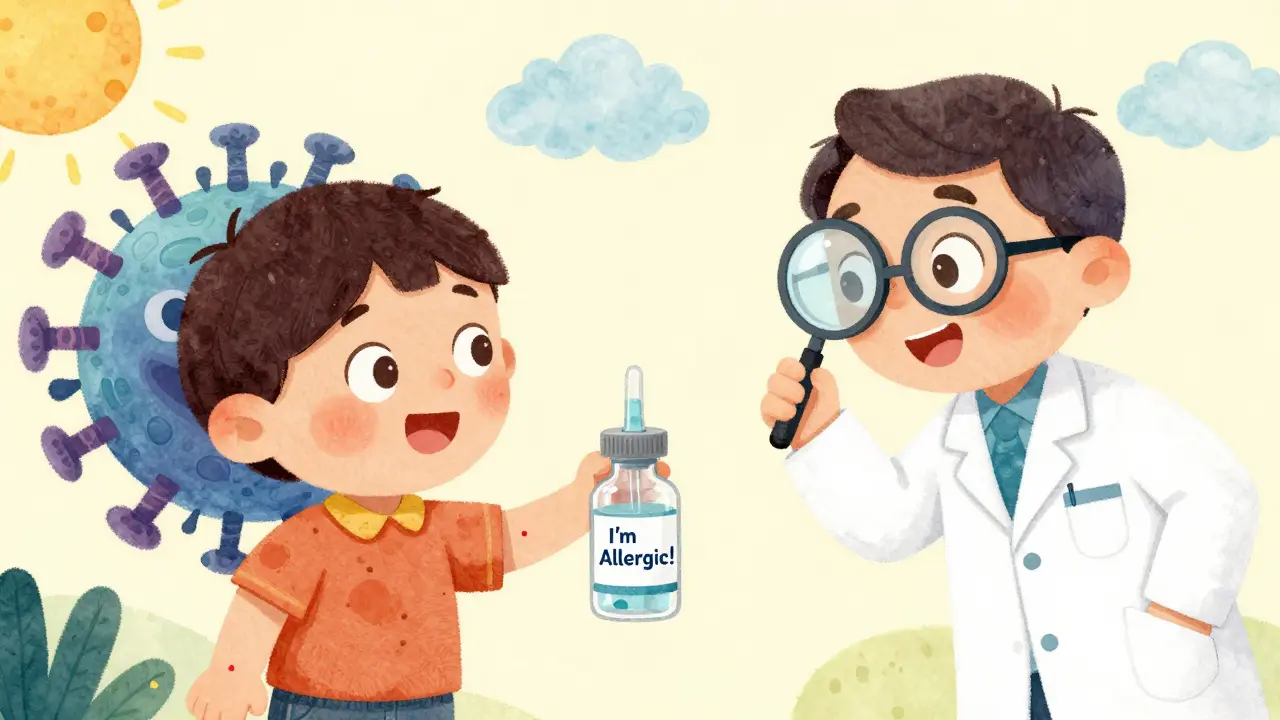
More than 10% of Americans say they’re allergic to penicillin. But here’s the truth: 95% of them aren’t. That’s not a typo. Most people labeled as penicillin-allergic can safely take it again - if they’re tested. This misunderstanding isn’t just a medical myth. It’s costing lives, increasing infections, and driving up healthcare bills by thousands per patient every year.
What Really Happens When You Say ‘I’m Allergic to Penicillin’
When someone says they’re allergic to penicillin, it usually traces back to a childhood rash - maybe from a viral infection like mono or roseola. That rash wasn’t caused by the antibiotic. But once it’s written in a medical chart as an allergy, it sticks. For decades. Even if the person hasn’t taken penicillin since they were five. The problem? Doctors start avoiding all beta-lactam antibiotics. That includes not just penicillin, but also amoxicillin, ampicillin, and often cephalosporins like ceftriaxone or cephalexin. Instead, they reach for broader-spectrum drugs like vancomycin, clindamycin, or fluoroquinolones. These alternatives are less effective, more toxic, and more likely to trigger deadly infections like Clostridioides difficile. A CDC study found that patients with a penicillin allergy label have a 30% higher chance of developing surgical site infections. Why? Because the right antibiotic - the one that actually kills the bacteria - is off the table.Penicillin vs Cephalosporin: The Real Risk of Cross-Reactivity
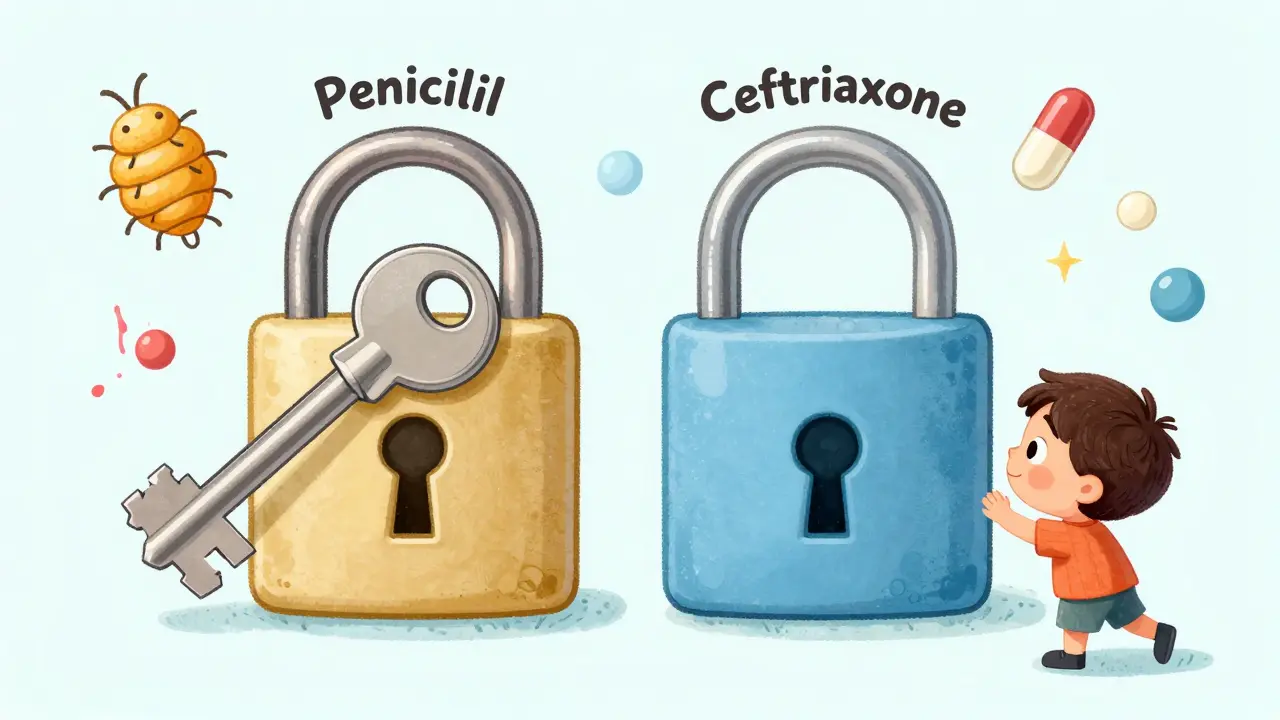
For years, doctors were taught that if you’re allergic to penicillin, you have a 10-30% chance of reacting to cephalosporins. That number was based on old studies from the 1970s. Today, we know better. The actual cross-reactivity rate? About 1-3% for first-generation cephalosporins like cephalexin. For newer ones like ceftriaxone or cefdinir? Less than 1%. That’s because modern cephalosporins have very different side chains than penicillin. The shared beta-lactam ring - the part everyone used to blame - isn’t the main trigger. It’s the side groups attached to it. Think of it like two different keys. Both fit the same lock (the beta-lactam ring), but one has a jagged edge (penicillin), and the other is smooth (ceftriaxone). If your body reacts to the jagged edge, it doesn’t mean it’ll react to the smooth one. Still, many hospitals avoid cephalosporins entirely in patients with penicillin allergies. That’s outdated. The American Academy of Allergy, Asthma & Immunology (AAAAI) now says: if you have a low-risk history (like a rash more than 10 years ago), you can safely take most cephalosporins without testing.How to Tell If It’s a Real Allergy - Not Just a Rash
Not all reactions are allergies. Here’s how to tell the difference:- True IgE-mediated allergy: Happens within an hour. Hives, swelling of the lips or tongue, wheezing, drop in blood pressure. This is life-threatening.
- Delayed rash: Appears days later. Flat, red, itchy. Often viral. Not an allergy.
- Nausea or diarrhea: Common side effect. Not an allergy.
- Headache or dizziness: Usually unrelated to the drug.
The Gold Standard: Skin Testing and Oral Challenges
If you’re labeled allergic and need a beta-lactam antibiotic, there’s a clear path forward. It’s not guesswork. It’s science. For penicillin, allergists use skin testing with two key components: the major determinant (penicilloyl-polylysine) and the minor determinant (a mix of penicillin metabolites). These are not available over the counter - only in allergy clinics. If both skin tests are negative, the next step is an oral challenge. You swallow a full dose of amoxicillin under observation. In 95% of cases, nothing happens. No reaction. No problem. For cephalosporins? No standardized skin test exists. So doctors use graded oral challenges. Start with 10% of the dose. Wait 30 minutes. Then 30%. Then 60%. If you make it to the full dose without symptoms, you’re cleared. This isn’t risky. It’s safer than guessing. A 2022 Mayo Clinic study showed that after testing, 65% of patients had their allergy label removed. Their next infection? Treated with the right antibiotic - not a last-resort drug.What If You Really Are Allergic? Desensitization Is an Option
Some people have true, confirmed penicillin allergies. But sometimes, they still need penicillin - like pregnant women with syphilis or patients with neurosyphilis. Penicillin is the only drug that works. That’s where desensitization comes in. It’s not a cure. It’s a temporary workaround. You get tiny, increasing doses of penicillin every 15-30 minutes over 4 to 8 hours. Your immune system gets tricked into tolerating it - just long enough to finish the treatment. It’s done in a hospital. With emergency equipment ready. And it only lasts as long as you keep taking the drug. Stop it? The allergy comes back. But here’s the key: this isn’t experimental. It’s standard care. The CDC says it’s required for certain infections. And success rates? Over 80%.Why This Matters More Than You Think
This isn’t just about one antibiotic. It’s about the entire system of how we treat infections. When we avoid penicillin and cephalosporins out of fear, we use drugs that destroy good bacteria, increase resistance, and raise the risk of deadly superbugs. Hospitals with formal allergy delabeling programs have cut vancomycin use by 23% and C. difficile infections by 17%. And the cost? The CDC says mislabeling adds $2,000 to $4,000 per patient per year in extra drugs, longer hospital stays, and complications. That’s millions across the country. Even more troubling: only 35% of U.S. hospitals have a formal program to check these labels. Rural areas? Only 28% have access to allergists. That’s a gap. A dangerous one.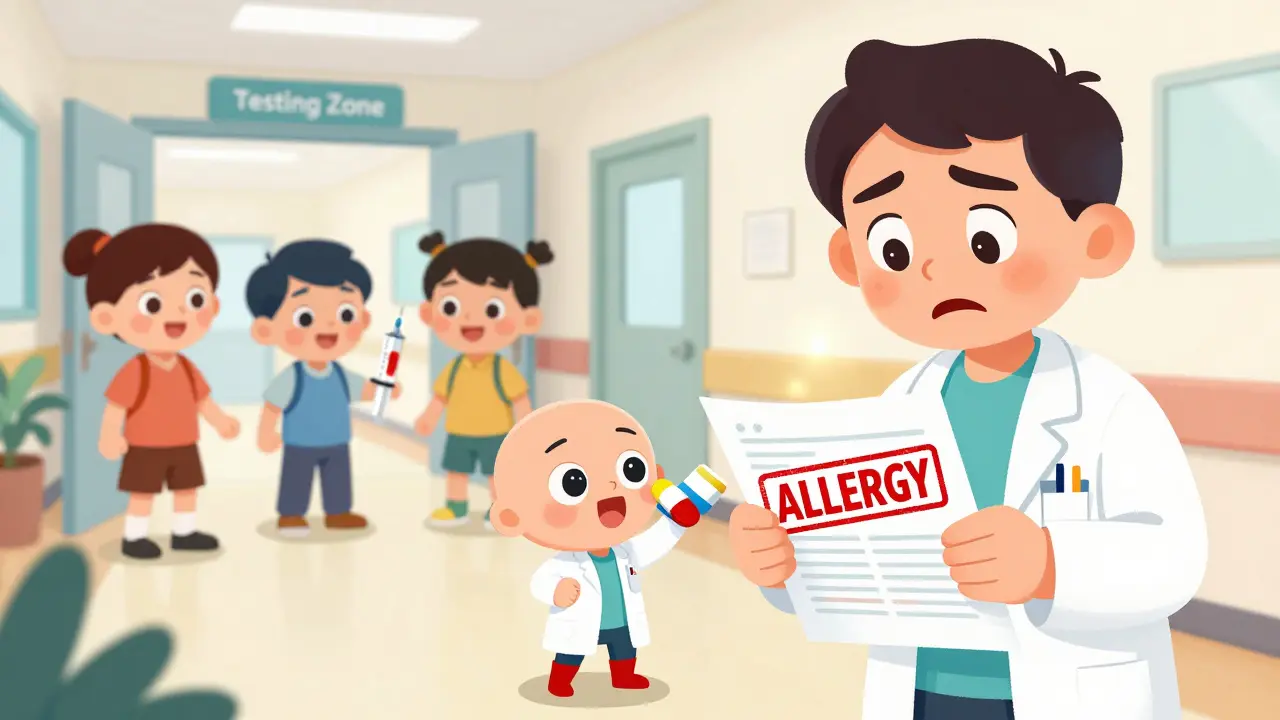
What You Can Do
If you or someone you love has a penicillin allergy label:- Ask: When did this happen? What exactly happened? Was it a rash? A fever? Trouble breathing?
- Ask your doctor: Can I be tested? Most primary care clinics can refer you to an allergist.
- Ask: Is this label still accurate? Eighty percent of people lose their penicillin allergy after 10 years.
- Don’t let a childhood rash dictate your adult treatment.
Frequently Asked Questions
Can I outgrow a penicillin allergy?
Yes. About 80% of people who had a penicillin allergy in childhood lose it after 10 years. Even if you were told you were allergic as a kid, you may be able to take it safely now. Testing is the only way to know for sure.
Are cephalosporins safe if I’m allergic to penicillin?
For most people, yes. The risk of a true allergic reaction is less than 1% with newer cephalosporins like ceftriaxone. Older, first-generation ones like cephalexin carry a slightly higher risk - around 1-3%. But even then, many patients with low-risk histories can take them safely without testing. The key is knowing the type of reaction you had and the specific cephalosporin being considered.
What if I had anaphylaxis to penicillin? Can I still be tested?
Yes - but only under strict supervision. If you had anaphylaxis (low blood pressure, swelling, trouble breathing), skin testing is still safe and highly accurate. A negative test means you can likely take penicillin again. Oral challenges are done only after negative skin tests. Never attempt this at home.
Can I take amoxicillin if I’m allergic to penicillin?
Amoxicillin is a type of penicillin. If you’re truly allergic to penicillin, you’re allergic to amoxicillin too. But if your allergy label is wrong - which it often is - you can likely take it safely. The best approach is testing, not avoidance.
Is penicillin allergy testing covered by insurance?
Most insurance plans cover allergy testing for penicillin, especially if you’re being considered for beta-lactam therapy. The test usually takes 2-4 hours and includes skin testing and possibly an oral challenge. The cost is far less than the long-term cost of using broader antibiotics.
Next Steps
If you’re unsure about your allergy status:- Check your medical records. What exactly was written? "Rash"? "Hives"? "Anaphylaxis"?
- Ask your doctor for a referral to an allergist. You don’t need a specialist to start the conversation.
- If you’re scheduled for surgery, dental work, or treatment for an infection - speak up now. Don’t wait until the last minute.
- Don’t assume your allergy is permanent. It might be a mistake.
So let me get this straight - we’ve been scaring people away from penicillin like it’s poison because some kid got a rash after a cold in 1997? And now we’re dumping vancomycin like it’s candy? I mean, I get being cautious, but this is like refusing to drive a car because someone once got a paper cut from a map. We’re not saving lives here - we’re just making the system more expensive and more dangerous.
This is one of those things that feels obvious once you see the data - but somehow never makes it into medical training. I’ve seen patients with penicillin labels get clindamycin for a simple UTI, then end up with C. diff. It’s heartbreaking. The real tragedy? Most of these labels aren’t even documented with any real history. Just ‘allergic to penicillin’ scribbled in a chart from 20 years ago. Time to fix that.
My mom’s allergic to penicillin. She’s 72. Got a rash at 8. Never had a reaction since. They just told her to avoid it. No testing. No questions. Just fear. This article should be required reading for every doctor who writes ‘penicillin allergy’ without asking what actually happened.
It is imperative to recognize that the persistence of outdated medical dogma, particularly in the realm of antimicrobial stewardship, constitutes a systemic failure in evidence-based practice. The conflation of non-IgE-mediated cutaneous reactions with true anaphylactic potential has led to a cascade of inappropriate antibiotic selection, thereby contributing significantly to the global burden of antimicrobial resistance. The data presented herein, while compelling, must be disseminated through formal continuing medical education modules, institutional protocols, and mandatory electronic health record decision support alerts to effect meaningful change at the population level.
Wait… so you’re telling me the whole ‘penicillin allergy’ thing is a government lie to push Big Pharma’s expensive antibiotics? I mean, why else would they keep pushing vancomycin if it’s so bad? And why don’t they just test everyone? They don’t want you to know you can take penicillin again. It’s all about profits. I read this on a forum where someone said the CDC is owned by Pfizer. I’m not saying it’s true… but… why don’t they just test us? Hmm?
Wow. So people are dying because they got a rash as a kid and someone wrote it down? That’s not an allergy, that’s just bad parenting. If your kid breaks out in a rash after a cold, maybe don’t give them antibiotics next time. Don’t blame the medicine. Blame the mom who thought a rash meant ‘allergy.’
Our country is falling apart because we don’t trust science anymore. This is exactly why we need to stop letting people make medical decisions based on ‘I think I had a rash once.’ If you’re American, you should trust the CDC, the Mayo Clinic, and real doctors - not some internet guy who says ‘maybe it’s not an allergy.’ This is why we’re losing the war on superbugs. We need discipline. We need rules. We need to stop letting fear rule medicine.
Interesting! I work in a hospital in India and we see this all the time. Parents say ‘my child is allergic to penicillin’ - but it was just a fever and a rash after dengue. We don’t have skin testing here, so we avoid cephalosporins too. But I’ve given ceftriaxone to 10 patients with ‘penicillin allergy’ and no one reacted. Maybe we need to start trusting data over fear.
My sister had a rash after amoxicillin when she was 6. She’s 34 now. Never had another reaction. She’s terrified to take any antibiotic. I just want her to get tested. It’s not just about her - it’s about her kids, her future surgeries, her infections. Why does something that happened 28 years ago still control her life? We need to stop living in the past.
As someone who’s lived in three countries and seen how different systems handle this, I’ve noticed something: places with formal allergy delabeling programs - like the UK and parts of Canada - have way fewer C. diff cases and lower antibiotic costs. It’s not magic. It’s just good practice. The U.S. is still stuck in the 90s. Time to catch up.
I just got my penicillin skin test last month. Negative. Took the oral challenge. No reaction. I cried. Not because I was scared - because I realized I’d been avoiding antibiotics for 15 years over a childhood rash. I’m getting my first real antibiotic for my UTI tomorrow. Thank you for this article. I finally feel safe.
This is a powerful reminder that medicine must evolve beyond tradition. The burden of mislabeling extends far beyond individual patients - it strains healthcare infrastructure, fuels antimicrobial resistance, and erodes public trust. We must institutionalize allergy assessment protocols, integrate decision support tools into EHRs, and empower primary care providers with accessible pathways to referral. Change is not optional. It is a moral imperative.
It is irresponsible to suggest that people who have been told they are allergic to penicillin should simply take it again. What if they die? Who takes responsibility? You cannot dismiss decades of medical caution based on a few studies. This is not science - it is reckless experimentation on human lives. The conservative approach is the ethical one.
My doctor said I was allergic to penicillin after a rash at age 4. I just turned 30. I’ve never had another reaction. I asked about testing. He said ‘it’s not worth it.’ I asked again. He said ‘just avoid it.’ So I did. Now I’m on clindamycin for a tooth infection. It gave me diarrhea for a week. I’m mad. I should’ve asked for a test. I’m gonna go ask again. This time I’m bringing the article.
So… what’s the point again? I read the whole thing. Still not sure if I should take penicillin or not. Can someone just tell me yes or no?