
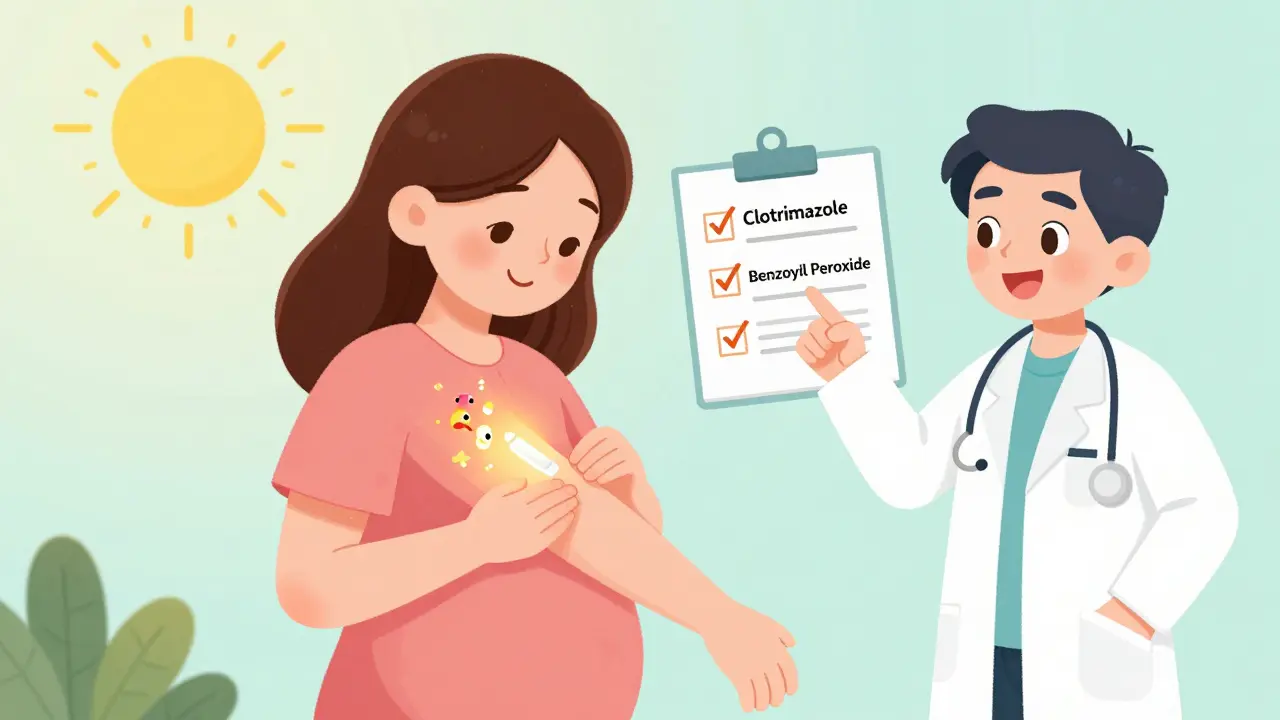
When you’re pregnant, even the smallest decision about what you put on your skin can feel overwhelming. You’ve got eczema flaring up, acne breaking out, or a fungal infection that won’t quit-and now you’re terrified that your favorite cream might hurt your baby. The good news? Most topical medications are far safer than you think. The even better news? You don’t have to guess. We’ve got the real, evidence-based breakdown of what’s safe, what’s risky, and what you should skip entirely during pregnancy.
Why Topical Medications Are Usually Safer
Unlike pills or injections, creams and ointments don’t flood your bloodstream. Most of what you apply stays on the surface. Studies show that only 1% to 10% of topical medications get absorbed into your body-and even less reaches your baby. For example, when you use hydrocortisone cream on your arms, less than 1% of it enters your blood. That’s why dermatologists and OB-GYNs often recommend topical treatments as the first line of defense during pregnancy.
But here’s the catch: absorption isn’t the same everywhere. Your face, neck, armpits, and groin absorb way more than your forearm or back. That’s why using a strong steroid cream on your face for weeks is riskier than using it briefly on your elbow. Always apply the smallest amount needed, and avoid covering large areas unless your doctor says it’s okay.
Safe Topical Options for Common Pregnancy Skin Issues
Let’s get practical. What can you actually use without worry?
- Hydrocortisone cream (1%) - This is the go-to for eczema, rashes, and bug bites. It’s low-potency, widely available, and has decades of safe use in pregnancy. The American College of Obstetricians and Gynecologists (ACOG) considers it acceptable for short-term use.
- Clindamycin and erythromycin (topical antibiotics) - These are the preferred treatments for acne during pregnancy. They work on the skin’s surface, and studies show less than 5% absorption. No link to birth defects has been found.
- Benzoyl peroxide (5-10%) - This is one of the most effective acne treatments and is considered safe. It doesn’t absorb deeply, and while the FDA once labeled it Category C, newer data shows no increased risk of fetal harm.
- Clotrimazole and miconazole (antifungal creams) - For yeast infections or athlete’s foot, these are first-line choices. The European Academy of Dermatology confirms they’re safe throughout pregnancy.
- Azelaic acid (15-20%) - A favorite for melasma (the pregnancy “mask”) and acne. It’s Category B, meaning animal studies show no risk, and real-world use in thousands of pregnant women hasn’t shown harm.
- Acyclovir cream - For cold sores or herpes outbreaks, this antiviral is safe. It’s been used for decades with no evidence of birth defects.
These options aren’t just “probably safe”-they’re backed by clinical data, expert guidelines, and decades of use. Many OB-GYNs and dermatologists recommend them as routine.
Topical Products to Avoid Completely
Not all creams are created equal. Some have clear risks-even if they’re just applied to the skin.
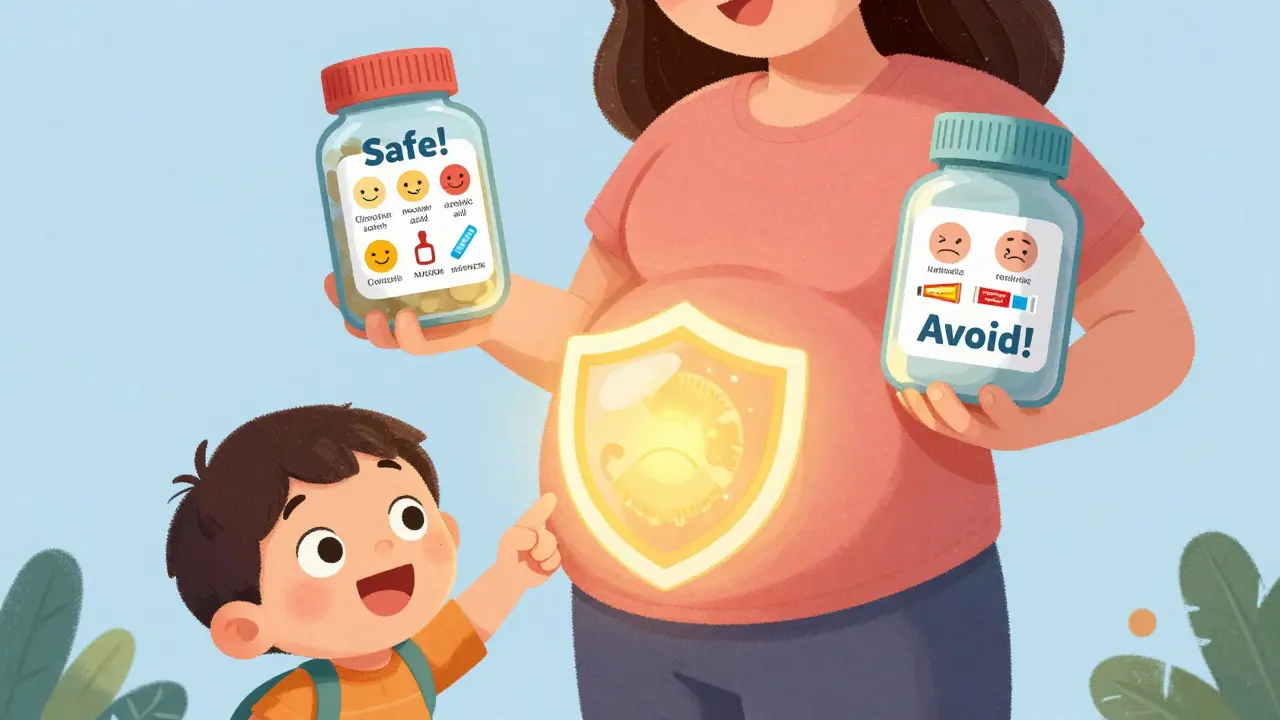
- Retinoids - This includes tretinoin (Retin-A), adapalene (Differin), and tazarotene. Even though they’re topical, case reports link them to rare birth defects when used in early pregnancy. The American Academy of Dermatology and ACOG both recommend avoiding them entirely during pregnancy-and ideally, stop using them before you even try to conceive.
- Topical NSAIDs (diclofenac, ibuprofen gel) - These may seem harmless, but they can cross into your baby’s system and affect fetal heart development. After 30 weeks, they’re linked to premature closure of the ductus arteriosus, a critical blood vessel. Avoid them completely after the second trimester.
- Podofilox and podophyllin - Used for genital warts, these are strongly linked to birth defects. They’re not just risky-they’re contraindicated.
- High-potency corticosteroids (clobetasol, betamethasone) - These aren’t banned, but they’re not safe for long-term or large-area use. Studies show a possible link to low birth weight when used heavily throughout pregnancy. If you need them, use the lowest dose for the shortest time possible, and always tell your OB.
- Econazole (antifungal) - Avoid in the first trimester. Use only if absolutely necessary later, and never on large areas.
These aren’t “maybe dangerous.” They’re flagged by multiple major medical societies for a reason. If you used one before realizing you were pregnant, don’t panic. Most single, short-term exposures don’t cause harm-but you should still talk to your provider.
What About Over-the-Counter (OTC) Products?
You might think “natural” or “OTC” means safe. It doesn’t.
Many OTC moisturizers contain retinol, salicylic acid (in high concentrations), or essential oils that haven’t been studied in pregnancy. Even “gentle” face washes can have hidden ingredients. Always check the label. Look for:
- Retinol, retin-A, tretinoin, retinyl palmitate
- Salicylic acid above 2% (common in acne toners)
- Essential oils like rosemary, thyme, or wintergreen (can be absorbed through skin)
Simple, fragrance-free moisturizers with ceramides, glycerin, or petrolatum are your safest bet. Brands like CeraVe, Vanicream, and Aveeno (fragrance-free) are commonly recommended by dermatologists for pregnant skin.
The Labeling Confusion: FDA Categories Are Gone-But People Still Use Them
You might hear doctors still talk about “Category B” or “Category C” drugs. That’s because the FDA retired those labels in 2015. They now require detailed narrative descriptions of risks instead of simple letters.
But here’s the problem: 68% of recent dermatology studies still use the old system. Product labels? Only 37% include clear pregnancy safety info. That means you’re often left guessing.
Don’t rely on the old A, B, C, D, X system. Instead, look for:
- Specific mentions of “pregnancy” or “fetal risk” in the prescribing information
- Recommendations from ACOG, the American Academy of Family Physicians, or the European Academy of Dermatology
- Studies with real human data-not just animal studies
When in doubt, ask: “Is there a human pregnancy study on this?” If the answer is no, proceed with caution.
Real Stories, Real Concerns
On Reddit, a user named “ExpectingMom2023” asked: “My dermatologist recommended hydrocortisone for my eczema-but I’m terrified. Is it really safe?” Over 40 people replied with “yes,” sharing their own experiences using it without issues.
But then there’s the flip side. A woman on BabyCenter shared that she accidentally got pregnant while using Accutane (oral isotretinoin) and had to terminate the pregnancy due to extreme risk of birth defects. That story sticks with people. It’s terrifying. But here’s the key: Accutane is oral. Topical retinoids are different. Still, the fear lingers.
The InfantRisk Center, which handles over 1,200 pregnancy medication questions every month, says topical concerns make up 18% of their calls. Most of those are about hydrocortisone, acne creams, or antifungals-and 9 out of 10 times, they confirm the product is safe.
What Should You Do?
Here’s your simple action plan:
- Stop using retinoids immediately if you’re pregnant or trying to conceive.
- Check your current products-look for retinol, salicylic acid above 2%, or NSAIDs like diclofenac.
- Stick to proven safe options: hydrocortisone (1%), clindamycin, benzoyl peroxide, azelaic acid, clotrimazole.
- Use the least amount possible-especially on your face, neck, or groin.
- When in doubt, call your OB or a specialist. The InfantRisk Center offers free consultations (1-800-994-6670) and has a reliable online database.
You don’t need to go bare-faced or bare-skinned during pregnancy. You just need to know what’s truly safe-and what’s not worth the risk.
Is it safe to use hydrocortisone cream during pregnancy?
Yes, 1% hydrocortisone cream is considered safe for short-term use during pregnancy. It’s a low-potency steroid with minimal absorption-especially when used on small areas like the arms or legs. The American College of Obstetricians and Gynecologists (ACOG) supports its use for eczema, rashes, and itching. Avoid using it on large areas or for more than a couple of weeks without your doctor’s advice.
Can I use acne cream with benzoyl peroxide while pregnant?
Yes. Benzoyl peroxide (5-10%) is one of the safest acne treatments during pregnancy. It works on the skin’s surface and has very low absorption. Studies have not linked it to birth defects, and it’s recommended by dermatologists as a first-line option. It’s also available over-the-counter, so you don’t need a prescription.
What if I used retinol before I knew I was pregnant?
If you used retinol or a topical retinoid for a short time before realizing you were pregnant, the risk is extremely low. Most cases of birth defects linked to retinoids involve high-dose oral use (like Accutane). Topical retinoids are absorbed in tiny amounts. Still, stop using them immediately and talk to your OB. They can monitor your pregnancy more closely, but there’s no need for panic. The vast majority of women in this situation go on to have healthy babies.
Are antifungal creams safe for yeast infections during pregnancy?
Yes. Clotrimazole and miconazole are first-line treatments for vaginal yeast infections and are safe throughout pregnancy. They’re available over-the-counter as creams or suppositories. Nystatin is also safe. Avoid econazole in the first trimester, and don’t use it on large skin areas. These treatments are preferred over oral antifungals like fluconazole, which carry higher risks.
Can I use topical NSAIDs like Voltaren gel while pregnant?
Avoid topical NSAIDs like diclofenac (Voltaren gel) after 30 weeks of pregnancy. Even though they’re applied to the skin, they can still enter your bloodstream and affect your baby’s heart by closing the ductus arteriosus too early. Before 30 weeks, use them only if absolutely necessary and for the shortest time possible. For pain relief, acetaminophen (Tylenol) is a safer oral option. Always check with your OB before using any NSAID-topical or oral.
Next Steps: What to Do Today
Start by checking your medicine cabinet. Toss out anything with retinol, tretinoin, adapalene, or salicylic acid above 2%. Replace it with a simple, fragrance-free moisturizer. If you’re using a prescription cream, call your dermatologist or OB and ask: “Is this safe for pregnancy?” Don’t assume it is. And if you’re unsure about anything-call the InfantRisk Center. They’re free, confidential, and they’ve helped over 100,000 pregnant women make smart choices.
You don’t need to sacrifice your skin health to protect your baby. With the right information, you can manage your condition safely-and sleep better at night knowing you’re doing the right thing.


