
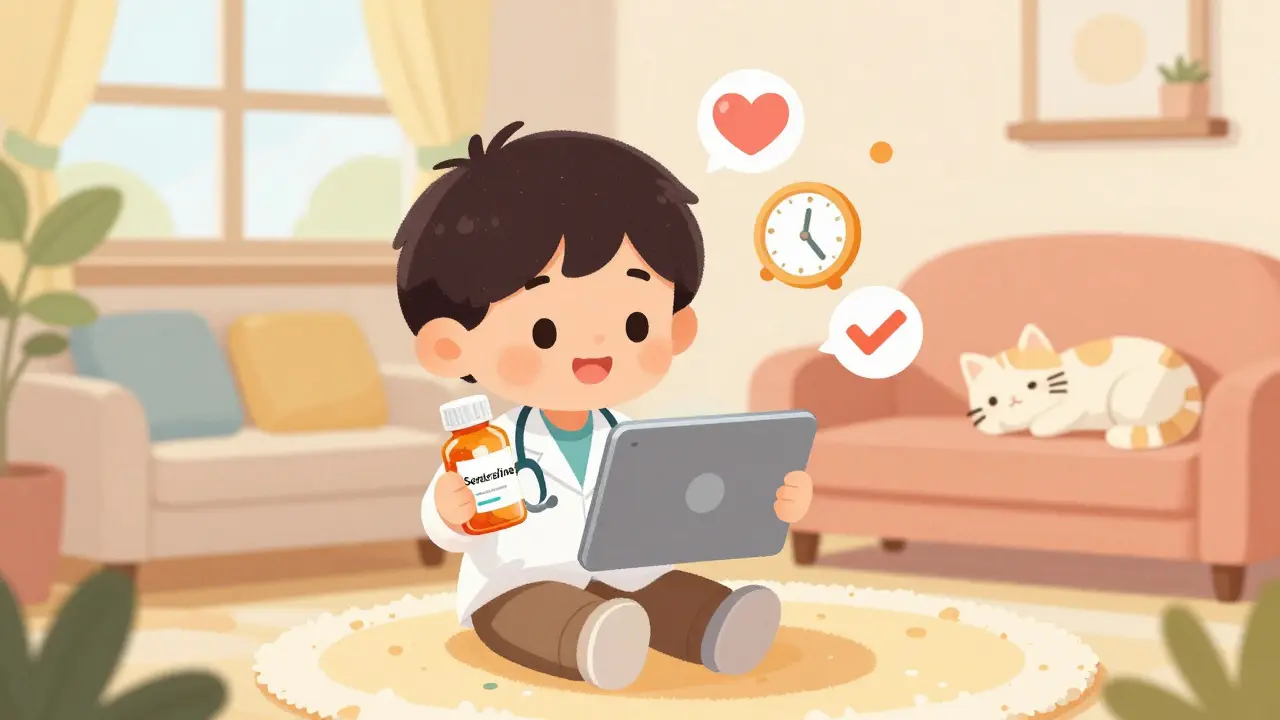
When you need a refill for your generic sertraline or buprenorphine, you might not think twice about getting it through a telemedicine visit. But behind that simple click-and-send prescription is a tangled web of federal rules, state laws, and technical hurdles that are changing fast - and most patients and even some doctors don’t fully understand them.
What’s Allowed Now - and What’s Not
In 2026, you can legally get a prescription for almost any generic medication via telemedicine - as long as it’s not a controlled substance. That means drugs like lisinopril, metformin, levothyroxine, and sertraline can be prescribed after a 15-minute Zoom visit, with no in-person exam ever required. The DEA doesn’t restrict these. Pharmacies accept them. Insurers cover them. It’s straightforward.
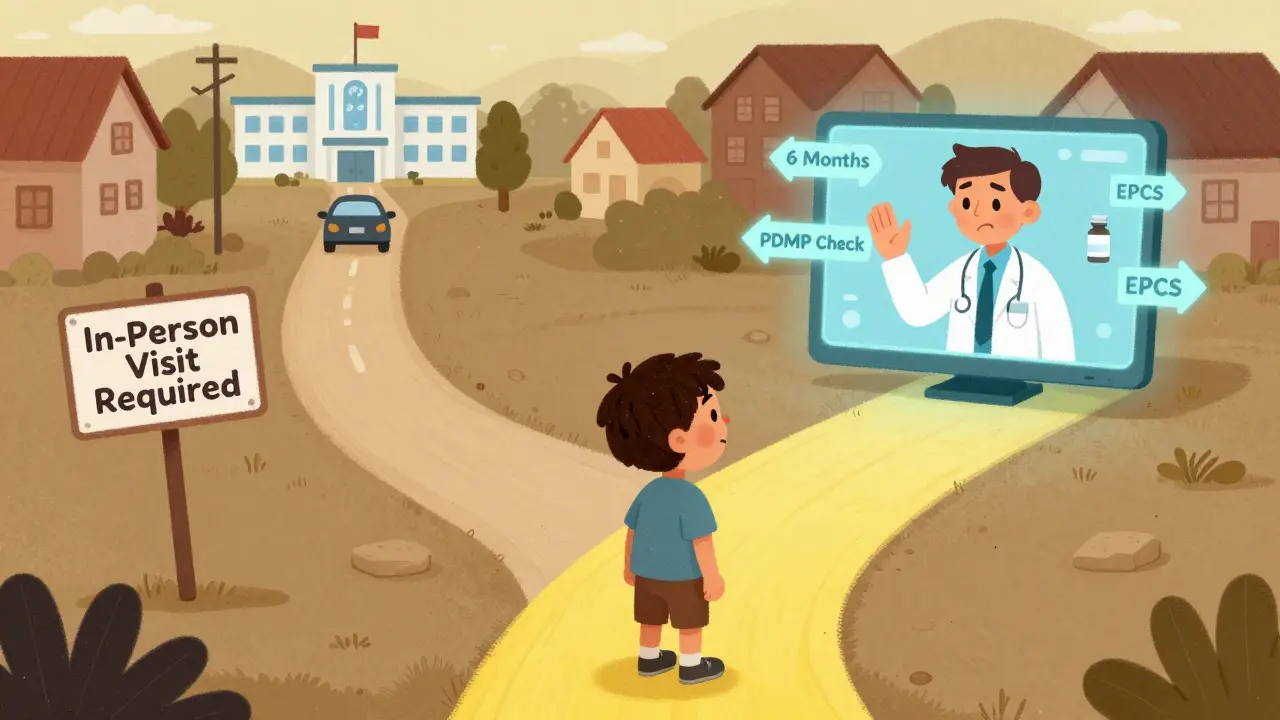
But if your medication is a controlled substance - even if it’s a generic - the rules get complicated. Generic buprenorphine for opioid use disorder? You can get it via telemedicine, but only under strict conditions. The DEA allows an initial six-month supply to be prescribed remotely, but after that, you must either see your provider in person or meet additional requirements to keep getting refills. Same goes for generic Adderall or oxycodone: only specialists like psychiatrists, neurologists, or hospice doctors can prescribe them remotely, and even then, only if they’re registered under the new Advanced Telemedicine Prescribing Registration.
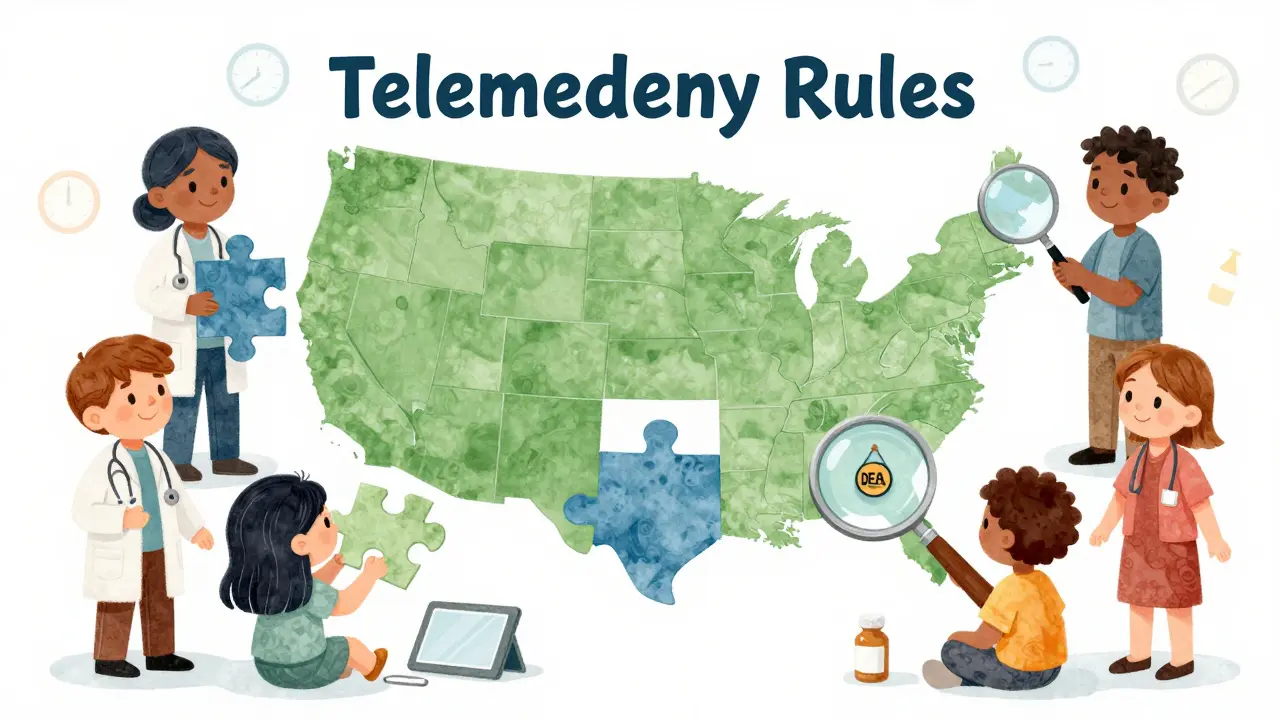
Primary care doctors? Most can’t prescribe Schedule II-V controlled substances via telemedicine anymore. Not unless they prove a "compelling use case" - a vague standard that’s left many rural providers stuck. And if you’re a patient in Arkansas, you can’t get any controlled substance by telemedicine at all - even if your doctor is licensed in California and you’re just trying to avoid a two-hour drive.
Why the Six-Month Limit Matters
The six-month limit on initial buprenorphine prescriptions isn’t just a bureaucratic rule - it’s a clinical problem. Studies show that patients who stay on medication-assisted treatment for 12 months or longer have significantly better outcomes: fewer overdoses, less relapse, improved mental health. But under current rules, after six months, you’re forced to schedule an in-person visit. For someone living in rural Montana or the Mississippi Delta, that’s not just inconvenient - it’s a barrier to survival.
Dr. Jennifer Sharpe Potter of the American Society of Addiction Medicine put it bluntly: "80% of patients with opioid use disorder first seek help in primary care. If we block those doctors from prescribing, we’re cutting off the most common path to treatment." And yet, the DEA’s new rules still exclude most family doctors from prescribing controlled substances via telemedicine.
The PDMP Problem
Every time a provider prescribes a controlled substance via telemedicine, they’re required to check the state’s Prescription Drug Monitoring Program (PDMP) before writing the script. Sounds reasonable, right? Except there are 50 different PDMP systems - each with its own website, login, and interface. Some states have APIs that connect to electronic health records. Most don’t.
Dr. Michael Reynolds, a family physician in Montana, told the American Telemedicine Association: "I have to check PDMPs from three states for my patients. Each check takes 5 to 7 minutes. That’s 15 to 20 minutes per visit - time I don’t have."
And it’s not just slow. It’s error-prone. In Q1 2025, 42% of DEA telemedicine registration applications were rejected because providers didn’t document PDMP checks correctly. One doctor in Texas submitted a record showing the PDMP was checked at 2:15 PM - but the system timestamped it at 2:17 PM. The DEA flagged it as a compliance violation. The doctor had to reapply.
EPCS and Identity Verification: The Tech Hurdles
Telemedicine prescriptions for controlled substances must be sent electronically using EPCS - Electronic Prescribing of Controlled Substances. That’s not just typing a prescription into your EHR. It requires:
- A two-factor authentication system (like a physical token or mobile app)
- DEA-certified e-prescribing software
- Identity verification using a government-issued photo ID scanned during the virtual visit
Most platforms spent 8 to 12 weeks getting EPCS working correctly. But only 37% of telehealth services have integrated PDMP systems - even though it’s mandatory. That means many prescriptions are getting flagged or rejected at the pharmacy level, even when the doctor did everything right.
Reddit user NeuroDoc87, a telepsychiatrist in California, shared: "I had three prescriptions denied this month because the pharmacy in Nevada didn’t know the DEA changed the rules. They thought I was breaking the law - but I was following them. I had to call the pharmacy, explain the new regs, and send them the DEA guidance PDF. That’s not healthcare. That’s customer service.”
Generics vs. Brand: The Regulatory Double Standard
There’s no difference in effectiveness between brand-name oxycodone and its generic version. But the DEA treats them the same - both are Schedule II, both require the same strict rules. Yet, non-controlled generics like sertraline, metoprolol, or atorvastatin? No restrictions. No PDMP checks. No identity verification beyond what the telehealth platform already uses.
This creates a strange reality: a patient with depression can get a year’s supply of generic Zoloft with one video visit. But someone with opioid use disorder might need to drive 100 miles every six months just to get their generic buprenorphine refilled. The clinical need is the same. The regulation isn’t.
What’s Coming in Late 2025 and Beyond
The current emergency flexibilities - the ones that let doctors prescribe controlled substances without an in-person visit - expire on December 31, 2025. After that, every provider must be registered under one of the DEA’s new categories: Telemedicine Prescribing Registration, Advanced Telemedicine Prescribing Registration, or Telemedicine Platform Registration.
Only 31 out of 127 telehealth platforms have completed the Telemedicine Platform Registration as of July 2025. That means many services you use today may stop offering controlled substance prescriptions by January 2026 unless they comply.
Medicare’s new rule adds another layer: starting October 1, 2025, patients must have had at least one in-person mental health visit in the past year to qualify for telehealth reimbursement. That could cut reimbursement for telemedicine prescriptions by nearly half - meaning some providers may stop offering them altogether to avoid financial loss.
What Patients Should Do Now
If you’re on a generic medication that’s not a controlled substance - like blood pressure pills, thyroid meds, or antidepressants - you’re fine. Keep using telemedicine. It’s safe, legal, and convenient.
If you’re on a controlled substance like buprenorphine, Adderall, or oxycodone, here’s what to do:
- Confirm your provider is registered with the DEA under the correct telemedicine category. Ask them directly.
- Make sure your pharmacy knows the new rules. Some still think telemedicine = illegal for controlled substances.
- Keep records of your PDMP checks. If your prescription is denied, ask for the reason - it might be a pharmacy error, not your provider’s fault.
- Plan ahead for the six-month limit. If you’re on buprenorphine, schedule your in-person visit before month six ends.
- Check your state’s rules. Arkansas, Texas, and a few others have tighter restrictions than federal law.
What Providers Need to Do
If you’re a doctor, nurse practitioner, or physician assistant prescribing via telemedicine:
- Apply for DEA registration now if you haven’t. The process takes 60-90 days.
- Ensure your EHR system supports EPCS and PDMP integration. If it doesn’t, switch platforms.
- Train your staff on identity verification protocols. Scanning a driver’s license isn’t enough - you need to confirm it’s real-time and matches the patient.
- Document every PDMP check with exact date and time. Don’t rely on memory.
- Know your state’s rules. California allows broad telemedicine prescribing. Arkansas doesn’t. Don’t assume federal rules override state law.
And if you’re a primary care provider? You’re not alone in feeling stuck. The DEA’s rules were designed with specialists in mind. But advocacy groups are pushing for changes. Stay informed. Join your state medical association. Your voice matters.
Bottom Line
Telemedicine prescriptions for generics are here to stay - and they’re working. But the rules for controlled substances are a patchwork of good intentions, technical gaps, and political compromise. The system isn’t broken - it’s still being built. And if you’re relying on it, you need to know the rules before you’re caught off guard.
The future of digital health isn’t about convenience. It’s about access. And right now, access depends on whether your medication is controlled - and where you live.
Can I get a prescription for generic Adderall through telemedicine?
Yes - but only if your provider is a board-certified psychiatrist, neurologist, hospice physician, pediatrician, or a specialist in long-term care. Primary care doctors cannot prescribe Schedule II controlled substances like generic Adderall via telemedicine unless they qualify under a rare "compelling use case" exception. Even then, they must be registered under the DEA’s Advanced Telemedicine Prescribing Registration and follow all EPCS and PDMP rules.
Is it legal to get buprenorphine through telemedicine?
Yes, and it’s one of the most important changes in addiction treatment. You can get an initial six-month supply of generic buprenorphine via telemedicine without an in-person visit. After that, you must either see your provider in person or continue under specific telemedicine conditions. The DEA allows this because clinical evidence shows buprenorphine saves lives - but the six-month limit still creates gaps in care for rural patients.
Why was my telemedicine prescription denied at the pharmacy?
Common reasons include: the pharmacy staff doesn’t know the new DEA rules, your provider didn’t document the PDMP check properly, your state has stricter laws than federal rules, or the EPCS system failed to send the prescription correctly. Ask the pharmacy for the exact reason. Often, it’s a misunderstanding - not a violation. Your provider can provide DEA guidance documents to help resolve it.
Do I need an in-person visit to get any generic medication via telemedicine?
No. For non-controlled generics like metformin, lisinopril, or sertraline, no in-person visit is required - ever. Federal law allows full telemedicine prescribing for these medications. The only restrictions apply to controlled substances (Schedule II-V), which include certain ADHD meds, painkillers, and addiction treatments.
What happens after December 31, 2025?
The current emergency flexibilities expire. After that, all telemedicine prescriptions for controlled substances must follow the new DEA registration rules. Providers must be registered under one of three categories. Platforms must be DEA-certified. PDMP checks and EPCS become mandatory. If your provider hasn’t registered by then, they won’t be able to prescribe controlled substances via telemedicine - even if they could before.
Can I use any telehealth platform to get a prescription?
For non-controlled generics, yes - most platforms are fine. For controlled substances, only platforms registered with the DEA can legally issue prescriptions. As of July 2025, only 31 of 127 telehealth platforms offering controlled substance prescriptions have completed DEA registration. Check if your platform lists its DEA registration number. If not, proceed with caution.
Are telemedicine prescriptions covered by insurance?
Yes - for both controlled and non-controlled generics. But starting October 1, 2025, Medicare will require patients to have had an in-person mental health visit in the past year to qualify for reimbursement of telehealth services. Private insurers generally cover telemedicine prescriptions the same as in-person ones, but always check your plan’s policy.
What’s Next?
If you’re a patient, stay informed. Don’t assume your prescription will auto-renew. Ask your provider about the DEA registration status of your telehealth service. If you’re on buprenorphine or another controlled substance, mark your calendar for the six-month mark.
If you’re a provider, don’t wait until December 2025 to get compliant. The DEA’s registration process is slow. The PDMP integration is complex. The training takes time. Start now - or you’ll lose the ability to help patients who rely on you.
Telemedicine isn’t going away. But the rules are still being written - and you need to be part of the conversation.
Okay, let’s be real: the DEA’s rules are a mess. I’ve had to call pharmacies three times this month because they didn’t know buprenorphine could be prescribed remotely after the new regs. And don’t get me started on PDMPs-why does Montana need a separate login for every state? It’s not healthcare; it’s bureaucratic obstacle course training. And yes, I’m screaming into the void-but someone needs to say it.
I’m a mom in rural Ohio. My kid’s on generic sertraline-no issues, easy refill every month. But my brother? He’s on buprenorphine. Last time he had to drive 90 miles just to get a six-month refill. He missed work. He cried in the parking lot. This isn’t policy-it’s cruelty disguised as caution.
telemedicine for generics is a game changer no cap
no more driving across town for a refill
my anxiety meds are now just a zoom call away
but the controlled stuff
why does it feel like we’re punishing people for needing help
it’s not fair
and it’s not smart
Wait so if I live in Arkansas I can’t get ANY controlled substance by telemedicine even if my doctor is in California and I’ve been stable for 3 years?? That’s not logic that’s punishment. And why are we still using paper-based PDMP systems in 2026?? I swear if one more pharmacy tells me ‘we don’t accept tele-prescriptions’ I’m going to scream into the void. Someone please fix this. I’m not asking for much-just access.
Let me cut through the noise: the system isn’t broken-it’s designed to fail people who need help the most. You can get a year’s supply of sertraline with a 10-minute video call. But if you’re trying to stay alive on buprenorphine? You need a driver’s license scan, two-factor auth, a PDMP check across three states, and a 100-mile drive every six months. This isn’t regulation. It’s systemic neglect wrapped in compliance paperwork.
Oh please. People think telemedicine is magic? You think a 15-minute Zoom call can replace real clinical judgment? I’ve seen patients self-medicate with stolen Adderall because they ‘got it online.’ This isn’t progress-it’s deregulation with a pretty UI. And now we’re rewarding laziness with convenience? Wake up. The DEA rules are cautious for a reason. Not everyone deserves a prescription. Some people just want a quick fix.
So let me get this straight… I can get my generic Zoloft via TikTok telehealth but if I need buprenorphine I need to bring my driver’s license to a 1998 fax machine? 😂
Also, PDMP checks take 7 minutes? Bro, I can order a burrito faster than that. We’re literally in the future and the system still thinks ‘copy-paste’ is a valid compliance strategy. 🤦♂️ #TelemedicineButMakeIt1999
Y’all this is so important!! I’m so proud of the people pushing for change!! 🙌
If you’re on meds and feeling stuck? You’re not alone. Talk to your provider. Ask them about their DEA status. Print out the guidelines. Share them with your pharmacy. We can fix this together!! 💪❤️
Also-yes, you can get sertraline anytime. No shame. No drama. Just care. You deserve it.
i think the rules are kinda dumb but also i get why theyre like this
like i dont want some guy on reddit selling adderall like candy
but then again… why does my friend need to drive 2 hours to get his buprenorphine when he’s been stable for 4 years??
its not fair
and i dont know how to fix it
but its messed up
you know what this really is? a moral failure disguised as regulation. we allow people to die slowly because we fear addiction more than we value life. we let rural patients suffer because urban bureaucrats don’t understand what ‘distance’ means. this isn’t about safety. it’s about control. and control is the last refuge of the powerless.
My cousin in West Virginia got her buprenorphine refill last week via telehealth. She didn’t have to miss work. Didn’t have to beg for gas money. Didn’t cry in the car. That’s what this is about. Not legality. Not bureaucracy. Not paperwork. It’s about someone getting to live another day without shame. We need more of this-not less.
just got my generic metformin refill today-5 minutes on the app, no questions asked. nice.
but my aunt’s Adderall got rejected again. pharmacy said ‘we don’t do tele for that.’
she called her doctor. they sent the DEA guidance. still got denied.
so now she’s gonna drive 60 miles next week.
it’s 2026. we can do better.
Look, I’m not saying the rules are perfect-but if we remove all the safeguards, we’re just enabling abuse. I’ve seen people sell their prescriptions, fake symptoms, game the system. The DEA isn’t being cruel-they’re being cautious. And yes, it’s inconvenient for some. But safety isn’t a convenience. It’s a responsibility. Maybe the real problem isn’t the rules-it’s that we expect healthcare to be easy when it’s inherently complex.
Let’s be brutally honest: the entire telemedicine infrastructure for controlled substances is a house of cards built on wishful thinking and poorly written legislation. The PDMP systems are incompatible, the EPCS platforms are half-baked, the DEA’s registration process is a black hole, and the pharmacy staff are clueless. Meanwhile, patients are being treated like criminals because their medication is classified as Schedule II. And the worst part? No one in charge actually cares enough to fix it. They just want to check a box. So we’re left with a system that technically works but functionally fails. And when someone dies because they couldn’t get their buprenorphine refill because a pharmacy clerk didn’t read the 17-page DEA memo? That’s not a tragedy. That’s negligence. And it’s systemic. And it’s going to get worse before it gets better. And no, I don’t have a solution. I just have data. And it’s ugly.