

What Happens After Your Liver Transplant?
Your new liver is working. You’re out of the hospital. The first big hurdle is behind you. But the real work? That’s just starting. The truth is, surviving the surgery is only half the battle. The other half is staying alive - not just surviving, but thriving - and that depends on two things you can control: recognizing rejection signs and never missing a dose of your meds.
Rejection doesn’t come with a siren. It doesn’t always scream. Sometimes, it whispers. And if you miss the whisper, your body might start turning against your new liver before you even feel sick.
How Your Body Can Turn on Your New Liver
Your immune system is designed to protect you. It’s great at spotting invaders - viruses, bacteria, anything foreign. But here’s the catch: it doesn’t know your new liver isn’t an invader. To your immune system, that liver is a trespasser. And it will try to kick it out.
This is called rejection. There are three types, but you only need to worry about two in daily life. Hyperacute rejection - happening within hours - is rare now thanks to pre-transplant testing. Chronic rejection creeps in over years, often without clear warning signs. But acute rejection? That’s the one you need to watch for in the first few months. It’s the most common, and it’s the most preventable.
Acute rejection usually shows up between one week and three months after surgery. You might not feel anything at first. But when symptoms do appear, they’re hard to ignore: fever over 100°F, pain or tenderness near your transplant site, sudden weight gain (10 pounds in 48 hours), flu-like aches, chills, dizziness, and a sharp drop in urine output. Your blood work will show rising creatinine - a clear red flag. If your doctor sees that, they’ll act fast. But if you ignore it? You could lose the liver.
Why Missing One Pill Can Cost You Your Liver
Here’s the hard truth: your meds aren’t optional. They’re your lifeline. Every single day, you take drugs like tacrolimus or cyclosporine - powerful immunosuppressants that trick your immune system into thinking your liver belongs there. Miss one dose? Your body gets a signal: the guard is down. It starts attacking.
Studies show patients who miss just 20% of their doses are three times more likely to reject their transplant. That’s not a small risk. That’s a 300% increase. And it’s not just about big misses. Skipping a pill because you’re traveling, because you’re tired, because you forgot - it all adds up. The National Kidney Foundation found that every 10% drop in adherence increases graft failure risk by 23%.
And it’s not just kidneys. Liver transplant patients face the same danger. The Cleveland Clinic reports that 5 to 20 out of every 100 liver recipients experience acute rejection. Most can be reversed - if caught early. But if you’re not taking your meds, you’re not just risking rejection. You’re risking death.
Dr. Arvind Agrawal of CareDx put it bluntly: "Kidney rejection, especially when mild, oftentimes does not have symptoms or is not caught during blood or urine tests." The same is true for liver transplants. You might feel fine. Your labs might look okay. But inside, your immune system is quietly building a case against your new organ.
Your Medication Routine: What You’re Really Taking
You’re not just taking one pill. You’re taking a cocktail. Most liver transplant patients take three types of drugs daily:
- Calcineurin inhibitors - tacrolimus or cyclosporine. These are the backbone. Your blood levels must stay in a tight range - usually 5 to 10 ng/mL in the first year. Too low? Rejection risk spikes. Too high? Kidney damage, tremors, high blood pressure.
- Antimetabolites - mycophenolate mofetil or azathioprine. These slow down immune cell production. Side effects? Nausea, diarrhea, low white blood cell count.
- Corticosteroids - like prednisone. These reduce inflammation. But long-term use? Weight gain, bone thinning, diabetes risk.
That’s an average of 12 pills a day in the first year. And you have to take them at exact times. Tacrolimus, for example, needs to be taken 12 hours apart. Miss the window? Your levels drop. No second chances.
And the cost? Without insurance, these drugs run $28,000 a year. That’s not a typo. Many patients skip doses because they can’t afford them. But there’s help. Patient assistance programs, nonprofit grants, pharmacy discounts - ask your transplant team. Don’t let money be your excuse.
How to Actually Remember Your Meds - Without Going Crazy
Remembering 12 pills a day is not about willpower. It’s about systems.
Here’s what works:
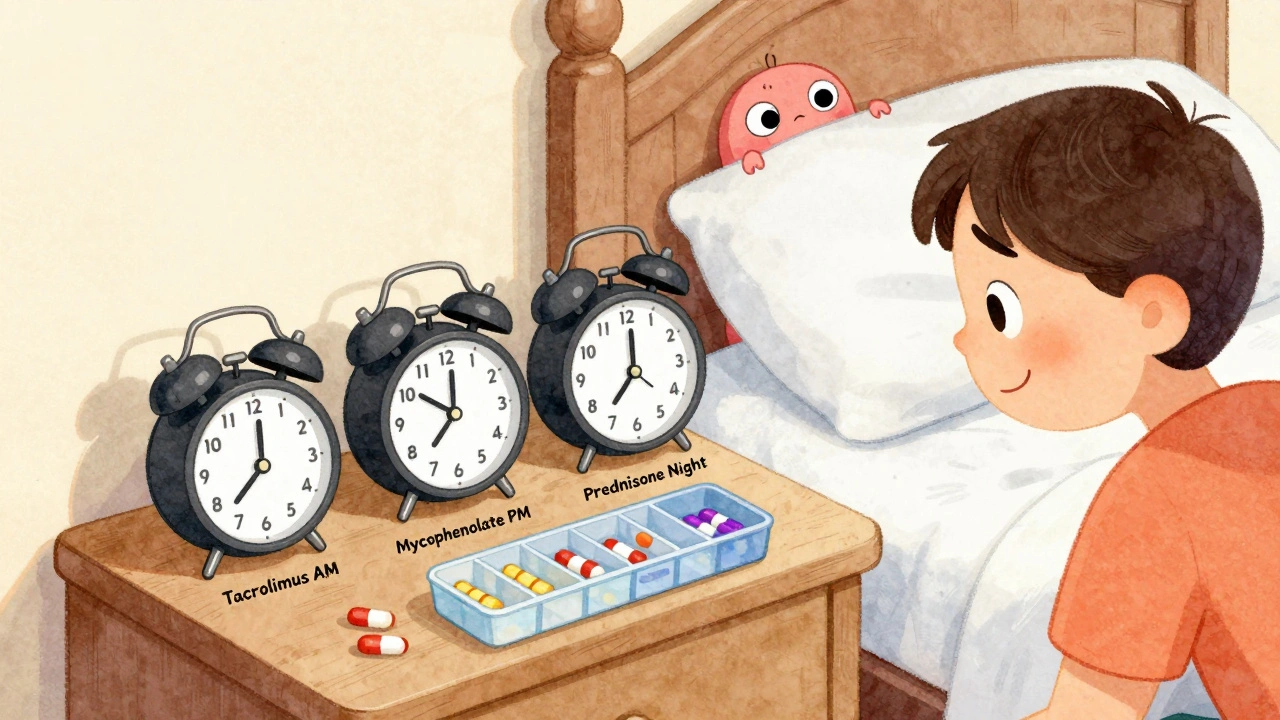
- Medication organizers - the kind with compartments for morning, afternoon, evening, night. 63% of long-term transplant survivors use them. Simple. Reliable.
- Smartphone alarms - set three alarms for each dose. Label them: "Tacrolimus AM," "Mycophenolate PM." A 2022 JAMA study showed this improves adherence by 37%.
- Family accountability - have someone check your pill box every Sunday. A spouse, sibling, friend. Studies show this cuts rejection rates by 28%.
- Smart pill bottles - these record when you open them. Your clinic gets a report. If you haven’t opened the bottle in 24 hours, someone calls you. 35% of top transplant centers now use them.
Some centers, like Johns Hopkins, pair this with monthly pharmacist reviews. The pharmacist checks your pill count, side effects, drug interactions, and cost issues. Their patients hit 92% adherence. The national average? 76%.
Don’t try to do this alone. Your transplant team isn’t just there for emergencies. They’re there to help you stay alive.
What to Do When You Feel Off - Even a Little
You’re tired. Your appetite is off. Your skin feels itchy. You have a low-grade fever. Maybe your blood pressure is higher than usual.
Don’t brush it off. Don’t wait. Don’t think, "I’ll just see how it goes." Call your transplant coordinator. Get your labs done. Even if you took all your meds.
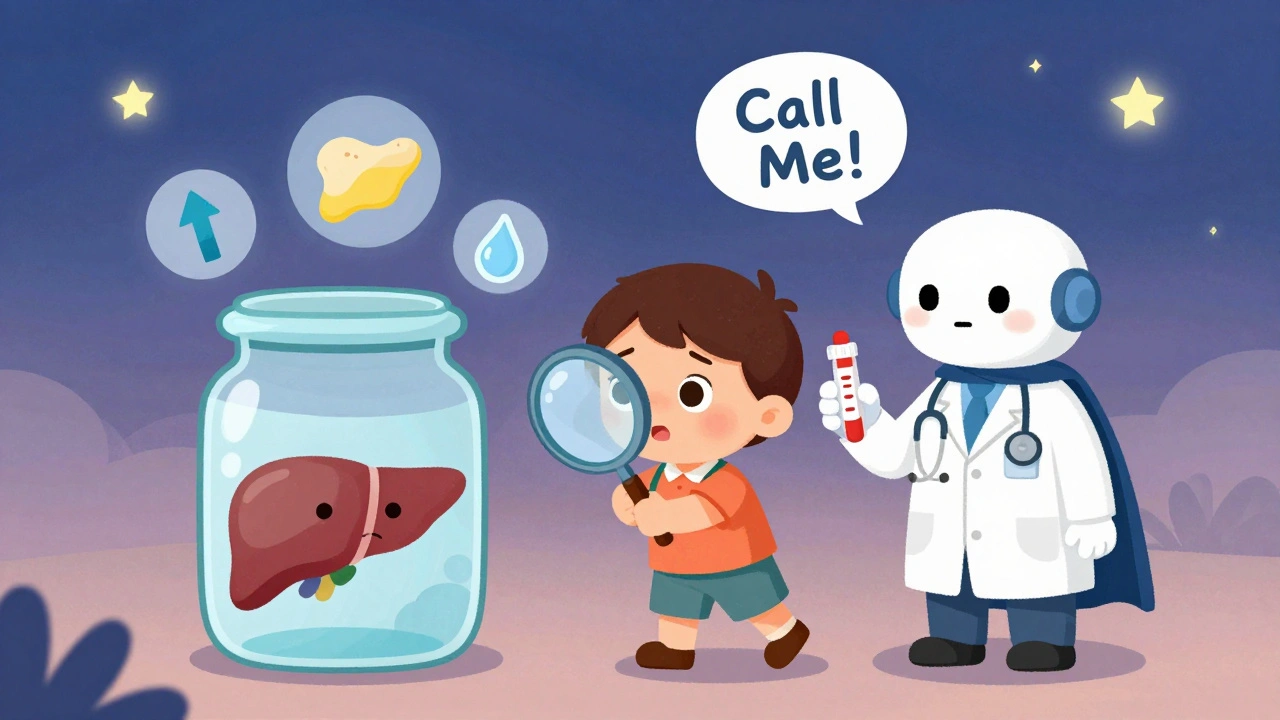
Rejection doesn’t always hurt. Sometimes, it just makes you feel... off. Like you’ve got the flu but you didn’t catch it from anyone. That’s your body’s quiet alarm. Your creatinine level might be rising. Your liver enzymes might be climbing. Only a blood test will tell.
And here’s the thing: early rejection is treatable. A short course of steroids, an IV drip, a tweak in your meds - you can bounce back. Late rejection? That’s often irreversible.
What’s New in Transplant Care - And What It Means for You
Science is moving fast. In January 2023, the FDA approved the first genetic test for tacrolimus dosing - XyGlo. It looks at your DNA to predict how your body processes the drug. That means fewer blood draws, fewer side effects, better dosing from day one.
There’s also the ImmuKnow assay - a blood test that measures your immune activity. Instead of guessing your drug levels, your doctor can see how hard your immune system is fighting. It’s used in 62% of U.S. transplant centers now.
And then there’s the big hope: tolerance. The Immune Tolerance Network recently reported that 40% of patients in a new stem cell + liver transplant trial stopped all immunosuppressants after 18 months - and their livers kept working. No meds. No rejection. It’s not ready for everyone yet. But it’s coming.
For now, your job is simple: take your pills. Know your signs. Call your team. Stay alive.
What Happens If You Stop Taking Your Meds?
Some people think: "I feel fine. Maybe I don’t need these anymore." That’s the deadliest lie in transplant care.
Stop your meds, even for a week, and your body starts attacking your liver. Within days, inflammation sets in. Scar tissue forms. Your liver stops filtering toxins. Your bilirubin rises. Your blood pressure spikes. You get confused. Your skin turns yellow. You stop urinating. You go into liver failure.
And then? You’re back on the transplant list. But here’s the catch: you’re now a higher-risk patient. Your chances of getting another liver? Lower. Your survival rate after a second transplant? Half of what it was the first time.
Dr. Joseph Murray, who did the first successful transplant in 1954 and won the Nobel Prize, said in his final published words: "The success of transplantation is not measured by the operation but by the patient’s lifelong commitment to their medication regimen."
You didn’t just get a new liver. You got a second chance. Don’t waste it.
Can I ever stop taking my transplant meds?
For nearly all liver transplant patients, no. Lifelong immunosuppression is required to prevent rejection. There are rare experimental cases - like the Immune Tolerance Network trials - where some patients have stopped meds after 18 months, but these are not standard. Never stop your medications without explicit direction from your transplant team.
What if I miss a dose of my immunosuppressant?
If you miss one dose, take it as soon as you remember - unless it’s close to your next scheduled dose. Never double up. Call your transplant coordinator immediately. They may want to check your drug levels or adjust your schedule. One missed dose won’t cause rejection, but repeated misses do. Track every missed dose and report them.
How do I know if I’m having rejection if I feel fine?
Many rejections happen without symptoms. That’s why regular blood tests are non-negotiable. Your creatinine, liver enzymes (ALT, AST), and bilirubin levels are your early warning system. Even if you feel great, skip a lab visit, and you could be missing the first signs of trouble. Stick to your testing schedule - weekly at first, then monthly.
Are there cheaper alternatives to my transplant meds?
Generic versions of tacrolimus and mycophenolate are available and often much cheaper. But never switch brands without consulting your pharmacist and transplant team - different generics can affect your blood levels. Also, ask about patient assistance programs through the National Kidney Foundation or pharmaceutical companies. Many offer free or discounted meds to those who qualify.
Can I drink alcohol after a liver transplant?
No. Even small amounts of alcohol can damage your new liver and interfere with your medications. Alcohol also increases your risk of infection and raises blood pressure - both dangerous after transplant. Your transplant team will tell you to avoid alcohol completely for life.
How often do I need blood tests after the first year?
After the first year, most patients get blood work every 1 to 3 months, depending on stability. If your levels are steady and you’re adherent, your team may space them out further. But if you miss doses, have side effects, or feel unwell, they’ll want you in sooner. Never skip a lab appointment - it’s your safety net.
Next Steps: What to Do Right Now
- Check your pill organizer - is it filled for the next week?
- Set three alarms on your phone for your next dose - label them clearly.
- Call your transplant coordinator and ask: "What’s my current creatinine level? When’s my next blood test?"
- If you’ve missed doses this month, tell your team. They’re not here to judge. They’re here to help you stay alive.
- Download a medication tracker app - many are free and sync with your clinic.
You didn’t just get a new liver. You got a new life. Protect it - one pill at a time.
It’s wild how something so simple-taking pills on time-can mean the difference between life and a second transplant. I used to think medical adherence was just discipline, but now I see it’s more like daily rebellion against your own body’s instinct to reject what saved you. It’s not just medicine. It’s a quiet, unglamorous kind of love.
Let me be clear: this post is dangerously oversimplified. You imply that missing a pill is tantamount to suicide, yet you cite no longitudinal studies on non-adherence mortality rates specific to liver transplants. The 300% figure is misleading-it conflates correlation with causation. Many patients miss doses due to financial hardship, not negligence. Blaming the patient ignores systemic failures.
Oh wow, another feel-good medical pamphlet. Let me guess-you also think yoga and affirmations cure cancer? The truth is, most people can’t afford these drugs, and the system doesn’t care. You talk about ‘systems’ like it’s a productivity hack. It’s not. It’s a Band-Aid on a gunshot wound. And don’t get me started on those smart pill bottles-they’re just another way for Big Pharma to track you like a dog wearing a GPS collar.
You Americans always act like your healthcare system is the pinnacle of civilization. In India, we don’t have smart pill bottles or pharmacists reviewing your meds monthly-we have families who wake up at 4 a.m. to remind their loved ones, and pharmacies that sell generics for $5 a month. Your problem isn’t adherence-it’s entitlement. You expect miracles without sacrifice. We don’t have the luxury of forgetting. We don’t have the luxury of choosing.
I lost my brother to rejection. He missed two doses because he was scared of the side effects. He didn’t want to gain weight, didn’t want to feel like a zombie. He thought he could ‘tough it out.’ He didn’t. The system didn’t help him. The meds didn’t save him. The love around him did-but too late. Don’t wait until you’re crying in a clinic to realize this isn’t about pills. It’s about being seen.
so like… 12 pills a day? and u just… do that for LIFE? lmao. i’d forget one and then panic and take 10 more and end up in the ER. also why is everything so expensive? i’m not rich, i’m just trying to not die. this post is giving me anxiety and i haven’t even had a transplant. 😭
As a clinical ethicist with over two decades of experience in transplant medicine, I must emphasize that the psychological burden of lifelong immunosuppression is underreported in public discourse. The moral framing of adherence as a personal virtue obscures the institutional neglect that forces patients into impossible choices between medication, housing, and food. Your call to action is well-intentioned but fundamentally incomplete without policy reform.
Let’s be honest-this is just another propaganda piece from the transplant industrial complex. You want us to believe that if we just take our pills, everything will be fine. But what about the fact that the same corporations that sell these drugs also lobby against price controls? You’re not saving lives-you’re selling dependency. And don’t get me started on the ‘smart pill bottles.’ That’s surveillance disguised as care.
Thank you for writing this with such clarity. I’ve been transplanting for 12 years now, and I’ve seen too many people think they’re ‘fine’ until they’re not. The quiet signs-fatigue, slight itching, a weird taste in your mouth-they’re real. And you’re right: call your team. Don’t wait. I’ve had patients who waited three weeks because they didn’t want to ‘bother’ their doctor. They didn’t get a second chance. You’re not bothering anyone. You’re protecting your life. Keep going.
Look, I get it-taking pills is hard. But here’s the thing: if you’re reading this, you’re already ahead of 80% of the people who don’t even know what tacrolimus is. You’re not just surviving-you’re participating in one of the most advanced medical miracles in human history. And yes, it’s expensive. And yes, it’s exhausting. And yes, sometimes you’ll want to throw the whole bottle in the trash. But here’s the truth: your liver didn’t just appear out of nowhere-it came from someone’s tragedy. Someone’s child. Someone’s parent. Someone who died so you could live. You don’t owe the system. You owe them. So take the damn pill. For them. Not for the doctor. Not for the app. For them.