
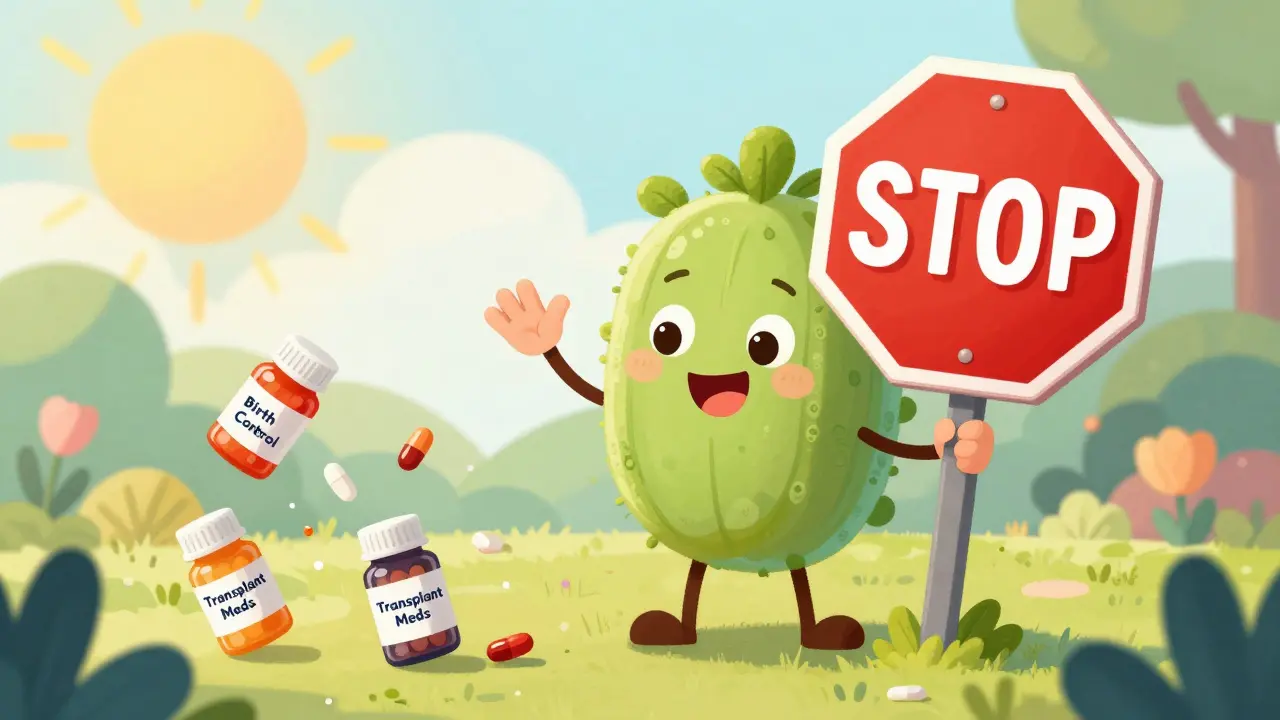
St. John’s Wort might seem like a safe, natural fix for low mood - and for some people, it works. But here’s the part no one tells you: if you’re on any prescription medication, this herb could be quietly sabotaging your treatment. It’s not just a mild concern. It’s a documented risk that has sent transplant patients into rejection, caused birth control to fail, and turned life-saving drugs into useless pills. This isn’t fearmongering. It’s pharmacology.
How St. John’s Wort Changes How Your Body Handles Medications
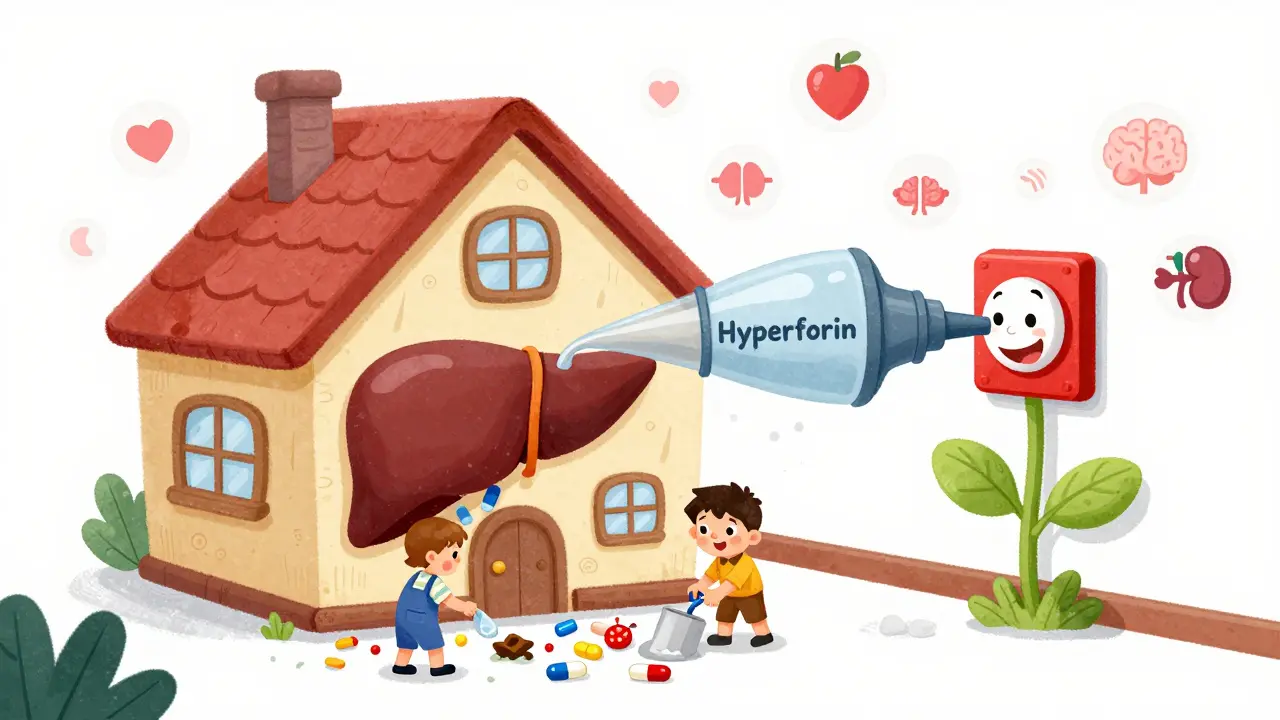
St. John’s Wort doesn’t just sit there. It actively rewires your body’s drug-processing system. The key player is hyperforin, a compound in the herb that turns on a switch called the pregnane-X-receptor (PXR). Once flipped, this switch tells your liver to crank up production of enzymes - especially CYP3A4, CYP2C9, and CYP1A2 - that break down medications. It also ramps up P-glycoprotein, a protein that pumps drugs out of your cells before they can do their job.
Think of it like this: your body suddenly becomes a super-efficient trash compactor for drugs. Medications that used to last 12 hours? Now they’re gone in 6. Doses that kept your blood pressure stable? Suddenly too weak. This isn’t guesswork. Studies show that after just 10 days of taking St. John’s Wort, enzyme levels peak. And even after you stop, the effects can linger for two weeks.
The 12 Medication Categories You Can’t Mix With It
St. John’s Wort doesn’t play favorites. It interferes with a wide range of drugs, especially those with a narrow therapeutic window - meaning the difference between working and failing is tiny. Here are the biggest red flags:
- Immunosuppressants like cyclosporine, tacrolimus, and sirolimus - used after organ transplants. Cases are documented where patients lost their new kidneys or livers because St. John’s Wort dropped drug levels by 50% or more.
- Antiretrovirals for HIV - including protease inhibitors and non-nucleoside reverse transcriptase inhibitors. A single dose of St. John’s Wort can slash drug concentrations enough to let the virus rebound.
- Oral contraceptives. Women have gotten pregnant while on the pill, even with perfect use, because St. John’s Wort made their birth control ineffective.
- Anticoagulants like warfarin. One case showed a patient’s INR - a measure of blood clotting - dropping from 2.5 to 1.4 in 10 days, putting them at high risk for stroke or clotting.
- Antidepressants - SSRIs, SNRIs, MAOIs. Mixing St. John’s Wort with these can trigger serotonin syndrome: agitation, rapid heart rate, high fever, seizures. It’s rare but deadly.
- Opioids like oxycodone, methadone, and tramadol. St. John’s Wort reduces their pain-relieving power, leaving patients in uncontrolled pain.
- Statins like simvastatin and atorvastatin - used for cholesterol. Lower drug levels mean higher heart attack risk.
- Benzodiazepines like alprazolam. Reduced effectiveness can worsen anxiety or insomnia.
- Chemotherapy drugs - many are metabolized by CYP3A4. St. John’s Wort can make cancer treatment less effective.
- Anti-seizure medications like phenytoin and carbamazepine. Levels drop, increasing seizure risk.
- Heart medications like digoxin. P-glycoprotein induction reduces absorption, leading to heart rhythm problems.
- Antifungals like itraconazole. Reduced levels mean fungal infections won’t clear.
That’s 12 categories. Over 50 documented drug interactions. The European Medicines Agency says it clearly: don’t use St. John’s Wort with any drug that has a narrow therapeutic index. That’s not a suggestion. It’s a warning based on real deaths and organ failures.
Why People Still Take It - And What Happens When They Do
It’s not hard to see why St. John’s Wort is popular. In Germany, it’s the third most common antidepressant. In the U.S., nearly 5% of adults use it. People report feeling better - fewer side effects than SSRIs, no weight gain, no sexual dysfunction. Reddit threads are full of stories like: “I switched from Lexapro and felt clearer within a week.”
But here’s the dark side: 32% of users on r/Supplements admit to mixing it with other meds. One woman on Drugs.com wrote: “I took St. John’s Wort and the pill. Got pregnant. No one warned me.” Another: “My transplant doctor found my tacrolimus levels were half of what they should be. I had no idea.”
These aren’t outliers. A 2019 Poison Control report details a 34-year-old woman who lost her new kidney because she started taking St. John’s Wort for “a little sadness.” She didn’t think it was a big deal. Her doctor didn’t ask about supplements. The result? She needed another transplant.
What You Should Do - Step by Step
If you’re thinking about trying St. John’s Wort, or already taking it - here’s what to do right now.
- Stop taking it immediately if you’re on any prescription meds. Don’t wait. Don’t “see how it goes.”
- Make a full list of every medication you take. Include blood pressure pills, heart meds, antidepressants, birth control, painkillers, even over-the-counter ones like ibuprofen or antacids.
- Talk to your pharmacist. They’re trained to catch interactions. Bring your list and the St. John’s Wort bottle. Ask: “Could this interfere with any of these?”
- Ask your doctor about alternatives. SAM-e and 5-HTP have far fewer interactions. For depression, talk therapy, exercise, and prescription options like escitalopram are safer if you’re on other meds.
- If you absolutely must use it - and your doctor agrees - get blood tests. Monitor drug levels every two weeks for the first month. Track symptoms closely. If you feel worse, or your condition changes, stop immediately.
The Hidden Danger: Delayed Recognition
Most people don’t realize something’s wrong until it’s too late. Why? Because the effects are slow. You don’t get sick right away. Your blood pressure doesn’t spike. Your depression doesn’t explode. Instead, your medication just… stops working. Over weeks. You think you’re getting worse. You up the dose. Your doctor thinks your condition is progressing. Meanwhile, St. John’s Wort is quietly draining your drugs out of your system.
A 2017 study found it takes the average person 3 to 6 weeks to connect their symptoms to the supplement. By then, damage may be done.
What’s Changing - And What’s Next
Scientists are working on a version of St. John’s Wort without hyperforin. Early studies show it reduces enzyme induction by 90%. That could mean a safer option someday. But right now, those products aren’t on shelves. And even if they were, they’d still need testing with every drug class.
The FDA updated its guidance in March 2023, calling St. John’s Wort a “high-risk supplement.” The European Medicines Agency still allows it - but only with mandatory labels listing all 12 interaction categories. In the U.S., labels are vague. “May interact with medications” - that’s it. No specifics. No warnings about birth control failure or transplant rejection.
Global sales have dropped 37% since 2000. People are learning. But not fast enough. In 2022, Americans still spent over $500 million on it. And every dollar spent is a potential risk.
Bottom Line: It’s Not Worth the Risk
St. John’s Wort isn’t a miracle herb. It’s a powerful enzyme inducer - one that’s more dangerous than most people realize. For mild depression, there are safer paths: therapy, exercise, sunlight, and FDA-approved medications with known safety profiles. If you’re on any prescription drug, especially for heart, brain, immune, or reproductive health - St. John’s Wort isn’t an option. It’s a gamble with your life.
Don’t assume “natural” means safe. Don’t assume your doctor knows. Don’t assume your supplement bottle tells you the truth. Ask. Check. Verify. Your life might depend on it.
Can I take St. John’s Wort if I’m on birth control?
No. St. John’s Wort reduces the effectiveness of oral contraceptives by speeding up how fast your body breaks down the hormones. There are documented cases of women becoming pregnant while taking both. If you’re using birth control, avoid St. John’s Wort entirely. Use a backup method like condoms if you’ve taken it recently - effects can last two weeks after stopping.
Does St. John’s Wort interact with antidepressants?
Yes, and it’s dangerous. Combining St. John’s Wort with SSRIs, SNRIs, or MAOIs can cause serotonin syndrome - a life-threatening condition with symptoms like confusion, rapid heartbeat, high fever, tremors, and seizures. Even if you’re switching from one antidepressant to St. John’s Wort, you need a washout period of at least two weeks. Never mix them without medical supervision.
How long does it take for St. John’s Wort to start interacting with drugs?
The enzyme-inducing effects begin within a few days, but peak around 10 days after starting. That’s why people don’t notice problems right away. The effects can last up to two weeks after you stop taking it. This delay makes it easy to miss the connection between the herb and your medication failure.
Is St. John’s Wort safe after a transplant?
Absolutely not. St. John’s Wort can reduce levels of immunosuppressants like cyclosporine and tacrolimus by 50% or more. This has led to acute organ rejection in multiple documented cases - even when patients were taking the correct dose. Transplant recipients should avoid St. John’s Wort completely. There are no exceptions.
Are there safer herbal alternatives for depression?
SAM-e and 5-HTP have far fewer known drug interactions than St. John’s Wort. SAM-e has minimal interactions, mainly with MAO inhibitors. 5-HTP is mostly safe unless combined with antidepressants. Neither has as much research backing for depression as St. John’s Wort, but they’re significantly safer if you’re on other medications. Talk therapy and regular exercise are also proven, interaction-free options.
Can I take St. John’s Wort if I’m not on any meds?
If you’re not taking any prescription or over-the-counter drugs - including supplements like fish oil, melatonin, or ibuprofen - then St. John’s Wort may be safe for short-term use. But even then, it can cause side effects like dry mouth, dizziness, or increased sun sensitivity. Always start low, monitor your body, and avoid long-term use without medical advice.
Why don’t supplement labels warn me clearly?
In the U.S., the FDA doesn’t require supplement makers to prove safety or efficacy before selling. Labels only need a general disclaimer like “This product is not intended to diagnose, treat, cure, or prevent any disease.” They don’t have to list specific drug interactions. In Europe, labels must list all 12 high-risk categories. In the U.S., you’re on your own. Always check with a pharmacist or use a reliable interaction checker like Drugs.com.