
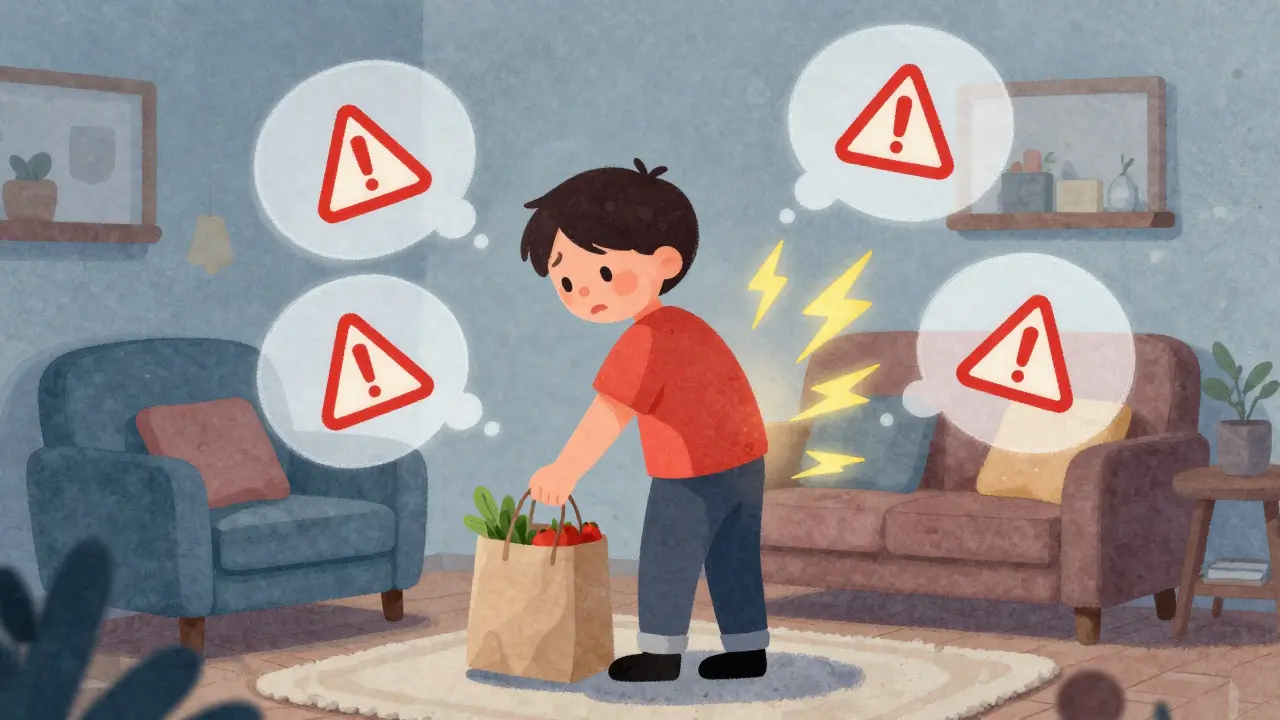
Imagine your back hurts every time you bend over. For years, you’ve been told it’s because of a "slipped disc" or "wear and tear." So, you move carefully. You avoid lifting groceries. You brace yourself before sneezing. But the pain doesn’t go away; in fact, it might get worse. This is where traditional medical advice often hits a wall. It focuses on fixing broken parts, but what if the problem isn't just in your tissue? What if the issue is how your brain interprets danger?
This is the core promise of Pain Neuroscience Education (PNE). It’s not a new drug or a surgery. It’s a way of teaching patients that pain is an output of the brain, not just a direct signal from damaged tissue. By changing how you understand pain, you can change how you experience it. Let’s look at how this works, why it matters, and how it fits into modern pain care.
What Is Pain Neuroscience Education?
Pain Neuroscience Education is a therapeutic educational approach that explains the neurobiology of pain to help patients reconceptualize their symptoms. Developed largely by physical therapists and pain scientists like Adriaan Louw and Lorimer Moseley in the early 2000s, PNE challenges the old idea that pain equals damage. Instead, it introduces the concept of the neuromatrix-the idea that your brain creates pain based on past experiences, current threats, and future predictions.
In simple terms, your brain is a prediction machine. If your brain thinks bending over is dangerous (because it hurt last time), it turns up the volume on pain signals to protect you. Even if your tissues are healthy, the alarm goes off. PNE teaches you how this alarm system works so you can learn to trust your body again.
- Peripheral Sensitization: When injured tissue sends extra signals to the nervous system.
- Central Sensitization: When the spinal cord and brain become overly sensitive, amplifying pain signals even after healing.
- The Biopsychosocial Model: Recognizing that biology, psychology (fears, beliefs), and social factors (work, support) all influence pain.
How PNE Differs From Traditional Pain Care
Most people grow up with a biomedical view of pain: Hurt means harm. If it hurts, something is broken. Doctors scan for cracks, tears, or inflammation. While this works well for acute injuries (like a broken bone), it falls short for chronic pain. Studies show that imaging results often don’t match pain levels. Many people have "abnormal" scans but no pain, while others have severe pain with normal scans.
| Feature | Traditional Biomedical Model | Pain Neuroscience Education (PNE) |
|---|---|---|
| View of Pain | Direct measure of tissue damage | Protective output created by the brain |
| Focus | Anatomy and pathology (scans, structures) | Neurophysiology and context (brain, fear, movement) |
| Patient Role | Passive recipient of treatment | Active participant in retraining the brain |
| Goal | Fix the "broken" part | Reduce threat perception and improve function |
| Effectiveness for Chronic Pain | Limited; often leads to fear-avoidance | High; reduces disability and catastrophizing |
The shift is significant. Instead of asking, "Where does it hurt?" PNE asks, "Why does your brain think this movement is dangerous?" This reframing reduces fear-avoidance behaviors. When you stop fearing movement, you start moving more. And movement is one of the best medicines for chronic pain.
The Science Behind the Shift
PNE isn’t just positive thinking. It’s grounded in neuroscience. Research using fMRI scans shows that when patients receive PNE, activity in the amygdala (the brain’s fear center) decreases. At the same time, activity in the prefrontal cortex (responsible for logic and control) increases. This means education literally changes how your brain processes pain signals.
A 2023 systematic review found that PNE reduced pain scores by an average of 1.8 points on a 0-10 scale. More importantly, it reduced pain catastrophizing-the tendency to dwell on pain and feel helpless-by 6.2 points. Catastrophizing is a major predictor of long-term disability. By breaking the cycle of fear, PNE helps patients regain confidence in their bodies.
Key mechanisms include:
- Demystifying Pain: Explaining that pain is a protective guess, not a precise gauge of damage.
- Reducing Threat: Lowering the brain’s perceived risk of movement.
- Encouraging Exposure: Gradually reintroducing avoided activities to prove safety to the brain.
Who Benefits Most From PNE?
PNE is most effective for people with chronic musculoskeletal pain, such as low back pain, fibromyalgia, or persistent neck pain. It’s less useful for acute pain where tissue damage is obvious and recent (like a fresh sprain). In those cases, rest and protection make sense. But when pain lingers beyond healing, PNE becomes a powerful tool.
It also works best when combined with other treatments. A study by Louw et al. (2016) showed that PNE alone helps, but adding exercise or manual therapy boosts outcomes by 30-40%. Think of PNE as the foundation. It prepares your brain to accept movement, while exercise rebuilds strength and mobility.
However, PNE isn’t a magic bullet. It requires active participation. Patients need to engage with the concepts, ask questions, and practice new ways of thinking. Those with low health literacy or severe cognitive impairment may struggle with the abstract concepts. In these cases, simplified language and visual aids are crucial.
How Clinicians Deliver PNE
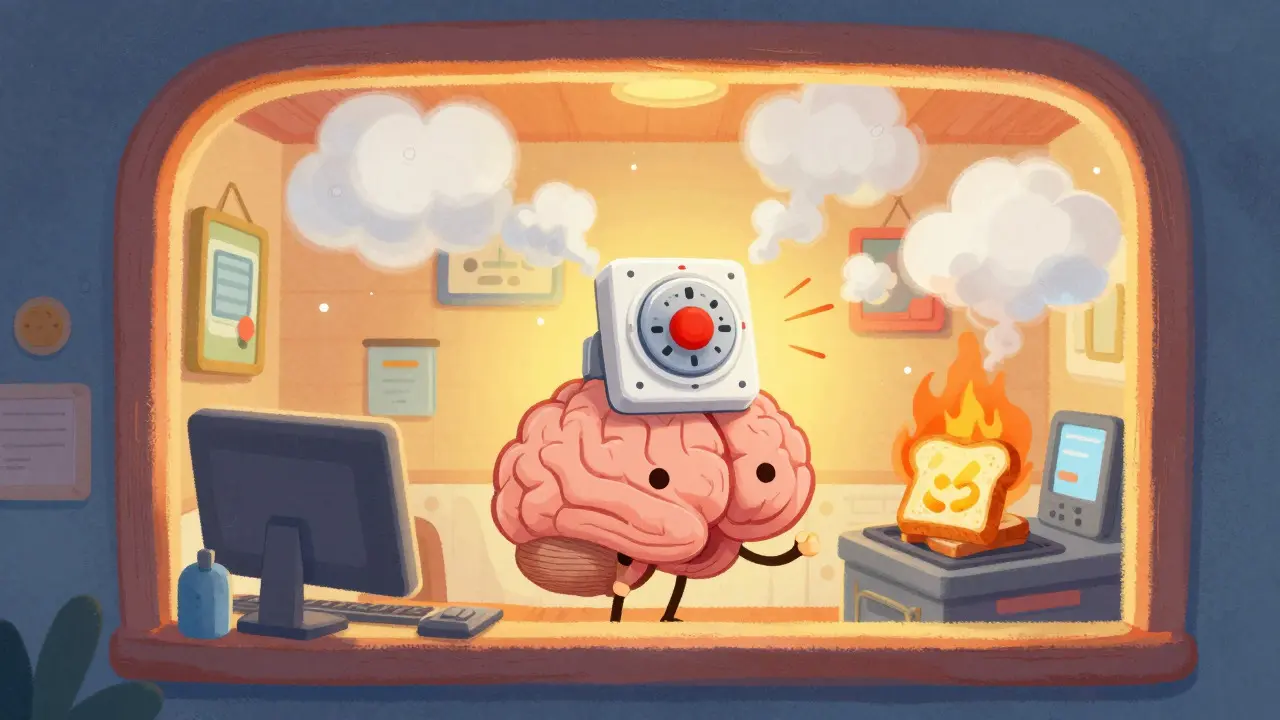
Effective PNE delivery relies on clear communication. Clinicians use metaphors to explain complex ideas. For example, the "smoke alarm" metaphor is popular. A smoke alarm that goes off when you burn toast isn’t broken; it’s just too sensitive. Similarly, your pain system might be oversensitive, triggering alarms without real danger.
Sessions typically last 30-45 minutes and can be done one-on-one or in groups. Digital tools are emerging too. Apps like "Pain Revolution" offer guided PNE content, making it accessible outside clinical settings. The key is consistency. Reinforcing concepts through written materials and follow-up discussions helps solidify understanding.
Clinicians must avoid biomedical jargon that reinforces fear. Instead of saying "your facet joints are arthritic," they might say, "your joints have changed structure, but that doesn’t mean they’re causing pain." Small language shifts make big differences in patient mindset.

Real-World Impact and Patient Stories
Patients often report profound changes after PNE. One user on a chronic pain forum shared how the smoke alarm metaphor helped them return to hiking after months of avoidance. Another nurse with fibromyalgia reduced her medication use significantly after completing a six-session PNE program.
But it’s not always smooth sailing. Some patients find the science overwhelming. Others expect immediate pain relief and get frustrated when it takes time to retrain the brain. About 28% of patients in one study dropped out early due to unrealistic expectations. Setting clear goals-like improving function rather than eliminating pain-is essential.
Despite challenges, PNE is gaining traction. As of 2023, 72% of US physical therapy programs include PNE in their curriculum. Insurance providers like Medicare now reimburse for PNE as part of evaluation codes. This recognition reflects growing confidence in its value.
Getting Started With PNE
If you’re dealing with chronic pain, ask your provider about PNE. Look for clinicians trained in biopsychosocial approaches. You can prepare by learning basic pain science concepts beforehand. Books like *Explain Pain* by Butler and Moseley are excellent resources.
During sessions, take notes. Ask questions. Challenge your own fears. Remember, the goal isn’t to ignore pain but to understand it. Over time, as you move more and fear less, your brain will start to see your body as safe again.
Is Pain Neuroscience Education covered by insurance?
Yes, in many cases. Since 2021, Centers for Medicare & Medicaid Services has reimbursed PNE as part of physical therapy evaluation and management codes (CPT 97160-97164). Private insurers vary, so check with your provider. Often, PNE is integrated into standard PT visits, making it easier to access.
How long does it take for PNE to work?
Results vary. Some patients feel a shift in perspective after one session. Others need several weeks of consistent education and movement exposure. A typical course involves 3-6 sessions. Long-term benefits depend on continued practice of new habits and mindsets.
Can PNE replace medication or surgery?
Not necessarily. PNE is a complementary approach. It helps reduce reliance on meds by addressing psychological drivers of pain. For structural issues requiring surgery, PNE can still aid recovery by reducing fear and improving post-op movement. Always consult your doctor before changing treatments.
What if I don’t believe my pain is "in my head"?
That’s common. PNE doesn’t say pain is imaginary. It says pain is real but generated by the brain’s protective systems. The goal is to show that your brain’s threat detection is overactive, not that your pain isn’t valid. Metaphors and evidence help bridge this gap.
Are there apps or online resources for self-guided PNE?
Yes. Apps like "Pain Revolution" and websites run by pain scientists offer structured PNE content. These are great supplements but work best alongside professional guidance. Look for resources endorsed by organizations like the International Association for the Study of Pain (IASP).
Pain Neuroscience Education offers a hopeful path forward for those stuck in chronic pain cycles. By understanding the brain’s role, you gain power over your pain narrative. It’s not about ignoring discomfort but reclaiming your life from fear. Start the conversation with your healthcare team today.