
Opioid Risk Stratification Calculator
Risk Assessment Tool
Answer these 5 questions to determine appropriate urine drug testing frequency based on CDC guidelines.
Risk Assessment Result
Recommended Testing Frequency
Why This Risk Level?
Clinical Recommendations
- Use for reliable results
- Check specimen validity for high-risk patients
- Discuss medication adherence with patient
When someone is prescribed opioids for chronic pain, the goal isn’t just to manage pain-it’s to keep them safe. But how do doctors know if a patient is taking their medication as directed? And how do they spot if someone is using drugs that could turn deadly? The answer lies in two things: urine drug screens and risk stratification.
Why Urine Drug Screens Are Used
Urine drug testing isn’t about catching people doing something wrong. It’s about making sure treatment is working-and safe. Every time a patient starts long-term opioid therapy, clinicians are faced with a question: Will they take this as prescribed, or will they mix it with something else? Alcohol? Benzodiazepines? Illicit fentanyl? These combinations can be fatal. The CDC reports that in 2021, over 80,000 of the 107,000 drug overdose deaths in the U.S. involved opioids. Many of those deaths happened because patients were taking more than one central nervous system depressant without anyone knowing. Urine screens give doctors objective data. They can confirm if the prescribed medication is present, and if there are other substances that shouldn’t be there. This isn’t new. The practice started in addiction treatment centers in the 1990s. Today, it’s standard in pain clinics, primary care offices, and even some emergency departments. The American Academy of Family Physicians, the American Society of Addiction Medicine, and the CDC all recommend it as part of responsible opioid prescribing.How the Tests Work (And Why They Sometimes Get It Wrong)
There are two main types of urine tests: screening and confirmation. The first is usually an immunoassay. It’s cheap-about $5 per test-and gives results in hours. It works by detecting broad categories of drugs. For example, an “opiate screen” looks for morphine-like molecules. That’s fine for heroin or codeine, but it misses a lot. Hydrocodone, a common prescription painkiller, often doesn’t trigger a positive result. One study found that 72% of patients who were taking hydrocodone tested negative on standard immunoassays. Fentanyl is another big problem. Most standard panels don’t detect it because its chemical structure is too different from morphine. Doctors have seen patients on fentanyl patches test negative repeatedly. That’s not because they’re not taking it-it’s because the test can’t see it. That’s where gas chromatography/mass spectrometry (GC/MS) or liquid chromatography/mass spectrometry (LC-MS) come in. These are confirmatory tests. They cost $25 to $100 per test, take days to process, and can identify exact drugs and metabolites. They’re the gold standard. If a patient’s screen says negative for hydrocodone, but the doctor suspects they’re taking it, a confirmatory test will tell the truth. Even then, there are traps. Some over-the-counter meds can cause false positives. Poppy seeds? They can trigger a false positive for opiates. Cold medicines with pseudoephedrine? They might look like amphetamines. That’s why labs also check for specimen validity: pH, creatinine, specific gravity. If the urine is too diluted, it might be an attempt to cheat the test.Who Gets Tested and How Often?
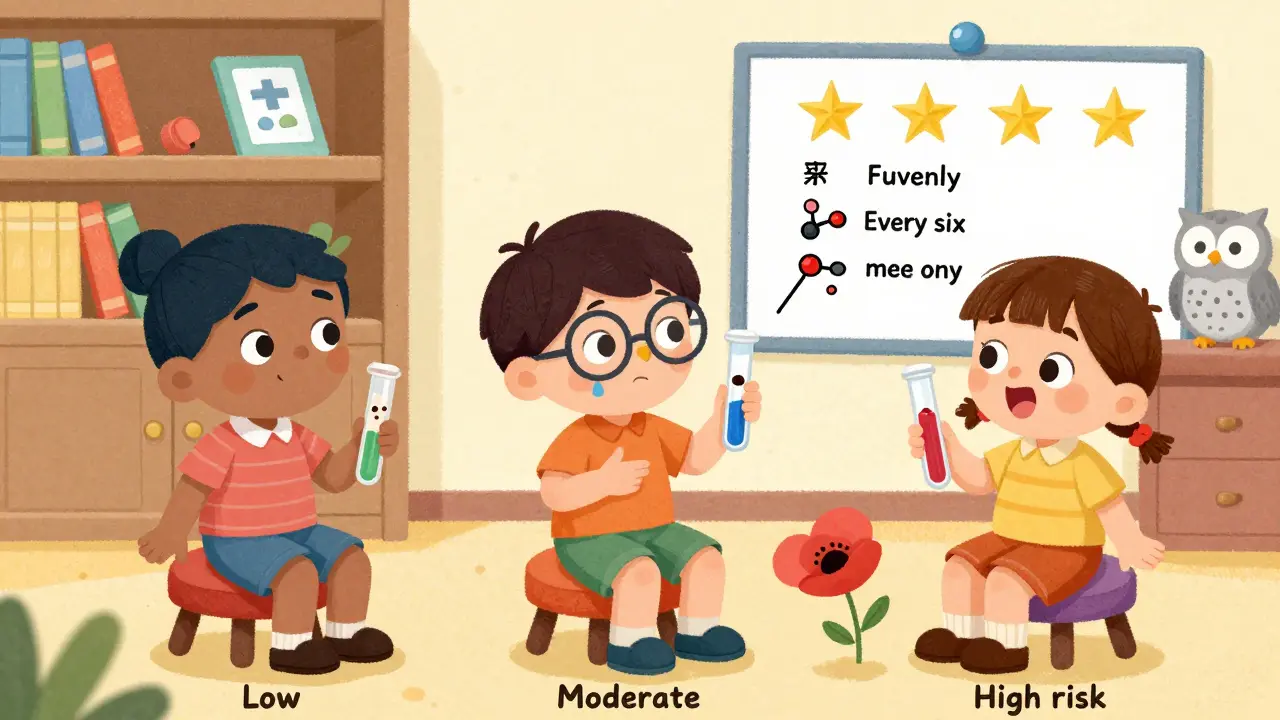
Not everyone needs the same level of monitoring. That’s where risk stratification comes in. The Opioid Risk Tool (ORT) is a simple five-question form used in clinics. It asks about family history of substance use, personal history of substance abuse, age, psychological conditions, and other factors. Based on the answers, patients are placed into one of three risk categories:- Low risk: Annual urine screening
- Moderate risk: Every six months
- High risk: Every three months, plus specimen validity checks
The Real-World Problems Doctors Face
Despite the guidelines, there’s a big gap between policy and practice. A 2022 survey of over 1,200 pain doctors found that 68% saw false-negative hydrocodone results at least once a month. Patients would come in, take their pills, and get a negative test. They’d be accused of noncompliance. Some even had their prescriptions cut off. It wasn’t their fault-it was the test. Reddit threads are full of stories like this. One user, “ChronicPainWarrior22,” wrote: “I take oxycodone every day. My test says negative. My doctor says I’m lying. I’m not.” Another issue: fentanyl. Clinicians report that patients on fentanyl patches routinely test negative. One doctor in Colorado told a colleague, “I had to order LC-MS for three patients last month. Each test cost $90. The insurance denied two of them.” And then there’s the problem of cross-reactivity. Buprenorphine, used to treat opioid use disorder, can cause false positives for other opioids in some immunoassays. One study found that 23% of patients on buprenorphine were wrongly flagged for non-adherence. The result? Patients lose trust. Doctors feel frustrated. And no one wins.What’s Changing in 2026
The field is evolving. In 2023, the FDA approved the first immunoassay specifically designed to detect fentanyl. It’s 98.7% sensitive at detecting levels as low as 1 ng/mL. That’s a game-changer. New CDC guidelines expected in late 2024 will push for LC-MS testing for anyone on synthetic opioids like fentanyl or carfentanil. No more guessing. Point-of-care devices are also coming. Several are in FDA review. These could give results in under an hour, with near-laboratory accuracy. Imagine a clinic doing a urine screen during the appointment-no waiting days for results. And AI is getting involved. The University of Pittsburgh is testing an algorithm called the Opioid Adherence Prediction Engine (OAPE). It uses past test results, prescription refill patterns, and even pharmacy data to predict who’s at risk of misuse. It’s not perfect-but it’s getting better.
What Patients Need to Know
If you’re on long-term opioids, here’s what to expect:- You’ll be asked to take the Opioid Risk Tool. Answer honestly.
- Urine tests aren’t punishment. They’re protection.
- If your test says negative but you took your medication, ask for a confirmatory test. It’s your right.
- Don’t take anything else without telling your doctor-especially benzodiazepines, alcohol, or sleep aids.
- Know your test. Ask: “What drugs does this screen detect? Does it catch fentanyl or hydrocodone?”


