
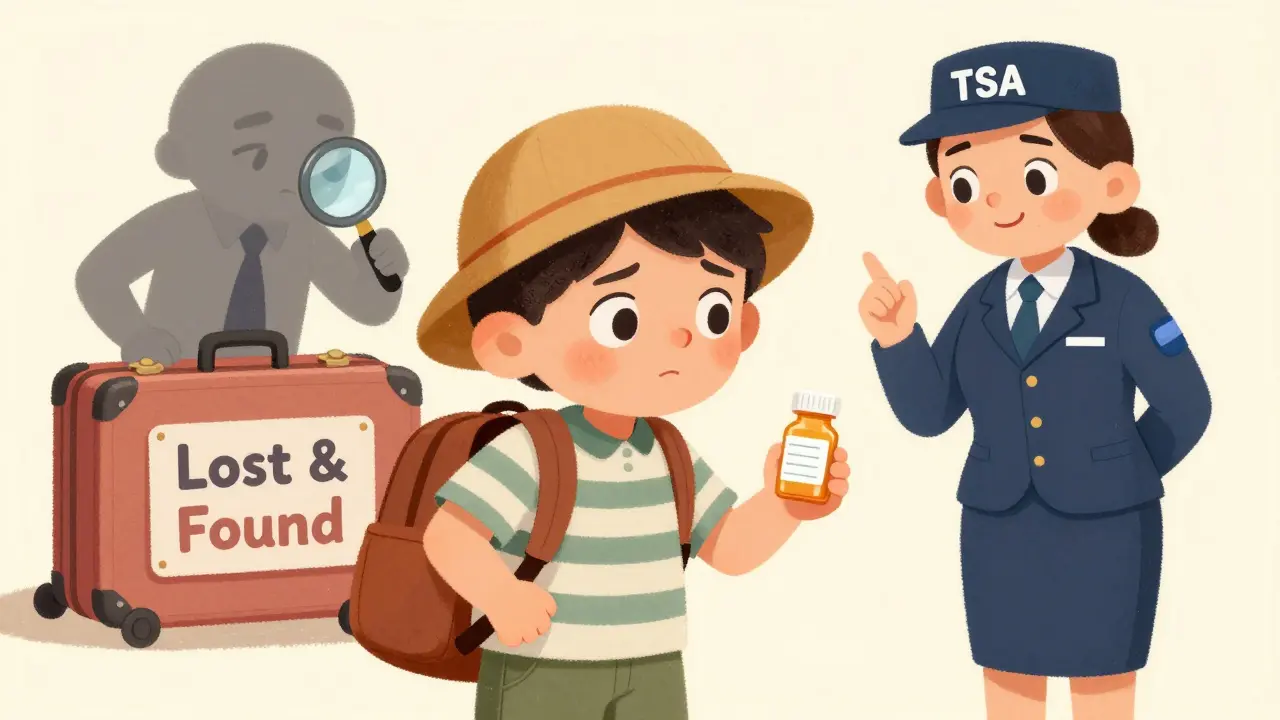
When you're traveling with controlled medications-like oxycodone, Adderall, or Xanax-you're not just carrying medicine. You're carrying something that thieves know has street value. The DEA classifies these drugs as Schedule II-V under the Controlled Substances Act, and they’re targeted because they can be sold for cash. According to the CDC, about 12% of all medication-related travel incidents involve theft, and nearly all of those involve controlled substances. It’s not just about losing your pills-it’s about risking your health, breaking the law, and facing long delays if you’re stranded without them.
Keep Medications in Your Carry-On
Never check your controlled medications. Ever. The Transportation Security Administration (TSA) requires all prescription drugs, especially controlled substances, to be in your carry-on bag. Why? Because checked luggage gets lost, stolen, or mishandled. SITA’s 2022 Baggage Report shows that about 25.5 bags per 1,000 passengers are mishandled. That’s more than 1 in 40 trips. If your pills are in that bag, you’re out of luck. And if you’re in a foreign country with no local pharmacy willing to refill a U.S. prescription for a Schedule II drug? You’re stuck.Even if you think your flight is short or you’ll be at the hotel in an hour, keep your meds with you. A traveler from Phoenix told me they left their hydrocodone in a checked suitcase during a layover. By the time they reached their destination, the bag was missing. They spent three days without pain relief and had to fly back to Arizona just to get a new prescription.
Use Original Prescription Containers
The best way to avoid trouble at security or customs is to keep your medications in their original pharmacy bottles. These labels show your name, the prescriber’s name, the drug name, strength, dosage, and date filled. That’s the gold standard. Cleveland Clinic pharmacists found that 78% of airport delays involving medications happened because people were carrying pills in unlabeled containers or pill organizers.If you’re worried about privacy or bulk, you can transfer small amounts-no more than a 14-day supply-to a secondary container. But only if it’s labeled exactly like the original: full patient name, doctor’s name, medication, strength, and directions. The International Narcotics Control Board allows this, but only if you’re not hiding anything. TSA agents and foreign customs officers are trained to spot fake or incomplete labels. If it looks off, they’ll detain you for verification.
Carry a Doctor’s Letter
For international travel, a signed letter from your doctor is non-negotiable. The CDC recommends a standardized travel letter that includes:- Your full name and date of birth
- Medication name, dosage, and frequency
- Reason for use (e.g., chronic pain, ADHD, anxiety)
- Prescribing doctor’s name, license number, and contact info
- Signature and date
Canadian travelers who follow this protocol have a 98.7% success rate entering other countries without issues. In contrast, travelers without documentation are routinely turned away. Japan, for example, confiscated 2,147 medications containing pseudoephedrine in 2022 alone-even if they were prescribed. Saudi Arabia bans 147 controlled substances outright, no exceptions. If you’re flying to one of the 41 countries that require advance approval for Schedule III-V drugs, you need to apply before you book your ticket.
Store Medications in a Hotel Safe
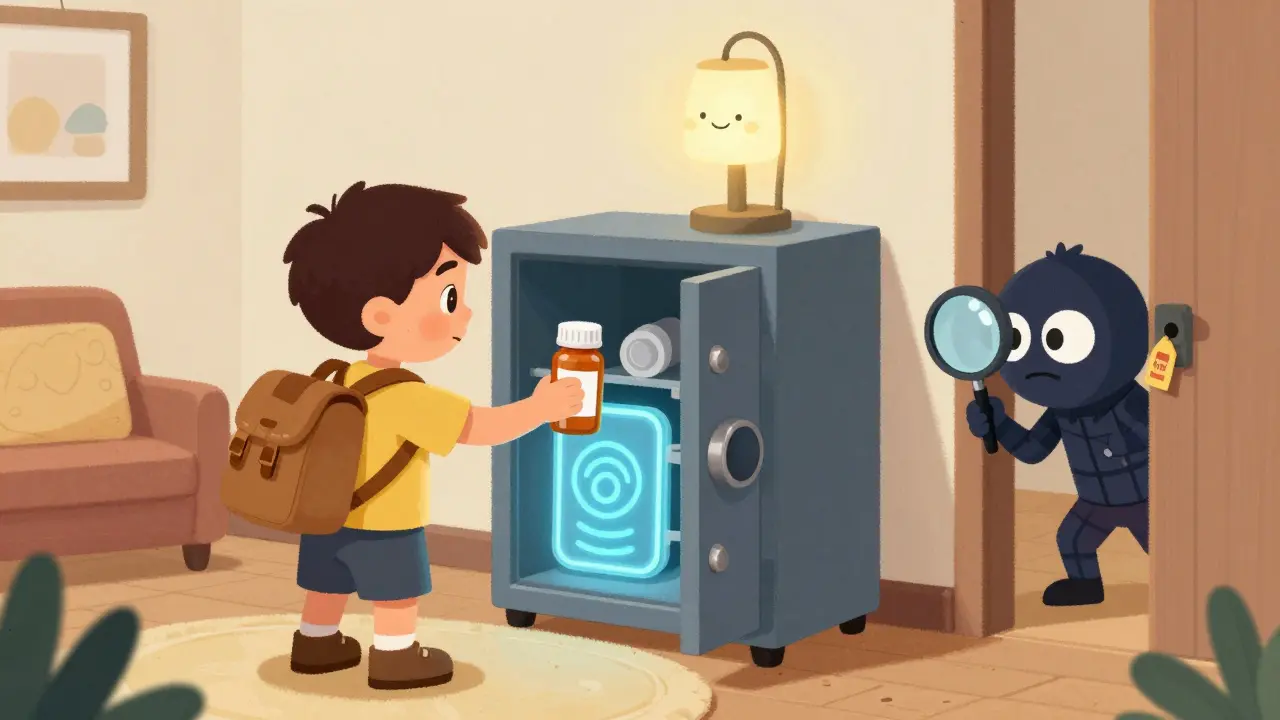
The biggest risk isn’t at the airport-it’s in your hotel room. Dr. Sarah Wyman from Cleveland Clinic says 92% of medication thefts happen when pills are left unattended in hotel rooms or rental cars. Thieves know what to look for: a pill bottle on the nightstand, a prescription label on a toiletry bag, or someone talking loudly about their pain meds at breakfast.Use the hotel safe. If it doesn’t have one, ask the front desk to store your meds. Most hotels will do it for free. If you’re staying in a place without a safe, carry your meds in a small, discreet case you keep with you at all times-even when showering. Don’t leave them on the counter, even for five minutes.
One of the most effective tricks reported by travelers? Use an RFID-blocking medication case. These small, slim containers block digital signals that thieves use to scan for electronic tags on pill bottles. Combined with a hotel safe, this setup reduces theft incidents by 76%, according to PackPoint’s travel safety blog.
Know the Rules Before You Fly
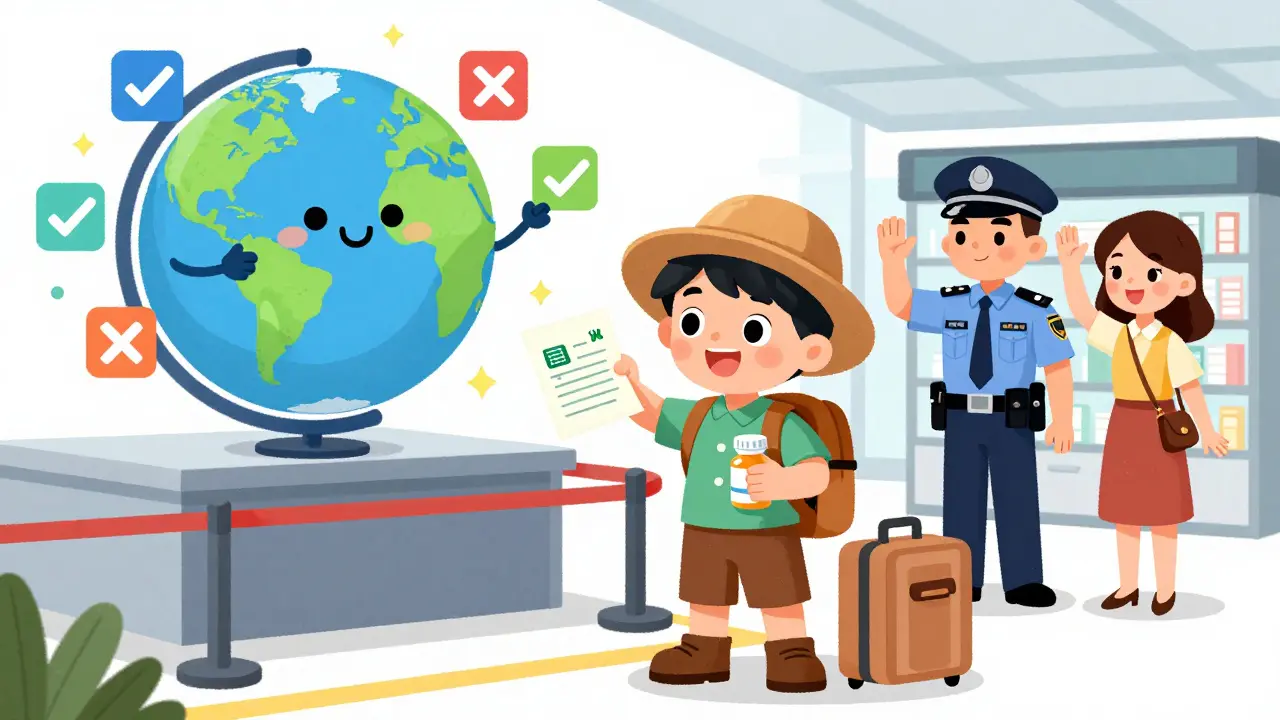
U.S. domestic travel is simpler than international, but still tricky. TSA lets you carry meds in non-original containers if you’re flying within the U.S.-but 32 states, including Texas, California, and Florida, require original pharmacy labels. That means if you’re driving across state lines, you’re still bound by state law. Don’t assume federal rules override state rules. They don’t.Internationally, it gets wilder. The U.S. Customs and Border Protection says you can only carry medications prescribed to you. Possessing someone else’s pills-even if they’re your spouse’s-is illegal and can lead to fines up to $10,000. Some countries, like the UAE and Singapore, have zero-tolerance policies. Even a single pill of a banned substance can land you in jail.
Check the International Narcotics Control Board’s online portal before you go. It’s updated as of September 2024 and lists maximum allowable quantities per country. For Schedule III-V meds, most allow up to a 30-day supply. For Schedule II, it’s usually 14 days. Don’t guess. Don’t hope. Check.
Protect Against Loss with Documentation
If your meds are stolen, you need a police report-fast. UnitedHealthcare’s 2023 policy update shows that only 17% of claims for stolen controlled substances were approved without a police report filed within 24 hours. With the report? 89% were approved. That’s the difference between getting your meds replaced in a day or being stuck for weeks.Also, keep a digital copy of your prescription and doctor’s letter. Email it to yourself. Save it in your phone’s notes. Take a photo of the original label. If you lose your physical copy, you’ll need proof to get a refill. And remember: DEA rules say pharmacies can’t refill Schedule II meds more than 5 days early without special authorization. Schedule III-V can be refilled up to 14 days early. Plan ahead.
Watch Out for New Tech and Scams
Pharmaceutical companies are improving packaging. 68% of Schedule II meds in the U.S. now come with tamper-evident seals that change color if opened. That’s good-but it also means if your bottle looks suspicious, security will question it. Don’t try to open and reseal it. That’ll raise red flags.There’s also a new DEA pilot program rolling out in 17 states that lets pharmacists verify stolen prescriptions electronically. If you’re in one of those states, you can get a replacement in under 4 hours instead of waiting 72. But you still need that police report.
And watch out for scams. Some travelers report fake “medication security” apps or RFID blockers sold online that don’t work. Stick to trusted brands. Look for products tested by independent labs. Don’t buy from random Amazon sellers.
What to Do If Your Meds Are Stolen
If your meds are stolen:- File a police report immediately-within 24 hours if possible.
- Contact your doctor. They may be able to fax a new prescription to a local pharmacy.
- Call your insurance company. Ask what’s covered and what paperwork they need.
- If you’re overseas, contact the nearest U.S. embassy or consulate. They can help you find a local doctor or pharmacy.
- Don’t try to buy meds on the street. It’s dangerous, illegal, and could make your condition worse.
Some travelers keep a backup prescription on file with a pharmacy back home. If you’re traveling for more than a week, ask your doctor if they can send a copy to a pharmacy near your destination. Not all pharmacies will accept it, but it’s worth asking.
Final Tips
- Carry only what you need. A 14-day supply for a 7-day trip is plenty. Extra pills mean more risk. - Never tell strangers about your meds. Don’t post about them on social media. Don’t discuss them in hotel lobbies. - Use a small, locked case you can keep in your pocket or purse. - Know your DEA schedule. Schedule II drugs (like oxycodone) are treated much more strictly than Schedule IV (like Xanax). - Always have a backup plan. If you’re flying internationally, know where the nearest U.S. embassy is.Traveling with controlled meds isn’t about paranoia. It’s about preparedness. You’re not carrying a luxury item-you’re carrying your health. Treat it like your passport. Protect it. Document it. Never let it out of your sight.
Can I carry controlled medications in a pill organizer when flying?
You can, but only if you also carry the original prescription bottle with you. TSA allows non-original containers for domestic flights, but many states require original labels. For international travel, you’ll likely be denied entry if your meds aren’t in labeled pharmacy containers. Pill organizers are fine for daily use, but never as your only container.
What happens if I’m caught with controlled meds without a prescription while traveling?
You could face fines, detention, or even arrest. In the U.S., possession without a valid prescription is a federal offense. In countries like Singapore, Japan, or Saudi Arabia, it can lead to jail time-even for small amounts. Always carry your prescription and doctor’s letter.
Can I get my controlled meds refilled abroad?
Almost never. Foreign pharmacies won’t refill a U.S. prescription for a Schedule II drug. Even for Schedule III-V meds, they usually require a local prescription. Always bring enough for your entire trip plus a few extra days. Plan ahead.
Are there special rules for flying with ADHD meds like Adderall?
Yes. Adderall is a Schedule II controlled substance. You must carry it in its original bottle with your name on it. International travel requires a doctor’s letter. Some countries, like Japan and Germany, have strict limits on stimulants. Check the INCB portal before you fly.
Does insurance cover stolen controlled medications?
Sometimes-but only if you file a police report within 24 hours. Without it, most insurers deny the claim. UnitedHealthcare approved only 17% of claims without a report in 2023. With it, 89% were approved. Always report theft immediately.