
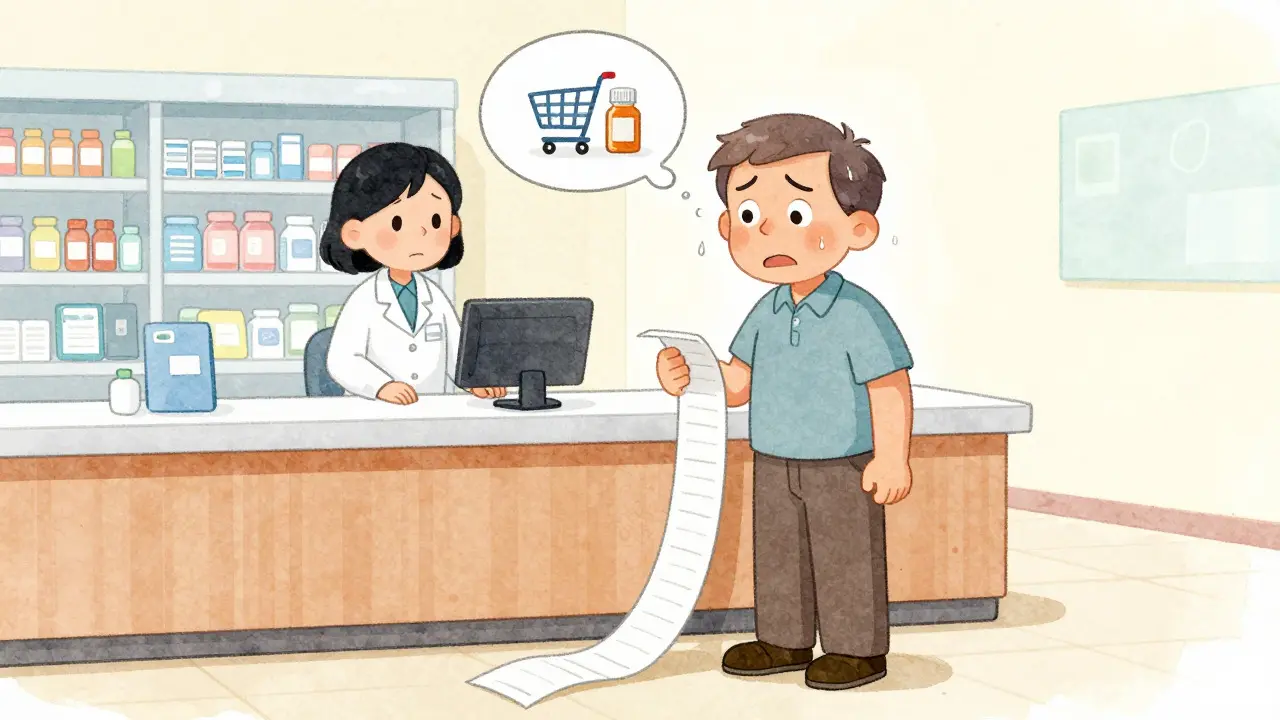
Prescription drug costs can spiral out of control overnight. One month you are paying a manageable $20 for your medication, and the next, your insurance plan moves that drug to a higher tier or resets your deductible, leaving you staring at a $400 bill at the pharmacy counter. It is a stressful situation that forces many patients to make impossible choices between buying groceries and staying healthy.
You might think that once you have private health insurance, you are safe from these shocks. But insurance deductibles and coinsurance mean you still pay a significant portion of the cost until you hit certain thresholds. This is where manufacturer prescription assistance programs come in. These are direct financial support initiatives established by pharmaceutical companies to help patients afford their medications. They are not charity in the traditional sense; they are strategic tools designed to keep patients on brand-name drugs while offering immediate relief at the point of sale.
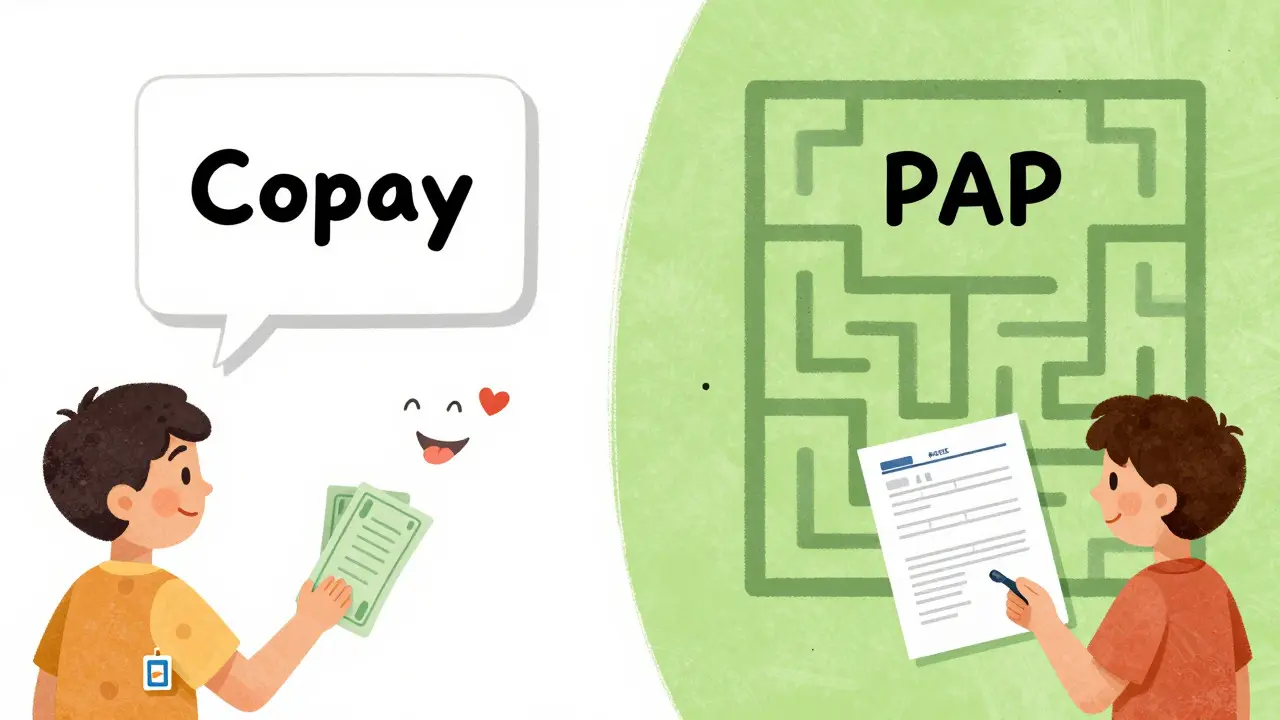
Understanding how these programs work is crucial because they are not one-size-fits-all. There are two main types: copay assistance programs (often called copay cards) and Patient Assistance Programs (PAPs). Knowing which one applies to your specific insurance status and income level can save you thousands of dollars annually.
The Two Main Types of Manufacturer Help
To get the right help, you first need to identify which bucket you fall into. The primary divide is based on whether you have commercial private insurance or if you are uninsured/underinsured.
Copay assistance programs are designed for patients with commercial private health insurance. These programs offset immediate out-of-pocket costs like deductibles, copays, and coinsurance. You typically receive a card or coupon code that you present at the pharmacy. The manufacturer pays the difference between what your insurance covers and the full price of the drug, up to a set limit. According to data from the Kaiser Family Foundation (KFF), these programs became increasingly common after 2005 as drug costs rose. Today, major manufacturers like Pfizer, Merck, and Eli Lilly offer them for most of their brand-name drugs.
In contrast, Patient Assistance Programs (PAPs) are for patients who are uninsured or underinsured. These programs emerged earlier, with some dating back to the 1980s during the HIV/AIDS crisis. PAPs provide medications at no cost or significantly reduced cost to patients who meet specific income criteria. Generally, this means earning between 200% and 400% of the Federal Poverty Level (FPL). For a family of four, that threshold was roughly $30,000 to $60,000 annually in 2023. If you do not have any prescription drug coverage, this is likely your best option.
How Copay Assistance Programs Work
If you have private insurance through an employer or the marketplace, copay assistance is your go-to resource. These programs vary significantly in structure. About 45% of copay programs have an annual dollar value limit, ranging from $1,000 to $25,000 depending on the medication's cost. Another 30% have monthly maximums, typically capping savings at $50 to $200 per month. Some use a combination of both.
Here is how it looks in practice: Let's say your specialty medication costs $500 per month. Your insurance requires you to pay 20% coinsurance, so your bill is $100. With a copay card that covers up to $80 per month, you would only pay $20. The manufacturer sends the remaining $80 directly to the pharmacy or distributor.
However, there are catches. Many programs require a nominal monthly contribution, often around $10 to $15 per prescription. Furthermore, these programs primarily target brand-name medications. Specialty drugs account for 68% of all copay assistance programs. If you are taking a generic drug, you will likely not find a manufacturer copay card available.
Navigating Patient Assistance Programs (PAPs)
PAPs are more complex than simple copay cards. Because they provide free or heavily discounted drugs outside of the insurance system, the application process is rigorous. You cannot just show up at the pharmacy with a code. You must apply directly through the manufacturer or a designated third-party administrator.
The documentation required usually includes:
- Proof of income, such as recent tax returns or two recent pay stubs.
- Residency documentation, like a driver's license or utility bill.
- Medical necessity verification, signed by your prescribing doctor.
This process can be burdensome. Studies indicate an average application time of 45 to 60 minutes per program. However, the payoff is substantial. For example, Teva’s Cares Patient Assistance Program provides certain medicines at no cost for U.S. residents meeting specific criteria. Similarly, the Asthma and Allergy Foundation of America notes that qualifying patients may pay as little as $15 per prescription for certain branded inhalers, saving hundreds of dollars annually.
A critical limitation for PAP users is that these programs generally exclude patients with government insurance. If you have Medicaid or Medicare, you are often ineligible for standard manufacturer PAPs. This creates a gap where those with low incomes but government coverage may still struggle with high deductibles or lack of formulary coverage.
The Medicare and Medicaid Complications
If you rely on government-sponsored insurance, the rules change dramatically. This is where many people get tripped up.
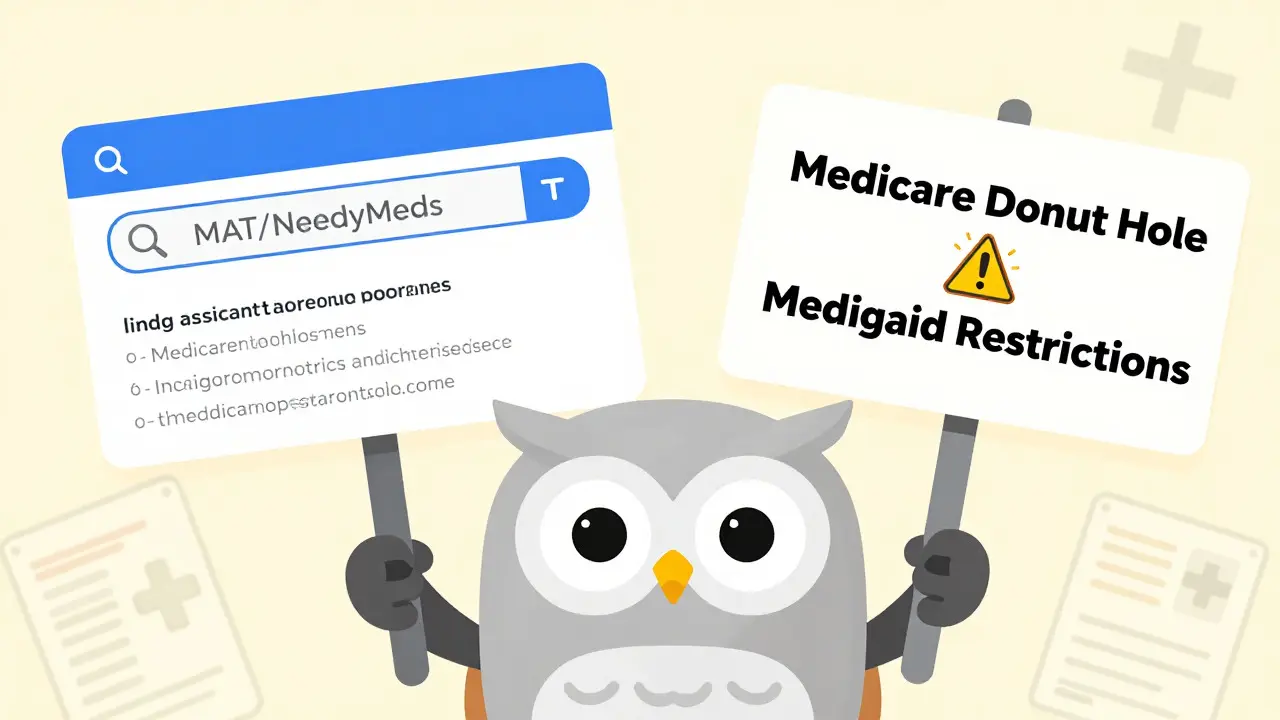
For Medicare Part D beneficiaries, using a manufacturer copay card can actually hurt you in the long run. The Centers for Medicare & Medicaid Services (CMS) specifies that copay assistance does not count toward your True Out-of-Pocket (TrOOP) costs. TrOOP is the metric used to determine when you exit the "coverage gap" (the donut hole) and enter catastrophic coverage. If you use a copay card to pay $0 for your drug, Medicare sees that you paid $0 out of pocket. Therefore, you stay in the donut hole longer, potentially facing higher costs later in the year when the card expires or limits are reached.
Additionally, CMS requires programs operating "outside the Part D benefit" to complete a PAP Attestation document to ensure separateness. This bureaucratic hurdle exists to prevent manufacturers from influencing Medicare spending decisions.
For Medicaid recipients, the situation is even stricter. A 2022 analysis found that 78% of state Medicaid programs prohibit the use of manufacturer copay assistance. States view these programs as potentially inflating drug costs by encouraging the use of expensive brand-name drugs over cheaper generics. While some states allow PAPs, the restrictions are tight. Always check with your state’s Medicaid agency before assuming a manufacturer program will work.
| Feature | Copay Assistance Cards | Patient Assistance Programs (PAPs) |
|---|---|---|
| Target Audience | Commercially insured patients | Uninsured or underinsured patients |
| Income Requirements | Usually none | Yes (typically 200-400% FPL) |
| Application Process | Simple online registration | Complex, requires doctor and income docs |
| Medicare Eligibility | Limited (does not count toward TrOOP) | Often excluded or restricted |
| Medicaid Eligibility | Rarely allowed (banned in 78% of states) | Varies by state, often restricted |
| Typical Savings | $10-$200 per month | Free medication or minimal fee |
Finding the Right Program for You
Searching for these programs individually is tedious. Manufacturers bury their assistance links deep within their websites. Instead, use centralized resources. The Medicine Assistance Tool (MAT), maintained by PhRMA, serves as a comprehensive search engine providing access to more than 900 public and private assistance programs. It is free, confidential, and allows you to filter by drug name, insurance type, and income level.
Another valuable resource is NeedyMeds, a non-profit organization that maintains a database of patient assistance programs, discount cards, and local clinics. Their helpline can also guide you through the complexities of eligibility.
When applying, keep these tips in mind:
- Check for Accumulator Programs: Many insurers now use "copay accumulator" programs. These prevent manufacturer copay assistance from counting toward your deductible. Even if you save money today, you might end up paying more later because your deductible isn't being met. Ask your insurer if they use accumulators.
- Renew Annually: Most PAPs and copay cards require annual re-enrollment. Set a calendar reminder to update your income documents and insurance information before your current authorization expires.
- Talk to Your Pharmacist: Pharmacists often know which manufacturer programs are easiest to process and which ones frequently cause billing errors at the point of sale.
The Bigger Picture: Are These Programs Enough?
While these programs provide essential lifelines, experts remain divided on their effectiveness. Supporters, including PhRMA, argue they are vital for access. In 2022 alone, member companies provided $24.5 billion in patient assistance, serving approximately 12.7 million patients. Dr. Jane Smith, Director of Health Policy at the Brookings Institution, noted that without these programs, millions more Americans would face medication non-adherence due to cost.
Critics, however, point out systemic issues. A 2022 study in JAMA Internal Medicine suggested that copay assistance may inadvertently increase overall healthcare costs by encouraging the use of expensive brand-name drugs over generics, adding an estimated $1.4 billion to annual drug spending. Additionally, the complexity of PAPs creates barriers for the very people who need them most. Only 37% of eligible patients were aware of available manufacturer assistance in a 2022 survey by the Patient Advocate Foundation.
Regulatory scrutiny is increasing. As of early 2024, 22 states had enacted laws restricting or regulating manufacturer copay assistance programs. California, for instance, passed SB 1424, requiring manufacturers to disclose total spending on these programs. This trend suggests that while direct manufacturer help is currently available, the landscape may become more regulated and transparent in the coming years.
For now, these programs remain a critical tool in managing prescription costs. By understanding the distinction between copay cards and PAPs, and knowing how they interact with your specific insurance type, you can navigate the system more effectively and keep your medication affordable.
What is the difference between a copay card and a Patient Assistance Program?
A copay card is for people with commercial private insurance and helps lower the amount you pay at the pharmacy each month. A Patient Assistance Program (PAP) is for people who are uninsured or underinsured and provides the medication for free or at a very low cost, but requires proof of income and a more complex application process.
Can I use a manufacturer copay card if I have Medicare?
You can use some copay cards with Medicare Part D, but it is risky. The payments made by the manufacturer do not count toward your True Out-of-Pocket (TrOOP) costs. This means you might stay in the "donut hole" coverage gap longer, potentially costing you more money later in the year. Always check with your plan first.
Are manufacturer assistance programs available for generic drugs?
Rarely. Manufacturer assistance programs are primarily designed for brand-name and specialty drugs. Generic drugs are already priced much lower, so manufacturers rarely offer financial aid for them. Look for general discount cards or pharmacy store brands for generic savings instead.
How do I find out if my drug has a manufacturer assistance program?
The easiest way is to use the Medicine Assistance Tool (MAT) website or call the number on the back of your prescription bottle. You can also ask your pharmacist or visit the official website of the pharmaceutical company that makes your medication. They usually have a "Patient Support" or "Savings" section.
Does Medicaid accept manufacturer copay assistance?
In most cases, no. About 78% of state Medicaid programs prohibit the use of manufacturer copay assistance because they believe it encourages the use of expensive brand-name drugs. Rules vary by state, so you should check with your specific state Medicaid office before trying to use a copay card.
Is there an income limit for copay assistance programs?
Most copay assistance programs for commercially insured patients do not have strict income limits. However, Patient Assistance Programs (PAPs) for uninsured patients do have income requirements, typically setting a cap at 200% to 400% of the Federal Poverty Level.
What is a copay accumulator program?
A copay accumulator is a policy used by some insurance plans where the money saved by a manufacturer copay card does not count toward your annual deductible. This means even though you pay less at the pharmacy, you haven't progressed closer to having your insurance cover 100% of your costs for the year.
Oh honey, you really think these 'assistance' programs are charity? Please. They are absolute masterpieces of corporate manipulation designed to keep you hooked on their expensive brand-name drugs while pretending to care about your wallet. It is so transparently disgusting that they let you pay $15 out of pocket just to feel like you contributed something meaningful to the system that is actively bankrupting you. I mean, look at the math, it is literally a scam wrapped in a hug. You get the drug, they get the loyalty, and the insurance company gets to shift the liability onto the manufacturer until the bill comes due later. It is emotional blackmail disguised as healthcare policy.
The entire premise of copay accumulation is a bureaucratic fabrication engineered by CMS to inflate administrative overhead while simultaneously suppressing market competition for generic alternatives. The term 'True Out-of-Pocket' is a semantic sleight of hand intended to obscure the reality that patient financial exposure remains static regardless of manufacturer subsidies. Furthermore, the exclusion of Medicaid recipients from these mechanisms suggests a deliberate stratification of healthcare access based on socioeconomic metrics rather than clinical necessity. One must question whether the pharmaceutical lobby’s influence over legislative bodies has resulted in a regulatory capture that prioritizes shareholder dividends over public health outcomes.
In my country we do not have this problem because our government buys the drugs in bulk so everyone pays the same price. Here it seems very complicated with all these different cards and forms. It makes sense that people get confused when there are so many rules. I just wish it was simpler for everyone.
interesting read but i think most people just give up trying to figure it out. the system is too messy
It is imperative to note that the reliance on Patient Assistance Programs indicates a fundamental failure of the broader healthcare infrastructure to provide equitable access to essential medications. The requirement for extensive documentation serves as a significant barrier to entry, effectively disenfranchising those who lack the time or resources to navigate such bureaucratic labyrinths. Consequently, the purported benefits of these programs are often negated by the administrative burden placed upon vulnerable populations.
It is morally repugnant that we allow corporations to dictate who gets to live and who gets to suffer based on arbitrary income thresholds. The fact that Medicare beneficiaries can be trapped in the donut hole simply because they used a coupon is a testament to the greed embedded in our system. We need universal coverage, not these band-aid solutions that treat symptoms while ignoring the disease. Every person deserves medication without having to beg for a discount card.
I work in pharmacy administration, and I can tell you that the accumulator programs are indeed a huge issue! Many patients do not realize that their copay card savings do not count toward their deductible, which means they end up paying full price later in the year once the card limit is reached. It is crucial to ask your insurer specifically if they use accumulators before signing up for any assistance program. Also, remember that PAPs require annual renewal, so set a reminder!
This is a very helpful breakdown for anyone navigating the complex world of prescription costs. It is important to know that resources like NeedyMeds exist to help simplify the search process. Take your time to understand which program fits your specific insurance status, and do not hesitate to ask your pharmacist for guidance. Knowledge is power when it comes to managing your health expenses.
Let us break this down simply! If you have private insurance, look for copay cards. If you have no insurance, look for PAPs. But watch out for the traps! Medicare users might stay in the donut hole longer, and Medicaid users might not be allowed to use these cards at all. Check your state rules! Do not let the complexity stop you from saving money. You got this!
The distinction between immediate relief and long-term cost is fascinating. Copay cards offer instant gratification but may delay deductible progress. PAPs offer deeper savings but demand more effort. One must weigh convenience against total expenditure.
Look, the data shows that only 37% of eligible patients even know these programs exist. That is not an accident. It is a feature. The complexity is designed to filter out the lazy and the poor. The ones who survive the application gauntlet are the ones who deserve the free drugs, right? Probably not. The system is rigged to favor those with the highest literacy rates and the most free time to fill out forms. Meanwhile, the rest of us bleed cash. It is efficient cruelty.