
By 2026, Medicare Part D is helping over 52 million Americans save money on prescriptions - and most of those savings come from generic drugs. If you're taking pills for high blood pressure, diabetes, or cholesterol, chances are you're on a generic. And if you're on Medicare, understanding how these generics are covered can save you hundreds - even thousands - of dollars every year.
What Exactly Is a Medicare Part D Formulary?
A formulary is just a list of drugs your plan covers. Think of it like a menu: only the items on the menu are available at a discount. Medicare Part D plans, offered by private companies but regulated by the federal government, must follow strict rules about which drugs they include - especially generics. Every plan has to cover at least two different generic versions of every common type of medication. For example, if you need a generic blood pressure pill, your plan must offer at least two different brands of that same drug. That’s not just good policy - it’s the law. This ensures you’re not stuck with just one option if the one you like gets pulled from the list. And here’s the kicker: over 92% of all prescriptions filled under Part D are generics. That’s not because people prefer them - it’s because they work just as well and cost a fraction of the price. A brand-name drug might cost $150 a month. The generic? $10.How Tiers Work: The Secret to Lower Costs
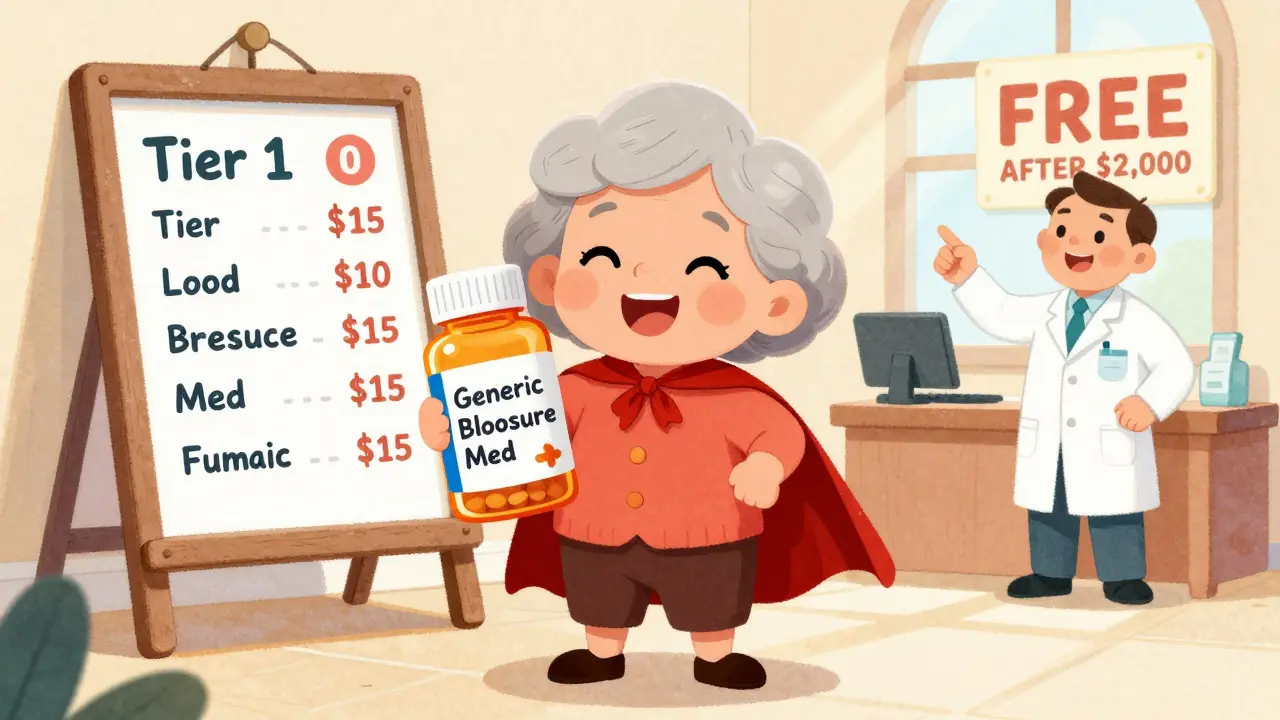
Part D plans organize drugs into five tiers. The lower the tier, the less you pay. Generics live mostly on Tier 1 and Tier 2.- Tier 1 (Preferred Generics): These are the cheapest. Most plans charge $0 to $15 for a 30-day supply. Think of this as the “buy one, get one free” deal for medications.
- Tier 2 (Non-Preferred Generics): Slightly more expensive - usually $15 to $40. These are still generics, but your plan doesn’t push them as hard. Maybe there’s a preferred alternative in Tier 1.
The $2,000 Out-of-Pocket Cap: A Game Changer
Before 2025, there was a gap in coverage called the “donut hole.” You’d hit a spending limit, then pay full price until you hit another threshold. It was confusing. It was expensive. And it hit people on multiple generics the hardest. The Inflation Reduction Act changed that. Starting January 1, 2025, there’s a hard cap: once you’ve paid $2,000 out of your own pocket for drugs in a year, you pay $0 for everything else - including generics - for the rest of the year. That means if you take three generic medications and your monthly cost is $120, you’ll hit that cap in about 17 months. But here’s the twist: you don’t have to wait until next year. The cap resets every January. So if you spend $2,000 in 2025, you get free drugs for the last 3-4 months of the year. Then in 2026, it starts over. And the cap is going up to $2,100 in 2026. But the principle stays the same: after you pay your limit, your meds are free.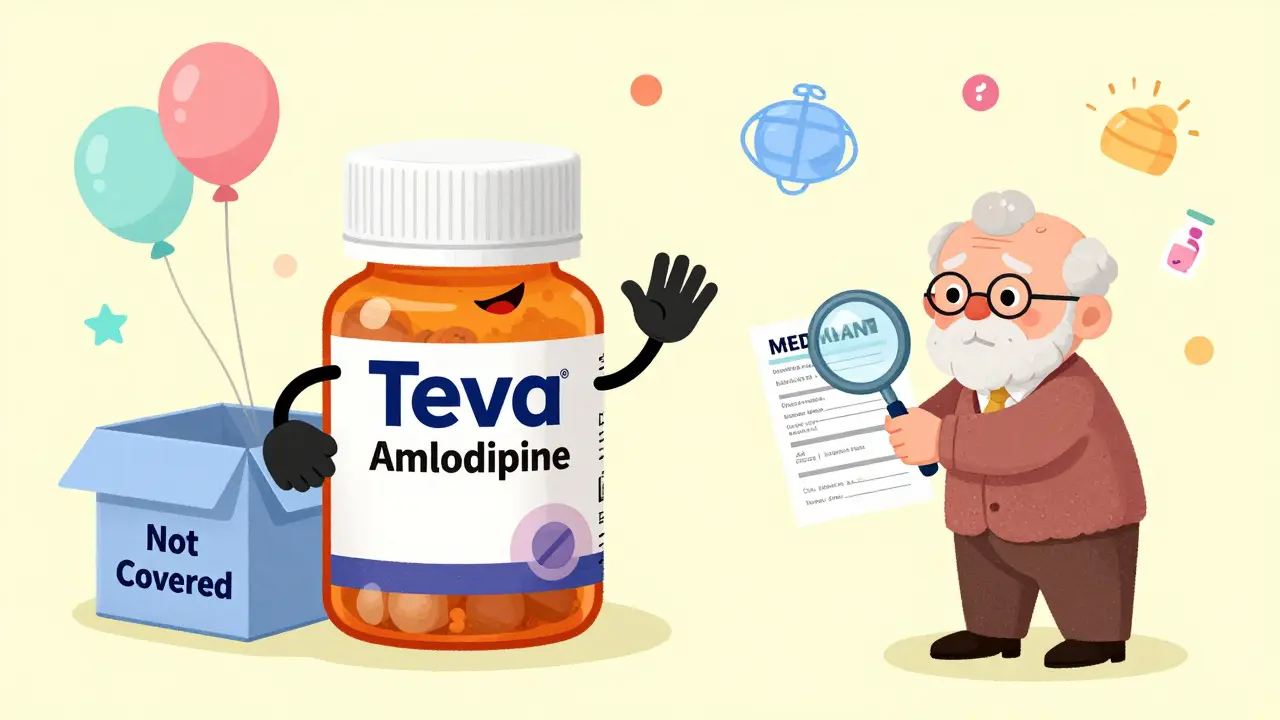
Why Your Generic Might Not Be Covered - Even If It’s the Same Drug
Here’s where things get tricky. Two generics can be chemically identical - same active ingredient, same dose, same manufacturer - but if your plan only covers one version, you’re stuck paying full price for the other. For example: your doctor prescribes amlodipine 10mg. Your plan covers Amlodipine by Teva. But your pharmacist gives you Amlodipine by Mylan. Same drug. Same effect. But if Mylan isn’t on your formulary, you pay $40 instead of $5. This is called “therapeutic interchange.” It’s legal. It’s common. And it’s frustrating. A 2024 survey found 23% of all Part D complaints were about this exact issue. The fix? Always check your plan’s formulary before you fill a prescription. Use the Medicare Plan Finder tool. Type in the exact name of the drug - not just the class. If you’re switching plans, make sure your current meds are still covered. Don’t assume.How Much You Really Pay - And What Counts Toward the Cap
Not all money you spend on drugs counts the same way toward your $2,000 cap.- For generics: Only what you actually pay out of pocket counts. If your copay is $10, that’s $10 toward the cap.
- For brand-name drugs: What counts is 70% of the total drug cost - even if you only paid 25%. That’s because manufacturers give discounts that count toward your out-of-pocket limit.
What You Should Do Right Now
You don’t have to wait until next fall to act. Here’s what to do today:- Check your plan’s formulary. Go to Medicare.gov/plan-compare and enter your medications. Look for the tier and copay for each generic.
- Ask your pharmacist. When you pick up a prescription, ask: “Is this the preferred generic?” If not, ask if they can switch you to the one your plan covers.
- Look for $0 deductible plans. About half of stand-alone Part D plans have no deductible in 2026. If you take multiple generics, this can save you hundreds.
- Request a coverage determination. If your generic isn’t covered, you can appeal. In 2023, 83% of these requests were approved. Don’t give up.
- Review your plan every fall. About 37% of plans change their generic coverage each year. What was $5 last year might be $25 this year.
What’s Coming Next
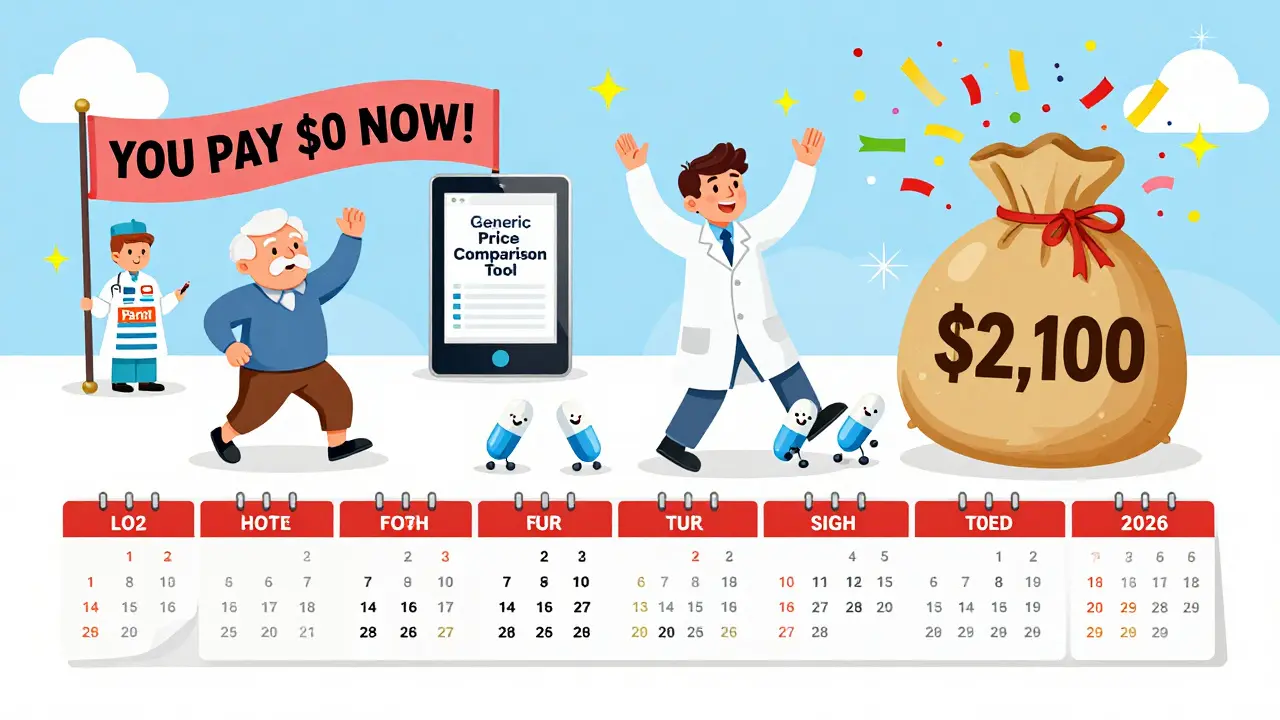
The government isn’t done changing things. In 2026, Medicare plans must add a “generic price comparison tool” to their member portals. That means you’ll be able to see, right on your phone, which version of your generic costs the least - even if it’s not the one your doctor prescribed. Starting in 2029, Medicare will start negotiating prices for some generics - like insulin glargine. That could bring prices even lower. And experts are pushing for a simple rule: if a plan covers one generic in a class, it must cover them all. That would end the “therapeutic interchange” nightmare.Real Stories, Real Savings
One retiree in Arizona, 72, takes three generics: metformin, lisinopril, and atorvastatin. In 2024, she paid $180 a month. Her plan switched to a $0 deductible Tier 1 plan in 2025. Now she pays $0 for all three. She saves $2,160 a year. Another man in Florida, 68, was paying $45 for his generic blood pressure med - until he found out his plan covered a different brand for $5. He switched. He didn’t change his doctor. He didn’t change his routine. He just asked the right questions.Bottom Line
Medicare Part D is designed to make generics easy and affordable. But you have to play the game. Know your tiers. Check your formulary. Ask your pharmacist. Don’t assume your plan hasn’t changed. The savings are real - but they’re not automatic. If you’re on multiple generics, you’re already saving money. With the $2,000 cap and new tools coming, you could soon be paying nothing at all.Are all generic drugs covered under Medicare Part D?
Almost all FDA-approved generic drugs are covered, but not every version of every drug. Medicare Part D plans must cover at least two generics per drug class, but they can choose which ones. If your preferred generic isn’t on your plan’s formulary, you’ll pay full price unless you get an exception.
Why is my generic drug more expensive this year?
Plans change their formularies every year. A generic that was on Tier 1 might move to Tier 2, or your plan might stop covering it entirely. Always review your Annual Notice of Change (ANOC) each fall. If a drug you rely on gets moved to a higher tier or removed, you can switch plans during Open Enrollment.
Do I have to pay a deductible for generics?
It depends on your plan. In 2026, 52% of stand-alone Part D plans have no deductible. The rest have a deductible of $590-$615. You pay this amount before your plan starts helping with costs. Once you meet it, you pay your copay or coinsurance for generics. Some plans waive the deductible for Tier 1 generics - check your plan details.
What happens if I take a generic that’s not on my plan’s formulary?
You’ll pay the full retail price - no discount. But you can ask your plan for a coverage determination. You’ll need your doctor to explain why you need that specific generic. If approved, your plan will cover it. If denied, you can appeal. About 83% of these requests are approved.
Can I switch plans if my generic isn’t covered?
Yes - during the Annual Enrollment Period (October 15 to December 7). You can also switch if you qualify for a Special Enrollment Period, like if your plan drops a drug you need. Use the Medicare Plan Finder to compare plans based on your exact medications. Even small changes in tier placement can save you hundreds.
Does the $2,000 out-of-pocket cap apply to all my drugs, even brand-name ones?
Yes. Once you’ve spent $2,000 out of pocket on any covered drugs - generics or brands - you enter catastrophic coverage. From then on, you pay $0 for everything else in that calendar year. The cap includes what you pay for generics, your share of brand-name drugs, and even manufacturer discounts that count toward your limit.
Why does my plan cover one generic but not another that’s the same?
Plans choose which generic manufacturers to include based on price and contracts. Two generics can be chemically identical, but if your plan negotiated a lower price with one company, they’ll only cover that version. This is legal, but it’s confusing. Always ask your pharmacist: “Is this the version my plan prefers?”


