
Side Effect Self-Assessment & Care Model Comparison
Tick every symptom or experience that applies to you in the last few weeks. The more you select, the higher your estimated risk of an unresolved medication issue.
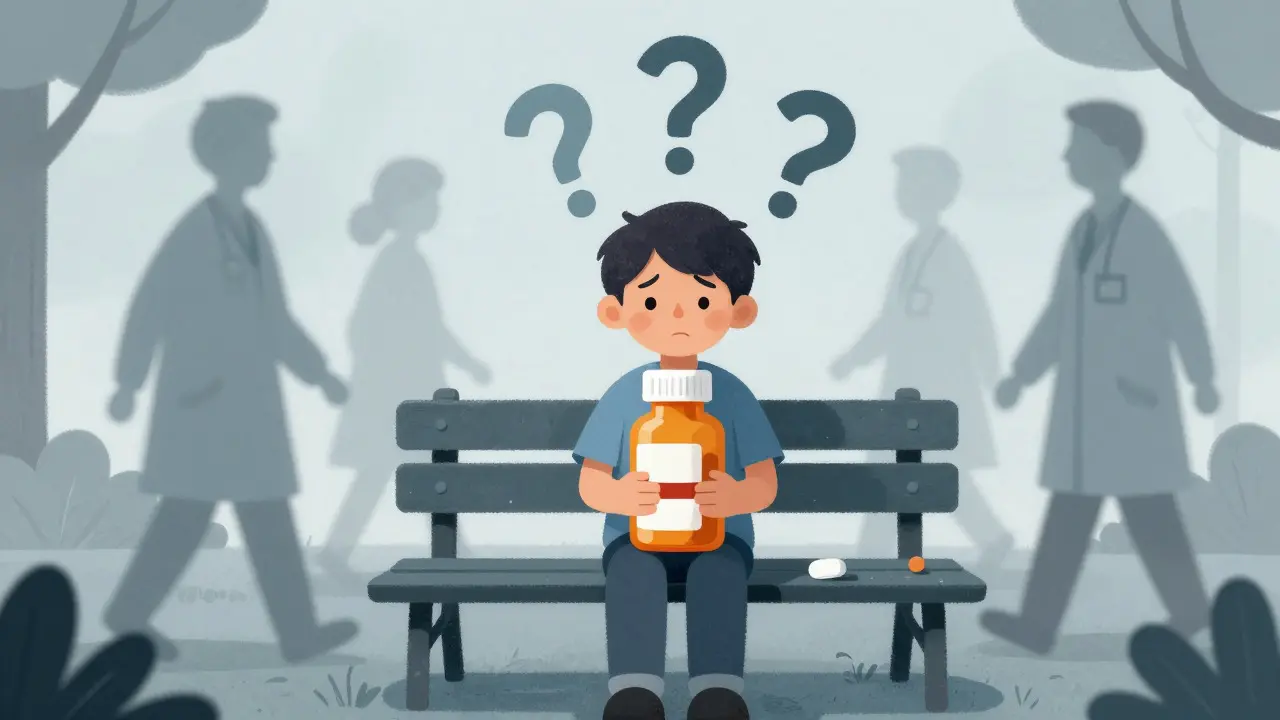
Ever taken a new prescription and felt like the doctor just handed you a pill bottle and walked away? You're not alone. For millions of patients, managing side effects feels like a solo mission, often leading to confusion, anxiety, or even stopping medication without telling anyone. But what if your care team actually worked together in real-time to catch those issues before they become problems?
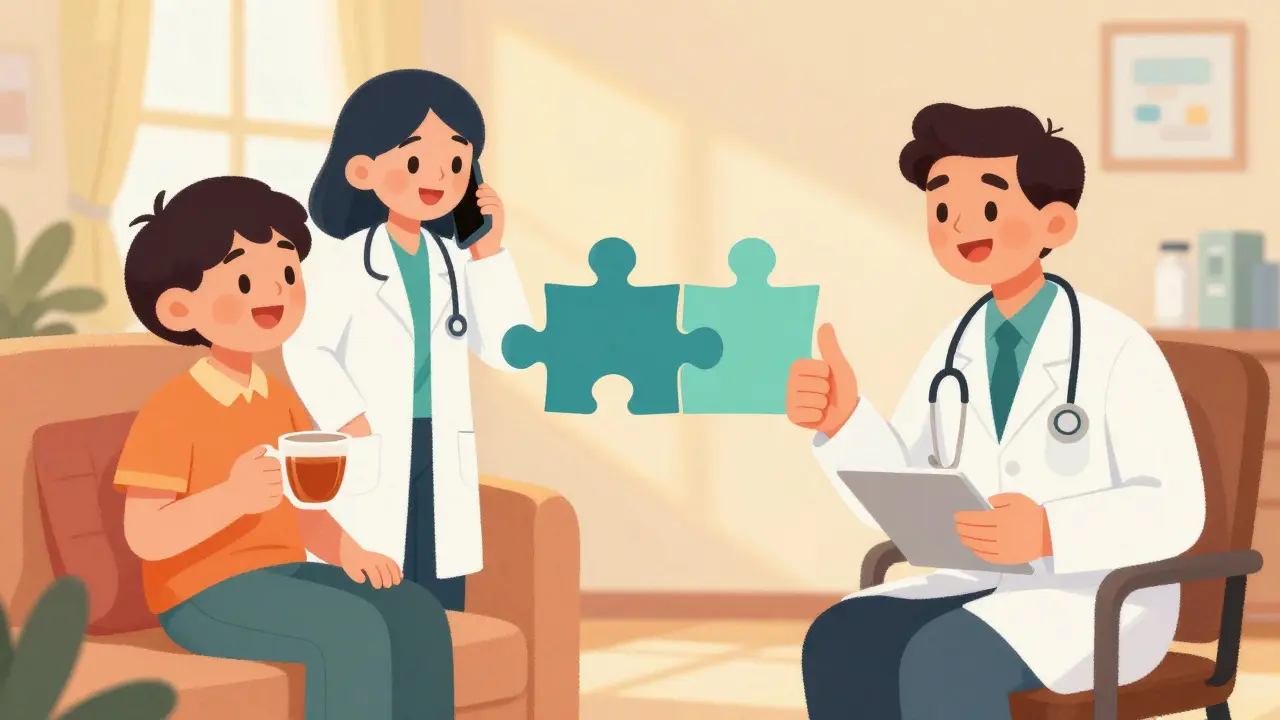
This is where healthcare team collaboration changes everything. It’s not just about doctors talking to nurses; it’s a structured system where pharmacists, physicians, and specialists share data, make joint decisions, and keep an eye on how every drug interacts with your body. When these professionals sync up, the guesswork disappears. Instead of playing telephone between three different offices, you get a unified plan that prioritizes your safety and comfort.
Why Solo Care Fails at Managing Side Effects
Traditional healthcare often operates in silos. Your primary care doctor prescribes a blood pressure med. Your cardiologist adds a statin. Your psychiatrist suggests an antidepressant. Each specialist sees a piece of the puzzle, but rarely do they see the whole picture simultaneously. This fragmentation creates blind spots, especially when it comes to adverse drug events.
Consider a patient taking five or more medications, a common scenario known as polypharmacy. Studies show that nearly 43% of these patients experience some form of drug interaction or side effect. In a siloed model, the doctor might miss a subtle interaction because the pharmacist isn't in the room during the consultation, and the pharmacist might not know about a recent change in dosage made by the specialist. The result? A patient ends up in the emergency room with a preventable reaction, or simply stops taking their meds because they feel unwell and don't know why.
The cost of this disconnect is staggering. Preventable adverse drug events cost the U.S. healthcare system over $500 billion annually. More importantly, for the patient, it means suffering from nausea, dizziness, or fatigue that could have been managed with a simple adjustment. Collaboration turns this reactive chaos into proactive prevention.
The Core Players in Interprofessional Practice
Effective collaboration isn't accidental; it involves specific roles working within defined boundaries. The World Health Organization defines interprofessional collaboration as multiple healthcare professionals working together to deliver high-quality care. In the context of side effect management, three key figures stand out:
- Physicians are responsible for diagnosis and overall treatment strategy. They hold the primary authority for prescribing but increasingly rely on team input to refine those prescriptions based on real-world tolerance.
- Pharmacists bring deep expertise in pharmacokinetics (how the body processes drugs) and pharmacodynamics (what drugs do to the body). They are the experts on interactions, dosing adjustments, and identifying non-adherence caused by side effects.
- Specialists (such as cardiologists, endocrinologists, or oncologists) manage complex conditions that require specialized medication regimens. They provide the nuanced clinical context that general practitioners might lack.
When these three groups operate under a Collaborative Practice Agreement (CPA), they share decision-making power. For example, a CPA might allow a pharmacist to adjust a diabetes medication dose without waiting for the doctor's signature, provided certain criteria are met. This speed is crucial when a patient reports a new side effect that requires immediate mitigation.
How Data Sharing Catches Issues Early
Collaboration doesn't happen over coffee; it happens through technology. Integrated Electronic Health Records (EHRs) using standards like HL7 FHIR allow real-time data sharing. When a patient visits the pharmacy, the pharmacist can see exactly what the specialist prescribed last week. If the pharmacist notices a potential conflict, they flag it instantly in the system, triggering a notification to the prescriber.
This digital handshake enables therapeutic drug monitoring. For drugs with a narrow therapeutic index-like warfarin or lithium-small changes in dosage can lead to severe side effects or toxicity. By sharing lab results directly between the specialist and the pharmacist, the team can fine-tune doses weekly rather than monthly. This precision reduces the trial-and-error phase that often leaves patients feeling unstable.
Furthermore, medication reconciliation becomes far more accurate. A 2022 study in JAMA Internal Medicine found that comprehensive medication reconciliation reduced errors by 67%. In a collaborative setting, this isn't just a one-time check at hospital discharge; it's a continuous process where every provider updates the shared list, ensuring no one is duplicating therapy or missing a critical contraindication.

Real-World Impact on Patient Outcomes
Does this theoretical framework actually work? The data says yes, and the improvements are significant. In a landmark study published in the New England Journal of Medicine, a team-based approach involving pharmacists achieved 94% blood pressure control in African-American men, compared to just 29% in standard care groups. The difference wasn't just better drugs; it was better communication. Pharmacists identified barriers to adherence, such as cost or side effects, and worked with doctors to switch to better-tolerated alternatives.
For patients managing chronic conditions like diabetes, collaborative care models have shown a 1.2% greater reduction in HbA1c levels compared to standard care. That percentage point matters. It translates to fewer complications, less need for insulin, and a lower risk of hypoglycemic episodes-a dangerous side effect that many patients fear. By having a pharmacist review the regimen alongside the endocrinologist, the team can balance efficacy with quality of life.
Hospital readmissions also drop significantly. A systematic review in the Journal of Interprofessional Care reported a 23.1% reduction in readmissions for patients under collaborative care. Many of these readmissions are driven by unresolved side effects or medication errors that occur during the transition from hospital to home. When the discharge team includes a pharmacist who explains the new regimen and checks for interactions, that gap closes.
| Metric | Standard Siloed Care | Interprofessional Collaboration |
|---|---|---|
| Blood Pressure Control Rate | ~29% | ~94% |
| Hospital Readmission Reduction | Baseline | 23.1% lower |
| Medication Error Rate | Higher due to fragmented info | 67% reduction via reconciliation |
| Patient Satisfaction | Variable | 89% satisfaction reported |
Overcoming Barriers to Effective Teamwork
Despite the benefits, implementing true collaboration isn't easy. One major hurdle is cultural resistance. Some physicians may feel that adding a pharmacist to the decision-making process dilutes their authority. Surveys indicate that around 37% of pharmacists report facing initial resistance from colleagues unfamiliar with collaborative models. Overcoming this requires establishing mutual respect and clear role definitions.
Another challenge is workflow integration. If the pharmacist has to spend two hours documenting notes in a clunky system, there's less time spent talking to patients. Successful teams use structured communication tools like SBAR (Situation, Background, Assessment, Recommendation) to keep conversations brief and focused. Daily 15-minute huddles between doctors and pharmacists have proven effective in keeping everyone aligned without bogging down schedules.
Reimbursement is another practical barrier. While 48 states allow Collaborative Practice Agreements, only 28 states have established Medicaid reimbursement for these specific pharmacist services. However, trends are shifting. Medicare Part B expanded coverage for pharmacist services in team-based settings in 2022, and proposals for direct reimbursement of comprehensive medication management are gaining traction. As value-based care grows, providers are motivated to invest in these models because they reduce long-term costs.
What Patients Can Expect From a Collaborative Team
If you are part of a healthcare team that practices interprofessional collaboration, here is what your experience should look like:
- Proactive Check-ins: You won't wait for your next annual physical to discuss side effects. Pharmacists may call you after starting a new medication to ask how you're feeling.
- Simplified Regimens: The team will work to reduce your pill burden. If two drugs are causing overlapping side effects, they will coordinate to replace one with a safer alternative.
- Clear Communication: You will receive consistent advice. If the doctor says one thing and the pharmacist says another, that indicates a breakdown in collaboration. In a well-functioning team, messages align.
- Faster Adjustments: If a side effect emerges, the time to fix it shortens. The pharmacist can recommend a change, and the doctor approves it quickly, rather than waiting weeks for a follow-up appointment.
Patient feedback supports this model. A 2023 survey showed 89% satisfaction with collaborative care, with many patients specifically praising the reduction in confusing instructions and the feeling of being supported rather than dismissed.
Frequently Asked Questions
Do I need to pay extra for collaborative care?
Usually, no. If your insurance covers primary care visits, the collaborative services are often bundled into that visit. However, standalone medication therapy management sessions may have separate copays depending on your plan. Always check with your insurer to understand what is covered under your specific policy.
Can a pharmacist change my prescription without seeing me?
In most cases, no. Under a Collaborative Practice Agreement, a pharmacist can make specific adjustments (like changing a dose or switching a generic brand) without a face-to-face visit, but they must notify the prescribing physician. Major changes usually require a direct conversation with the doctor.
Is this model available in community pharmacies?
Yes. Many large pharmacy chains and independent pharmacies now employ clinical pharmacists who partner with local clinics. These pharmacists focus on chronic disease management and side effect monitoring, bridging the gap between the clinic and the pharmacy counter.
How long does it take for a team to start collaborating effectively?
It typically takes 4 to 6 months to establish smooth workflows. During this period, teams refine communication protocols and build trust. Patients might notice the biggest improvements in coordination after the first few months of consistent interaction.
What should I tell my team if I have a side effect?
Be specific and honest. Note when the symptom started, how severe it is, and if it happens after taking a specific pill. Because the team shares records, reporting it to any member (doctor, nurse, or pharmacist) ensures the whole group knows, speeding up the solution process.