
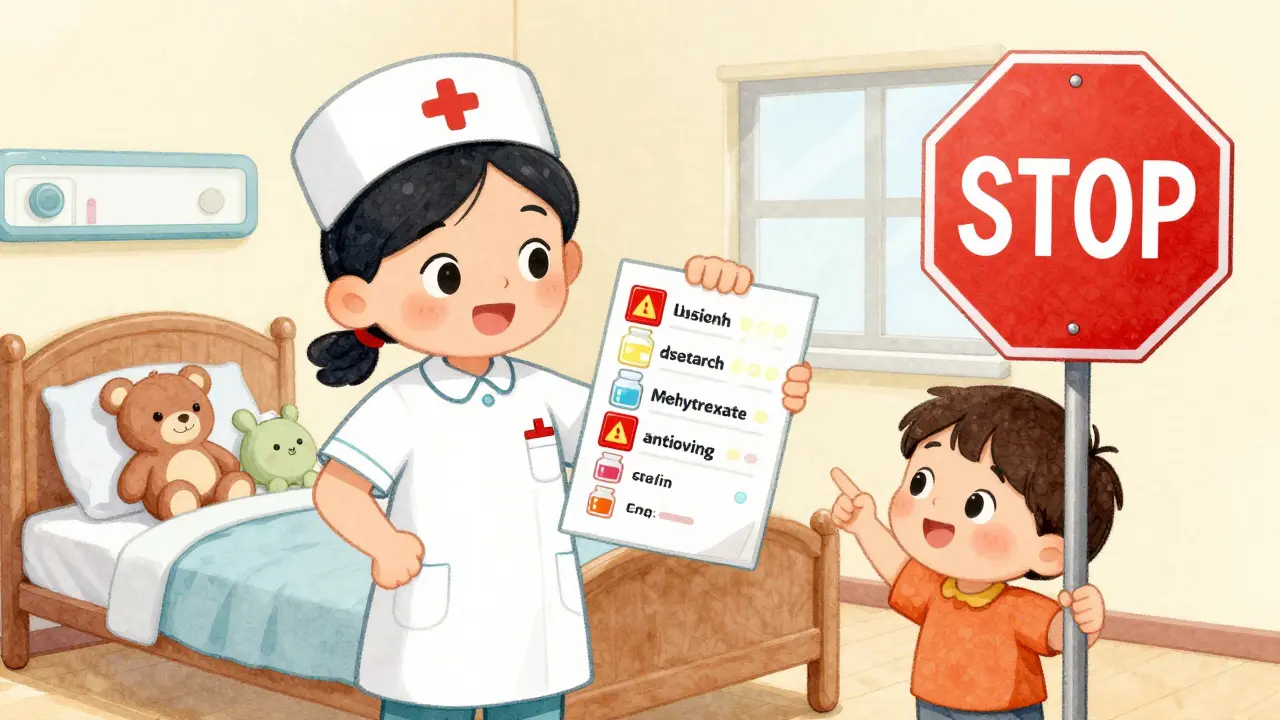
When you’re managing medications for a patient, a single mistake can lead to serious harm-or death. That’s why documenting safety alerts on your medication list isn’t just paperwork. It’s the difference between a patient going home safe and ending up in the ICU. The ISMP guidelines (Institute for Safe Medication Practices) have made it clear: if you’re handling high-alert medications, you need a system that doesn’t just warn you-it forces you to act, and then records that you did.
What Counts as a Safety Alert?
Not every warning is a safety alert. A safety alert is a documented risk tied to a specific medication that can cause severe harm if used incorrectly. These aren’t general cautions like "may cause drowsiness." They’re life-or-death triggers. The ISMP’s 2024-2025 list includes 19 categories of high-alert medications, such as:- Insulin (especially when given intravenously)
- Neuromuscular blockers (like succinylcholine)
- Anticoagulants (warfarin, heparin, apixaban)
- Oral methotrexate (if dosed daily instead of weekly)
- Opioids (morphine, fentanyl, oxycodone)
For example, giving a patient 10 mg of oral methotrexate every day instead of once a week can cause bone marrow failure. The system must stop that order. And you must document why you overrode it-if you did.
Why Documentation Matters More Than Alerts Alone
Electronic health records (EHRs) love to pop up alerts. But if you’re clicking "acknowledge" without changing anything, you’re not preventing errors-you’re just getting used to them. Studies show that in systems without proper documentation, up to 49% of safety alerts get bypassed. That’s nearly half the time, someone ignored a warning that could have saved a life.The real power comes when you pair the alert with a documented action. For instance:
- When insulin is ordered, you document the concentration (e.g., 100 units/mL), confirm the patient’s last blood sugar, and record that a second clinician verified the dose.
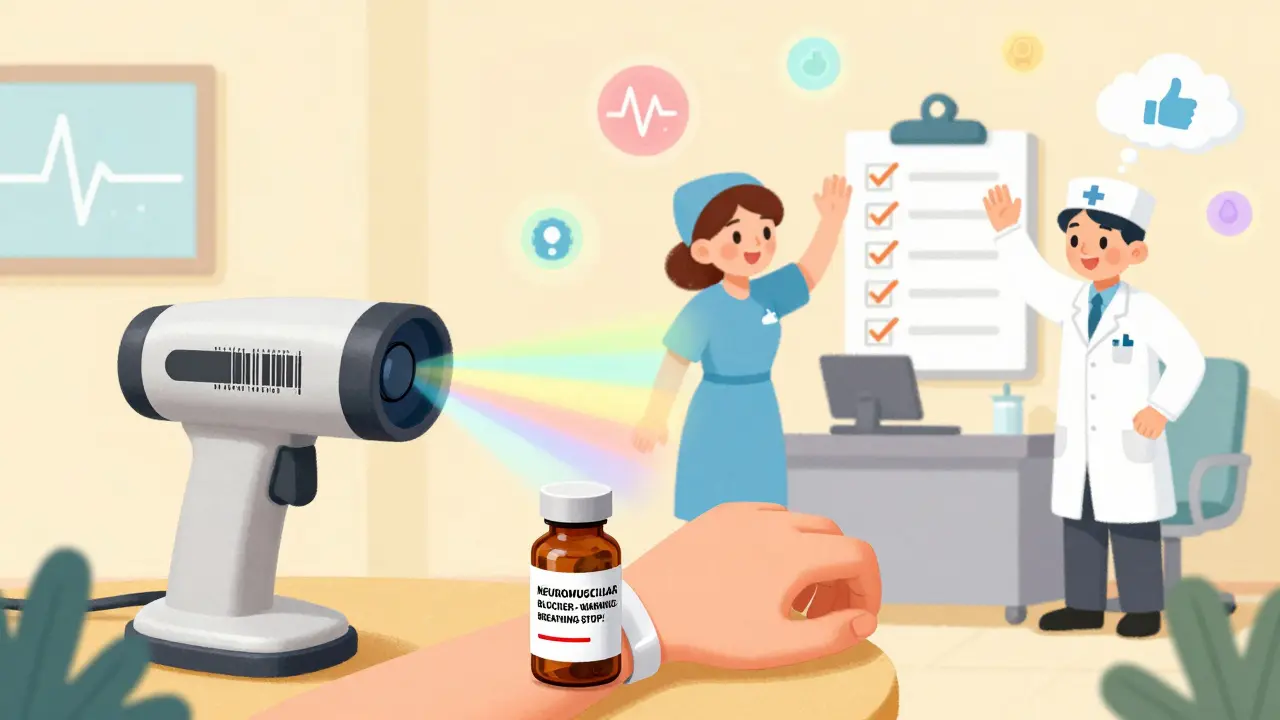
- When a neuromuscular blocker is dispensed, you attach a physical label to the vial that says: "WARNING: CAUSES RESPIRATORY ARREST - PATIENT MUST BE VENTILATED." Then you log that the label was checked before administration.
These aren’t suggestions. They’re requirements under Joint Commission standards and ISMP best practices. And they’re backed by data: hospitals that follow this full documentation process see up to a 50% drop in medication errors.
How to Set Up a Documentation System
You don’t need a fancy tech stack to start. But you do need structure. Here’s how to build a system that works:- Make your facility-specific list. Start with the ISMP master list. Then, remove any drugs your facility doesn’t use. Add any local high-risk meds (like compounded chemotherapy or off-label insulin regimens). This should be reviewed quarterly by your medication safety committee.
- Tag every high-alert med in your EHR. Use color-coding, mandatory fields, and hard stops. For methotrexate, the system should default to weekly dosing and require the prescriber to select an oncology diagnosis before approving.
- Require documentation at every critical step. For insulin: concentration, double-check signature, patient education confirmation. For anticoagulants: INR value, indication, next test date. Don’t let the system accept an order without these fields filled.
- Use barcode scanning. Every time a high-alert med is dispensed or administered, scan the medication and the patient’s wristband. The system should log the time, who did it, and whether the alert was overridden. Aim for 95% scanning compliance. If it drops below 90%, investigate why.
- Track bypasses. If someone clicks past an alert, document why. Was it a false alarm? Was the patient allergic to something else? Was the system misconfigured? Review all bypasses monthly. If more than 5% of alerts are bypassed, you have a system problem-not a human problem.
What Happens When You Don’t Document
Skipping documentation might feel faster. But it’s risky. In 2023, a critical access hospital in rural Iowa gave a patient 10x the prescribed dose of IV insulin because the nurse didn’t document the double-check. The patient went into a coma. The hospital lost its accreditation. The nurse faced disciplinary action. The cost? Over $1.8 million in legal fees and lost reimbursements.Regulators are watching. The Joint Commission’s National Patient Safety Goal NPSG.01.01.01, effective January 1, 2024, requires documented proof of risk mitigation for high-alert meds. Medicare and Medicaid (CMS) will start factoring this into reimbursement in 2025. Hospitals that fail to document properly could lose millions in funding.
Real-World Challenges and How to Fix Them
You might be thinking: "We’re a small clinic. We don’t have the staff for this." You’re not alone. A 2023 AHRQ survey found that 37% of smaller facilities say staffing is their biggest barrier.Here’s what works in real life:
- Assign a medication safety officer. You don’t need a full-time person. One pharmacist or nurse can handle it 0.5 FTE. Their job: review bypass logs, update the alert list, train staff, and report to the safety committee.
- Use automated feeds. The FDA’s Sentinel Initiative now pushes real-time safety alerts directly into EHRs. Mayo Clinic cut manual entry by 80% using this. If your system doesn’t support it, ask your vendor.
- Start small. Pick one high-alert med-say, insulin-and perfect the documentation for it. Then add another. Don’t try to fix everything at once.
- Make it part of the workflow. If documentation feels like an extra step, you’ve designed it wrong. It should be built into the order, dispensing, and administration process-not tacked on.
What’s Changing in 2025 and Beyond
The rules are tightening. By December 31, 2025, ISMP requires documentation for compounded medications and vaccine errors. That means if you’re mixing a custom IV bag or giving a flu shot, you need to log the verification steps.AI is coming. Epic Systems is launching an AI module in Q2 2025 that auto-prioritizes alerts based on your facility’s error history. But don’t get too excited. Early AI tools had an 18% false-negative rate-meaning they missed critical alerts. The key is to use AI as a helper, not a replacement. Always require human review for flagged items.
By 2027, ECRI Institute predicts 75% of U.S. hospitals will have fully automated safety alert documentation. That means alerts trigger actions, those actions get recorded, and the system learns from mistakes without human input. But even then, the human role doesn’t disappear. It shifts from clicking through alerts to reviewing patterns and fixing system flaws.
Bottom Line: Documentation Is Your Safety Net
You can’t prevent every mistake. But you can make sure that when one happens, you know why, who was involved, and how to stop it from happening again. Documenting safety alerts isn’t about checking boxes. It’s about building a culture where every step is intentional, every override is questioned, and every error becomes a lesson.Start with one drug. Document one process. Track one bypass. If you do that right, you’ll see results-faster than you think.
What medications are considered high-alert under ISMP guidelines?
The ISMP 2024-2025 list includes 19 categories of high-alert medications, such as insulin, neuromuscular blockers, anticoagulants, opioids, oral methotrexate, IV potassium chloride, and concentrated electrolytes. These are drugs that can cause serious harm-like respiratory arrest, organ failure, or death-if used incorrectly. The list is updated every two years and must be customized by each facility based on what they actually use.
Do I need to document every single safety alert in the EHR?
No-you only need to document the ones tied to high-alert medications and the actions taken. Generic alerts like "possible drug interaction" don’t require documentation unless they involve a high-risk drug. Focus on the 19 ISMP categories. Overloading the system with too many alerts causes "alert fatigue," which leads to more bypasses. The goal is precision, not volume.
What should I do if a staff member keeps bypassing alerts?
Don’t punish-investigate. If someone bypasses an alert more than once, review the reason they gave. Is the alert wrong? Is the system too slow? Is the workflow broken? A 2021 study found that 68% of repeated bypasses were caused by system design flaws, not staff negligence. Use these cases to improve the process, not to blame individuals.
Can I use paper forms instead of electronic systems?
Yes, but it’s harder to track and audit. Paper documentation works for small clinics with low volume, but it doesn’t scale. Electronic systems automatically log timestamps, user IDs, and bypass reasons. They also make it easy to generate reports for safety committees or regulators. If you use paper, assign someone to scan and digitize logs weekly to avoid losing records.
How often should I update my facility’s high-alert medication list?
Review your list at least every three months. Add new drugs that are now being used in your facility. Remove any no longer in stock. Also, check for new FDA safety alerts or ISMP updates. The Joint Commission requires this review as part of accreditation. If you don’t update it, your documentation becomes outdated-and useless.
Is there a penalty for not documenting safety alerts?
Yes. The Joint Commission can issue a citation for non-compliance with NPSG.01.01.01, which could delay or deny hospital accreditation. Starting in 2025, CMS will tie reimbursement to documented safety protocols. Hospitals with poor documentation may lose millions in Medicare and Medicaid payments. In extreme cases, a medication error linked to poor documentation can lead to lawsuits, fines, or loss of licensure.
Man, this post hit different in Lagos where we still use paper charts and pray the pharmacist remembers the dose
One time a nurse gave a kid 10mg methotrexate daily for three days because the script was blurry
We lost that child
Documentation ain't bureaucracy-it's the last breath between life and paperwork
Same. I work in a rural ER. We don’t have fancy EHRs. We scribble on sticky notes and hope the next shift reads it.
But we started tagging insulin with red tape on the vial and now no one forgets.
Simple fixes work better than fancy systems.
Bro in India we don't even have barcode scanners in 70% of clinics
But we do have chai breaks and senior nurses who know every patient's meds by heart
Maybe tech helps but human memory still saves lives
Don't throw out the old ways before the new ones work for real people
I’ve seen nurses cry after bypassing an alert because they were told to 'just get it done' by admin
It’s not them
It’s the system that broke them first
And now they’re too tired to care
This is the most important thing I’ve read all year
Not because it’s technical
But because it says: your humanity matters
When you document that you double-checked insulin
You’re not filling a form
You’re whispering to the universe: I saw them
I didn’t look away
That’s sacred work
So if we document every override... but the system still lets you override... isn't that just giving people permission to ignore it... like a warning light that never turns off... and then you stop noticing it... and then you just click... because why not... it's always there...
And then someone dies... and everyone says 'well the alert was there'... but no one actually looked...
It's not the alert that's broken... it's the culture...
And culture can't be coded...
Can it?
Let’s not pretend this is about technology. It’s about power. The system doesn’t want you to document because documentation exposes failure. It creates audit trails. It forces accountability. And institutions hate accountability. They’d rather you click through 200 alerts a day than admit that their software was designed by someone who’s never held a syringe or watched a family cry over a coma. The ISMP guidelines are beautiful. But they’re toothless unless we stop treating clinicians as cogs and start treating them as guardians. We’re not here to optimize workflows. We’re here to prevent graves. And if your EHR can’t handle that, then your EHR is the problem-not your staff. The real innovation isn’t AI. It’s humility. It’s asking: who gets hurt when we cut corners? And then having the courage to fix it-even if it costs us money, time, or pride.
Per Joint Commission NPSG.01.01.01, documented risk mitigation for high-alert medications is now a mandatory accreditation criterion, effective January 1, 2024. Furthermore, CMS reimbursement models are transitioning to value-based payment structures, wherein documentation integrity directly influences funding allocation. Non-compliance may result in denial of Medicare/Medicaid reimbursement, with potential penalties exceeding $2M annually per facility. Additionally, the ECRI Institute’s 2027 projection of 75% automation adoption implies that manual documentation processes will become obsolete unless integrated into clinical decision support architectures. Failure to implement barcode scanning, mandatory fields, and bypass logging constitutes a systemic vulnerability under the National Patient Safety Goals framework.
wait so if i give a patient insulin and dont log the double check but i did check it... is that still bad...? i mean i was busy and the system was slow and the patient was stable... i just forgot to click... i swear i checked...
is that gonna get me sued...? i just need to know
They say documentation saves lives. But I’ve seen more lives lost to paperwork than to medication errors.
Every time a nurse spends 12 minutes filling out a form instead of holding a patient’s hand… that’s a death too.
They call it safety. I call it performance theater.
And the worst part? The people who designed this system will never see a single patient die because of it.
OMG I JUST REALIZED I DID THIS LAST WEEK I GAVE SOMEONE FENTANYL AND DIDNT DOCUMENT THE DOUBLE CHECK AND NOW I’M TERRIFIED I’M GONNA GET FIRED OR SUED OR BOTH I’M CRYING RIGHT NOW I JUST NEED TO KNOW IF I CAN FIX IT PLEASE SOMEONE HELP ME
Let’s be real: if your EHR doesn’t auto-populate the INR value, require the indication field, and lock the order until both clinicians sign off, you’re not compliant-you’re negligent. The Joint Commission isn’t asking for ‘best practices’-they’re mandating structural integrity. If your system allows overrides without mandatory fields, it’s not a safety tool-it’s a liability generator. And if your safety officer is part-time, you’re gambling with lives. This isn’t about ‘culture’-it’s about engineering. Fix the system, or stop pretending you care.
As a healthcare administrator, I can affirm that the implementation of documented safety protocols for high-alert medications is not merely a regulatory obligation-it is a moral imperative. The data is unequivocal: hospitals that enforce structured documentation processes experience a statistically significant reduction in preventable adverse events. Therefore, we have mandated comprehensive training modules, integrated barcode scanning into all high-alert medication workflows, and established a biweekly review committee to analyze bypass patterns. Our error rate has decreased by 57% in six months. This is not optional. This is excellence.
Started with insulin last month. Made the system force concentration selection and double-check signature. No more mistakes. No more panic. Just quiet confidence.
Now we’re doing anticoagulants next.
One step at a time.