
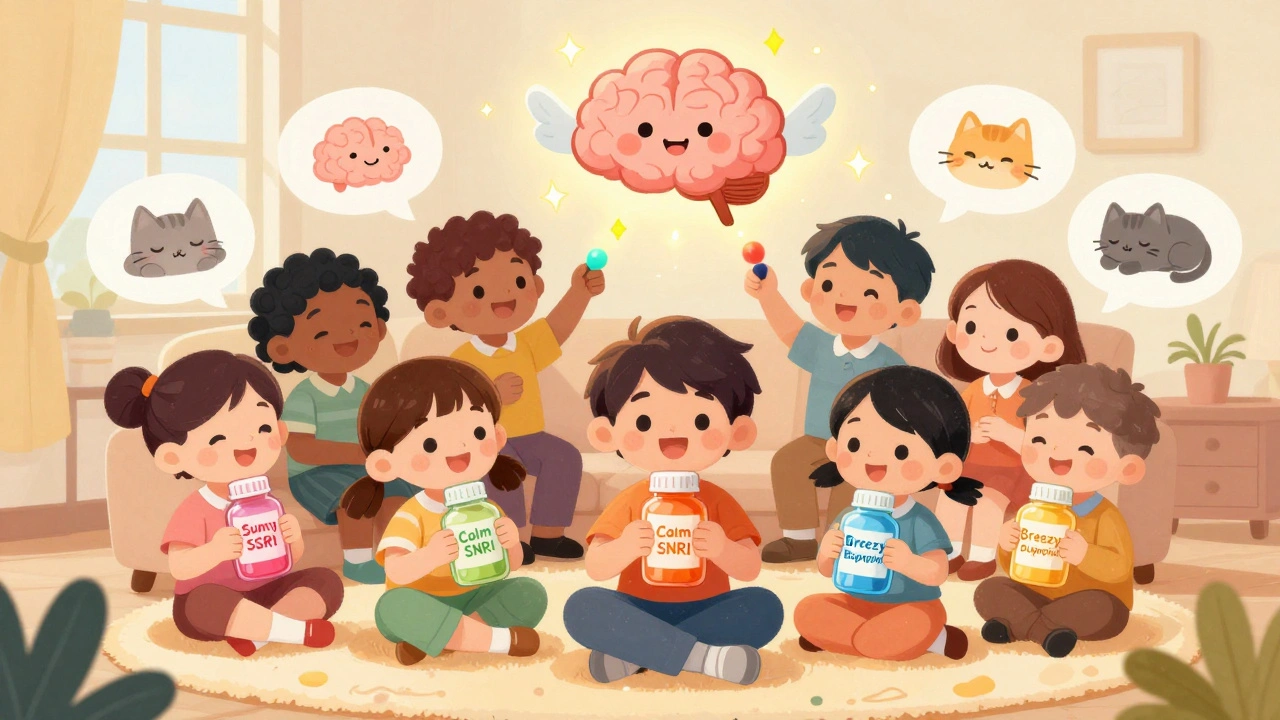
Antidepressants aren’t magic pills. They don’t fix your life. But for millions of people struggling with depression, anxiety, or PTSD, they can be the bridge back to feeling like themselves again. The truth? They work for about half the people who try them. And for many, that’s enough.
What Are the Main Types of Antidepressants?
There are five main classes of antidepressants, each with different ways of affecting brain chemistry. The most common ones today are SSRIs - selective serotonin reuptake inhibitors. These include fluoxetine (Prozac), sertraline (Zoloft), escitalopram (Lexapro), and citalopram (Celexa). They’re the first choice for most doctors because they’re effective and have fewer side effects than older options.
Next are SNRIs, or serotonin-norepinephrine reuptake inhibitors. Venlafaxine (Effexor) and duloxetine (Cymbalta) fall into this group. They work on two neurotransmitters instead of just one, which can help with both mood and physical symptoms like chronic pain.
Bupropion (Wellbutrin) is an atypical antidepressant. Unlike SSRIs and SNRIs, it mostly affects dopamine and norepinephrine. It’s often chosen when sexual side effects are a concern - it’s less likely to cause them. It’s also used for smoking cessation.
The older drugs - tricyclic antidepressants (TCAs) like amitriptyline and MAOIs like phenelzine - are still used, but only when newer options fail. TCAs can cause dry mouth, dizziness, and heart rhythm issues. MAOIs require strict dietary rules: no aged cheese, cured meats, or red wine. A single mistake can cause a dangerous spike in blood pressure.
For treatment-resistant depression, newer options like esketamine (Spravato) and zuranolone (Zurzuvae) are now available. Esketamine is a nasal spray that can lift mood within hours, not weeks. Zuranolone is an oral pill approved for postpartum depression. Both are expensive and require monitoring, but they offer hope where other treatments fell short.
How Do Antidepressants Actually Work?
They don’t make you happy. They don’t erase your problems. What they do is help your brain manage stress and emotion better. Depression isn’t just sadness - it’s a chemical imbalance in how your brain handles serotonin, norepinephrine, and dopamine. These neurotransmitters affect sleep, focus, energy, and emotional control.
SSRIs and SNRIs block the reabsorption of these chemicals, so more of them stay active in your brain. It’s like turning up the volume on signals that help you feel calm, focused, or motivated. But it takes time. Most people don’t feel better for 4 to 6 weeks. Some need up to 12. That’s why quitting after two weeks is a mistake - you’re not giving it a fair shot.
Studies show that about 50-60% of people on antidepressants see a 50% or greater drop in symptoms. That’s better than placebo, which helps about 30-40%. For severe depression, combining medication with therapy - like cognitive behavioral therapy - doubles your chances of recovery. Neither alone works as well.
What Are the Most Common Side Effects?
Side effects are real - and they’re why so many people stop taking these meds. The most common ones include:
- Nausea (15-20% of users, usually fades in a week or two)
- Weight gain (affects about half of long-term users)
- Sexual problems - low desire, trouble reaching orgasm (up to 56% with SSRIs)
- Drowsiness or insomnia
- Dry mouth, dizziness, headaches
Some side effects are worse with certain drugs. Paroxetine (Paxil) is notorious for weight gain and sexual issues. Fluoxetine (Prozac) tends to cause more jitteriness early on. Bupropion is less likely to cause sexual side effects - that’s why doctors sometimes add it to an SSRI to counteract them.
Emotional numbness is another quiet but serious complaint. Many patients say they feel “flat” - less sad, yes, but also less joyful. They cry less, laugh less, feel disconnected. It’s not listed as a formal side effect, but it’s one of the most common things patients report on forums like Reddit’s r/antidepressants.
What Are the Serious Risks?
Most side effects fade. But some risks are real and need attention.
The FDA requires a black box warning on all antidepressants for increased suicidal thoughts in people under 25. It’s rare - affects up to 18% of young users in the first few weeks - but it’s serious. If you or someone you know starts feeling worse, more agitated, or has new thoughts of self-harm, call your doctor immediately. This doesn’t mean antidepressants are dangerous. It means they need monitoring, especially early on.
Long-term use has been linked to higher risks of bone fractures, low sodium levels (hyponatremia), and even type 2 diabetes in some studies. These are not common, but they’re more likely if you’re older, take the meds for years, or have other health problems.
For pregnant women, antidepressants carry risks too. Babies born to mothers who took them in the third trimester may have jitteriness, trouble feeding, or breathing issues. But untreated depression during pregnancy also carries risks - preterm birth, low birth weight, postpartum depression. The American College of Obstetricians and Gynecologists says for many women, the benefits outweigh the risks. Decisions should be made with your OB and psychiatrist.
What Happens When You Stop Taking Them?
Stopping abruptly is a bad idea. About 50-70% of people experience withdrawal symptoms - sometimes called discontinuation syndrome. These aren’t cravings. They’re physical reactions to your brain adjusting:
- Dizziness or vertigo
- Electric shock sensations (“brain zaps”)
- Nausea, vomiting
- Anxiety, irritability
- Flu-like symptoms
Drugs with short half-lives - like paroxetine and venlafaxine - cause worse withdrawal. Fluoxetine lasts longer in your system, so withdrawal is milder. Always taper off slowly under your doctor’s guidance. Never quit cold turkey.
And here’s the catch: stopping doesn’t mean you’re “cured.” Studies show that if you stop after only a few months, your chance of relapse jumps back to 50-60%. Staying on the medication for 6-9 months after you feel better cuts that risk in half.
How Do You Know If It’s Working?
It’s not about feeling euphoric. It’s about function. Ask yourself:
- Can I get out of bed without forcing myself?
- Do I still dread phone calls or social events?
- Can I focus on work or chores for more than 10 minutes?
- Am I sleeping better?
- Do I feel less overwhelmed by small problems?
Improvement is gradual. You might notice energy returning before mood lifts. Or sleep improves before appetite does. Track your symptoms weekly. Talk to your doctor every 1-2 weeks at first. If nothing changes after 8 weeks, it’s time to switch or adjust.
Most people need to try 2-3 different antidepressants before finding one that works. That’s normal. It’s not your fault. It’s biology. Your brain chemistry is unique.
What Should You Do If It’s Not Working?
Don’t blame yourself. Don’t assume you’re “broken.” Antidepressants aren’t one-size-fits-all. Here’s what to do:
- Wait 8-12 weeks before deciding it’s not working.
- Check your dose - sometimes you need more, not less.
- Switch to a different class - try an SNRI if an SSRI failed.
- Add therapy. CBT, mindfulness, or interpersonal therapy can boost results.
- Consider genetic testing. Some labs can predict how you’ll metabolize certain drugs. It’s not perfect, but it can help avoid trial-and-error.
And if nothing works? There are options: transcranial magnetic stimulation (TMS), ketamine therapy, or electroconvulsive therapy (ECT). These aren’t last resorts - they’re valid treatments, especially for severe cases.
How Much Do Antidepressants Cost?
Cost varies wildly. Generic SSRIs like sertraline or citalopram can cost under $4 a month with insurance. Without insurance, you might pay $10-$20 at Walmart or Target. Brand-name drugs like vortioxetine (Trintellix) or zuranolone can cost $500-$1,000 a month. Many manufacturers offer patient assistance programs. Ask your pharmacist.
Most insurance plans cover antidepressants well. If yours doesn’t, ask for a prior authorization or switch to a generic. You’re not getting ripped off - you’re getting a life-changing tool.
Final Thoughts: Is It Worth It?
Antidepressants aren’t perfect. They come with side effects, risks, and a long road to finding the right fit. But for people with moderate to severe depression, they’re often the difference between surviving and thriving.
One woman in Phoenix told me she spent two years in bed, unable to care for her kids. After six weeks on sertraline and weekly therapy, she started cooking again. She laughed at her daughter’s jokes. She didn’t feel “cured,” but she felt like she could breathe again.
That’s the goal. Not happiness. Just the ability to live.
How long does it take for antidepressants to start working?
Most people start noticing small improvements after 2-4 weeks, but full effects usually take 6-12 weeks. Don’t give up if you don’t feel better right away. Your brain needs time to adjust. Stopping too soon is the most common reason people think antidepressants don’t work.
Can antidepressants make you more depressed at first?
Yes, especially in the first 1-2 weeks. Some people feel more anxious, agitated, or have increased suicidal thoughts - particularly if they’re under 25. This is rare but serious. If you or someone you know feels worse after starting an antidepressant, contact your doctor immediately. It doesn’t mean the drug is wrong - it means you need closer monitoring.
Do antidepressants cause weight gain?
About half of long-term users gain weight. SSRIs like paroxetine and mirtazapine are more likely to cause it. Bupropion and sertraline are less likely to. Weight gain isn’t guaranteed, but it’s common enough to plan for. Talk to your doctor about strategies: diet changes, exercise, or switching meds if it becomes a problem.
Can I drink alcohol while taking antidepressants?
It’s not recommended. Alcohol can worsen depression, interfere with sleep, and increase drowsiness or dizziness. With MAOIs, alcohol can cause dangerous blood pressure spikes. Even with SSRIs, mixing alcohol and medication reduces effectiveness and raises the risk of overdose. If you drink, be honest with your doctor. They can help you weigh the risks.
Are antidepressants addictive?
No, antidepressants are not addictive in the way opioids or benzodiazepines are. You won’t crave them or get high from them. But your body can become dependent - stopping suddenly causes withdrawal symptoms. That’s why you must taper off slowly under medical supervision. Dependence isn’t addiction.
What if I feel emotionally numb on antidepressants?
Emotional blunting is a common complaint - you feel less sad, but also less joy, love, or excitement. It’s not listed in official side effect sheets, but it’s real. Talk to your doctor. Sometimes lowering the dose helps. Switching to bupropion or adding therapy can restore emotional range. Don’t assume this is normal or permanent.
Can I take antidepressants while pregnant?
It’s a personal decision made with your OB and psychiatrist. Untreated depression during pregnancy increases risks of preterm birth, low birth weight, and postpartum depression. Some antidepressants, like sertraline and citalopram, are considered safer during pregnancy. Others, like paroxetine, carry higher risks. New guidelines say for many women, the benefits outweigh the risks. Never stop suddenly - work with your care team.
SSRIs are basically neurochemical volume knobs-turn 'em up slowly, and the noise of depression gets quieter. But damn, the emotional blunting? Real. I was on escitalopram for 18 months and felt like I was watching my life through a foggy window. Not sad, not happy-just… present. Like a ghost in my own skin. 🤷♂️
people keep acting like antidepressants are some kind of magic serum but theyre just chemical bandages for a broken system. your brain isnt broken its just overwhelmed. the real fix is sleep, sunlight, movement, and community-not a pill you swallow and pray to the pharmaceutical gods. still… i took sertraline for 3 years and it let me breathe again. so yeah. maybe its not a cure but its a lifeline. 🙏
Oh wow. So we're just supposed to swallow these little chemical time bombs and hope we don't turn into a zombie who cries during dog commercials? And let's not forget the FDA's little 'you might wanna kill yourself' warning-because nothing says 'we care' like a black box that reads like a horror movie trailer. 🎭
Big Pharma knows this. They want you dependent. They fund the studies. They pay the doctors. They silence the critics. You think this is medicine? It's a multi-billion-dollar trap. And they'll keep selling you pills until your bones turn to dust and your sodium crashes. 💉
Antidepressants? More like antidepressants-for-the-system. They keep you functional so you can keep working, paying taxes, buying shit. Meanwhile your soul’s in a drawer labeled 'temporary suspension'. They don’t fix the world-they fix you to live in it. 😏
Let me be clear: antidepressants are not a substitute for systemic healing. Poverty, racism, trauma, isolation-these are the root causes. Medication helps you survive long enough to fight the system. I’ve seen men in Lagos on generic fluoxetine who still wake up at 4 a.m. to clean gutters because they can’t afford therapy. The drug isn’t the hero-their resilience is. But we must not romanticize the pill. It’s a tool, not a solution. 🙏
man i started on zoloft after my dad died and honestly the first 3 weeks i felt like a robot on a treadmill. then one day i was washing dishes and i just… smiled. not because something good happened. just because i could. that’s the weird thing. it’s not euphoria. it’s the return of small moments. also i still drink beer. my doc said ‘moderation’ so i’m good. 🍻
emotional blunting is so real and no one talks about it enough. i was on citalopram for 2 years and i stopped crying at movies, stopped feeling excited about birthdays, stopped wanting to hug people. i thought i was ‘better’ until i realized i was just… hollow. switched to bupropion and therapy-now i feel joy again, even if it’s quieter. if you’re numb, don’t just tough it out. talk to your prescriber. it’s not weakness-it’s self-awareness. 💛
Wow. So we’re just supposed to trust Big Pharma’s fairy tales? Antidepressants are just chemical sedatives disguised as hope. You think your brain needs fixing? Maybe your life does. 🤡
While I appreciate the clinical precision and compassionate tone of the original post, I must respectfully emphasize that the pharmacological modulation of neurotransmitter reuptake mechanisms-though empirically validated in randomized controlled trials-is not, and should never be construed as, a panacea for existential distress. The human condition, in all its complexity, demands holistic integration of psychosocial, environmental, and neurobiological interventions. Medication, when appropriately indicated, serves as a scaffold-not the foundation. I have witnessed patients who, after six months of SSRI therapy combined with mindfulness-based cognitive therapy, regained not only function, but profound meaning in their relationships, work, and self-perception. This is not pharmacological magic. This is healing, in its most disciplined, multidimensional form. 🌱