
Every year in the U.S., more than 2.8 million people get infected with bacteria that no longer respond to antibiotics. Over 35,000 of them die. Many of these deaths aren’t caused by the original infection-they’re caused by what happens after the antibiotics are used. The real enemy isn’t just the bacteria. It’s the overuse and misuse of the drugs meant to kill them.
What Antibiotic Stewardship Really Means
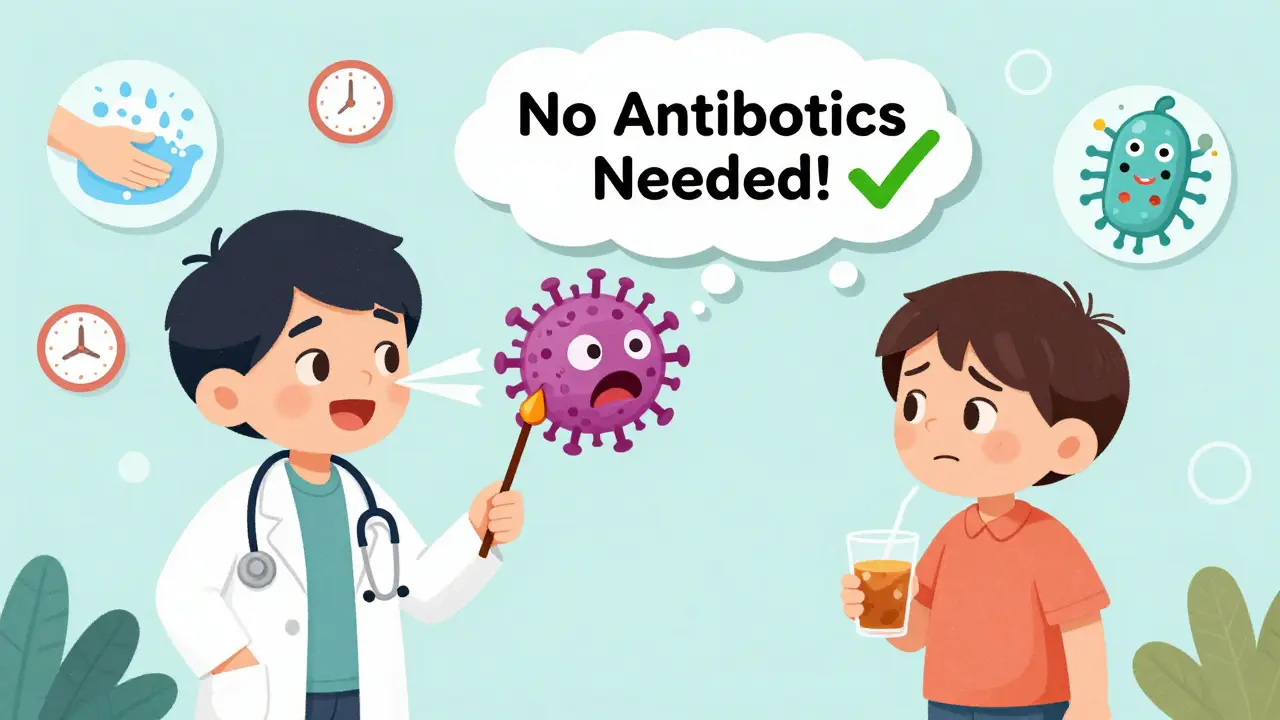
Antibiotic stewardship isn’t about banning antibiotics. It’s about using them the right way-only when needed, with the right drug, at the right dose, for the right length of time. The CDC calls it “the effort to measure and improve how antibiotics are prescribed by clinicians and used by patients.” That’s it. Simple. Practical.Think of it like this: if you have a cold, your body fights it. Antibiotics won’t help. But if you have pneumonia, they can save your life. The problem? About 46% of the time, doctors prescribe antibiotics for acute respiratory infections like bronchitis or sinusitis-even when they’re not needed. That’s not just wasteful. It’s dangerous.
Stewardship programs don’t just stop at prescribing. They track how much is used, how often side effects happen, and whether resistance is rising. One key metric is days of therapy (DOT) per 1,000 patient days. If a hospital sees that number go down without worsening patient outcomes, they’re doing something right.
The Gut Is a Battlefield
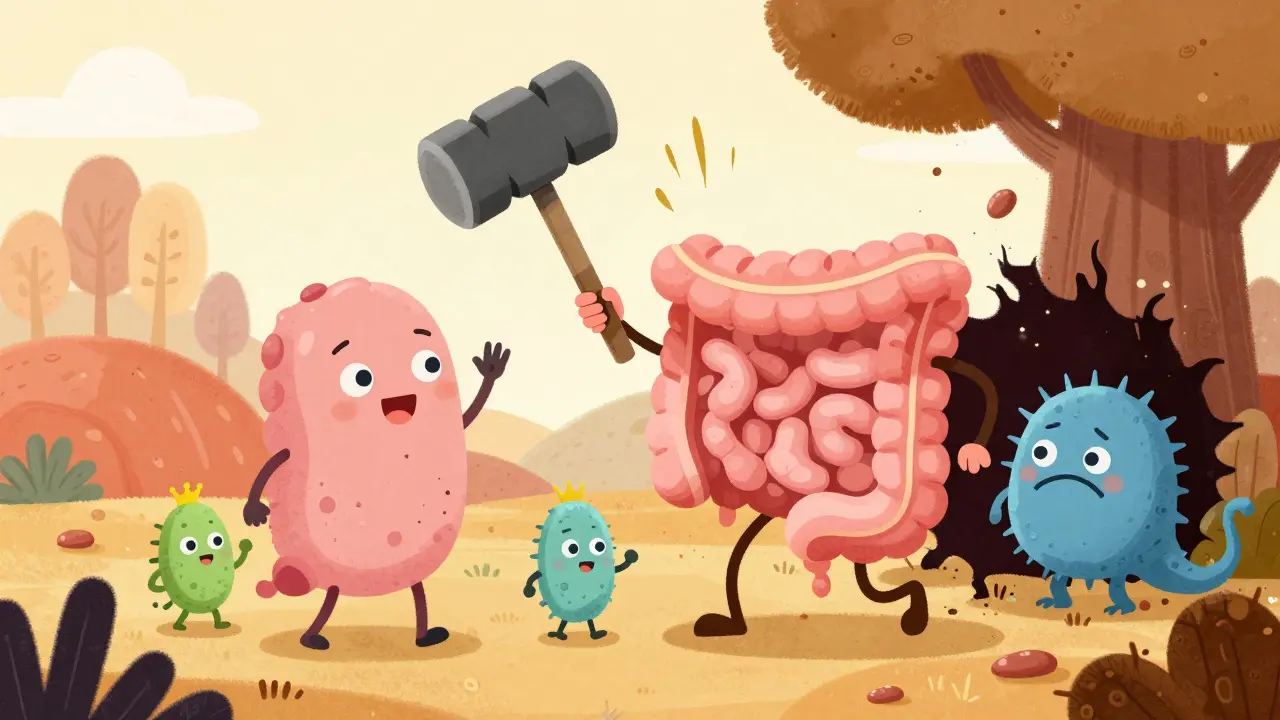
Your gut isn’t just for digestion. It’s home to trillions of bacteria-most of them good. These microbes help break down food, train your immune system, and keep harmful bugs in check. Antibiotics don’t care about that. They wipe everything out like a sledgehammer.When you take an antibiotic, especially a broad-spectrum one, you’re not just killing the bad bacteria. You’re also killing the good ones. That creates a vacuum. And guess what moves in? Clostridioides difficile, or C. diff. This nasty bug thrives when the normal gut flora is gone. It causes severe diarrhea, colon inflammation, and sometimes death.
Here’s the scary part: about 20% of patients who get antibiotics develop C. diff. In the U.S., it causes 223,900 infections and 12,800 deaths every year. And antibiotics are the number one risk factor. That’s not a side effect-it’s a direct consequence of misuse.
Stewardship programs cut C. diff rates by reducing unnecessary prescriptions. At the University of Nebraska Medical Center, their stewardship program, running since 2004, helped slash C. diff cases by targeting long courses of antibiotics that didn’t need to be long. They didn’t stop using antibiotics-they just made sure they were used smartly.
How Hospitals Are Doing It Right
The CDC’s Core Elements framework gives hospitals a clear roadmap: leadership, accountability, drug expertise, action, tracking, reporting, and education. Sounds bureaucratic? It’s not. It’s life-saving.Successful programs have two key people: an infectious disease doctor and a clinical pharmacist. Together, they review every antibiotic order. No more guessing. No more “just in case.”
One of the most effective methods is called “handshake stewardship.” Instead of blocking prescriptions or requiring approvals, a team walks the floor, talks to doctors face-to-face, and says, “Hey, I noticed you prescribed amoxicillin for this sinus infection. Have you considered that most of these are viral?”
It works because it’s not punitive. It’s collaborative. A 444-bed hospital using this method saved over $2 million a year-not just from drug costs, but from fewer ICU admissions, shorter stays, and fewer C. diff cases.
And it’s spreading. As of 2022, 84% of large hospitals had formal stewardship programs. But only 54% of smaller hospitals did. That gap is where lives are still being lost.
What Happens Outside the Hospital
Most antibiotics are prescribed in doctor’s offices, urgent care centers, and pharmacies-not hospitals. And that’s where the biggest misuse happens.Parents bring kids in with ear infections. Doctors feel pressured to prescribe. Patients expect a pill. But studies show that up to 70% of ear infections in kids resolve on their own. Waiting 48 hours doesn’t hurt-and it prevents unnecessary antibiotic exposure.
Some clinics are using behavioral nudges. Posters in exam rooms say: “I commit to only prescribing antibiotics when truly needed.” One study found this simple sign cut inappropriate prescribing by 5.6%. That’s not huge-but when multiplied across millions of visits, it saves thousands of patients from gut damage.
Doctors are also using decision tools. When a clinician types “cough” into the electronic record, the system pops up: “Viral likely. Consider watchful waiting. Antibiotics not recommended.” It’s not forcing anything. It’s guiding.
The Bigger Picture: Resistance and the Future
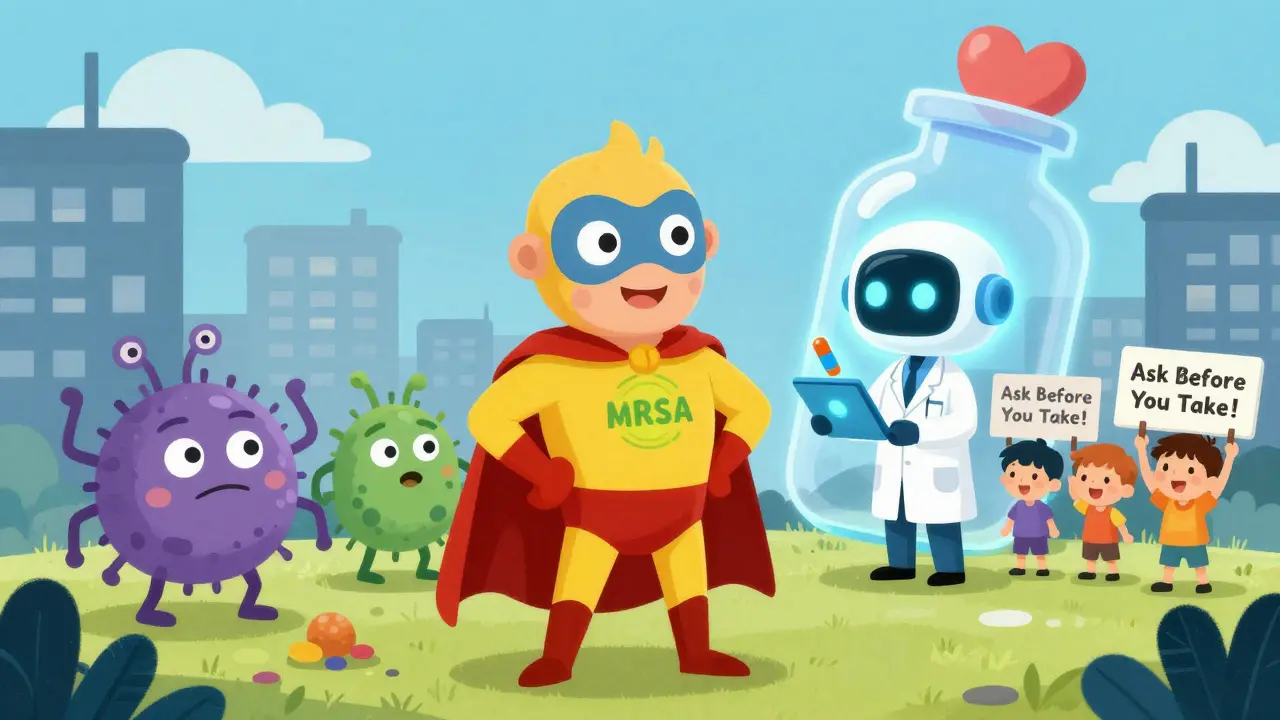
Antibiotic resistance isn’t a future threat. It’s here. Superbugs like MRSA, VRE, and carbapenem-resistant Enterobacteriaceae are already killing people. And every unnecessary antibiotic course makes it worse.The CDC estimates that if we improve antibiotic use across all U.S. healthcare settings, we could prevent 130,000 C. diff infections and save 10,000 lives by 2025. That’s not a guess. That’s based on data from programs already doing it right.
Future tools are coming. AI is being tested to analyze patient data in real time and suggest the best antibiotic, duration, and alternative options. One pilot at a major academic hospital improved appropriate prescribing by 18% just by using AI prompts during charting.
And it’s not just hospitals. The World Health Organization says 127 countries now have national plans to fight resistance. The U.S. National Action Plan for 2020-2025 treats stewardship as non-negotiable. Not because it’s trendy. Because it’s essential.
What You Can Do
You don’t need to be a doctor to help. Here’s how:- Don’t pressure your doctor for antibiotics. Ask: “Is this definitely bacterial?”
- If you’re told to take antibiotics, ask: “How long do I really need to take this?” Many courses can be shortened.
- Never save leftover antibiotics for next time. They lose potency and can promote resistance.
- Ask about alternatives. For ear infections, pain relievers and time often work better than pills.
- Wash your hands. Preventing infection in the first place reduces the need for antibiotics.
Antibiotics are powerful. But they’re not magic. They’re tools. And like any tool, they’re dangerous when misused.
Why This Matters for Everyone
This isn’t just about hospitals or doctors. It’s about your gut. Your child’s gut. Your parent’s gut. The antibiotics you take today affect the bacteria living inside you-and the bacteria living in the world around you.Every time you take an antibiotic unnecessarily, you’re not just risking your own health. You’re contributing to a global crisis. One where common infections become untreatable. One where surgeries, cancer treatments, and organ transplants become far riskier.
Antibiotic stewardship isn’t about saying no to medicine. It’s about saying yes to smart medicine. And that’s something we all need to support.


