
When you pick up a prescription, you might not think twice about whether it’s the brand-name drug or the cheaper generic version. After all, the FDA says they’re the same. But for some people, switching to a generic isn’t just a cost-saving move-it’s a health risk. Why do some patients feel worse after switching? Why do others never notice a difference? The answer isn’t simple, and it’s not about quality. It’s about biology, chemistry, and how the system is designed.
The FDA’s Bioequivalence Standard Isn’t Perfect
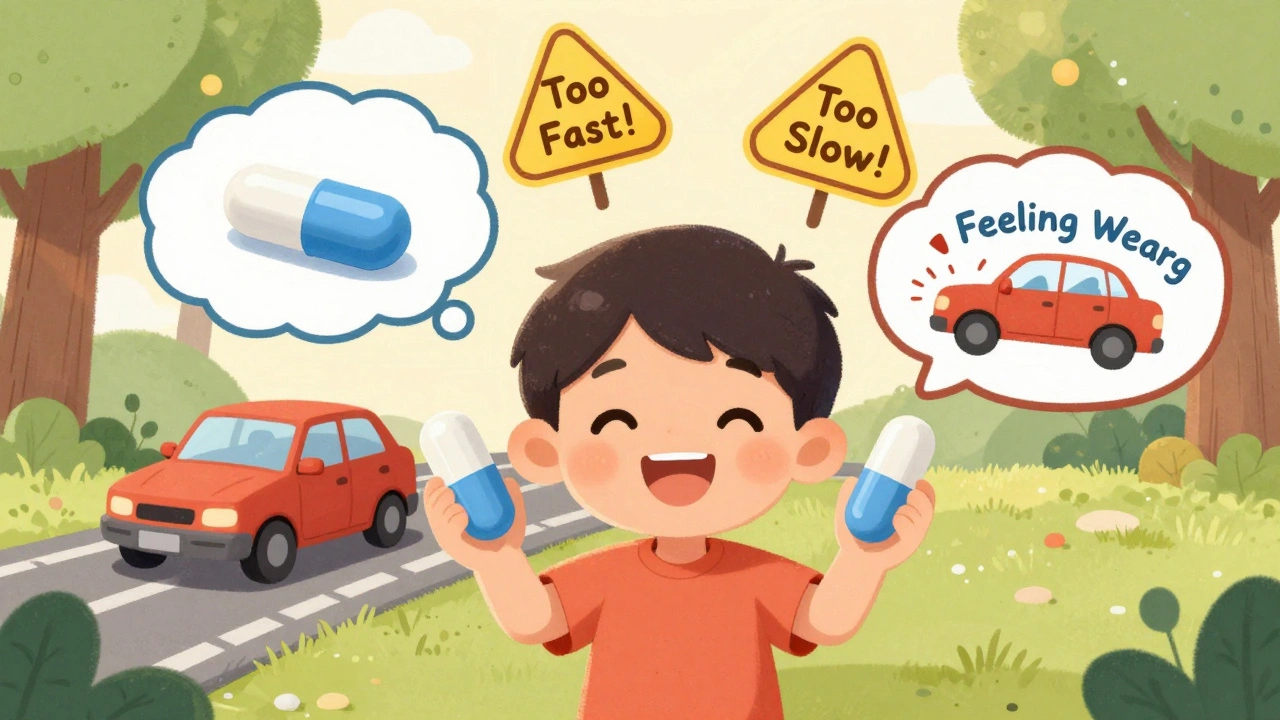
The FDA requires generic drugs to deliver between 80% and 125% of the active ingredient’s concentration in the bloodstream compared to the brand-name version. That sounds precise, but it’s actually a wide range. Two different generic versions of the same drug can differ by up to 45% in how quickly or completely they’re absorbed-yet both can still be approved as "bioequivalent." Think of it like two cars that both get 25 miles per gallon on average. One might hit 30 mpg on the highway and 20 in the city. The other might be steady at 24-26 mpg everywhere. Same average. Very different real-world performance. That’s what happens with generics. For most drugs, it doesn’t matter. For others, it can be dangerous.Narrow Therapeutic Index Drugs: When Small Changes Matter
Some medications have what’s called a narrow therapeutic index (NTI). That means the difference between a dose that works and a dose that harms is tiny. A 10-15% change in blood levels can mean the difference between control and crisis. Drugs like levothyroxine (for thyroid disease), warfarin (a blood thinner), phenytoin (for seizures), carbamazepine (another seizure drug), and digoxin (for heart rhythm) all fall into this category. For these, even minor shifts in absorption can trigger serious side effects. A 2019 study in JAMA Internal Medicine followed over 2,000 people switching from brand-name Synthroid to generic levothyroxine. Nearly 24% had thyroid hormone levels swing out of the safe range within six months. That’s more than double the rate of people who stayed on the brand. Many reported fatigue, weight gain, anxiety, or heart palpitations-symptoms that were reversed when they switched back. The same pattern shows up with antiepileptic drugs. A 2018 study found that 17% of patients on generic lamotrigine had breakthrough seizures after switching, compared to under 9% who stayed on the brand. For someone with epilepsy, that’s not a minor inconvenience-it’s life-threatening.The Hidden Culprits: Inactive Ingredients
The active ingredient in a generic pill is identical to the brand-name version. But the rest? Not so much. Pills are mostly filler. Up to 99% of a tablet’s weight can be inactive ingredients: dyes, preservatives, binders, coatings, and stabilizers. These don’t treat your condition. But they can affect how your body absorbs the drug-or even trigger reactions. Some people are allergic to certain excipients. For example, sodium metabisulfite, a preservative used in some generics, can trigger asthma attacks in 5-10% of asthmatic patients. Others report headaches, nausea, or mood swings after switching to a generic version that uses a different coating or filler. Reddit threads and patient forums are full of stories. One user described severe headaches and anxiety after switching from brand-name Wellbutrin to a generic. Another said their depression returned after a pharmacy switched their levothyroxine to a different manufacturer. These aren’t "in their heads." They’re real biological responses to chemical differences.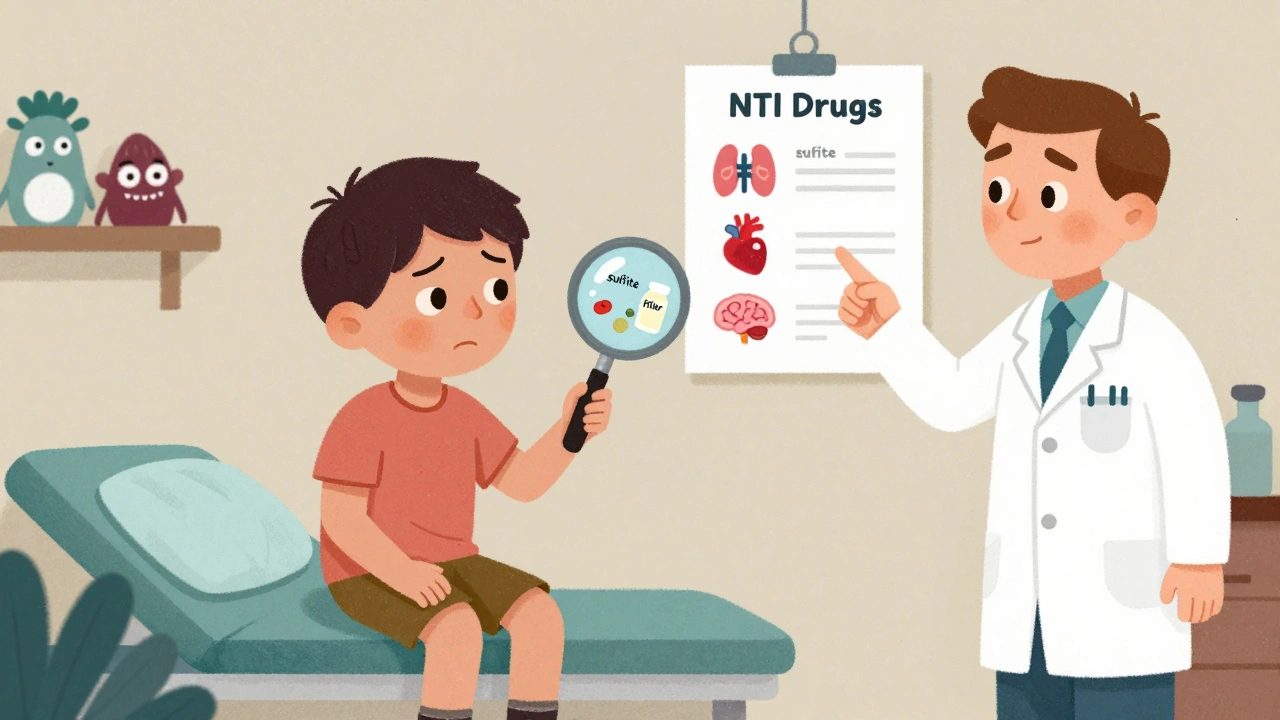
What the Data Really Shows
It’s easy to say generics are just as good. And for most people, they are. A 2024 study of 2.1 million patients found no difference in adverse events between brand and generic drugs across 85% of medication classes. That’s reassuring. But that 15%? That’s where the real risk lies. And it’s not random. It’s concentrated in NTI drugs and patients on multiple medications. A 2019 study by Dr. Jerry Avorn found that 28% of patients on complex regimens had adverse effects after switching between different generic manufacturers of the same drug. That’s not a fluke. That’s a pattern. And it’s why pharmacists at CVS and Walgreens now block automatic substitutions for NTI drugs unless the doctor specifically approves it.What You Can Do
If you’re on a medication with a narrow therapeutic index-or if you’ve noticed changes in how you feel after a switch-here’s what to do:- Ask your doctor if your drug is on the FDA’s list of NTI medications. If it is, ask for a brand-name prescription or insist on staying with the same generic manufacturer.
- Check the label. Generic pills often list the manufacturer on the bottle. If your pharmacy switches brands, ask why. You have the right to refuse a substitution.
- Track your symptoms. Keep a simple log: date, drug name, manufacturer, and how you feel. If you notice fatigue, mood shifts, or worsening symptoms after a switch, bring it to your doctor’s attention.
- Use the FDA’s Inactive Ingredient Database. If you have allergies (like to sulfites or certain dyes), look up your drug’s ingredients. You can find this on the FDA website or ask your pharmacist to print it out.

man i switched my levothyroxine last year and thought i was just getting older until i started feeling like a zombie. switched back to the same generic brand and boom, energy returned. its not in my head. bodies are weird like that.
also why do we act like the FDA is some infallible god? they approve stuff based on averages. what about the outliers? the people who actually live with the meds?
Oh wow. A 45% absorption variance? And you call this medicine? This is just pharmaceutical roulette with a side of corporate greed. The FDA is a joke. They’d approve a placebo if it had the right paperwork. My neighbor’s dog has more consistent bioavailability than these generics.
And don’t get me started on the ‘same active ingredient’ nonsense. If I pour two different brands of gasoline into my car and one makes it sputter, am I supposed to say ‘they’re both hydrocarbons, so it’s fine’? No. I take it to the mechanic. Why is my body any different?
NTI drugs = high risk. Generic substitution = systemic failure. Pharma pushes cost-cutting. Pharmacies automate. Docs don’t track. Patients suffer. Data confirms. Fix the system not the patient.
Stop blaming individuals for not knowing. The system is rigged.
so i switched to generic wellbutrin and started crying in the cereal aisle?? like... why was i crying over cornflakes??
turned out the filler had some weird dye or something. switched back to brand and boom. no more existential cereal breakdowns. 😅
also my pharmacist just shrugged when i asked why they changed it. like... yolo?
This is such a critical conversation. I’ve been tracking my meds for 3 years now - brand vs generic, manufacturer, symptoms, sleep quality, even mood logs. It’s wild how much variation there is. One generic made me feel like I had a low-grade fever for two weeks. Another? Perfect.
And guess what? I found out my body reacts badly to magnesium stearate. Found it in the FDA’s inactive ingredient database. Now I check every bottle. It’s a pain, but it’s saved me from multiple crashes.
Also - pharmacogenomics is the future. My cousin got tested and they found she metabolizes SSRIs 4x slower. No wonder she kept getting sick on generics. This isn’t science fiction anymore. It’s happening.
👏👏👏
It’s frankly irresponsible that the public is not better educated about this. People assume ‘FDA-approved’ means ‘identical’ - a dangerous misconception that has led to hospitalizations, psychiatric crises, and even deaths. The system is not broken - it’s *designed* this way. Profit over precision. Efficiency over individuality. And now we’re all expected to be grateful for the crumbs.
And yet, when patients report symptoms, we’re told it’s ‘psychosomatic’ or ‘nocebo effect.’ No. It’s pharmacokinetic variability. It’s excipient sensitivity. It’s biology, not belief. The burden of vigilance should not fall on the patient. It should fall on regulators, manufacturers, and prescribers who refuse to acknowledge the evidence.
And yes - I’ve seen it. My sister’s seizures returned after a pharmacy switch. They didn’t believe her until the blood levels dropped. Now she gets her brand-name lamotrigine. And yes, her insurance fights it every time. The system is cruel.
People are so dramatic about generics. It’s just a pill. If you can’t handle a 15% fluctuation in absorption, maybe you shouldn’t be on meds at all. This isn’t rocket science. The FDA doesn’t approve junk. If you’re having issues, maybe it’s your body, not the pill.
Also, why do you think your body is so special? Everyone else takes generics and lives fine. Stop being a victim.
Also, you’re probably just stressed. Try yoga.
I’ve been thinking about this a lot lately - not just as a patient, but as someone who watches aging parents navigate the system. There’s this quiet, unspoken assumption that medicine is a science of absolutes. But it’s not. It’s a science of probabilities, averages, and compromises.
And yet, we treat patients like variables to be optimized, not humans to be understood. The FDA’s 80-125% range? That’s not precision. That’s tolerance for chaos.
What if we started measuring outcomes not just in lab values, but in lived experience? What if a patient’s report of fatigue, brain fog, or anxiety was treated as data - not anecdote?
I don’t know the answer. But I know this: when someone says, ‘I feel worse,’ we should listen before we label.
Oh honey. You’re telling me the same pill made by a different company can make you cry in the cereal aisle? And you’re shocked? 😂
Next you’ll tell me that two identical-looking shoes from different factories don’t fit the same. Shocking. I mean, who knew manufacturing isn’t magic?
Also, I’m sure your ‘life-threatening’ seizures are just your fault for not meditating enough. Just saying.
India uses generics. Millions. No problem. You overthink. Body adapts. Stop whining.
Also, doctor knows best. Trust system.
NTI drugs = pharmacoeconomic liability. Substitution protocols are non-compliant with therapeutic equivalence frameworks. You need stratified prescribing algorithms based on CYP450 polymorphisms and excipient sensitivity profiles. Or just don’t take meds.
Also, your anecdotal data is statistically insignificant.
So let me get this straight - you’re saying your depression came back because your pharmacy gave you a different pill? And now you want the whole system to change?
Wow. I thought my drama was bad. You’re basically asking for a custom-made pill with your name on it. Next you’ll want the pill to sing you lullabies.
Also, I bet your therapist could help more than your pharmacist.
My cousin died because they switched her digoxin. They didn’t even tell us. Just a different bottle. She had heart failure. They said ‘it’s the same.’
It’s not the same. It’s not even close.
And now they want us to be ‘grateful’ for the savings?
My grief isn’t a cost-benefit analysis.
And if you think this is just ‘a few outliers’ - you’ve never held someone’s hand while they stop breathing because a pill changed color.