
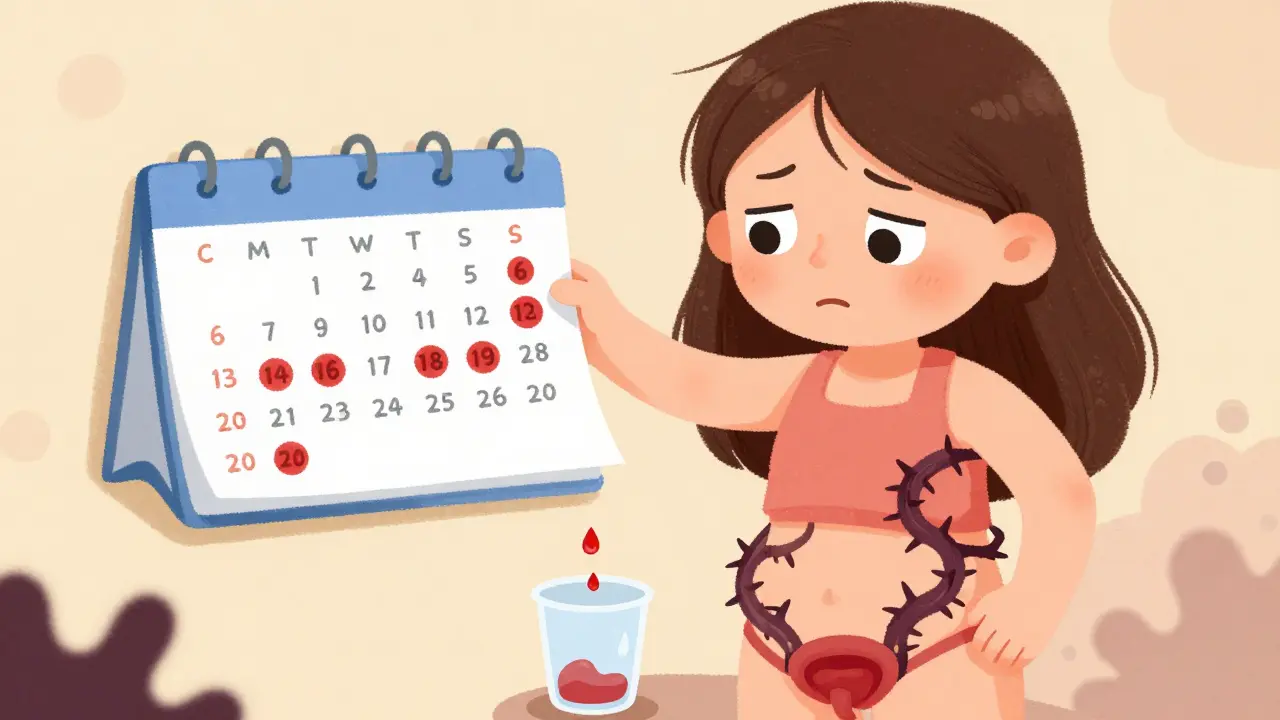
Women with chronic pelvic pain often hear the same thing: "It’s just cramps." Or, "You’re stressed." Or worse-"It’s all in your head." But for millions, the pain is real, persistent, and deeply misunderstood. Two conditions, endometriosis and interstitial cystitis, are behind much of this suffering-and they look almost identical on the surface. Yet treating them the same way can make things worse.
Why Pelvic Pain Gets Ignored
It takes an average of 7 to 10 years for a woman to get a correct diagnosis for endometriosis. For interstitial cystitis, it’s still 3 to 5 years. That’s not because doctors don’t care. It’s because the symptoms overlap so badly that even specialists get confused. Both cause pelvic pain, frequent urination, pain during sex, and burning when peeing. Both can flare with your period. Both leave women feeling like they’re being gaslit by the medical system.A 2011 study of 178 women with chronic pelvic pain found that 65% had both conditions at the same time. That’s not coincidence. It’s a pattern. Yet most doctors still look for one or the other-not both. And that’s where things go wrong.
Endometriosis: The Hidden Tissue
Endometriosis happens when tissue that looks and acts like the lining of your uterus grows outside the womb-on your ovaries, bowel, bladder, or even your diaphragm. It bleeds. It swells. It scars. And it hurts. A lot.The pain is usually cyclical. It gets worse right before and during your period. That’s because this tissue responds to hormones just like the lining inside your uterus. If you have endometriosis on your bladder, you might notice blood in your urine during your period. That’s a red flag most IC patients don’t get.
The only way to confirm endometriosis is through surgery-specifically, laparoscopic deep excision. It’s not a simple procedure. It takes a skilled surgeon who’s done at least 50 of them to do it right. The cost? $5,000 to $15,000 in the U.S. Recovery takes 2 to 4 weeks. Insurance often denies it. But without it, you’re just guessing.
And here’s the catch: endometriosis affects 1 in 10 women of reproductive age. That’s 190 million women worldwide. Yet most primary care doctors don’t screen for it. Only 15% of OB/GYNs in the U.S. are trained in the kind of excision surgery that actually removes the tissue, not just burns it off.
Interstitial Cystitis: The Bladder That Hurts for No Reason
Interstitial cystitis (IC), also called painful bladder syndrome, is different. There’s no visible lesion. No infection. No cancer. Just a bladder that hurts when it fills, and a nervous system that’s turned up the volume on pain signals.Unlike endometriosis, IC pain doesn’t follow your cycle. It’s constant. Sure, it might flare around your period-but it doesn’t disappear afterward. Women with IC often pee more than 7 times a day. They wake up at night to go. They feel pressure or burning even when the bladder isn’t full. Some say it feels like a constant urge to pee, but nothing comes out.
There’s no blood test for IC. No scan. No MRI. Diagnosis is a process of elimination. First, you rule out UTIs, kidney stones, bladder cancer, and sexually transmitted infections. Then comes cystoscopy-a scope inserted into the bladder. Sometimes, doctors do a potassium sensitivity test (PST), which checks how your bladder reacts to a potassium solution. If it hurts way more than normal, IC is likely. But the PST misses 20% of cases.
The average bladder capacity in IC patients is only 300-400 mL. A normal bladder holds 400-600 mL. So when you feel like you need to go every 30 minutes? It’s not anxiety. It’s your bladder telling you it’s full-even when it’s not.
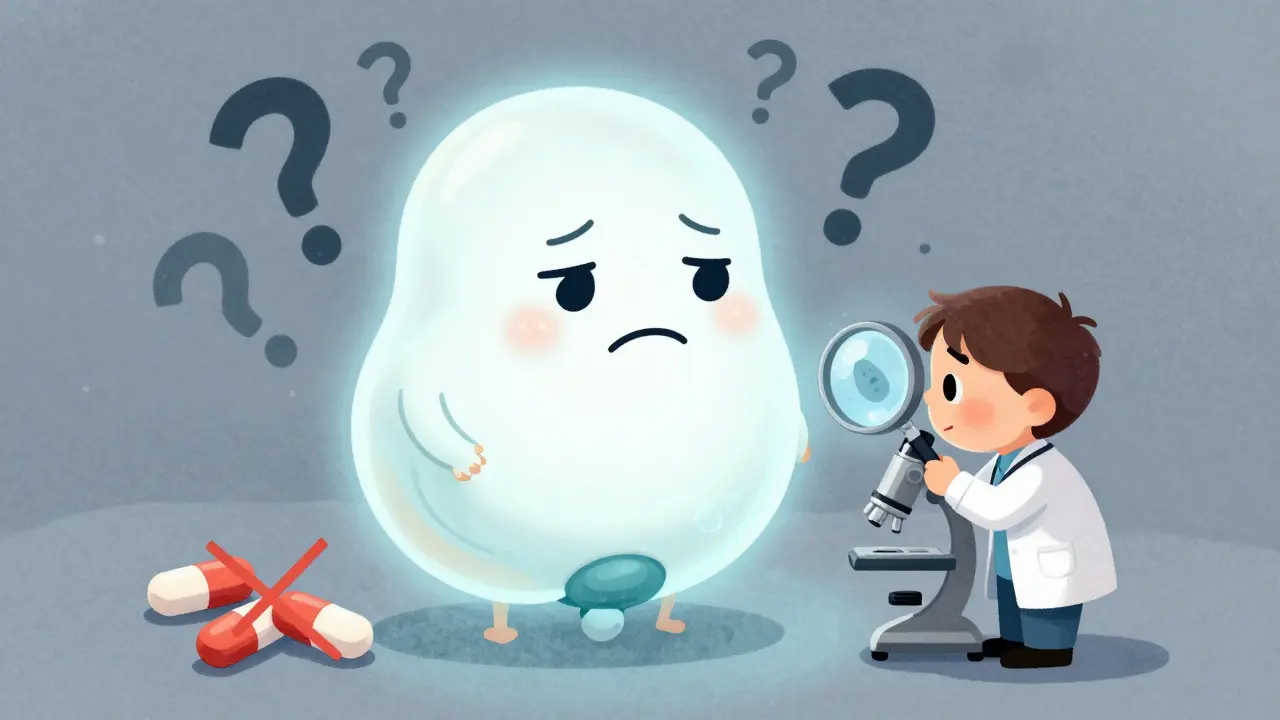
The Overlap: Why You Can’t Just Pick One
Both conditions share the same symptoms:- Chronic pelvic pain
- Urinary urgency
- Frequent urination (more than 7 times a day)
- Pain during sex
- Burning or stinging when peeing
So how do you tell them apart?
Endometriosis pain is tied to your cycle. IC pain isn’t. Endometriosis can cause bleeding in your urine during your period. IC almost never does. Endometriosis needs surgery to confirm. IC is diagnosed by ruling everything else out.
But here’s the real problem: endometriosis can grow on the bladder. In fact, 1 to 12% of endometriosis patients have bladder involvement. And when that happens, it mimics IC perfectly. That’s why Dr. Tamer Seckin says, “You can’t diagnose IC without first ruling out endometriosis.”
A 2022 study from Hofstra Northwell found that up to 80% of patients diagnosed with IC actually had undiagnosed endometriosis. That’s not a small number. That’s a systemic failure.
What Happens When You Get It Wrong
If you’re told you have IC and you take the standard treatments-diet changes, bladder instillations, oral meds like Elmiron-you might feel a little better. But if you actually have endometriosis on your bladder, those treatments won’t fix the root cause. The tissue keeps growing. The pain keeps getting worse.One woman on Reddit shared her story: after 7 years of IC diagnosis, she had a third laparoscopy. They found endometriosis on her bladder wall. Her urinary symptoms dropped by 80% after surgery. She’d been treated for the wrong thing for nearly a decade.
And then there’s the emotional toll. A 2023 survey found 76% of IC patients were told their pain was “all in their head.” That kind of dismissal doesn’t just delay treatment-it breaks trust in the entire medical system.

What to Do If You’re Still in Pain
If you’ve been told you have IC-or endometriosis-and you’re still hurting, here’s what to do next:- Keep a detailed symptom diary for 3 weeks. Note pain levels, urination frequency, timing relative to your period, and triggers (coffee, stress, sex).
- Ask for a pelvic floor physical therapy evaluation. Over 90% of women with either condition have pelvic floor muscle tightness that worsens pain.
- Request a referral to a specialist who treats both conditions. Look for a gynecologist trained in deep excision surgery and a urogynecologist who understands IC.
- Insist on a cystoscopy and laparoscopy if symptoms persist. Don’t accept one diagnosis without ruling out the other.
- Join a support group. The Endometriosis Foundation and Interstitial Cystitis Network have thousands of women who’ve walked this path.
There’s no magic pill. But there is hope. When both conditions are identified and treated together-surgery for endometriosis, bladder retraining and diet for IC-63% of patients report major improvement.
The Future Is Changing
In January 2024, the Endometriosis Foundation updated its surgical guidelines: every excision surgery now must include a bladder check. In February 2024, the NIH gave $4.2 million to find biomarkers that can distinguish endometriosis from IC without surgery.By 2030, experts predict multidisciplinary pelvic pain centers will become standard. These centers bring together gynecologists, urologists, pain specialists, and physical therapists under one roof. No more bouncing between departments. No more guessing.
For now, you have to be your own advocate. If your pain doesn’t fit the textbook, it doesn’t mean you’re wrong. It means the system is still catching up.
Can endometriosis cause bladder symptoms?
Yes. Endometriosis can grow on or into the bladder wall, causing urgency, frequency, pain when the bladder fills, and even blood in the urine during menstruation. This is called bladder endometriosis and affects 1-12% of women with endometriosis. It’s often mistaken for interstitial cystitis.
Is interstitial cystitis a real condition or just undiagnosed endometriosis?
Interstitial cystitis is a real condition, but many cases are misdiagnosed. Research shows up to 80% of patients diagnosed with IC actually have undiagnosed endometriosis affecting pelvic structures. That doesn’t mean IC isn’t real-it means the diagnostic process has been flawed. The best approach is to test for both.
How do I know if my pelvic pain is from endometriosis or IC?
Track your symptoms over time. Endometriosis pain typically worsens before and during your period and may include bleeding in urine during menstruation. IC pain is constant and not tied to your cycle. The only way to be sure is to get evaluated for both: a pelvic exam, cystoscopy, and laparoscopy if needed. Don’t accept one diagnosis without ruling out the other.
Why do so many women get misdiagnosed with UTIs instead?
Because the symptoms-burning, urgency, frequency-look exactly like a urinary tract infection. But in reality, IC and bladder endometriosis don’t involve bacteria. Antibiotics won’t help. Studies show 63% of IC patients were treated for UTIs an average of 5 times before getting the right diagnosis. If antibiotics don’t work and symptoms return, ask about IC or endometriosis.
What’s the best treatment for both conditions together?
For endometriosis, deep excision surgery is the most effective treatment. For IC, a combination of pelvic floor physical therapy, dietary changes (avoiding acidic foods, caffeine, alcohol), bladder training, and sometimes medications like pentosan polysulfate sodium helps. When both are treated together, 63% of patients report major symptom improvement. Treating one without the other often leads to ongoing pain.
I was misdiagnosed with IC for 6 years. Took me three ER visits, two negative UTI tests, and a pelvic floor PT to finally get referred to an endometriosis specialist. When they found lesions on my bladder wall? My urinary symptoms dropped 80% overnight. If you’re still in pain after ‘IC treatment’-don’t give up. Push for laparoscopy. You’re not crazy. The system just sucks.
THEY KNOW THIS IS HAPPENING AND THEY STILL IGNORE IT BECAUSE WOMENS PAIN ISNT REAL TO THEM ITS ALL HORMONES AND STRESS AND THE PHARMA COMPANIES MAKE BILLIONS OFF ELMIron AND ANTIBIOTICS AND THEY DONT WANT YOU TO KNOW SURGERY CAN FIX IT
Man I feel you. My sister went through this for 8 years. Just last year they found endo on her bladder. She cried for an hour after the surgery. Not because it hurt-but because someone finally believed her.
Why are we even wasting time on this? Just do the surgery. If you're in pain and the docs won't help, go to Canada or Mexico. They don't play games there. Stop waiting for permission to heal.
Is there any way to find a good surgeon without spending a fortune? I heard some hospitals in India have programs for international patients. Anyone know if it's legit?
Think about it… our bodies are not broken… they’re just misunderstood. The medical industrial complex prefers pills over precision. It’s easier to prescribe Elmiron than to train surgeons in excision. We’re not patients-we’re data points in a system designed to profit from chronic suffering… 🤔💔
You are NOT alone. I was told I was ‘anxious’ for 7 years. Then I found a pelvic pain specialist who actually listened. We did both cystoscopy AND laparoscopy-and guess what? Endo on my bladder AND IC. I’m not fixed-but I’m finally on the right path. You deserve to be heard. Keep pushing. You’re stronger than you think. 💪🌸
Stop being so dramatic. Most women just need to stop drinking coffee and do yoga. This ‘endometriosis epidemic’ is just a trend. You’re all being manipulated by influencers and overpriced specialists. Go get a second opinion from a real doctor-not some Instagram guru.
They’re covering this up because if women knew they could be cured with surgery… they’d stop taking birth control. And then… who would have babies? Who would keep the economy going? This isn’t medicine. It’s population control. 🕵️♀️🩸