

Topical analgesics are changing how people manage localized pain-without swallowing pills, risking stomach ulcers, or dealing with drowsiness. These creams, gels, and patches work right where the pain is, blocking signals at the nerve level instead of flooding your whole body with medication. For millions with arthritis, nerve pain, or muscle strains, they offer a safer, more targeted option than oral drugs. But not all topical pain relievers are the same. Lidocaine, capsaicin, and NSAID gels each work in completely different ways, and knowing how they differ can make all the difference in finding relief.
How Lidocaine Patches Block Pain Signals
Lidocaine patches, like Lidoderm®, are designed for nerve pain. They don’t reduce swelling or inflammation. Instead, they silence overactive pain nerves. The 5% lidocaine patch delivers just enough of the drug through the skin to block sodium channels-the tiny gates nerves use to send pain signals to the brain. This stops the nerve from firing off false pain messages, especially useful for conditions like postherpetic neuralgia (pain after shingles).
What makes lidocaine patches unique is how little enters the bloodstream. During a 12-hour application, only about 63 milligrams of lidocaine gets absorbed-roughly 10% of the amount that could trigger heart rhythm problems. That’s why they’re safe for older adults or people on multiple medications. You can use up to three patches a day, but only for 12 hours at a time, followed by 12 hours off. This cycle prevents skin irritation and keeps the effect steady.
Patients often report that the patch doesn’t numb the skin like a dentist’s shot-it just quiets the burning, stabbing, or electric pain. One user on Reddit said, “It didn’t feel like anything was happening on my skin, but the pain dropped from an 8 to a 3.” That’s the goal: silent nerves, not numb skin.
Capsaicin: Burn to Relieve
If lidocaine is a mute button, capsaicin is a reset switch. Derived from chili peppers, capsaicin activates the TRPV1 receptor-the same one that makes your mouth feel like it’s on fire when you eat spicy food. At first, this causes a burning sensation. But after repeated activation, the nerve endings become exhausted. They stop sending pain signals for weeks, even months.
The 8% capsaicin patch (Qutenza®) is the strongest version available. It’s not sold over the counter. You need a healthcare provider to apply it because the initial burning can be intense-lasting 30 to 60 minutes. But after that, pain relief can last up to three months. Studies show it reduces pain from postherpetic neuralgia with a number needed to treat (NNT) of 4.4, meaning about 1 in 4 patients get meaningful relief.
But here’s the catch: 30 to 50% of people quit because the first application is too uncomfortable. That’s why it’s done in a clinic, with pain meds on standby. One patient described it as “the worst 45 minutes of my life-but worth it.” For those who stick with it, the payoff is long-lasting. Unlike pills that need daily dosing, one patch application can mean months without pain.
NSAID Gels: Anti-Inflammatory on the Skin
NSAID gels, like Voltaren (diclofenac 1%), work differently. They don’t block nerves. They fight inflammation at the source. When you apply the gel to a sore knee or elbow, it gets absorbed into the tissues underneath, where it blocks the COX enzymes that make pain-causing chemicals called prostaglandins. Studies show tissue concentrations of diclofenac in the joint area can be 10 to 100 times higher than in the blood.
This means it works locally-without the stomach upset, kidney strain, or heart risks that come with oral NSAIDs. A 2018 Cochrane review found topical NSAIDs had an NNT of 2.7 for acute sprains, meaning nearly 3 out of 4 people got relief. For osteoarthritis of the knee, 60% of users saw at least half their pain go away in four weeks. But for deeper joints like the hip, the effect drops to 20% because the gel doesn’t penetrate far enough.
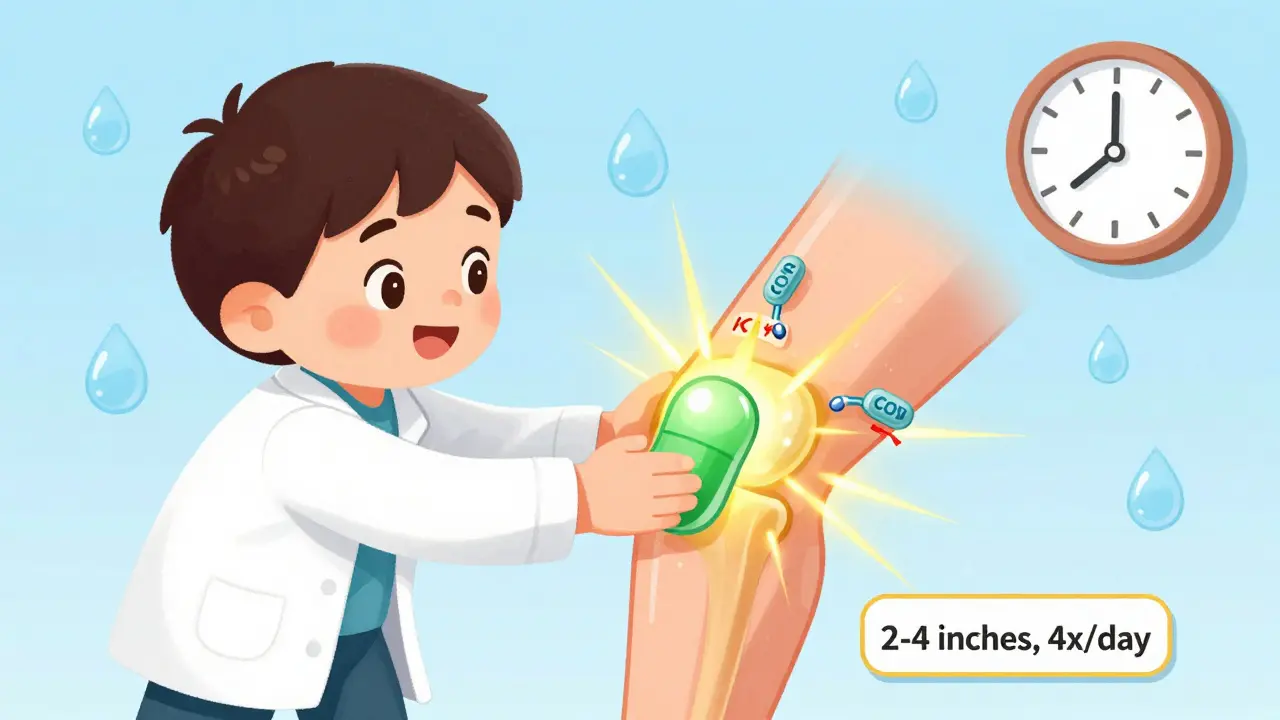
Applying it right matters. Most people use too little. The recommended dose is a 2- to 4-inch ribbon of gel, applied four times a day. Many users skip the massage, which helps the gel sink in. Peak pain relief comes about 90 minutes after application. One user noted, “It takes forever to kick in, but once it does, I’m good for six hours-with no heartburn.”

Comparing the Three: Which One Works Best?
Choosing between lidocaine, capsaicin, and NSAID gels depends on your pain type and tolerance.
| Feature | Lidocaine Patch | Capsaicin Patch | NSAID Gel |
|---|---|---|---|
| Primary Use | Neuropathic pain (e.g., shingles, diabetic nerve pain) | Neuropathic pain (e.g., postherpetic neuralgia) | Inflammatory pain (e.g., osteoarthritis, sprains) |
| How It Works | Blocks nerve signals | Depletes pain chemicals in nerves | Reduces inflammation at the site |
| Onset of Relief | 1-2 hours | After 30-60 min burning (relief lasts weeks) | 1-2 hours |
| Duration of Effect | 12 hours per patch | Up to 3 months after one application | 4-6 hours per application |
| Application Frequency | Up to 3 patches/day, 12 hours on/off | Once every 3 months (clinic only) | 4 times daily |
| Common Side Effects | Redness, itching at site (5-15%) | Intense burning (30-50% discontinue) | Skin irritation, rash (10-20%) |
| Best For | Localized nerve pain, elderly patients | Severe, persistent nerve pain | Sore joints, muscle strains |
For joint pain from osteoarthritis, NSAID gels are usually the first choice. For burning, shooting nerve pain, lidocaine patches are safer and easier than pills. Capsaicin is a last-resort option-powerful, but not for everyone.
What Patients Really Say
Real-world feedback paints a mixed picture. A 2019 survey of 250 chronic pain patients found 68% had moderate to significant improvement with topical NSAIDs. But 45% said their relief was inconsistent. Why? Technique matters. Many apply too little gel. Others use it on broken skin or don’t massage it in. One user on Drugs.com complained, “I used it like lotion-no effect.”
For lidocaine patches, satisfaction is high among those with nerve pain. One Reddit user wrote, “I tried gabapentin for months. Side effects were awful. The patch? Zero side effects. Pain cut in half.”
Capsaicin users are split. The initial burn turns people off. But those who push through often call it life-changing. “I couldn’t sleep for years,” said one patient. “One patch, and I slept through the night for the first time in a decade.”
Practical Tips for Getting Results
- Apply to clean, dry skin. Moisture or lotion blocks absorption.
- Use the full dose. For gels, 2-4 inches of product is standard. Don’t guess.
- Massage gently. It helps the medicine sink in. Don’t rub hard-just smooth it in.
- Wait before washing. Give gels 30 minutes to absorb before showering.
- Avoid broken skin. Applying to cuts or rashes can cause irritation or systemic absorption.
- Be patient. NSAID gels take 45-90 minutes. Capsaicin takes weeks to build up. Lidocaine works faster, but needs consistent use.
Most people need 2-3 tries to get the technique right. Don’t give up after one bad experience.
What’s Next for Topical Pain Relief?
Researchers are working on better versions. A new nanoemulsion diclofenac gel, tested in late 2023, delivers 2.3 times more medicine into the tissue without raising blood levels. That could mean stronger relief with fewer applications.
Other studies are exploring resiniferatoxin (RTX), a capsaicin-like compound 1,000 times stronger. It’s not ready for skin use yet-it doesn’t penetrate well-but early trials for joint pain show promise.
As opioid use declines, doctors are turning to these topical options more often. The American Pain Society now recommends them as first-line treatment for localized pain. With aging populations and growing concerns about drug interactions, their role will only grow.
Can I use topical analgesics with oral pain meds?
Yes, but check with your doctor. Topical lidocaine and capsaicin rarely interact with other drugs. NSAID gels can add to the effects of oral NSAIDs, increasing risk of side effects. If you’re taking aspirin, ibuprofen, or naproxen, using diclofenac gel may raise your total NSAID dose. Your doctor can help balance the benefits and risks.
Are topical analgesics safe for older adults?
They’re often safer than oral pills. Lidocaine patches and NSAID gels have minimal absorption into the bloodstream, so they’re easier on the kidneys, liver, and stomach. For seniors on multiple medications, this reduces drug interactions. Capsaicin can be used too, but the initial burning may be harder to tolerate. Always start with the lowest dose and monitor skin reactions.
Why does capsaicin burn when I apply it?
Capsaicin triggers TRPV1 receptors on pain nerves, which normally respond to heat. This tricks your brain into feeling a burning sensation. It’s not damaging your skin-it’s just activating the same pathway as spicy food. After 30-60 minutes, the nerve endings become overloaded and stop sending pain signals. The burn fades, and relief begins. This is normal and expected.
How long does it take for lidocaine patches to work?
You’ll usually feel relief within 1 to 2 hours. Unlike NSAID gels that fight inflammation, lidocaine blocks nerve signals directly. It doesn’t reduce swelling, so if your pain comes from swelling, it may not help. But for nerve pain-burning, tingling, electric shocks-it works quickly. Keep using it as directed: 12 hours on, 12 hours off.
Can I use these products if I have sensitive skin?
Proceed with caution. All topical analgesics can cause mild redness or itching, especially at first. If you have eczema, psoriasis, or very sensitive skin, test a small area first. For lidocaine and NSAID gels, try a small patch for a day. For capsaicin, avoid it entirely if your skin is broken or inflamed. If irritation lasts more than 2 days, stop using it and consult your doctor.


