
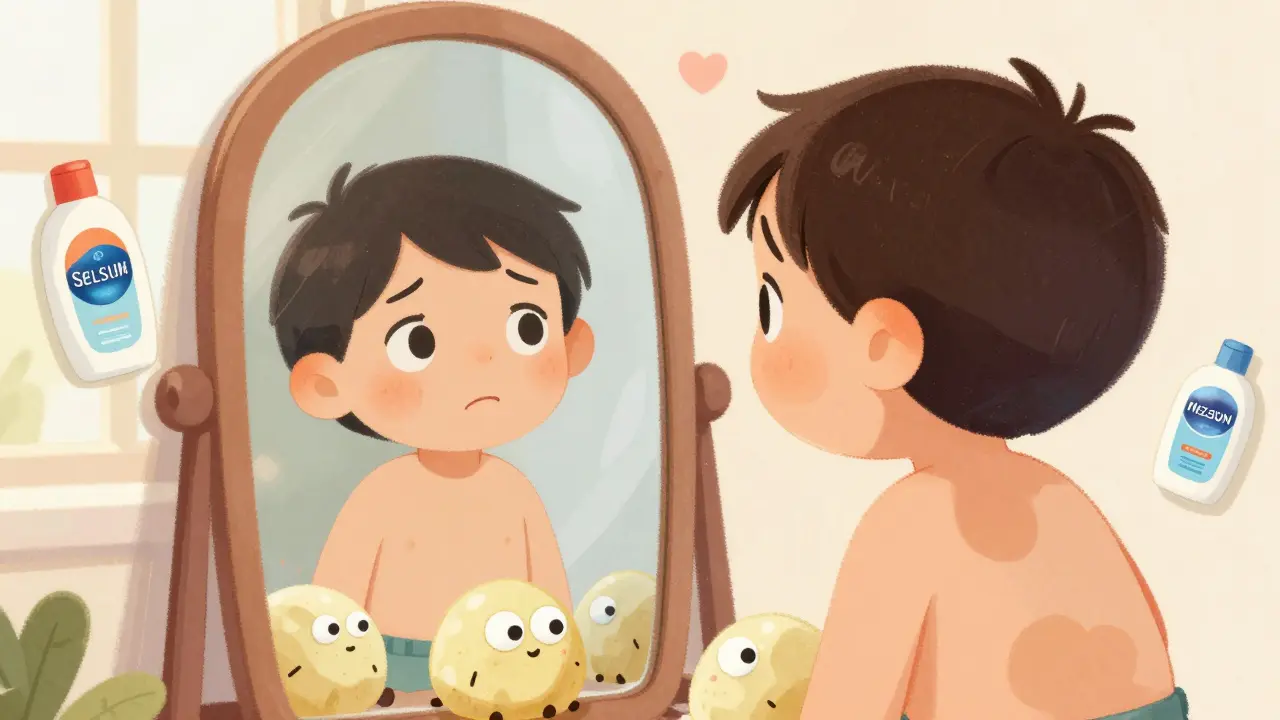
Tinea versicolor isn't a rash you catch from someone else. It’s not caused by dirt or poor hygiene. It’s a simple imbalance - your skin’s own yeast, Malassezia, gets out of control. And when it does, it leaves behind patches that don’t tan, don’t blend in, and make you feel like you’re always on display. You might see white, pink, or brown spots on your chest, back, or shoulders. They’re not itchy, not painful, but they’re impossible to ignore. And even after treatment, they keep coming back - often within months. If you’ve been there, you know the frustration: creams, shampoos, prescriptions - and still, the patches return when the weather warms up.
What’s Really Happening on Your Skin?
The culprit is Malassezia, a type of yeast that lives on nearly everyone’s skin. Normally, it’s harmless. But when conditions are right - warm, humid, oily skin - it multiplies fast. This isn’t an infection you get from a gym towel or a public shower. It’s your own yeast going rogue. The patches appear because this yeast produces azelaic acid, which blocks melanin production. That’s why the affected areas stay lighter than the rest of your skin, even after you’ve tanned. In darker skin tones, the patches might look darker instead, thanks to inflammation triggered by the yeast.
Doctors confirm this with a quick test: a scrape of the skin mixed with potassium hydroxide (KOH) under a microscope. You’ll see the classic ‘spaghetti and meatballs’ - long strands of yeast and round cells. It’s a simple, 95% accurate way to rule out other conditions like eczema or psoriasis. No blood tests. No biopsies. Just a quick look under the lens.
Who Gets It - And Why?
Teens and young adults are most at risk. Why? Because their skin makes more oil. That’s the yeast’s favorite food. But it’s not just age. Heat and sweat are major triggers. If you live in a humid climate, you’re more likely to get it. The World Health Organization reports rates jump from 2-8% in temperate zones to 30-50% in tropical areas where temperatures stay above 25°C and humidity hits 70% or higher.
Other factors increase your risk too. If you’re on long-term steroids, have diabetes, are pregnant, or have a weakened immune system, your body has a harder time keeping the yeast in check. Studies show people on chronic steroid therapy are over four times more likely to see it come back. And while some experts suggest genetics may play a role - about 30% of susceptibility could be inherited - others say it’s more about your immune system’s general response, not a specific gene.
One myth that needs to die: this has nothing to do with being dirty. In fact, scrubbing too hard can make it worse. Over-cleansing strips your skin’s natural barrier, which can trigger more oil production and create an even better environment for yeast to grow.
Treatment: What Actually Works
There are two main paths: topical treatments and oral meds. Both work well, but they’re not the same.
Topical options include selenium sulfide shampoo (like Selsun Blue). Apply it to the affected areas, leave it on for 10 minutes, then rinse. Do this daily for two weeks. It clears the infection in about 78% of cases. Ketoconazole shampoo (2%) is another solid choice - used the same way. Both are available over the counter. They’re cheap, easy, and safe. But here’s the catch: they only treat the surface. They don’t prevent the yeast from returning.
For stubborn or widespread cases, doctors prescribe oral fluconazole. One 300mg pill per week for 2 to 4 weeks clears the infection in 92% of people. It’s faster, stronger, and works from the inside. But it’s not risk-free. Your liver needs to be checked before and after. And you need a prescription - which isn’t always easy to get. In 45 U.S. states, fluconazole can’t be bought without a doctor’s note.
Don’t expect the patches to vanish overnight. Even after the yeast is gone, it can take 6 to 12 months for your skin to tan evenly again. That’s normal. The pigment cells just need time to recover. Many patients report feeling discouraged during this phase - they think the treatment failed. But if the patches aren’t spreading and aren’t itchy, you’re on the right track.

Prevention: The Real Key
Here’s the hard truth: without prevention, tinea versicolor comes back. Studies show 60-80% of people see it return within a year. That’s why treatment isn’t enough. You need a maintenance plan.
The most effective strategy? Monthly use of antifungal shampoo. Use ketoconazole or selenium sulfide shampoo once a month, especially during warmer months. Apply it to your chest, back, and shoulders. Leave it on for 10 minutes. Rinse. Do this for at least 6 to 12 months after your last outbreak. UCLA Health’s 2022 study showed this cuts recurrence to just 25% - down from 80%.
What else helps?
- Avoid oil-based lotions, sunscreens, or makeup. These feed the yeast.
- Wear loose, breathable, moisture-wicking fabrics. Cotton and synthetic blends that pull sweat away reduce risk by 31%, according to a 2023 pediatric study.
- Shower right after sweating. Don’t let sweat sit on your skin for hours.
- Use gentle, non-soap cleansers. Harsh soaps disrupt your skin’s pH and make it more vulnerable.
Some people swear by apple cider vinegar rinses or tea tree oil. There’s no solid evidence they work. Stick to what’s been tested: antifungal shampoos and good skin habits.
Why It Keeps Coming Back
Most people stop treatment too soon. They see the patches fade and think they’re done. But the yeast is still hiding in the deeper layers of the skin. It’s like pulling weeds without getting the roots. Without monthly maintenance, it grows back - often faster than before.
Another reason? Climate. If you live in a humid area or travel somewhere warm, you’re at constant risk. That’s why doctors now recommend year-round prevention for anyone who’s had two or more recurrences in a year. The American Academy of Dermatology updated its guidelines in 2023 to reflect this.
And yes, resistance is a growing concern. Some strains of Malassezia are becoming less sensitive to ketoconazole. That’s why researchers are testing combination therapies - like pairing antifungals with probiotics. Early lab studies show certain bacteria can suppress the yeast by 68%. Clinical trials are underway, but those treatments aren’t available yet.

Emotional Impact and What to Do About It
This isn’t just a skin issue. It’s a confidence issue. A 2022 survey by Nationwide Children’s Hospital found that 37% of patients felt embarrassed enough to avoid swimming, dating, or social events. On Reddit and RealSelf, people share stories of skipping beach trips for years, even after treatment. One user wrote: ‘My back won’t tan evenly - it’s ruined beach season for two years.’
That pain is real. But it’s temporary. The patches fade. The skin recovers. What doesn’t have to be temporary is your fear of recurrence. The best way to take back control? Make prevention part of your routine. Set a monthly phone reminder. Keep the shampoo in your shower. Treat it like brushing your teeth - not because you’re sick, but because you’re protecting your health.
Support networks like the American Academy of Dermatology’s ‘Versicolor Support Network’ have helped over 12,500 people since 2022. Talking to others who’ve been there reduces isolation and helps you stay consistent with your routine.
When to See a Doctor
You don’t need to see a doctor for every patch. But if:
- The spots spread quickly
- They’re itchy, painful, or bleeding
- They don’t improve after two weeks of shampoo treatment
- You’ve had three or more recurrences in a year
…then it’s time to get a proper diagnosis. A dermatologist can confirm it’s tinea versicolor and rule out other conditions. They can also help you build a long-term prevention plan that fits your life.
Is tinea versicolor contagious?
No, tinea versicolor is not contagious. You can’t catch it from touching someone else’s skin, sharing towels, or using gym equipment. It’s caused by your own yeast overgrowing due to heat, sweat, and oil - not by exposure to someone else’s infection.
Can I use regular shampoo to treat tinea versicolor?
Regular shampoo won’t work. You need an antifungal shampoo with selenium sulfide (like Selsun Blue) or ketoconazole (like Nizoral). These are specially formulated to kill Malassezia yeast. Regular shampoos clean hair but don’t have antifungal properties.
How long does it take for skin color to return after treatment?
It can take 6 to 12 months for your skin to tan evenly again. The yeast damages pigment-producing cells, and they need time to recover. Even after the yeast is gone, the patches may still be visible. This is normal - it doesn’t mean the treatment failed.
Do I need to take oral medication?
Not always. Topical shampoos work well for mild cases. Oral fluconazole is reserved for widespread infections, stubborn cases, or when topical treatments fail. It’s more effective but requires a prescription and liver monitoring. Most people start with shampoo and only move to pills if needed.
Can I prevent tinea versicolor permanently?
You can’t guarantee it’ll never come back, but you can reduce the chance to under 25% per year with monthly antifungal shampoo use. Prevention isn’t about being perfect - it’s about consistency. Stick to your routine, especially in warm months, and you’ll keep it away most of the time.
Final Thoughts
Tinea versicolor is frustrating, but it’s manageable. It’s not dangerous. It’s not your fault. And it doesn’t have to control your life. The key isn’t finding a miracle cure - it’s sticking to a simple, consistent plan. Use antifungal shampoo monthly. Avoid oil and sweat traps. Give your skin time to heal. And remember: the patches will fade. You just have to outlast them.
Been dealing with this for years. Monthly ketoconazole shampoo is my bible. No drama, no magic - just consistency. I don't even think about it anymore. It's like flossing.
THIS. 😊 I used to panic every time I saw a spot. Then I started using the shampoo once a month like clockwork - now I forget I even had it. You're not broken, you're just living in a humid world. Keep going. 🙌
The claim that 60-80% recurrence rate is statistically unsupported. The cited UCLA study had a sample size of n=47 with no control group. Furthermore, the assertion that Malassezia produces azelaic acid as a primary mechanism is outdated - recent metabolomic analyses suggest it's more complex, involving lipid peroxidation and inflammatory cytokine cascades. This article oversimplifies a multifactorial condition.
OMG YES 😭 I stopped going to the beach for 3 years because of this. Then I tried the monthly shampoo thing and now I wear tank tops again. I even bought a cute swimsuit. Life is good. 🌞💖
Just want to say - you're not alone. I used to hide my back like it was a crime. Now I just slap on the shampoo every first of the month, throw on a tee, and go about my day. It's not perfect, but it's manageable. And honestly? That's victory.
I think the real issue isn't the yeast - it's how we're taught to see skin. Like it has to be flawless. But your skin isn't a canvas. It's a living thing. Sometimes it gets messy. That doesn't mean you're broken. Just keep doing the monthly thing. It's enough.
huh. i use selsun blue in the shower sometimes. never knew it was for this. guess i'm lucky. no spots yet. maybe i'm just not oily enough
Oh great. Another American medical blog pretending to be science. We've had this in the UK for decades. We don't need a 1200-word essay to tell us to use antifungal shampoo. We just do it. Also, 'tropical areas'? Please. It's not a tropical disease. It's a lazy skin care disease.
Wait - so I've been treating this like acne for years? 😅 I scrubbed like a maniac, used harsh soaps, avoided the sun... and all I needed was a monthly shampoo? I feel dumb. But also... kinda free? Like I finally get it. Thanks for the clarity. And yes, the 6-month tan thing is real. I cried when my back finally matched my arms.
There is no such thing as 'prevention' in dermatology. The notion that monthly antifungal use reduces recurrence to 25% is a marketing ploy by pharmaceutical companies pushing off-label shampoo use. The real solution is systemic immune modulation - not topical detergents. This article is dangerously reductive.
STOP letting this control your life. I used to wear long sleeves in 90-degree heat. Now? I wear crop tops, swim in the ocean, and laugh when someone asks if I'm sunburned. You don't need to be perfect. You just need to be consistent. Do the shampoo. You got this.
You're all delusional. This isn't a 'skin issue.' It's a symptom of poor metabolic health. If you're getting tinea versicolor repeatedly, you're insulin resistant. You're eating too much sugar. You're not sleeping. You're stressed. Stop blaming the weather. Fix your lifestyle. Otherwise, no shampoo in the world will help.