
Why Most Patent Disputes Never Go to Trial
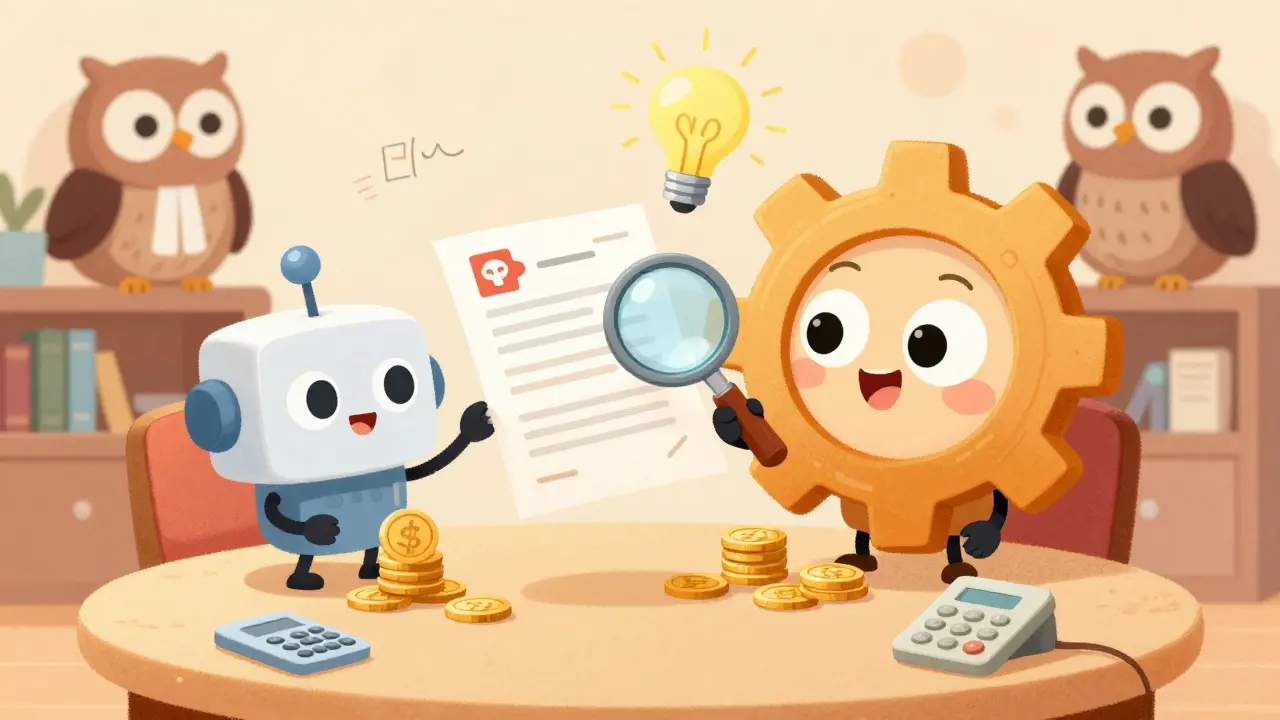
Most companies don’t fight patent battles in court. They don’t have to. In fact, 85.7% of patent disputes end in settlement before a single jury is seated. That’s not luck. It’s strategy. When two companies clash over who owns a technology, the real battle isn’t about the law-it’s about cost, risk, and timing. Litigation can cost $3 million to $5 million just to get to trial. For a small company, that’s bankruptcy. For a big one, it’s a distraction from innovation. So they sit down, not to argue, but to calculate.
The Hidden Math Behind a Patent Settlement
Before a single lawyer opens their mouth, both sides do the math. What’s the worst-case scenario if this goes to trial? What’s the best-case outcome if they settle now? It’s not about who’s right-it’s about who can afford to wait. A typical settlement for a dispute between competitors averages $8.7 million. For patent trolls, it’s lower-around $1.2 million-but they file hundreds of cases. That’s how they make money: by targeting companies that would rather pay than fight.
But here’s what most people miss: the real value isn’t in the dollar figure. It’s in what’s not paid. A company that avoids a 2-year lawsuit saves millions in legal fees, keeps engineers focused on product development, and protects its reputation. That’s why big players like Apple, Samsung, and Intel don’t just settle-they design settlements that serve their long-term goals.
How Settlements Actually Work: The High-Low Structure
One of the smartest tools in patent negotiation is the high-low settlement. It sounds complicated, but it’s simple: both sides agree on two numbers upfront. If the court rules in their favor, they get the high number. If it rules against them, they get the low number. No appeals. No endless back-and-forth.
Stanley Black & Decker pioneered this in 2015. Instead of fighting over 20 patents, they picked 3 key ones. If those were found valid and infringed, the payment jumped. If not, the company paid a smaller, predictable amount. This cuts the risk of losing everything-and gives both sides a reason to walk away with something. It works best between rivals who still need to do business together. It fails miserably with patent trolls, who don’t care about future collaboration-they just want a quick payout.
When Cross-Licensing Beats Cash Payments
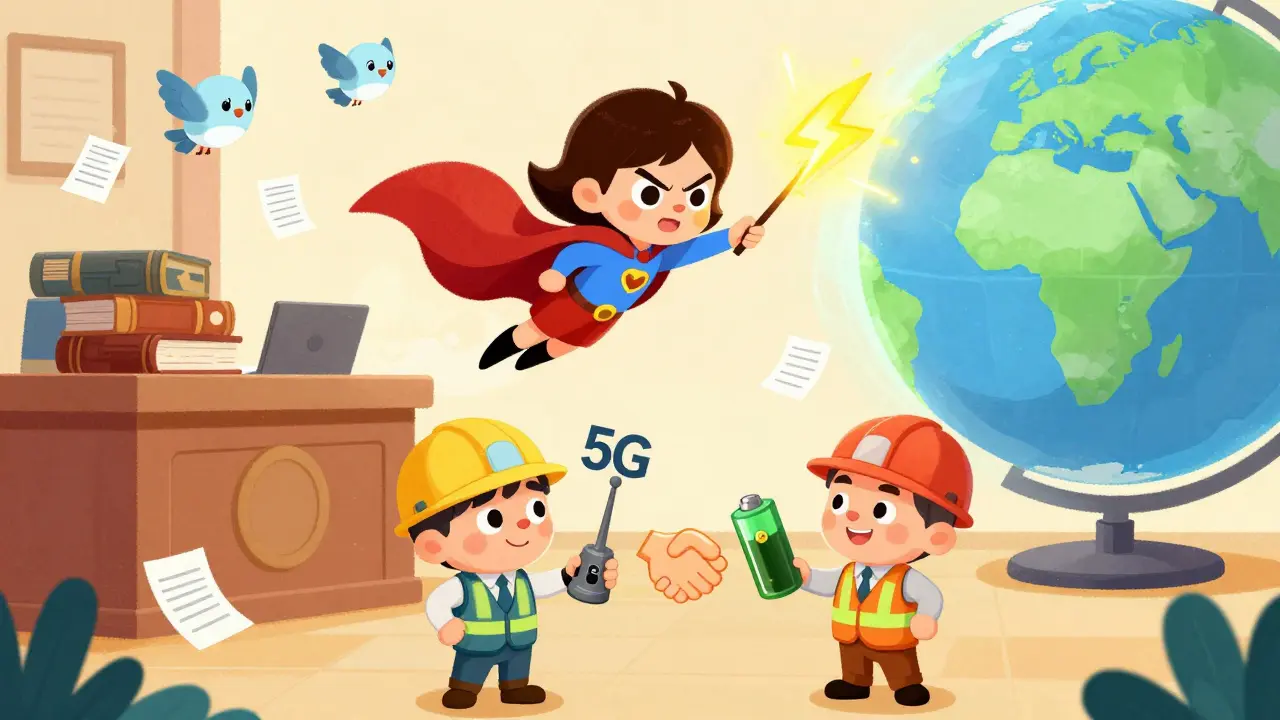
In industries like semiconductors and telecom, cash isn’t the main currency. Technology is. Two companies might settle not by exchanging money, but by exchanging patents. This is called cross-licensing. One company gets access to the other’s 5G patents. The other gets rights to the first’s battery management tech. No money changes hands. But both save millions in R&D.
Intel’s 2018 settlement with MEDIATEK didn’t just end a lawsuit-it led to a joint project that saved over $200 million in development costs. That’s the power of turning a fight into a partnership. But cross-licensing only works if both sides have strong, valuable portfolios. A company with 500 patents can negotiate with a company with 800. A company with 12 weak patents? Not so much.
The Role of Mediation and Specialized Judges
Not every settlement happens in a conference room. Sometimes, it happens in front of a retired judge. That’s where mediation comes in. Former Federal Circuit Judge Randall Rader helped broker the 2021 Ericsson-Samsung deal after 8 months of stalled talks. His role? Not to decide who won, but to make both sides see reality.
Mediation succeeds in 65% of patent cases. Binding arbitration, where a third party makes a final decision, works even better-81% success rate. But here’s the catch: once you go to arbitration, you can’t appeal. That’s a big risk. That’s why most companies prefer mediation. It’s a nudge, not a verdict.
Why Patent Validity Is the Biggest Wild Card
Here’s the dirty secret: nearly 4 out of 10 patents that get sued over are later thrown out-or at least weakened-by the USPTO. That’s not a glitch. It’s the system. Patents are granted quickly, often without deep prior art checks. Companies know this. So before they even sit down to negotiate, they run a patent portfolio stress test. They dig into every patent they’re using or being accused of infringing. They look for old papers, rejected applications, foreign patents that might invalidate the claims.
Top firms spend $150,000 to $300,000 on this step alone. Why? Because if you can prove a patent is weak, your settlement power skyrockets. One company in 2023 used a USPTO program called Patent Evaluation Express to get a non-binding validity opinion in 6 weeks-for 60% less than a full post-grant review. That single report shifted the entire settlement balance.
How AI Is Changing the Game
Five years ago, assessing a patent portfolio took weeks. Now, AI tools like PatentSight can do it in days. These tools scan millions of documents-patents, academic papers, product manuals-to find hidden prior art. They flag patents that look strong but have fatal flaws.
But AI isn’t perfect. A 2023 study in Nature Machine Intelligence found AI misses nearly 19% of relevant prior art. That’s why the best teams use AI as a first pass, then bring in human experts. The AI finds the needle. The expert decides if it’s a scalpel or a trap.
The New Rules in Europe and Beyond
Since June 2023, Europe has had a new player: the Unified Patent Court. It’s a single court for all EU countries. That means a patent lawsuit in Germany now affects the entire bloc. Companies can’t just settle in one country and ignore the rest. So cross-border settlements have jumped 22% in just six months. If you’re a company selling in Europe, you can’t afford to treat patent disputes country by country anymore. You need a continent-wide strategy.
And then there’s the FRAND problem. If your patent is part of a standard-like 4G or Wi-Fi-you’re legally required to license it fairly. But what’s “fair”? That’s where the European Commission steps in. They fined Qualcomm €242 million in 2018 for using patent threats to block competitors. Now, companies think twice before using SEPs as leverage.
What Happens After the Settlement?
Signing a paper doesn’t end the story. Royalty payments must be tracked. Sales data must be reported. If you’re paying 2% of device revenue, you need accurate numbers. That’s where blockchain is starting to show up. IBM and Microsoft are testing smart contracts that automatically adjust payments based on real-time sales. No more audits. No more disputes over numbers. Just code doing what it’s told.
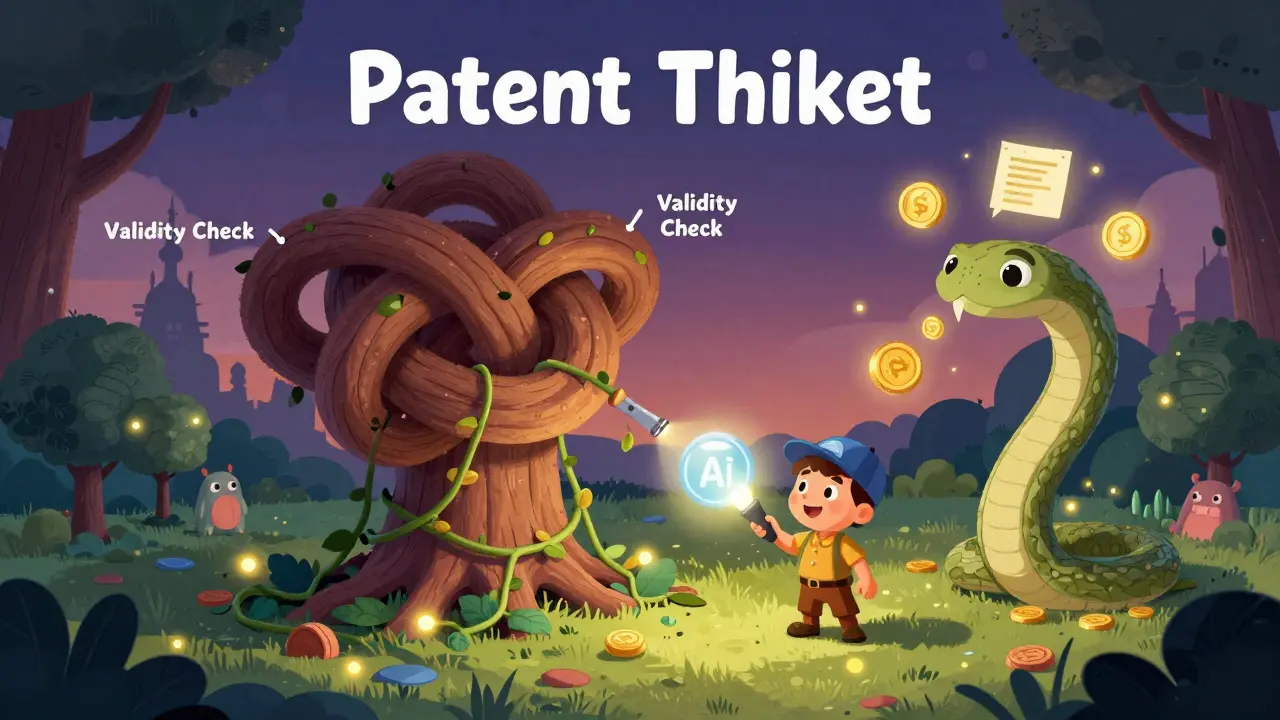
But the biggest challenge ahead? Patent thickets. In AI, quantum computing, and medical devices, a single product can touch 500+ patents across 10 countries. Negotiating all of them? That’s a 300% increase in complexity compared to older tech. Companies that win won’t be the ones with the most patents. They’ll be the ones who can navigate the mess.
How to Prepare for a Patent Settlement
- Know your bottom line-Calculate the cost of litigation vs. the cost of paying up. Don’t guess. Do the math.
- Test your patents-Run validity checks on every patent you’re using or being accused of using. Weak patents are bargaining chips.
- Don’t lead with your highest offer-Studies show plaintiffs who ask for 3x their target get 28% more. But that also makes the other side dig in. Be strategic, not aggressive.
- Use mediation early-A neutral third party can break deadlocks faster than lawyers.
- Think beyond cash-Can you trade tech access, joint R&D, or extended licenses instead of money?
What to Avoid
- Settling too fast without checking patent validity.
- Letting emotions drive decisions-this isn’t personal, it’s business.
- Ignoring international implications-especially in Europe and Asia.
- Signing vague agreements-royalty terms, expiration dates, and scope must be crystal clear.
What’s the difference between a patent settlement and a license?
A settlement ends a dispute-usually with a payment or agreement to stop fighting. A license is a legal agreement that lets one company use another’s patent, often in exchange for ongoing royalties. Settlements can include licenses, but not all licenses come from settlements. Some are just business deals.
Can a small company successfully settle a patent case against a big one?
Yes, but only if they have strong patents. Big companies settle with small ones all the time-not because they’re scared, but because it’s cheaper than fighting. If you hold a patent that’s critical to their product and it’s likely to hold up in court, you have leverage. The key is proving validity before negotiations start.
How long do patent settlement negotiations usually take?
Most take 6 to 9 months, especially for complex tech. The heaviest negotiations happen after the Markman hearing (where courts define patent terms) and before summary judgment. That’s when both sides know what’s at stake and are most motivated to settle.
Why do some companies still go to trial?
A few reasons: they believe they’re completely in the right, they want to set a legal precedent, or they’re trying to scare competitors. Sometimes, it’s pride. But 85% of cases settle because the cost of winning in court is often higher than the cost of losing.
Are patent settlements public record?
The fact that a case settled is public, but the terms usually aren’t. Settlement agreements are often confidential. That’s why exact numbers are hard to find. But if the case was part of a public lawsuit, the dismissal order will show up in court records.
Man, I’ve seen this play out in startups up in Austin. Big corp comes in with a patent they bought for $50k, threatens to sue, and the founder just pays up because they can’t afford a lawyer. But here’s the kicker - half the time, that patent’s garbage. The USPTO’s backlogged so bad, they’re granting patents on stuff that’s been on GitHub since 2012.
The high-low settlement mechanism is underutilized in tech litigation. Structured risk allocation reduces litigation volatility by anchoring both parties to a bounded outcome space, effectively decoupling adversarial posturing from economic rationality. This is particularly effective in cross-licensing ecosystems where iterative innovation depends on continued interoperability.
It’s funny how we call it ‘settlement’ like it’s peace, but really it’s just the quiet surrender of the weaker player to the machinery of capital. The law doesn’t decide truth - it decides who can afford to keep playing. The patent system isn’t broken, it’s working exactly as designed: to concentrate power in the hands of those who already have it. We’ve turned innovation into a financial instrument, not a human one.
Okay but let’s be real - patent trolls are the reason we can’t have nice things. I know a guy who runs a tiny SaaS company and got hit with a $1.2M demand over a patent for ‘clicking a button to send data.’ That’s not a patent, that’s a tax. And the worst part? The guy who owns it? Lives in a mansion in Florida and has never written a line of code. Meanwhile, real engineers are stuck in Zoom calls arguing over royalty splits instead of building stuff. This whole system is a pyramid scheme with lawyers at the top.
And don’t even get me started on AI tools that ‘find prior art’ - they’re trained on garbage data and miss the obvious stuff. Like, I’ve seen them overlook a 1998 IEEE paper that literally describes the exact method in question. AI doesn’t understand context. It just counts keywords.
And then there’s Europe with their new court - great, now we have to pay lawyers in 27 languages. And FRAND? Yeah right. Qualcomm got fined for being a jerk, but the same companies still use SEPs to lock out competitors. It’s all theater. The real winners? Law firms. The losers? Everyone else.
This article is pure corporate propaganda. They make it sound like settling is smart, but it’s just cowardice dressed up as strategy. Companies don’t settle because they’re rational - they settle because they’re scared. Scared of exposure. Scared of bad PR. Scared that their own patents are junk. The real innovation here isn’t in the settlements - it’s in the legal engineering that lets billion-dollar corporations bully small players into silence. And the media eats it up like it’s wisdom.
Meanwhile, real inventors? They’re getting crushed. One guy I know spent $400k defending his patent - and lost. The big guy paid nothing. That’s not justice. That’s theft with a law degree.
Blockchains for royalty tracking sound good in theory but ignore human error. What if sales data gets misreported? What if a product is bundled and the revenue split isn’t clear? Code can’t fix bad contracts. Clear terms and regular audits still matter.
Back home in Nigeria, we don’t have this problem because most of us can’t even afford to file a patent. But I’ve seen how big companies use IP to lock out local innovators. It’s the same story everywhere - power protects power. Maybe the real solution isn’t better settlements, but better access. If everyone could afford to defend their ideas, maybe the system wouldn’t be so one-sided.
I appreciate how the article highlights mediation and the role of retired judges - this is critical. Many companies overlook the value of a neutral facilitator who can reframe the conversation from ‘winning’ to ‘solving.’ The emotional toll of litigation is often underestimated, and a skilled mediator can help parties reconnect with their business goals rather than their grievances.
Additionally, the emphasis on patent validity testing before negotiation is spot-on. Proactive due diligence reduces downstream friction and empowers companies to negotiate from strength, not fear. This is a model that should be institutionalized across all tech sectors.
AI finds 19% of prior art? LOL. I’ve used PatentSight. It’s worse than that. It flags every patent with the word ‘wireless’ as infringing. Meanwhile, the real prior art is buried in a 1987 Soviet engineering journal nobody’s ever read. And cross-licensing? Please. It’s just a fancy way to say ‘we both stole from each other and now we’re pretending it’s fair.’ 😅
patents are just a scam. why do we even have them? someone invents something and then gets to charge everyone else forever? dumb. just let people copy stuff. innovation would be faster. this whole article is just lawyers trying to make it sound smart.
There’s a deeper truth here that nobody talks about: patent disputes aren’t about innovation - they’re about control. The companies that settle aren’t being smart. They’re being strategic about preserving their ecosystem. The real winners are the ones who build alliances, not lawsuits. Think of it like chess - sometimes the best move isn’t capturing the queen, it’s making sure your opponent can’t make any moves at all.
And cross-licensing? That’s not just business. That’s trust. It’s saying, ‘I know you’re good at this, I’m good at that, let’s not waste time fighting over who owns the tools.’ That’s the future. Not litigation. Collaboration.
But it only works if you’ve got integrity. And right now, too many companies are playing dirty. The system rewards greed, not genius.
This is so inspiring! Even in India, where resources are limited, we’re seeing startups use mediation and AI tools to level the playing field. It’s not about having the most patents - it’s about being smart, patient, and creative. Keep pushing forward - change is possible!