
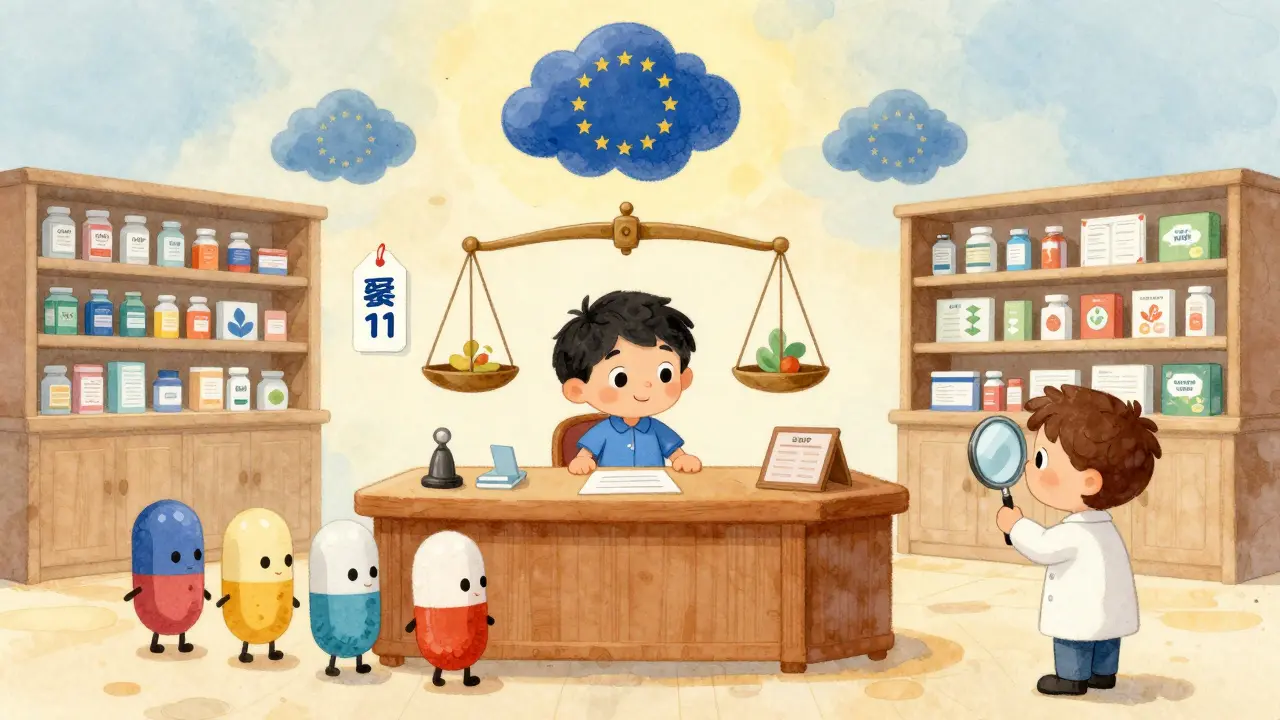
When European public hospitals and pharmacies need to buy generic medicines, they don’t just pick the cheapest option off a shelf. They go through a formal, tightly regulated process called tendering. This isn’t a simple bidding war-it’s a complex, legally binding system designed to get the best value for taxpayer money while ensuring fair access for suppliers across the EU. The result? Billions in savings, higher quality control, and a level playing field for generic drug manufacturers big and small.
How Europe’s Tendering System Works
Every public contract above a certain value-usually €25,000 for goods like medicines-must follow EU procurement rules. These rules aren’t suggestions. They’re law, written into directives like 2014/24/EU and 2014/25/EU, and enforced in every member state. The goal? Transparency, fairness, and competition. No insider deals. No favoritism. No hidden criteria. The system uses five main procedures, each suited to different types of purchases:- Open procedure: Any supplier can submit a bid. It’s the most transparent, but also the most paperwork-heavy. About 45% of EU public tenders use this method.
- Restricted procedure: Suppliers must first prove they’re qualified. Only those who pass get to submit a full bid. This cuts down on volume but still allows broad competition. Used in 35% of cases.
- Competitive Negotiated procedure: Used when the needs are too complex for standard bids. Authorities can talk to suppliers, adjust requirements, and negotiate terms. Common in high-tech medical equipment, but rarely used for simple generics.
- Competitive Dialogue: For projects where even the authorities don’t know exactly what they need yet. Think smart drug delivery systems or new packaging tech. Used in 20% of tenders, especially in energy and transport-but less so in pharma.
- Framework Agreements: A pre-approved list of suppliers for recurring purchases. Hospitals sign one contract with 3-5 generic drug makers, then pick from them as needed. This cuts bidding time and stabilizes supply.
For generic medicines, the most common approach is the Restricted procedure or a multi-supplier Framework Agreement. Why? Because buying 500,000 tablets of metformin isn’t a mystery-it’s a standardized product. But the system still demands rigor.
The MEAT Rule: Why Price Isn’t Everything
You might assume the lowest bidder always wins. In Europe, that’s not true. The rule is MEAT: Most Economically Advantageous Tender. That means authorities must weigh multiple factors-not just price.For generic drugs, the evaluation might look like this:
- Price (40-60% weight)
- Quality of manufacturing (GMP compliance, audit history) - 20-30%
- Reliability of supply (on-time delivery track record) - 10-15%
- Environmental impact (packaging, carbon footprint of logistics) - 5-10%
- Local employment or regional investment - up to 5%
Professor Anna De Lillo from Bocconi University found that when MEAT is applied properly, public health systems get 12-18% better value than with lowest-price-only awards. That’s not just money saved-it’s fewer stockouts, fewer recalls, and better patient outcomes.
Since 2022, EU rules require that for any tender over €1 million, at least 50% of the score must come from non-price factors. For generics, this means suppliers can’t just undercut everyone by 10%. They need to prove they’re trustworthy, consistent, and responsible.
How Suppliers Play the Game
Generic drug makers-whether a small Polish lab or a large Indian manufacturer-must navigate a digital ecosystem to compete. The central hub is Tenders Electronic Daily (TED), the EU’s official platform where all public tenders are published. Suppliers sign up for email alerts, search by CPV codes (like “33142000-8” for generic pharmaceuticals), and download the full tender documents.But the real challenge isn’t finding the tender-it’s winning it. A 2023 survey by Eurochambres found that small generic suppliers spend an average of 117 hours preparing a single bid. That’s over two full weeks of work. For a €50,000 contract, that’s a huge investment.
Successful bidders do three things well:
- They match the CPV code exactly. In 2022, 23% of rejected bids were due to misclassification.
- They prove compliance with EU GMP standards and provide audit reports-not just claims.
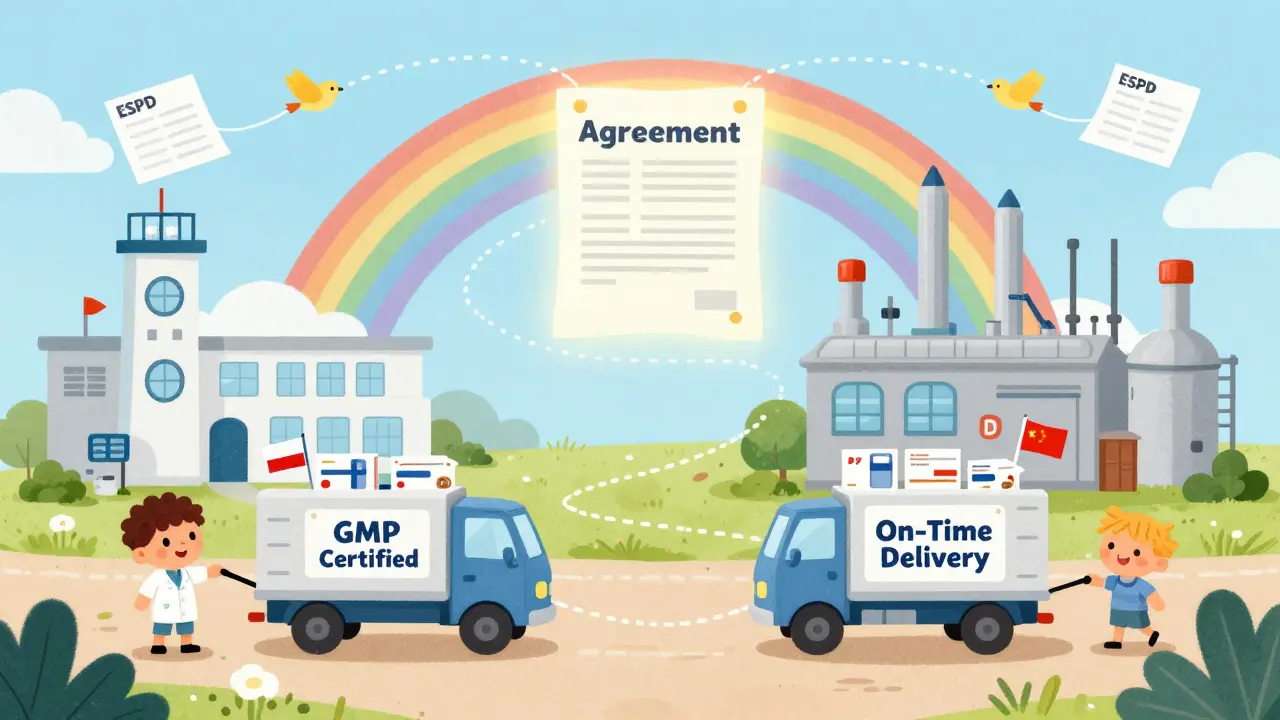
- They use the European Single Procurement Document (ESPD), a standardized form introduced in 2023 that cuts paperwork by 40%.
One German generic manufacturer, BioPharm Solutions, won a framework agreement with the German public health system by focusing on supply chain resilience. They showed data proving they could deliver 99.7% of orders on time over three years, even during the pandemic. That reliability earned them a spot-despite having a slightly higher price than competitors.
The Hidden Costs of Poor Procurement
When tendering goes wrong, patients pay the price. In Spain, a €180 million rail signaling contract was canceled after 18 months because the technical specs were too vague. Similar issues happen in pharma. Ambiguous requirements cause 68% of supplier complaints, according to Dr. Sarah Compson’s research. Each dispute costs an average of €127,000 in legal fees and delays.Some authorities still try to set unrealistic requirements. One Eastern European health agency once demanded that generic drug suppliers have €10 million in annual revenue for a €1 million contract. That’s a violation of the EU’s proportionality principle. You can’t require a small business to have the financial muscle of a multinational just to bid on a routine medicine purchase.
The European Court of Justice has ruled against such practices 147 times since 2022. The message is clear: requirements must match the contract’s scale.
Why Cross-Border Bidding Is Still Rare
Despite the EU’s single market, only 7.3% of public drug purchases cross national borders. Why? Language barriers, different national interpretation of rules, and lack of familiarity with foreign suppliers.Nordic countries lead in cross-border procurement-with 14% of their tenders going to suppliers outside their borders. Southern and Eastern Europe lag at just 3.8%. Many small generic manufacturers don’t even try. They assume it’s too complicated.
But that’s changing. Framework agreements are making it easier. Once a supplier is on a multi-country framework-like the one used by the Nordic Health Alliance-they can bid on tenders in Finland, Sweden, and Denmark with the same documentation. No need to reapply each time.
What’s Next? Digital, Green, and Smarter
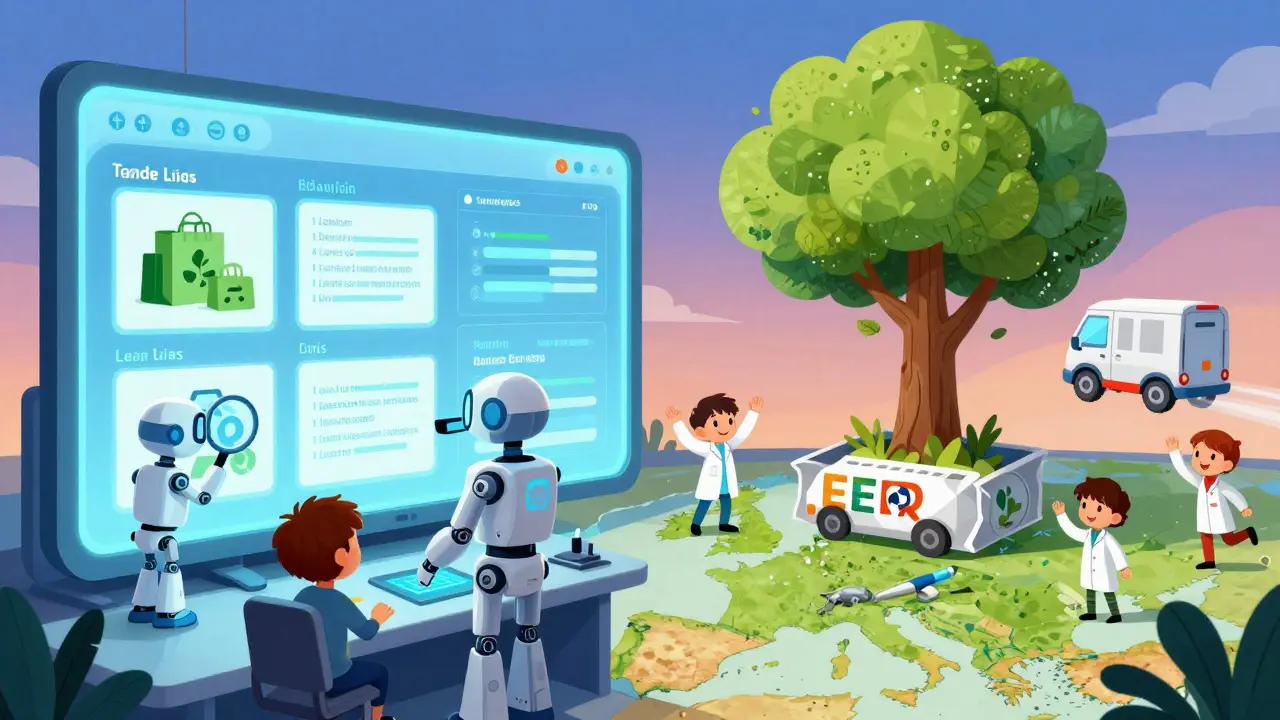
The EU is pushing hard to make tendering faster, greener, and smarter. By 2027, 95% of all public tenders must be electronic. Already, 76% are-up from just 39% in 2016.AI tools are being tested in France and Finland to automatically score bids. These systems check for GMP compliance, flag inconsistent pricing, and even detect if a bid is suspiciously low. Early results show 30% faster evaluations with 99.2% accuracy.
Sustainability is now a must. By 2025, 85% of high-value drug tenders will include environmental criteria. That means:
- Recyclable blister packs over plastic
- Low-carbon logistics
- Pharmaceutical waste reduction plans
One Finnish hospital reduced its carbon footprint by 22% simply by switching to a generic supplier that used electric delivery vans and biodegradable packaging-all without increasing cost.
What This Means for Generic Drug Access
Europe’s tendering system isn’t perfect. It’s bureaucratic. It’s slow. But it works. It ensures that generic drugs-cheaper, equally effective alternatives to branded medicines-are available at the lowest possible price without sacrificing safety or reliability.Thanks to this system, countries like Spain, Italy, and Poland have cut their generic drug spending by 30-40% over the last decade. That’s billions redirected to patient care, mental health services, and cancer screenings.
For generic manufacturers, it’s a tough but fair game. You can’t win by undercutting on price alone. You win by proving you’re the most reliable, responsible, and responsive partner. And for patients? That’s the real win.
Been watching this system for years and honestly it’s kind of quiet genius
Not flashy, no drama, just steady
Generic meds are cheaper but not at the cost of safety
That’s rare in any system really
Wait wait wait - you think this is about fairness? Nah. This is Big Pharma letting the EU do their dirty work
They push these ‘MEAT’ rules so small labs can’t compete
Then they buy up the winners later
It’s all a front
You think GMP audits are about quality? Nah - they’re just gatekeeping
And TED? That’s just another surveillance tool for the cartel
Ask yourself - who benefits when only 7% of bids cross borders? Not the patient
The MEAT framework represents a non-price-based optimization heuristic calibrated against supply chain resilience metrics and regulatory compliance vectors
It’s a paradigmatic shift from transactional procurement to value-based contracting
What’s often mischaracterized as bureaucracy is actually risk mitigation architecture
And the ESPD? That’s not paperwork reduction - it’s harmonization of interoperable regulatory ontologies across sovereign jurisdictions
Most stakeholders still operate at a heuristic level - they don’t grasp the systemic complexity
This isn’t about cost - it’s about systemic integrity
And yes, the 2027 digital mandate is non-negotiable - legacy systems are entropy engines
Bro this whole thing is wild
Imagine spending two weeks just to bid on medicine
And then some dude in Germany wins because he had electric vans??
Like what even is this
They gonna start giving awards for recycling blister packs next?
Meanwhile in Nigeria we just order from the guy who shows up with the drugs
And he doesn’t even have a website
Why y’all making this so hard??
meat rule? more like meat lie
they say its about quality but its just another way to keep chinese and indian companies out
gmp? they make you submit papers that cost more than the bid itself
and espd? ha! they still reject you for one typo
i saw a guy in delhi lose a contract because he wrote ‘pharmaceutical’ wrong
and now he’s in debt
and the real crooks? the ones who write the rules
they all live in brussels and drive teslas
they dont even take generic meds
Oh sweetie, you really think this is about fairness?
Let me explain how this actually works - the ‘MEAT’ system is the only thing keeping your insulin from being sold by a guy on Instagram who says his ‘pharma-grade’ stuff is ‘imported from Germany’
Yes, it’s bureaucratic. Yes, it’s slow. But guess what? When a hospital runs out of metformin because someone cut corners, it’s not a ‘glitch’ - it’s a death sentence
And those ‘small Polish labs’? They’re not victims - they’re the ones who *want* this system because it stops the Chinese mega-factories from flooding the market with fake pills
So yes, the paperwork is annoying - but it’s the difference between a patient getting real medicine or a sugar pill with a QR code that leads to a crypto scam
Try being grateful for the mess. It’s saving lives.
I’ve spent years working in public health procurement across three countries and I can tell you - the system isn’t perfect but it’s the most humane one we’ve got
There’s this idea that efficiency means speed, but what we really need is reliability
When a patient depends on a daily generic medication, they don’t care if the bid took six weeks to process - they care if it arrives on time, every time, without contamination or delay
And the environmental criteria? That’s not greenwashing - it’s about long-term public health
Think about it: if you’re packaging pills in plastic that takes 500 years to decompose, you’re not just polluting the planet - you’re polluting the water supply, the soil, the food chain - and eventually, the medicine itself
The system forces us to think beyond the next fiscal quarter
It’s not about being fast - it’s about being responsible
And honestly? The fact that small suppliers can still win if they prove reliability? That’s the part that gives me hope
It’s not perfect, but it’s trying
Framework agreements are the quiet MVP here
Once you’re in, you’re in - no more 117-hour bid marathons
It’s like getting a VIP pass to the entire EU market
And the Nordic model? That’s the future
They treat procurement like infrastructure - not a transaction
One supplier, one set of docs, five countries
That’s scalability without the chaos
And the AI scoring tools? They’re not replacing humans - they’re removing the bias
Imagine a system where a small Greek lab has the same shot as a German giant because the algorithm only sees GMP scores and delivery logs
No favoritism, no connections, no ‘who you know’
That’s the single market we were promised
It’s not sexy
But it works