
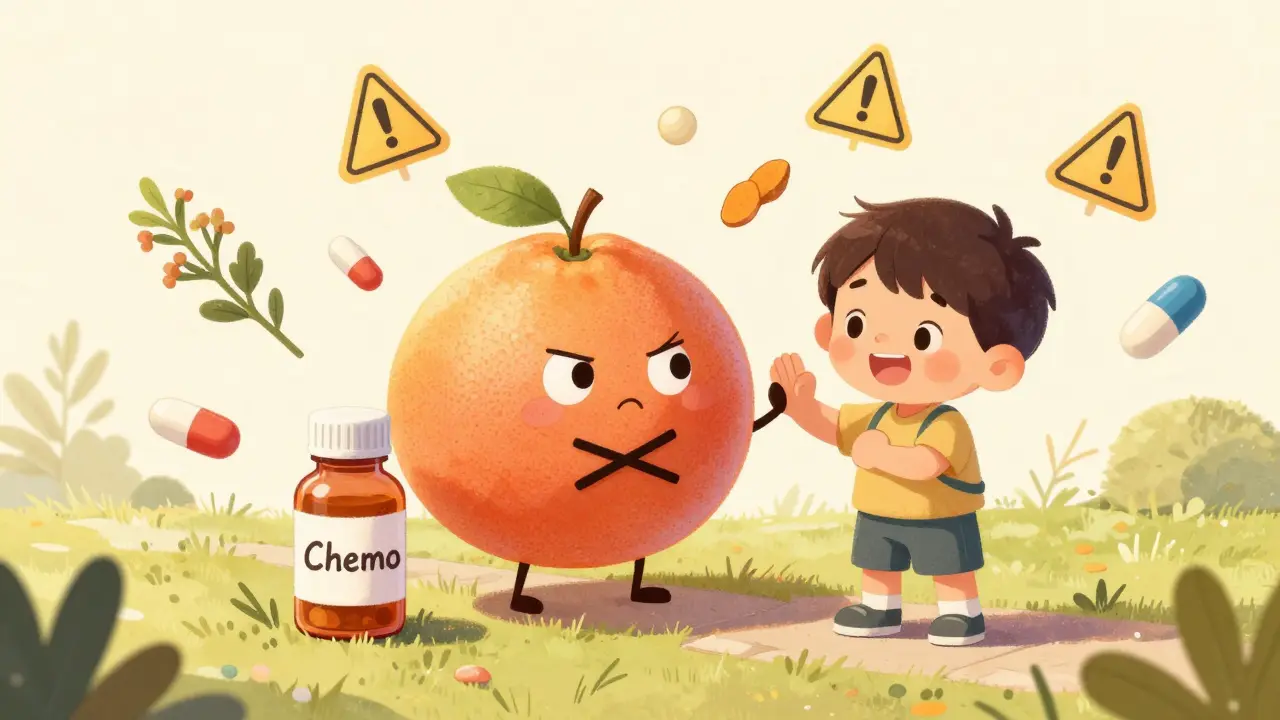
When you’re undergoing chemotherapy, every pill, supplement, or even a glass of grapefruit juice can change how your treatment works. It’s not just about the cancer drugs themselves-it’s what they’re doing with everything else you’re taking. About half of all outpatient cancer patients experience at least one potential drug interaction, and one in three of those could lead to serious harm-like kidney damage, dangerous bleeding, or even treatment failure. This isn’t rare. It’s routine. And it’s preventable.
What Exactly Is a Chemotherapy Drug Interaction?
A drug interaction happens when one substance changes how another works in your body. With chemotherapy, that can mean the drug becomes too strong, too weak, or triggers unexpected side effects. There are three main types:- Pharmacodynamic interactions-when two drugs affect the same part of your body, either adding up (like two kidney-toxic drugs causing more damage) or canceling each other out.
- Pharmacokinetic interactions-when one drug changes how your body absorbs, breaks down, or gets rid of another. This is the most common type, especially when it involves the liver’s cytochrome P450 enzymes.
- Immunological interactions-a newer, less understood danger with immunotherapy drugs. These can turn harmless medications into triggers for severe skin reactions or liver damage.
For example, gemcitabine and cisplatin work better together because they interfere with cancer cells’ ability to repair DNA. But if you take St. John’s wort at the same time, your body might break down the chemo too fast-making it useless. Or if you’re on tamoxifen for breast cancer and take a common antidepressant like fluoxetine, the drug can block tamoxifen’s activation, increasing your risk of recurrence.
Why Oral Chemo Makes Interactions Worse
Twenty-five percent of chemotherapy drugs now come as pills you take at home. That sounds convenient, but it’s made interactions way harder to track. Unlike IV chemo given in a clinic where nurses can spot problems, oral drugs are taken daily, often with meals, supplements, or OTC painkillers-none of which are always reported to your oncologist.And here’s the kicker: many of these oral drugs are broken down by the same liver enzymes (CYP3A4, CYP2D6) that process common medications like statins, blood thinners, and even heartburn pills. When you take two drugs that use the same pathway, they fight for space. One can block the other, making it build up to toxic levels-or speed it up, making it vanish before it can work.
Grapefruit and Seville oranges are a classic example. They contain compounds that permanently disable CYP3A4. If you’re taking a chemo drug like docetaxel or erlotinib, eating just one grapefruit can cause drug levels to spike by 300%. That’s not a myth-it’s a documented risk. And it lasts for days.
The Hidden Danger: Supplements and Herbal Products
People think “natural” means safe. It doesn’t. In fact, the VA Whole Health Library warns that supplements aren’t held to the same standards as prescription drugs. Labels can be wrong. Products can be contaminated. And many have real, dangerous effects on chemo.Here’s what’s risky:
- Ginkgo biloba, garlic, ginger, ginseng-increase bleeding risk, especially dangerous before surgery or with blood thinners.
- Turmeric (curcumin)-can interfere with drug metabolism and reduce chemo effectiveness.
- Black cohosh, dong quai, fish oil-linked to liver toxicity and unpredictable interactions with hormonal therapies.
- Vitamin E, resveratrol-may protect cancer cells from chemo damage instead of helping kill them.
A 2014 study of 244 cancer patients over 70 found that 75% were taking at least one supplement that could cause a serious interaction. And that was before immunotherapy became widespread. Now, the risks are even higher.
Age, Other Medications, and Your Body’s Changing Response
As you get older, your liver and kidneys don’t work as well. Your body composition changes. You’re more likely to be on five, ten, or even fifteen other medications-for high blood pressure, diabetes, arthritis, or depression.That’s polypharmacy. And it’s the perfect storm for drug interactions. A 2011 study of 278 cancer patients found that 40% had at least one potential interaction. But it’s not just about quantity-it’s about what you’re taking. For example:
- Antibiotics like clarithromycin can block chemo metabolism.
- Antifungals like fluconazole can raise chemo levels dangerously.
- Proton pump inhibitors (like omeprazole) can interfere with drugs like clopidogrel and some targeted therapies.
And genetics play a role too. Some people naturally have slower or faster versions of liver enzymes. That’s why two patients on the same chemo can have wildly different reactions. Testing for these genetic differences (pharmacogenomics) is becoming more common-but it’s still not standard everywhere.
Immunotherapy: A New Kind of Risk
Checkpoint inhibitors like pembrolizumab and nivolumab have changed cancer treatment. But they’re not just another chemo drug. They turn your immune system loose on cancer-and that can make your body react unpredictably to other medications.There are now documented cases where patients on immunotherapy developed severe skin reactions or liver damage after taking common antibiotics or NSAIDs like ibuprofen. These aren’t classic drug interactions. They’re immune-mediated. Your immune system, already overactive from the immunotherapy, starts attacking your own tissues because another drug triggered it.
Doctors are still learning how to predict these reactions. But one thing’s clear: you can’t assume a drug is safe just because it’s “normal.” If you’re on immunotherapy, even a simple cold medicine could be risky.
How to Protect Yourself
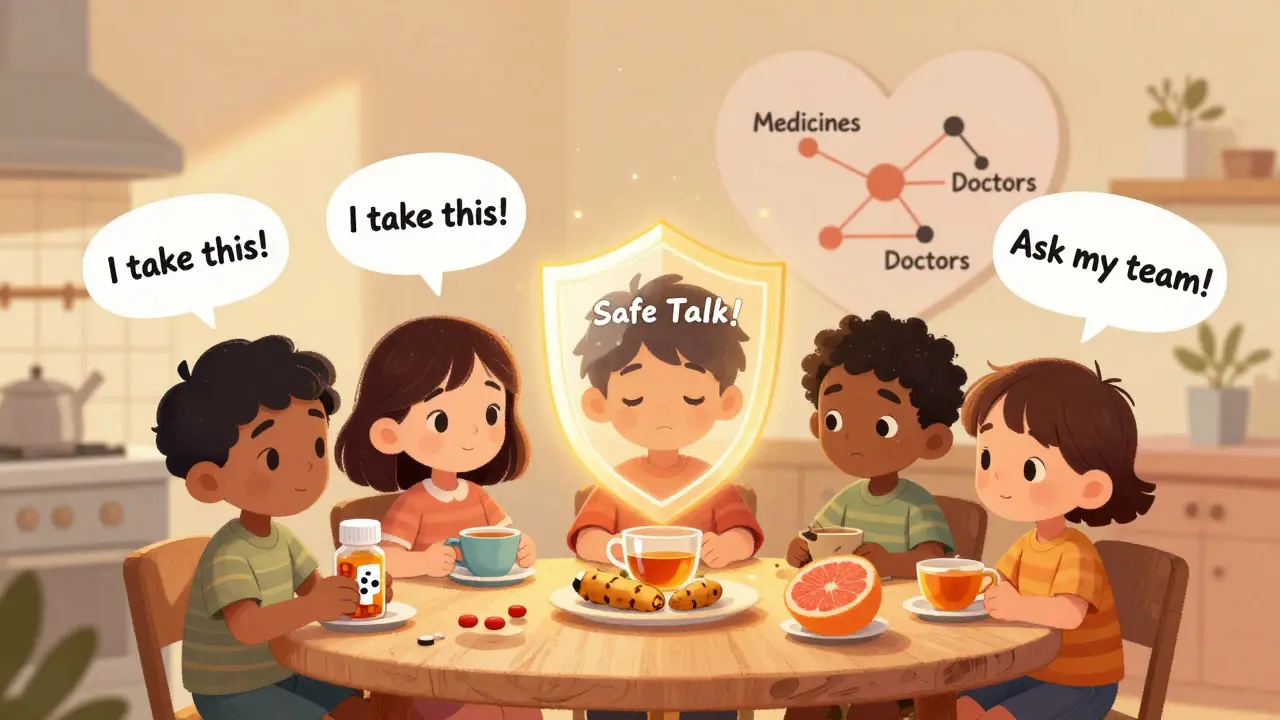
You don’t have to guess. Here’s how to stay safe:- Make a complete list-every prescription, OTC pill, vitamin, herb, tea, or supplement. Include dosages and how often you take them.
- Bring it to every appointment-even if you think it’s “not important.” Your oncologist might not ask. But your pharmacist will.
- Ask your pharmacist-not just your doctor. Pharmacists are trained to spot interactions. Many cancer centers now have oncology pharmacists on staff specifically for this.
- Never start or stop anything without asking-not even melatonin for sleep or ginger for nausea.
- Avoid grapefruit and Seville oranges-period. No exceptions.
- Stop risky supplements 10 days before surgery-especially those that thin blood or affect liver function.
Many hospitals now use tools like Lexicomp or Micromedex to check for interactions. But these systems aren’t perfect. They flag potential issues-but not all are clinically meaningful. That’s why human review matters. A pharmacist can tell you which interaction is a red flag and which is just a theoretical concern.
What to Do If You Think You’ve Had an Interaction
Symptoms like sudden fatigue, unexplained bruising, yellowing skin, severe nausea, or unusual rashes could signal a drug interaction. Don’t wait. Call your oncology team immediately. Bring your medication list. Don’t assume it’s just “side effects.”One patient on oral chemo for colon cancer started taking turmeric capsules for joint pain. Two weeks later, her cancer markers rose. Her oncologist suspected the turmeric was blocking her drug’s effect. She stopped it. Her numbers dropped back down. That’s the power of catching it early.
The Bottom Line
Chemotherapy is powerful. But it’s not magic. It’s chemistry. And chemistry doesn’t care if something is “natural” or “over-the-counter.” It responds to molecules. Your body doesn’t know the difference between a prescription pill and a herbal capsule-it just processes them the same way.The safest approach? Be honest. Be thorough. And never assume. If you’re taking anything-prescription, OTC, or “just a little something”-tell your cancer care team. It’s not about being judged. It’s about staying alive.
Drug interactions are one of the leading preventable causes of treatment failure and death in cancer care. But with the right information and communication, you can avoid them. Your life depends on it.
I had chemo for breast cancer last year, and I swear I almost died because I didn’t know grapefruit could wreck my meds. My oncologist never mentioned it. My aunt gave me a bottle of ‘natural detox tea’ with ginger and turmeric-said it’d help my immune system. Turns out it made my chemo useless. I cried for three days after I found out. Don’t let anyone tell you ‘natural’ means safe. It’s not a yoga class-it’s life or death.
Now I carry a laminated card in my wallet with every single thing I take. Even my morning green smoothie. I’m not joking. My pharmacist calls me ‘the spreadsheet queen.’
From a pharmacokinetic standpoint, the CYP3A4 inhibition by furanocoumarins in citrus fruits is a well-documented phenomenon, with a half-life of enzyme inhibition extending up to 72 hours post-consumption. This is particularly critical for substrates like docetaxel, erlotinib, and many TKIs, where the AUC can increase by >300%, leading to dose-limiting toxicities.
Moreover, concurrent use of P-glycoprotein inhibitors (e.g., cyclosporine, verapamil) further compounds the risk. The VA’s Whole Health Library underestimates the clinical relevance-this isn’t anecdotal, it’s pharmacovigilance data from multiple prospective cohorts. Always cross-reference with the FDA’s Drug Interaction Database and consider pharmacogenomic profiling for CYP2D6/CYP3A5 polymorphisms before initiating oral chemo regimens.
As someone who moved from Montreal to New York for treatment, I was stunned by how little American oncology teams discuss supplements. In Canada, pharmacists are integrated into the care team-we have mandatory med reviews before chemo starts. Here? You’re expected to ‘know better.’
I brought my entire herbal cabinet to my first appointment-ginseng, ashwagandha, elderberry syrup, even the ‘cancer-fighting’ mushrooms my sister sent from Vancouver. The pharmacist actually gasped. She said, ‘You’re lucky you didn’t end up in ICU.’
Don’t wait until you’re sick to ask. Bring everything. Every capsule. Every tea bag. Even the lavender oil you rub on your wrists. It matters. I’m alive today because I didn’t assume anything was ‘harmless.’
Oh wow, so taking ‘natural’ supplements is like playing Russian roulette with your liver? And we wonder why people die from cancer instead of just… getting the chemo to work?
Let me guess-your oncologist also told you to ‘eat more kale’ and ‘avoid stress’? Like, cool, but my tumor doesn’t care if I meditated or drank celery juice. It just wants to multiply.
Also, grapefruit? Really? That’s the big scary thing? I thought it was the fact that half the meds they give you are literally just poison with a receipt.
Really appreciate this breakdown. As a clinical pharmacist specializing in oncology, I see this every day. The biggest gap? Patients think if it’s sold at Whole Foods or Amazon, it’s ‘safe.’
Here’s the reality: CYP3A4 substrates make up over 50% of oral chemo agents. Add in CYP2D6 inhibitors like SSRIs (fluoxetine, paroxetine), and you’ve got a perfect storm. We use tools like Lexicomp daily-flags for St. John’s wort are red, not yellow.
Also, don’t underestimate pharmacogenomics. I had a patient on tamoxifen who kept relapsing. Turned out she was a CYP2D6 poor metabolizer. Switched to anastrozole-boom, remission. Genetic testing isn’t fancy-it’s essential.
People are so dumb. You think a little pill you bought online is going to help you? No. It’s going to kill you. Why don’t you just listen to your doctor instead of listening to some Instagram influencer who says ‘turmeric cures everything’?
I had a cousin who died because she took ‘immune boosters.’ She didn’t even know what chemo was. Just believed the hype. Now she’s dead. Don’t be her.
Stop being naive. This isn’t a lifestyle blog. It’s your life.
Man, I just want to say-this post saved my life. My mom was on oral chemo, and she started taking fish oil ‘for her heart.’ I didn’t know anything, but I remembered reading something about bleeding risks, so I asked her pharmacist. Turns out, fish oil + tamoxifen + aspirin = a trip to the ER waiting to happen.
She stopped everything, made a list, and now she sees a pharmacist every time she gets a new script. No more guessing. No more ‘I’ll just take one.’
Also, grapefruit? Gone. Like, full-on ban. Even the juice at breakfast. My mom says she misses it… but she’s still here. And that’s what matters.
Thanks for putting this out there. Seriously. This is the stuff no one talks about until it’s too late.
I am writting this from my chemo chair, just got done with my infusion, and I have to say, I had NO IDEA about the grapefruit thing. I’ve been drinking it every morning for 5 years. My nurse just told me to stop. I cried. Not because I’m sad, but because I felt so stupid. Like, why didn’t anyone tell me? I’ve been to 12 appointments.
And the supplements? I’ve been taking magnesium, vitamin D, and that ‘cancer fighter’ mushroom powder my yoga teacher gave me. I’m going to throw it all out today. I’m scared, but I’m also so grateful someone wrote this. I’m not alone in this. Thank you. From a tired, scared, but still fighting woman.
Also, I miss my grapefruit. 😢
Good post man! I am a caregiver for my dad who has prostate cancer on oral chemo. We just found out his blood thinner (warfarin) and his chemo (abiraterone) were interacting-his INR went to 8. He was bleeding from his gums. We didn’t know. Now we have a pharmacist on speed dial. I wish I read this 3 months ago.
Also, he was taking ashwagandha for ‘stress’-we stopped it. No more guesswork. Every pill now gets checked. Even the Tylenol. I know it sounds crazy, but I’d rather be annoying than bury my dad.
Thanks for sharing. You saved someone today. 💪