
Have you ever looked at the expiration date on a medicine bottle and wondered what it actually means? Is it just a number picked by a marketer, or is there hard science behind that deadline? For most of us, an expired pill is simply something we toss in the trash. But for manufacturers and regulators, that date is the result of years of rigorous testing designed to ensure the drug remains safe and effective until the very last day.
The core issue isn't just about time passing. It's about generic degradation. Chemicals don't stay static forever. They break down, change form, or react with their environment. If this happens too fast, the drug might stop working-or worse, become toxic. Understanding how shelf life is determined, especially for generic drugs which often face unique stability challenges, helps you make smarter decisions about your health and medication storage.
What exactly is shelf life?
Shelf life is the period during which a product retains its specified properties and characteristics within acceptable limits, from the time of packaging until use. It is not arbitrary; it is scientifically proven through stability studies.
The Science Behind the Expiration Date
To understand why some medicines expire sooner than others, you need to look at the four pillars of stability testing. Regulators like the U.S. Food and Drug Administration (FDA) and the European Medicines Agency (EMA) require manufacturers to prove their products hold up under pressure. This isn't a guesswork game; it follows strict guidelines established by the International Council for Harmonisation (ICH).
First, there is Chemical Stability. This measures whether the active ingredient stays potent. Manufacturers use High Pressure Liquid Chromatography (HPLC) to detect tiny amounts of breakdown products. If a drug degrades into unknown impurities above 0.1%, it fails. Next is Physical Stability. Does the tablet crumble? Does the liquid separate? For advanced treatments like nanomedicines, particle size is critical. If nanoparticles agglomerate and grow beyond 200 nanometers, they can no longer reach target cells effectively, rendering the treatment useless.
Then comes Microbiological Stability. This ensures bacteria and fungi don't turn your medicine into a petri dish. Non-sterile products must keep microbial counts below 100 CFU/g, while sterile injections require a sterility assurance level of 10^-6. Finally, Functional Stability checks if the delivery system works. For example, a metered-dose inhaler must deliver between 90% and 110% of the labeled dose every time you press it. If any of these four areas fail, the shelf life is shortened.
Why Generic Drugs Face Unique Stability Challenges
You might assume that because a generic drug has the same active ingredient as a brand-name drug, it will last just as long. That’s often true, but not always. The problem lies in the "inactive" ingredients-excipients like fillers, binders, and coatings. These components protect the active drug from moisture, light, and air.
Different manufacturers use different excipients and manufacturing processes. A study by the FDA in 2020 highlighted a stark example with levothyroxine, a common thyroid medication. The study found that 17.3% of generic versions exhibited stability issues not seen in the reference brand, Synthroid. The culprit? Differences in moisture protection. One generic manufacturer’s coating allowed slightly more humidity to penetrate the tablet over time, causing the hormone to degrade faster. This doesn’t mean all generics are unsafe, but it does mean each generic formulation must undergo its own rigorous stability testing to determine its specific shelf life.
| Factor | Brand-Name Drug | Generic Drug |
|---|---|---|
| Active Ingredient | Identical chemical structure | Identical chemical structure |
| Excipients (Fillers/Coatings) | Proprietary, tested extensively | May vary by manufacturer |
| Moisture Protection | Established barrier methods | Can differ, affecting degradation rates |
| Stability Data History | Decades of real-world data | Limited to post-approval studies |
Accelerated Testing: Cutting Corners or Smart Science?
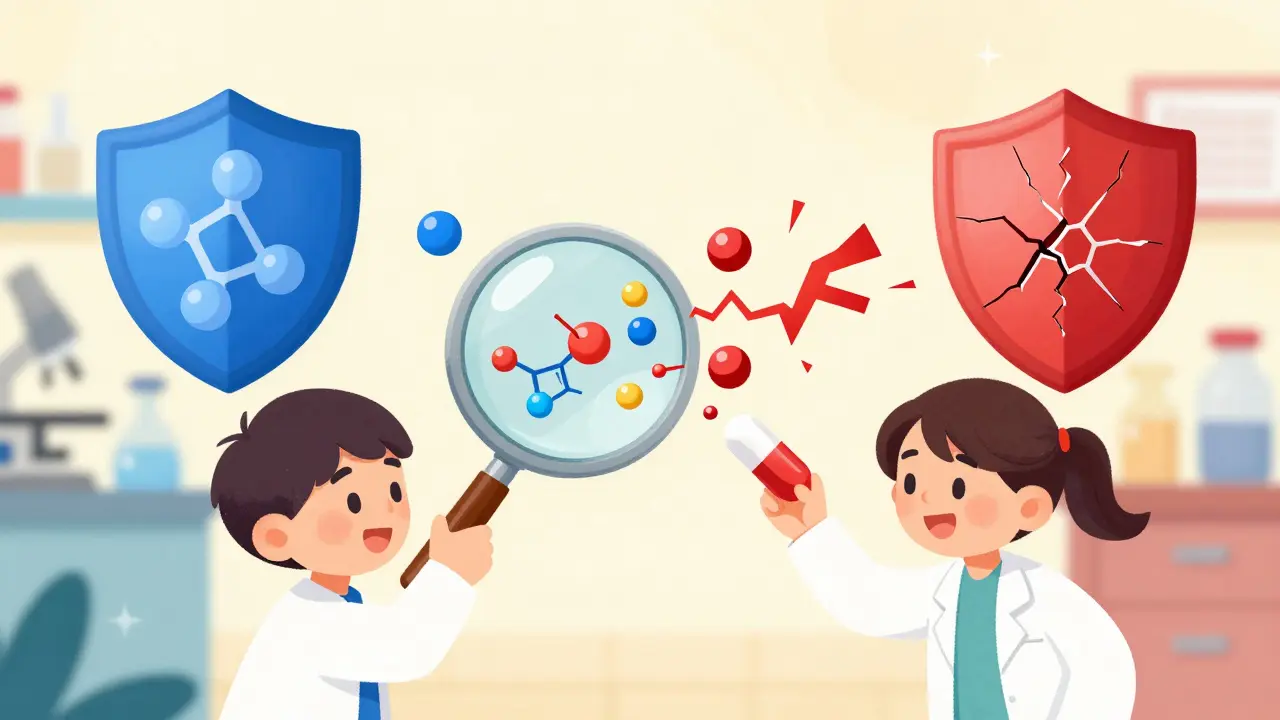
Waiting three years to see if a drug expires is impractical for getting it to market quickly. So, scientists use accelerated stability testing. They store samples at higher temperatures (like 40°C) and high humidity (75%) to force degradation to happen faster. The idea is to predict how the drug will behave at room temperature over a longer period.
However, this method has pitfalls. Dr. Kim Huynh-Ba, a stability expert with 25 years of experience, warns against relying solely on extreme heat for short periods. Why? Because the mechanism of degradation at high temperatures can be completely different from what happens at room temperature. A drug might resist heat but slowly crystallize due to minor temperature fluctuations in a warehouse. Real-world examples show this risk: one quality assurance professional reported wasting $250,000 when an accelerated test showed no issues, but a real-time study later revealed crystallization after 24 months due to an undetected polymorphic transition.
This is why regulations like ICH Q1A(R2) allow limited extrapolation but still require long-term data. You can’t just guess. You have to prove it. Newer approaches, like Risk-Based Predictive Stability (RBPS), are emerging. Pilot studies with companies like Amgen and Merck showed these tools could determine shelf life 30% faster. But regulatory acceptance is slow because safety cannot be compromised for speed.
The Human Factor: Storage and Handling Errors
All the lab testing in the world won’t help if the drug is stored incorrectly after it leaves the factory. A significant portion of stability failures aren’t due to bad chemistry, but bad logistics. According to industry forums, 80% of FDA observations regarding stability programs relate to inadequate storage documentation. Simply writing "room temperature" on a logbook is not enough. You need precise data.
Room temperature is defined by the United States Pharmacopeia (USP) as 15-30°C (59-86°F). However, research suggests 24-25°C is the optimal reference point. If a warehouse hits 35°C during a summer heatwave, even for a few days, it can accelerate degradation significantly. In low-income countries, the World Health Organization (WHO) reported that 28.7% of medicines failed stability tests due to poor temperature control during distribution. Compare that to 1.2% in high-income countries, and the gap becomes clear. Climate change adds another layer of risk, with projections suggesting average drug shelf lives could drop by nearly five months by 2050 due to rising global temperatures.
Microbial Growth: The Silent Threat
While chemical degradation gets the most attention, microbial growth is a leading cause of product recalls. A survey by the Parenteral Drug Association found that 62.7% of stability professionals experienced a recall in the past five years. The top reason? Microbial growth in preservative systems caused by changes in water activity.
Water activity (aw) is a measure of available water for microbes to use. If a product’s formulation shifts slightly during storage, releasing more free water, bacteria can thrive. This is particularly dangerous in multi-dose vials or topical creams. Unlike chemical changes, which might just reduce potency, microbial contamination can cause serious infections. This is why preservatives are carefully balanced, and why shaking a bottle before use (to mix suspended particles or emulsions) is sometimes required to maintain uniformity and safety.
What This Means for You
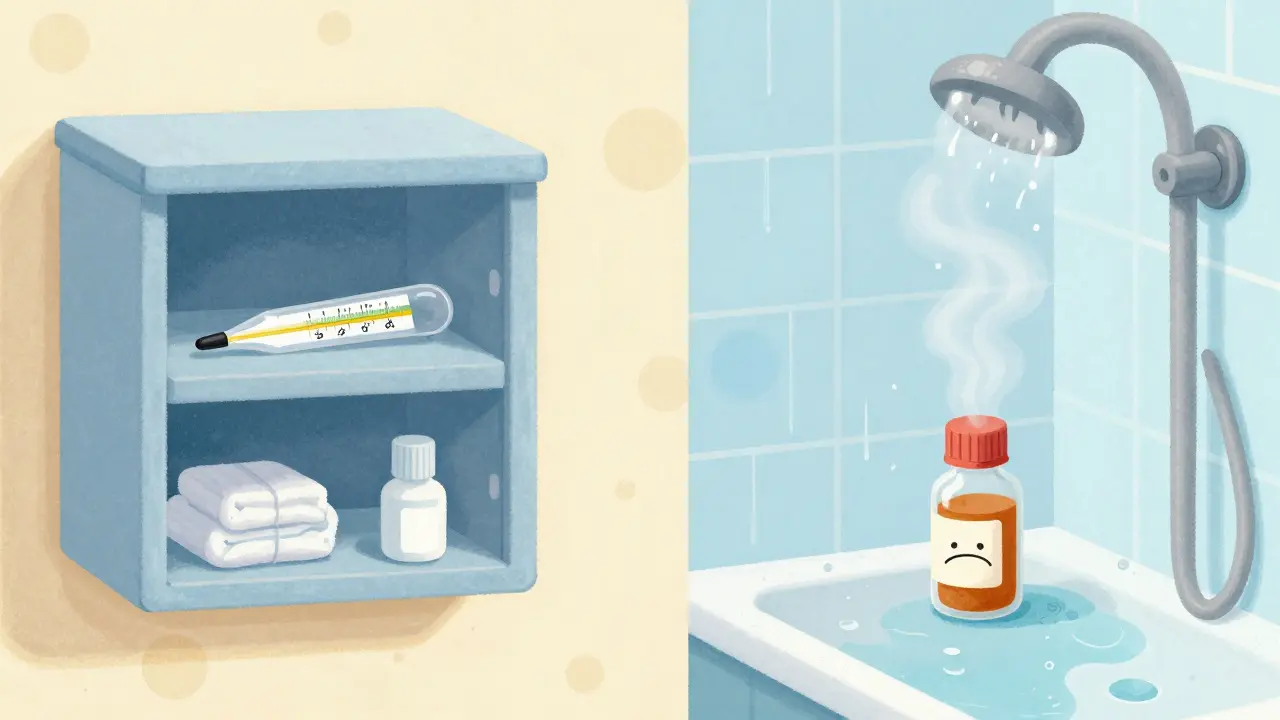
So, how do you apply this knowledge? First, trust the expiration date, but understand it assumes proper storage. Keep your medications in a cool, dry place away from direct sunlight. Avoid storing them in bathrooms where humidity fluctuates wildly with showers. Second, be aware that generic drugs are safe and effective, but they are distinct products. If you switch brands and notice differences in how you feel, consult your pharmacist-it could be a subtle difference in absorption or stability related to the specific formulation.
Finally, don’t hoard old medicines. Just because a pill looks fine doesn’t mean it’s chemically stable. Some degradation products are invisible. When in doubt, dispose of it properly. The science of shelf life is complex, involving chemistry, physics, and biology, but the goal is simple: ensuring that when you take your medicine, it works exactly as intended.
Can I take medicine after the expiration date?
Generally, no. While some drugs may retain potency for a short time after expiration, there is no guarantee. Degradation products can form that are ineffective or harmful. The expiration date is the last day the manufacturer guarantees full potency and safety.
Why do generic drugs sometimes have shorter shelf lives?
Generic drugs may use different excipients (fillers and coatings) than brand-name drugs. These inactive ingredients affect how well the drug is protected from moisture and air. If the protection is less robust, the active ingredient may degrade faster, leading to a shorter assigned shelf life.
What is accelerated stability testing?
It is a method where drugs are stored at elevated temperatures and humidity to speed up degradation. This allows manufacturers to estimate shelf life faster than waiting for real-time results. However, it must be validated against long-term data because high heat can cause different types of damage than normal storage conditions.
How does humidity affect drug stability?
Humidity can cause tablets to soften, crumble, or dissolve prematurely. It can also increase water activity, promoting microbial growth. Many drugs are hygroscopic, meaning they absorb moisture from the air, which accelerates chemical breakdown.
Are all stability tests the same worldwide?
Most major regulatory bodies, including the FDA and EMA, follow harmonized guidelines set by the International Council for Harmonisation (ICH). This ensures that stability data generated in one country is generally accepted in others, facilitating global drug trade and safety standards.