
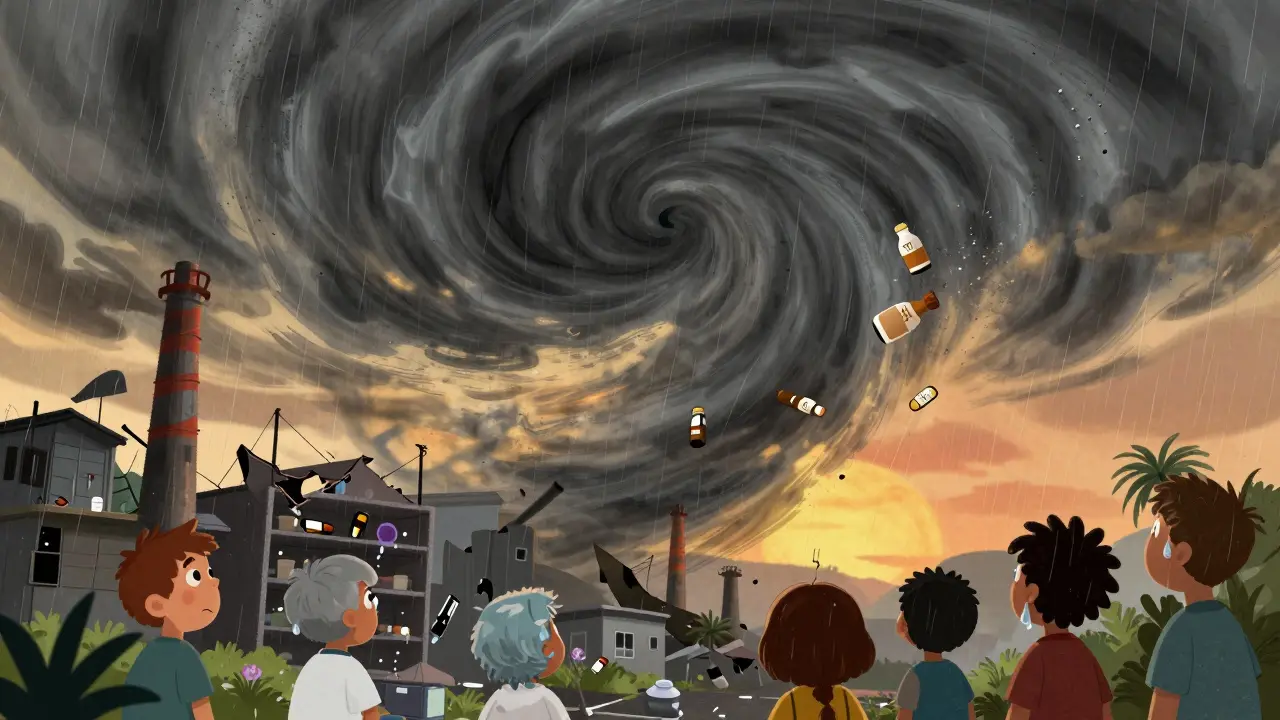
When Hurricane Maria hit Puerto Rico in 2017, it didn’t just destroy homes and power lines-it shut down a huge chunk of America’s medicine supply. Nearly 30% of U.S. pharmaceutical manufacturing was located on the island at the time. That included factories making 10% of all FDA-approved drugs and 40% of sterile injectables like saline and insulin. When the grid went down, so did production. Hospitals across the country scrambled. Patients waited. Some surgeries were canceled. And the shortages? They lasted 18 months.
That wasn’t an accident. It was a warning.
Why Climate Disasters Are Now a Top Cause of Drug Shortages
The FDA now says climate-related events are one of the biggest reasons for drug shortages. Between 2017 and 2024, 32% of all supply disruptions were tied to hurricanes, floods, wildfires, or extreme heat. And it’s getting worse. A 2024 study in JAMA found that 65.7% of U.S. drug manufacturing facilities are in counties that have had at least one federally declared weather disaster since 2018.
Hurricanes are the worst offenders. They account for 47% of all climate-related drug supply problems. Why? Because they don’t just knock out power-they wipe out entire infrastructure networks. Roads, ports, cooling systems, backup generators-all gone. And unlike a power outage in a city, you can’t just flip a switch and fix it. These facilities need specialized equipment, clean rooms, and stable energy to make medicine. No power? No production.
The Hidden Geography of Risk
You might think drug manufacturing is spread out across the country. It’s not. It’s concentrated in a few high-risk zones.
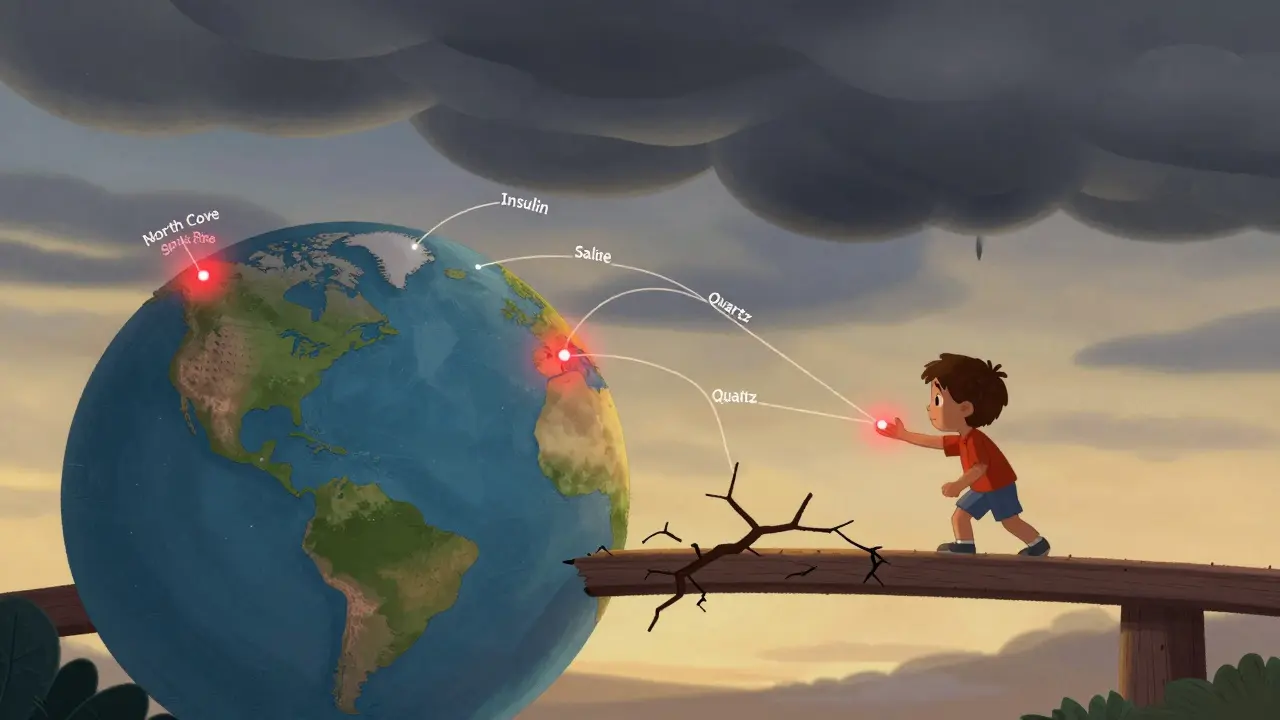
Puerto Rico used to be the biggest hub. Before Maria, it had 55 FDA-registered facilities. One of them made 80% of the nation’s insulin. After the storm, insulin supplies dropped by over 60%. Patients had to ration. Some switched to less effective treatments. Others went without.
Today, the biggest vulnerability isn’t in the Caribbean-it’s in Western North Carolina. The town of North Cove is home to Baxter International’s main IV fluid plant. It produces 1.5 million bags of saline and other IV solutions every day. That’s about 60% of the entire U.S. supply.
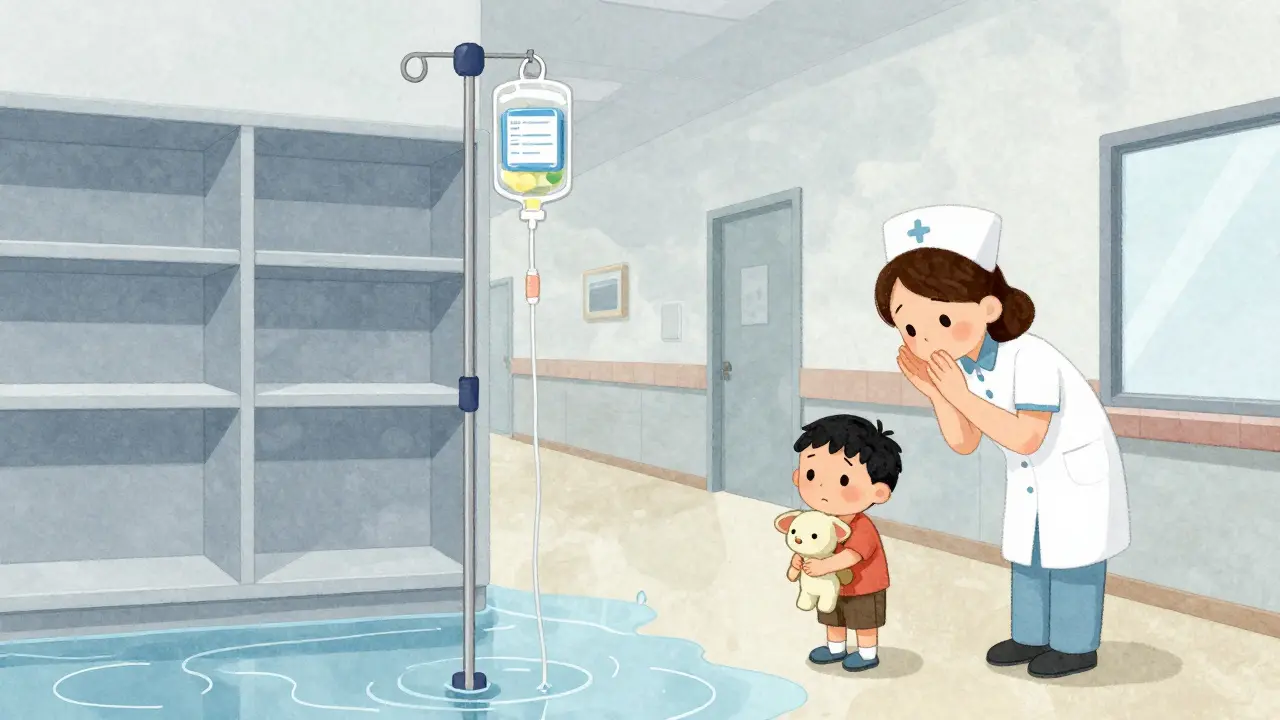
When Hurricane Helene slammed into that area in September 2024, the plant was flooded. Within 72 hours, hospitals nationwide were running out of IV fluids. Emergency rooms started turning away non-critical patients. Cancer centers delayed chemo infusions. Pediatric units rationed fluids. The FDA said it could take until mid-2025 to restore normal supply.
And it’s not just drugs. In Spruce Pine, North Carolina, 90% of the high-purity quartz used to make medical device chips is mined. If that region floods, it doesn’t just affect medicine-it affects ventilators, dialysis machines, and even MRI scanners.
Why There’s No Backup
You’d think drug companies have backup factories. They don’t. At least, not enough.
A 2023 survey by the American Society of Health-System Pharmacists found that 78% of sterile injectable drugs in the U.S. have only one or two manufacturing sites. That means if one plant goes down, there’s no alternative. No redundancy. No safety net.
Why? Because the system was built for efficiency, not resilience. Companies use a “just-in-time” model-making drugs only when needed, keeping inventory low to save money. It works great until a storm hits. Then, there’s nothing to fall back on.
Even when companies try to build backup capacity, it takes years. Getting a new manufacturing facility approved by the FDA takes 6 to 12 months. Installing specialized equipment? That can take 2 to 3 years. By then, the crisis is over-and the next one is already on the way.
What Happens When the Medicine Runs Out
When IV fluids disappear, it’s not just about inconvenience. It’s about survival.
Every chemotherapy patient needs saline to flush their IV lines. Every person with severe dehydration-whether from cancer, kidney disease, or heatstroke-needs fluids. Newborns in NICUs depend on sterile solutions. When those run out, hospitals have to make impossible choices.
In 2024, after Helene, hospitals in Georgia, Florida, and Tennessee started using less concentrated saline. Some delayed surgeries. Others switched to oral rehydration when possible. But for many patients, especially those with chronic conditions, there’s no substitute.
And it’s not just IV fluids. Hurricane Maria caused shortages of 14 critical drugs, including antibiotics, anesthetics, and heart medications. One study found that hospitals in disaster-affected areas saw a 22% increase in patient complications during drug shortages.
What’s Being Done-and Why It’s Not Enough
Some progress is being made. The FDA now has an emergency pathway to allow temporary imports of drugs during shortages. After Maria, they brought in saline from Europe. But it took 28 days to approve. That’s too slow.
Companies like Sensos are using AI to predict weather impacts. During Helene, they warned hospitals 14 days in advance. Some were able to stockpile enough IV fluids to last 30 days. That saved lives.
The Strategic National Stockpile is now piloting emergency reserves of critical injectables in hurricane-prone states. Early results show a 40% reduction in shortage duration compared to 2017.
But most hospitals still don’t know where their drugs come from. A 2024 report found that only 31% of pharmaceutical companies have taken real steps to reduce climate risk. Smaller hospitals? Even less. Only 1 in 4 have mapped their supply chains beyond the first supplier.
The Road Ahead: What Needs to Change
Experts agree: the system is broken. And it’s not just about money-it’s about policy.
The FDA is proposing a new rule for 2025 that would require manufacturers of critical drugs to keep a 90-day emergency inventory and submit a climate risk plan. If passed, this could prevent 60% of future climate-related shortages. But it’ll also raise production costs by 4-7%.
Some argue that’s too expensive. Others say it’s cheaper than treating patients who die because their IV bag ran out.
One thing is clear: we can’t keep building factories in flood zones and pretending it won’t matter. Climate change isn’t a future threat-it’s here. And it’s cutting off our medicine.
The American Society of Clinical Oncology warns that by 2027, cancer patients could face treatment delays during 8 to 10 major climate disasters every year if nothing changes. That’s not speculation. That’s the projection based on current trends.
We need more than alerts and emergency stockpiles. We need manufacturing in safe zones. We need mandatory backup capacity. We need regulations that treat medicine like a lifeline-not a commodity.
Because when the next storm hits, and the IV fluids disappear, it won’t be a supply chain problem.
It’ll be a human one.
man, i just never thought about how something as simple as saline could be tied to a hurricane. we take medicine like air-like it’s infinite. but when the grid goes down, so do the machines that make our lifesaving stuff. it’s wild how fragile everything is. we build empires on efficiency, but we forget resilience isn’t optional-it’s survival.
we need to stop treating medicine like a product and start treating it like oxygen. you don’t optimize oxygen supply for profit. you make sure it’s always there. period.
Oh, so now we’re supposed to feel bad for pharmaceutical companies because their profit-driven, climate-blind factories got flooded? Let me guess-they didn’t bother to build in higher ground because it cut into Q3 margins. And now we’re supposed to applaud the FDA for taking 28 days to approve foreign imports? This isn’t a tragedy. It’s negligence dressed up as capitalism. The system didn’t fail. It was designed this way.
we got a whole country full of drug plants in flood zones? what the heck. we let china make our antibiotics and puerto rico make our insulin and now north carolina’s the new weak spot? this ain’t america. this is a broken toy. we need to build factories in kansas or somewhere dry. no more coastal nonsense. we ain’t got time for this. and stop using fancy words like ‘resilience’-just build backup stuff. duh.
honestly, i’ve been thinking about this since helene. my aunt’s in chemo and they had to delay her session because the hospital ran low on saline. it’s not just numbers on a chart. it’s real people sitting in waiting rooms wondering if they’ll get their treatment tomorrow. we’ve got so much tech, so much data… and we still can’t protect the most basic thing: medicine. something’s wrong with that.
the fact that only 31% of pharmaceutical companies have mapped their supply chains beyond the first supplier is terrifying. how can anyone claim to be responsible when they don’t even know where their raw materials come from? if your insulin comes from a plant in a hurricane zone, and that plant relies on quartz from a flood-prone mine, and that mine depends on a single road that washes out every rainy season-you don’t have a supply chain. you have a house of cards. and someone’s going to get crushed when it falls.
the more i read about this, the more i realize how deeply embedded this vulnerability is in every layer of our healthcare system. it’s not just about building backup factories-it’s about rethinking how we value healthcare infrastructure. we’ve spent decades optimizing for cost, not for continuity. we reward companies that cut corners, that outsource, that ignore risk. and then we act shocked when a child in a NICU doesn’t get their IV fluid because a storm took out a single town’s entire production line. this isn’t a natural disaster. it’s a policy failure. and it’s going to keep happening until we stop treating medicine like a line item and start treating it like a public good. we need mandatory redundancy, federal oversight, and real investment in climate-resilient manufacturing. anything less is just waiting for the next body count.
in india, we don’t have the same level of centralized drug production. we rely on local labs, small manufacturers, decentralized networks. it’s not perfect, but when a flood hits one region, others can ramp up. we’ve had to adapt because we’ve always had to adapt. maybe we don’t have fancy FDA approvals, but we have resilience built into our bones. maybe the answer isn’t to copy america’s system-it’s to learn from how the rest of the world survives without it.
just a thought-what if we started building new drug plants on higher ground, like on old military bases or abandoned industrial sites inland? no need to rebuild everything from scratch. we’ve got land. we’ve got infrastructure. we just need the will. and honestly? if we can build space stations, we can build a saline factory that won’t drown in a storm. it’s not rocket science. it’s just common sense.
they’re talking about a 90-day inventory? that’s cute. try 180. try 365. because the next storm isn’t coming next year-it’s coming next month. and if we wait for legislation to catch up, people are going to die waiting. why are we even debating this? if your life depends on a bag of fluid and that bag is in a warehouse that floods every 3 years, you don’t need a policy meeting. you need a backup. now.
oh wow, so the answer to climate change is… more government regulation? revolutionary. next you’ll tell me we should put sunscreen on the sun. these companies aren’t evil-they’re just trying to make a buck. and guess what? if you make them spend extra on backup plants, who pays? YOU DO. your insurance premiums, your taxes, your co-pays. so yeah, let’s all cry about IV fluids while we’re paying $200 for a bag of salt water. genius.
the strategic national stockpile pilot program reducing shortage duration by 40% is a meaningful step forward. while systemic reform is necessary, immediate mitigation through targeted reserves provides critical breathing room. the FDA’s emergency import pathway, despite delays, demonstrates regulatory adaptability. Continued investment in predictive analytics, supply chain transparency, and geographically distributed manufacturing infrastructure represents a pragmatic, multi-layered approach to resilience. The challenge is not merely technical-it is institutional. But progress, however incremental, is still progress.