
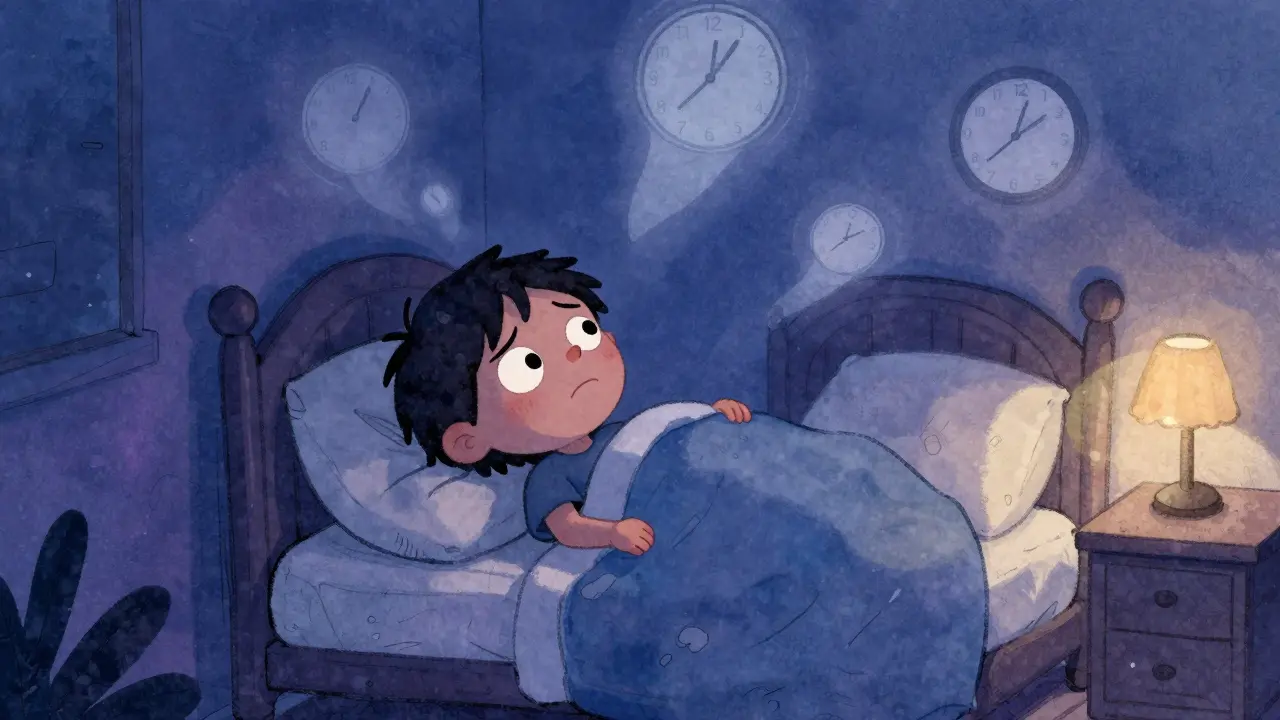
Ever find yourself staring at the ceiling for three hours, calculating exactly how much sleep you'll get if you fall asleep right now? You aren't alone. For many people with chronic insomnia, the bed becomes a place of frustration and anxiety rather than rest. The irony is that we often try to fix this by spending more time in bed, hoping to "catch up" on sleep, but that actually makes the problem worse. Sleep Restriction Therapy is a behavioral treatment that systematically limits the time you spend in bed to match the actual amount of sleep you're getting. Also known as SRT, it's a core part of Cognitive Behavioral Therapy for Insomnia (CBT-I). By creating a controlled state of sleep deprivation, SRT resets your body's natural sleep-wake patterns and stops the cycle of tossing and turning.
Why Your "Resting" Strategy Isn't Working
When you can't sleep, the natural instinct is to stay in bed longer or go to bed earlier. But here is the problem: your brain begins to associate the bed with being wide awake and stressed. This weakens your homeostatic sleep drive-the biological "pressure" that builds up throughout the day and tells your brain it's time to shut down. If you spend nine hours in bed but only sleep six, your brain decides it doesn't need to be efficient. You end up with fragmented sleep, long gaps of wakefulness, and that dreaded "tired but wired" feeling.
CBT-I is the gold-standard psychological treatment for chronic insomnia, and SRT is its powerhouse component. Unlike sleep hygiene-which is just general advice like "don't drink coffee at night"-SRT is a precise, active intervention. It targets the biological mechanisms of sleep, specifically reducing sleep onset latency (the time it takes to fall asleep) and nighttime awakenings.
The Step-by-Step Protocol for SRT
You can't just guess your way through this; it requires a bit of math and a lot of discipline. Here is how the process typically works:
- The Baseline Week: For seven days, you keep a detailed sleep diary. You track exactly when you got into bed and how many hours you actually slept. If you were in bed for 8 hours but only slept 5, your average sleep time is 5 hours.
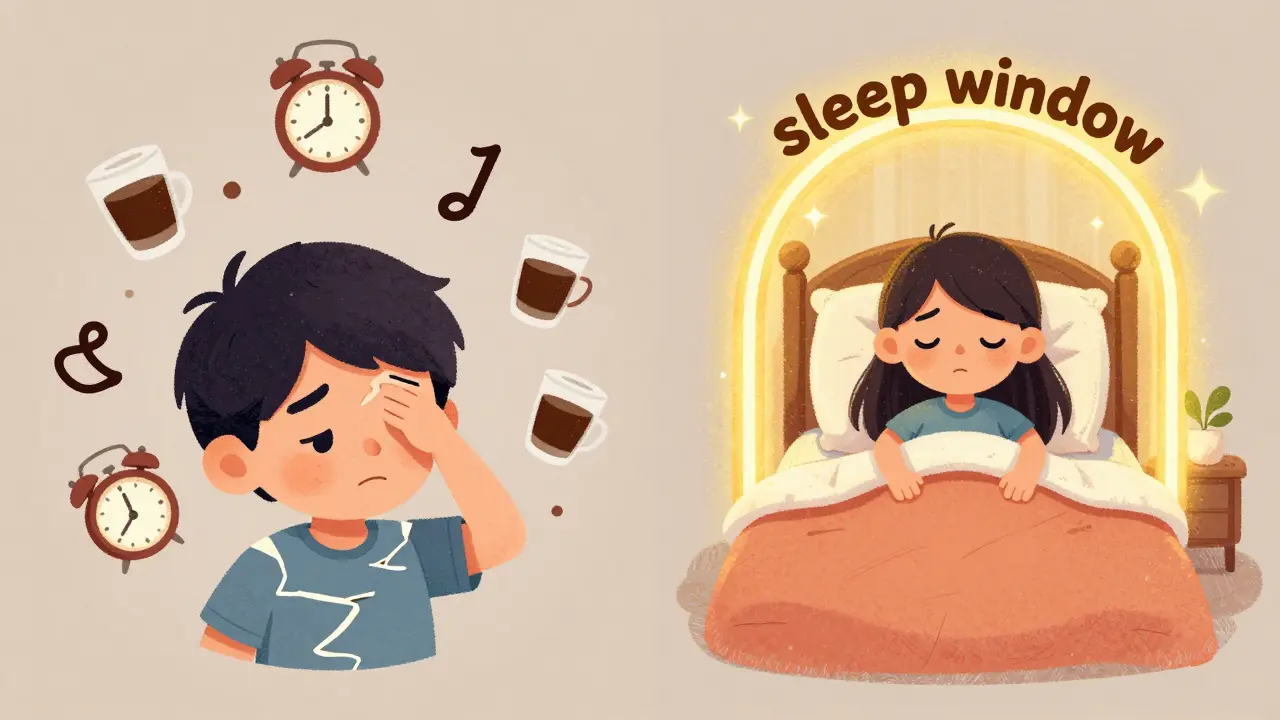
- Setting the Window: Your initial "sleep window" is set to match your average sleep time. If you averaged 5 hours of sleep, you are only allowed to be in bed for 5 hours. For example, if you must wake up at 6:00 AM, you cannot go to bed until 1:00 AM.
- The Restriction Phase: You stick to this strict window every single day, including weekends. No matter how tired you are, you do not go to bed early and you do not nap. This builds an intense sleep drive that eventually overrides the insomnia.
- Adjusting the Window: Once your Sleep Efficiency is the percentage of time in bed spent actually sleeping reaches 85-90% for three consecutive nights, you can add 15 to 30 minutes back to your window. You continue this gradual expansion until you reach your ideal amount of sleep (usually 7-8 hours) without losing sleep quality.
Comparing SRT to Other Insomnia Treatments
Many people reach for a pill first, but the long-term data suggests a different path. While benzodiazepines or sedative-hypnotics can knock you out, they often lead to rebound insomnia once you stop taking them. SRT, on the other hand, trains your brain to sleep again. A 2023 meta-analysis showed that SRT outperforms basic sleep hygiene education by 47% in improving sleep efficiency. Even compared to melatonin, which might help you fall asleep 12-18 minutes faster, SRT provides a more durable solution. In fact, a longitudinal study reported that 78% of people maintained their improvements six months later, compared to only 32% of those using medication.
| Method | Primary Goal | Duration of Effect | Main Trade-off |
|---|---|---|---|
| SRT | Consolidate sleep & increase sleep drive | Long-term/Permanent | Initial daytime fatigue |
| Pharmacology | Immediate sedation | Short-term | Dependency & rebound insomnia |
| Sleep Hygiene | Environmental optimization | Variable | Insufficient for chronic insomnia |
| Melatonin | Circadian rhythm signaling | Temporary | Modest impact on sleep onset |
The Hard Part: Navigating the First Two Weeks
Let's be honest: the beginning of SRT is brutal. Because you are intentionally limiting your sleep, you will feel exhausted. About 68% of users report significant daytime sleepiness in the first 14 days. This is where most people quit or start "cheating" by napping for 20 minutes or going to bed an hour early on a Friday. But here is the secret: that sleepiness is actually a sign that the therapy is working. You are building the sleep pressure necessary to break the insomnia cycle.
To get through this phase, it helps to pair SRT with Stimulus Control Therapy is a technique used to strengthen the association between the bed and sleep
. This means if you aren't asleep within 20 minutes, you get out of bed and do something boring in dim light until you feel sleepy. By combining SRT with stimulus control, you attack the problem from both the biological (sleep drive) and psychological (association) angles.
Who Should (and Shouldn't) Use This?
SRT is incredibly effective, but it isn't for everyone. It requires a level of commitment and mental flexibility that can be daunting. If you have a job that requires operating heavy machinery or a long commute, the initial sleep deprivation can be dangerous. You should consult a provider to manage the transition safely.
Additionally, those with severe comorbid anxiety or depression may find the restriction phase overwhelming. In these cases, doctors usually recommend pairing SRT with cognitive therapy to manage the stress of the process. For postmenopausal women, however, the results have been particularly striking, showing a 22.7% improvement in sleep efficiency, far outperforming medications alone.
Getting Help and Tools
While you can attempt SRT on your own with a diary and a calculator, working with a professional increases the success rate. There are about 1,200 certified CBT-I clinicians in the U.S., though they can be hard to find. If in-person therapy is too expensive-with programs ranging from $300 to $2,500-digital options are becoming the new standard. FDA-cleared apps and platforms like Somryst offer remote SRT delivery with high efficacy rates, making the treatment accessible to those who can't find a local specialist.
Does SRT mean I'm just depriving myself of sleep?
Technically, yes, but it's controlled and temporary. The goal isn't to keep you tired; it's to eliminate the time you spend awake in bed. By compressing your sleep into a smaller window, you improve the quality and density of your sleep. Once your sleep is consolidated, you gradually increase the window to get the total amount of rest you need.
What happens if I nap during the restriction phase?
Napping is the fastest way to sabotage SRT. Even a short 20-minute nap releases some of the homeostatic sleep pressure you've been building up. This makes it harder to fall asleep at your scheduled bedtime, which prolongs the restriction phase and slows down your recovery.
How long does it take to see results?
Many users report a jump in sleep efficiency within the first 3 weeks. However, the full process of restricting and then gradually expanding the sleep window typically takes 6 to 8 weeks, though some may take a few months depending on the severity of their insomnia.
Is SRT safe for people with anxiety?
It can be, but it requires caution. The prospect of restricting sleep can actually trigger anxiety in some patients. Experts recommend pairing SRT with cognitive therapy components to help patients manage their stress and prevent the therapy from exacerbating their anxiety disorders.
Why is this better than taking sleep medication?
Medications treat the symptoms, while SRT treats the cause. Drugs often lead to dependency and a phenomenon called "rebound insomnia," where sleep gets even worse once the drug wears off. SRT creates a durable, biological change in how your brain handles sleep, leading to much higher long-term success rates.
Sounds like a lot of math and effort just to be exhausted for two weeks lol
Actually, that exhaustion is exactly what you need to push through! Just imagine the feeling of finally hitting the pillow and passing out instantly. You've got this!
apps track everything and they know when you sleep too just a way to keep us compliant
OH MY GOD I literally tried this once and I felt like I was dying!! I was so cranky that I almost ended up screaming at my mailman because he dared to breathe too loudly in my general direction! It is absolutely TORTURE but I guess that's the point??
The grit required for the first fortnight is simply monumental, but the payoff is a total game-changer for your brain chemistry. It's like a hard reset for your internal clock that just clears out all the cobwebs and mental static. Stick with it, the struggle is real but the reward is a velvety, deep sleep that you haven't felt in years!
I tried this and it was just so emotionally draining that I spent three days crying into my pillow because I felt so alone in my tiredness and honestly it felt like the world was collapsing around me because I couldn't even focus on my favorite shows 😭💔 why is life so hard and why does sleep have to be such a battle for some of us while others just drift off effortlessly 😩
It is truly inspiring to see such a structured approach to a problem that often feels so chaotic and insurmountable. While the initial phase of sleep restriction is undoubtedly grueling, the promise of a permanent biological shift is a beacon of hope for those of us who have suffered through years of restlessness. I firmly believe that the discipline exercised during those first few weeks serves as a catalyst for a much healthier relationship with our bedrooms. Every single minute of wakefulness spent outside the bed is a step toward reclaiming our peace. It is simply marvelous to think that we can retrain our own brains through sheer willpower and a bit of arithmetic. I am absolutely thrilled that this information is being shared so clearly for everyone to benefit from!
The idea of a "sleep window" is such a quirky way to look at it (✿◡‿◡)
imagine needing an app to tell you how to sleep 🤡 so pathetic 🇮🇳
Stay strong everyone! 🌟 We can all get through the tired phase together and find our rhythm again! ✨💖
Just vibing with the idea of a 5 hour window lol 😴✨