
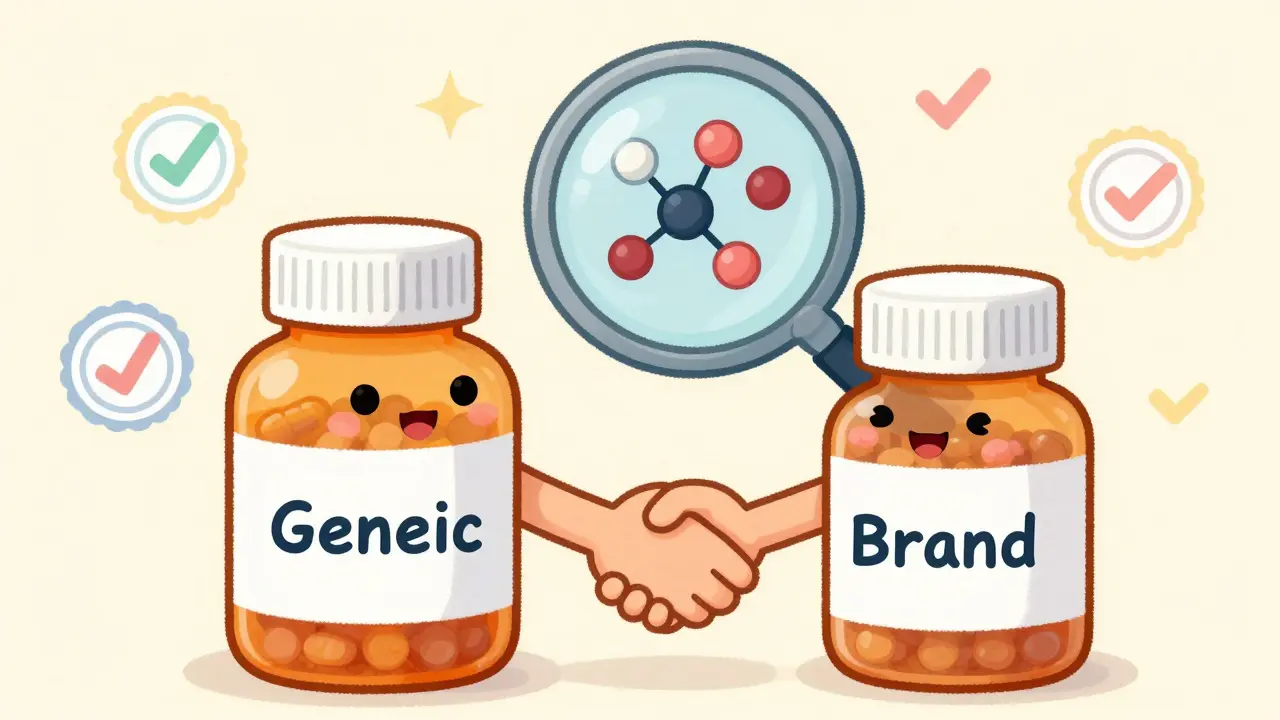
When you pick up a generic prescription, do you know what’s really in that pill? Many people assume generics are just cheaper versions of brand-name drugs - maybe weaker, maybe less reliable. But here’s the truth: pharmaceutical equivalence is the strict, science-backed rule that makes generics safe and effective. It’s not marketing. It’s regulation. And it’s why 90% of prescriptions in the U.S. are filled with generics today.
What Pharmaceutical Equivalence Actually Means
Pharmaceutical equivalence means two things: the generic drug and the brand-name drug must have the exact same active ingredient, in the exact same amount, in the exact same form. That means if your brand-name pill is a 25mg tablet taken by mouth, the generic must be a 25mg tablet taken by mouth - no exceptions. The FDA calls this the bare minimum requirement before any other testing even begins.
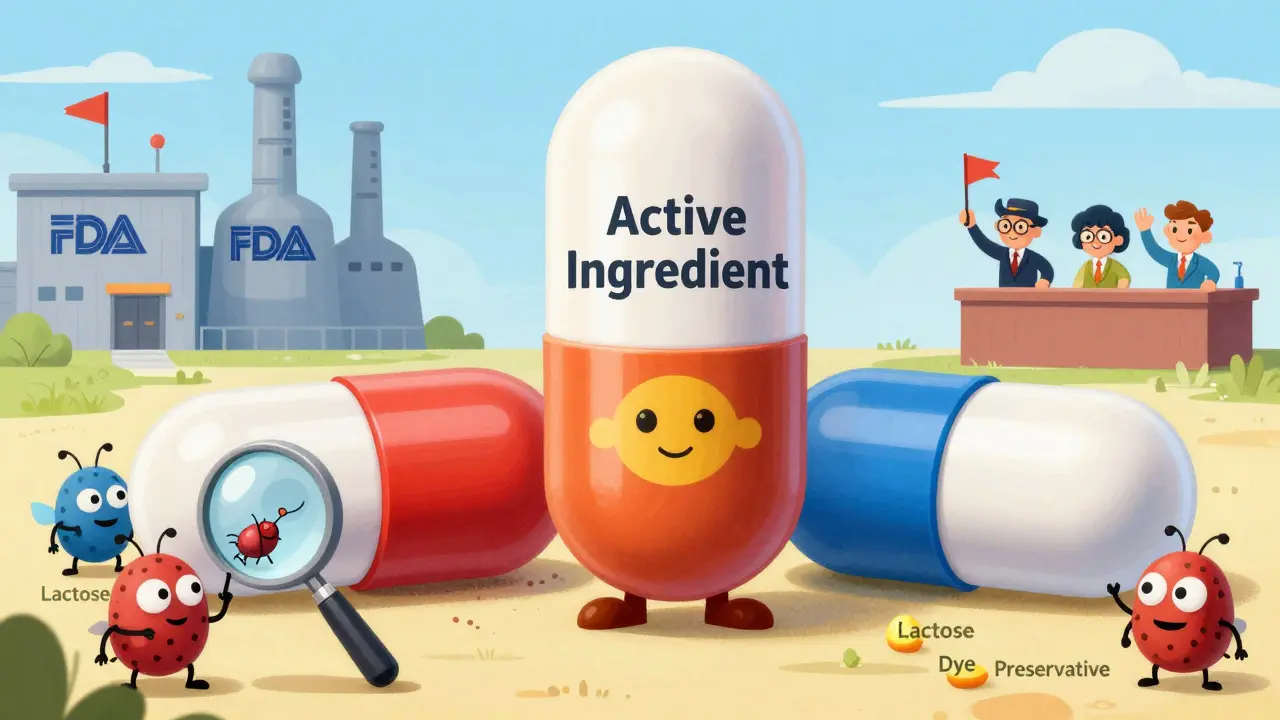
This isn’t about how the pill looks or tastes. The color, shape, size, and even the coating? Those can be totally different. The fillers, preservatives, and dyes? Those can change too. But the active ingredient - the part that actually treats your condition - must match down to the last milligram. The FDA requires this to be verified using lab tests like high-performance liquid chromatography (HPLC), which checks that the amount of active drug is within ±5% of what’s listed on the label.
This standard was created by the Hatch-Waxman Act of 1984, and it’s been the foundation of the modern generic drug system ever since. Without pharmaceutical equivalence, there would be no way to guarantee that a generic drug could ever replace a brand-name one. It’s the first gate in a three-step approval process.
The Three Levels of Drug Equivalence
Pharmaceutical equivalence is just the starting line. The FDA has three levels of equivalence you need to understand:
- Pharmaceutical equivalence - Same active ingredient, same dose, same form. That’s what we just covered.
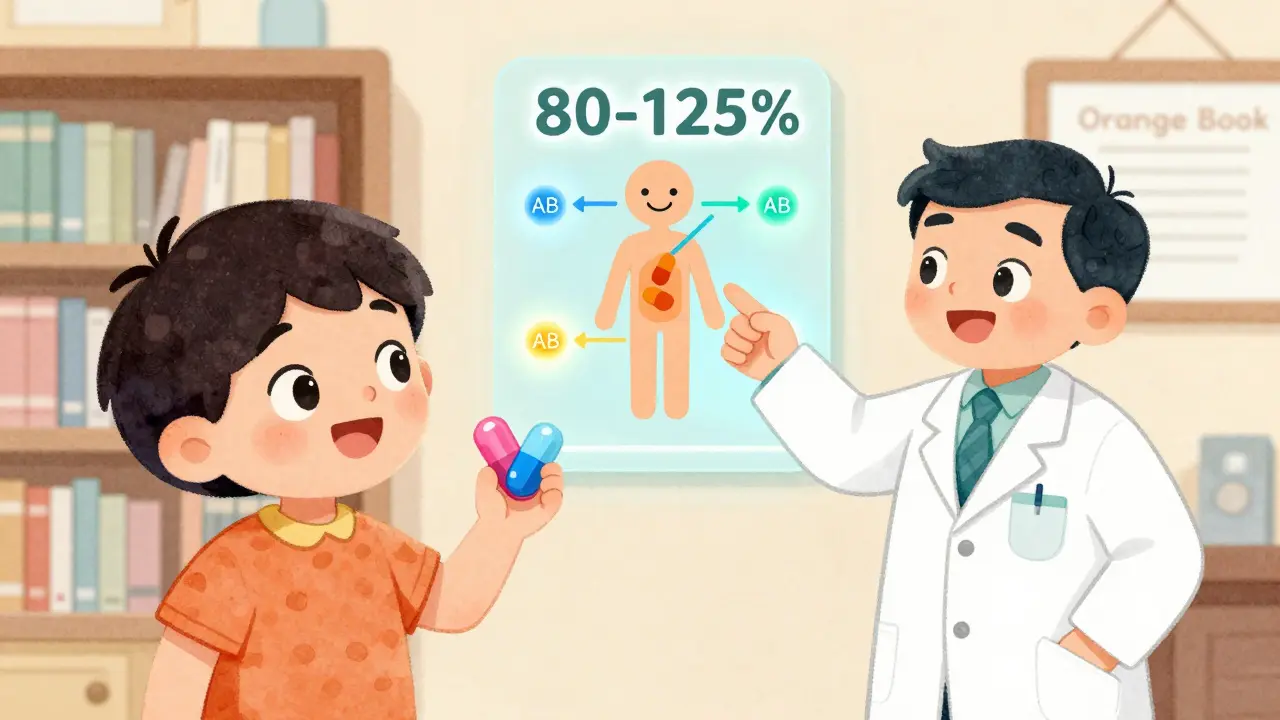
- Bioequivalence - The drug must get into your bloodstream the same way. This is tested by measuring how much of the drug enters your blood (AUC) and how fast it peaks (Cmax). The FDA allows a range of 80% to 125% compared to the brand-name drug. That’s not a loophole - it’s based on normal human variation. Your body absorbs the same drug differently from day to day. The 80-125% range accounts for that.
- Therapeutic equivalence - This is the final goal: does the generic work the same in your body, with the same benefits and risks? If yes, the FDA rates it as “AB” in the Orange Book. If there are concerns - like with drugs that have a narrow therapeutic index - it might be rated “BX,” meaning it’s not automatically interchangeable.
Here’s the key point: a drug can be pharmaceutically equivalent and still not be therapeutically equivalent. Take warfarin, for example. Two pills might have identical amounts of the active ingredient. But if one releases it slightly faster, it could raise your risk of bleeding. That’s why pharmacists check the Orange Book rating before swapping your prescription.
Why Excipients Matter More Than You Think
While the active ingredient is locked in, the inactive ingredients - called excipients - aren’t. These include things like lactose, cornstarch, dyes, and preservatives. They help the pill hold together, dissolve properly, or stay stable on the shelf. But for some people, they can cause problems.
A 2022 survey of pharmacists found that 87% had at least one patient report side effects from a generic’s excipients. Maybe it was a rash from a dye, stomach upset from a filler, or an allergic reaction to a preservative. Only 2.3% of those patients needed to go back to the brand-name drug. Still, that’s 2.3% of people who were otherwise doing fine.
That’s why the American Society of Health-System Pharmacists is pushing for better disclosure of excipients on labels. Right now, you have to dig into the FDA’s database or ask your pharmacist. If you have celiac disease, a dairy allergy, or sensitivities to certain chemicals, knowing what’s in your pill isn’t optional - it’s essential.
How Generics Are Approved - The ANDA Process
Generic manufacturers don’t run full clinical trials like brand-name companies do. Instead, they file an Abbreviated New Drug Application (ANDA). The word “abbreviated” here doesn’t mean “less rigorous.” It means they skip the expensive, years-long human trials because they’re relying on the brand-name drug’s safety data.
But they still have to prove:
- Their active ingredient matches exactly
- Their manufacturing process is consistent
- Their drug dissolves at the same rate as the original
- Their product is stable over its shelf life
They use real-world lab tests - dissolution profiles, stability studies under ICH Q1A(R2) guidelines, and chemical analysis - to prove it. The FDA reviews every piece of data. And they inspect the manufacturing facilities, too. In 2023, the FDA conducted over 400 inspections of generic drug plants worldwide.
Before 2022, the average approval time for a generic was 24 months. Thanks to the Generic Drug User Fee Amendments (GDUFA III), it’s now down to 18 months. That’s faster approval without cutting corners.
What the Orange Book Really Tells You
The FDA’s “Approved Drug Products with Therapeutic Equivalence Evaluations” - known as the Orange Book - is the bible for pharmacists. It lists every approved drug and gives it a rating:
- AB - Therapeutically equivalent. Safe to substitute.
- BX - Not equivalent. Don’t swap without checking.
- BZ - Insufficient data. Proceed with caution.
As of June 2024, there were 15,372 generic drugs listed. Of those, 12,845 were rated AB. That means over 83% of generics on the market are approved for automatic substitution. But 2,527 are not. Those are the ones that need extra care - especially drugs like levothyroxine, lithium, or seizure medications.
Pharmacists use this system every day. In 68% of hospitals, pharmacists must manually verify the Orange Book rating before switching a patient to a generic. That’s not bureaucracy - that’s patient safety.
Why People Are Still Skeptical
Despite all this, a 2023 Kaiser Family Foundation survey found that 42% of patients believe generic drugs contain only 80% of the active ingredient. That’s a dangerous misunderstanding. The 80-125% range applies to how the body absorbs the drug - not how much is in the pill. The pill itself contains 100% of the labeled dose.
That confusion comes from mixing up bioequivalence with pharmaceutical equivalence. It’s easy to do. But the difference matters. A pill doesn’t become “80% strong” just because your body absorbs it a little slower. The drug is still fully potent. It just moves through your system a bit differently.
That’s why education matters. Pharmacists and doctors need to explain this clearly. You’re not getting a lesser drug. You’re getting the same drug, made by a different company, under the same rules.
What’s Changing in 2026
The FDA is updating its standards for complex generics - drugs that aren’t just pills. Think inhalers, injectables, creams, or patches. These are harder to copy because how the drug is delivered matters as much as what’s in it.
In 2023, the FDA launched a new program to improve pharmaceutical equivalence for these products. They’re testing advanced methods like Raman spectroscopy and X-ray powder diffraction to analyze the physical structure of the drug. This isn’t about cutting costs - it’s about making sure that a generic inhaler works just as well as the brand.
By 2027, these techniques may become standard. And if you’re on a complex medication, that’s good news. It means fewer surprises.
Bottom Line: You’re Getting Exactly What You Pay For
Generic drugs saved the U.S. healthcare system $2.2 trillion between 2009 and 2023. That’s $1,008 saved per prescription. And it’s all possible because of pharmaceutical equivalence.
It’s not magic. It’s science. It’s regulation. It’s testing. It’s inspection. It’s data. And it works.
If your doctor prescribes a generic, you’re not taking a compromise. You’re taking a drug that meets the same exacting standards as the brand - same active ingredient, same dose, same form. The rest? That’s just packaging.
And if you have allergies or sensitivities? Ask your pharmacist. They’re trained to spot excipient issues. They’re your ally, not your obstacle.
Pharmaceutical equivalence isn’t just a regulatory term. It’s the quiet promise that keeps millions of people healthy - and costs them less.
Are generic drugs always as strong as brand-name drugs?
Yes - if they’re pharmaceutically equivalent. The active ingredient in a generic must be identical in amount and type to the brand-name version. The FDA requires lab tests to confirm this, ensuring the drug contains exactly what’s listed on the label. The 80-125% range you hear about refers to how your body absorbs the drug (bioequivalence), not how much is in the pill.
Can I switch between different generic brands?
For most drugs, yes. If both generics are rated "AB" in the FDA’s Orange Book, they’re considered therapeutically equivalent and interchangeable. But for drugs with a narrow therapeutic index - like warfarin or levothyroxine - switching between generics can sometimes cause issues. Always check with your pharmacist before changing between generic brands.
Why do generic pills look different from brand-name ones?
The law allows manufacturers to change the color, shape, size, and coating of generics to avoid infringing on the brand’s trademark. These differences are cosmetic and don’t affect how the drug works. What matters is that the active ingredient, dose, and delivery method are identical.
Do generic drugs have the same side effects as brand-name drugs?
Generally, yes - because they contain the same active ingredient. But sometimes, differences in inactive ingredients (like dyes or fillers) can cause minor reactions in sensitive individuals. If you notice new side effects after switching to a generic, talk to your pharmacist. They can check if an excipient might be the cause.
How do I know if my generic is approved by the FDA?
All legally sold generics in the U.S. must be FDA-approved. Check the Orange Book online - it lists every approved drug and its therapeutic equivalence rating. Your pharmacist can also confirm if your generic is rated "AB," which means it’s interchangeable with the brand-name drug.