
Medication Guide Rights & Troubleshooter
Select Your Situation
Click on the scenario that matches your experience at the pharmacy to see your legal rights and recommended actions.
Your Action Plan
Select a scenario on the left to view your rights and steps to take.
Steps to Take:
- Ask specifically: "Does this medication require a Medication Guide?"
- If they say no but you suspect otherwise, verify on the FDA website.
- If they claim they are out of stock, ask them to print it electronically or transfer your script to another location.
Steps to Take:
- ✔ Specify your preferred method (email, app link, patient portal).
- ✔ Ensure you can access it immediately at the counter.
- ✔ Confirm receipt before leaving the pharmacy.
Steps to Take:
- Request an electronic version to adjust font size.
- Ask the pharmacist to explain key sections in plain English.
- Look for bolded boxes or highlighted warnings first.
Steps to Take:
- Immediately check the drug name on the guide against your prescription label.
- Return to the counter and point out the discrepancy.
- Request the correct guide before leaving.
You pick up your prescription. The pharmacist hands you the bag, maybe a quick verbal warning about side effects, and then... silence. No paper insert. No detailed guide. You walk out feeling like you missed something crucial, but you weren't sure if you had a right to ask for it. This is a common frustration for millions of Americans filling prescriptions every year.
Here is the reality: for certain high-risk medications, the law requires more than just a label on the bottle. It mandates a Medication Guide, which is an FDA-approved document providing critical safety information directly to patients. These aren't optional marketing flyers. They are legal requirements designed to prevent serious health issues. But knowing your rights-and how to get that information when the pharmacy forgets-is where things get tricky.
What Exactly Is a Medication Guide?
A Medication Guide is a specific type of patient labeling required by the U.S. Food and Drug Administration (FDA) for certain prescription drugs. Established under federal regulations in 1998, these documents exist because some drugs pose serious public health concerns that standard bottle labels can't adequately cover.
The FDA doesn't require these for every pill. As of late 2023, only about 150 prescription drugs-roughly 5% of all medications on the market-require them. These are typically drugs where:
- Patient awareness could help prevent serious adverse reactions.
- The drug has significant risks relative to its benefits, affecting your decision to continue use.
- Strict adherence to directions is crucial for the drug to work effectively.
Think of blood thinners like warfarin, or certain antidepressants with black box warnings. If your medication falls into this category, you are legally entitled to receive this guide. Unlike generic pharmacy leaflets, these guides are developed by manufacturers and strictly approved by the FDA, ensuring the information is scientifically accurate and free from promotional fluff.
Your Legal Right to Receive One
Under 21 C.F.R. §208.24, pharmacies must dispense a Medication Guide to you (or your agent) in paper form at the time of dispensing. That means when you hand over your cash or insurance card, the guide should be in your hand or inside the bag. It’s not enough for the pharmacy to say, "We have them if you want one." They must proactively provide it.
However, compliance isn't perfect. A 2022 survey by the National Consumers League found that 43% of patients reported never receiving a Medication Guide even when their prescription required one. Why? Often, it comes down to workflow chaos. Pharmacists are overwhelmed, and during peak hours, that extra 15-20 seconds to print and hand over a guide can get skipped.
If you don't see one, don't assume it's not needed. Ask. Specifically, ask, "Does this medication require a Medication Guide?" This simple question triggers the pharmacist to check the system. Most major chains like CVS, Walgreens, and Rite Aid have electronic systems that flag these requirements automatically. If they say no, but you suspect otherwise, you can verify on the FDA's official website list of required guides.
Paper vs. Electronic: You Have a Choice
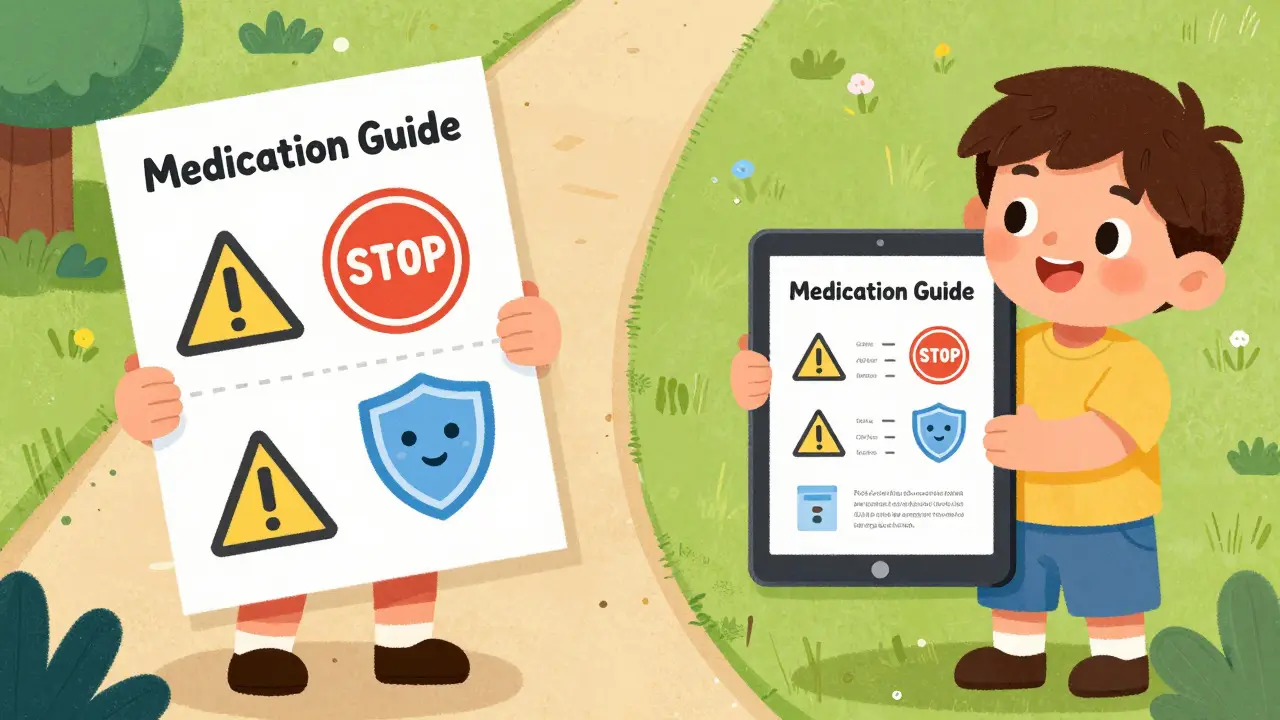
Historically, Medication Guides were always paper. But the landscape shifted significantly in May 2023. The FDA issued a Federal Register Notice clarifying that patients may request electronic delivery of the Medication Guide instead of a printed copy.
This is a big deal for two reasons. First, it reduces paper waste. Second, it addresses a common complaint: small font sizes and dense text that make paper guides hard to read. With electronic delivery, you can zoom in, save the file, or access it via a patient portal app.
Here is what you need to know about exercising this right:
- It’s your choice: Pharmacists cannot force you to take a paper copy if you prefer digital. Conversely, if you prefer paper, they cannot force you to download an app.
- Timing matters: The electronic version must be provided at the time of dispensing, just like the paper one. They can't email it to you three days later.
- Accessibility: Ensure you have a way to access the electronic file immediately. If you're picking up a med for an elderly parent who isn't tech-savvy, stick with paper.
When requesting electronic delivery, specify how you want it. Do you want it emailed? Linked in the pharmacy's app? Some pharmacies are still figuring out their workflows here, so clear communication helps avoid delays.
Why These Guides Matter More Than You Think
It’s easy to dismiss Medication Guides as bureaucratic clutter. After all, the pharmacist already told you not to drive if you feel dizzy. But data suggests they play a vital role in patient safety.
In a 2022 impact survey by Patients for Safer Drugs, 22.5% of respondents credited Medication Guides with preventing potential adverse events. In 17 specific cases, patients avoided dangerous drug interactions solely because they read the guide. Dr. Janet Woodcock, former director of the FDA’s Center for Drug Evaluation and Research, noted that these guides have "prevented countless adverse events by ensuring patients receive critical safety information at the point of dispensing."
However, there is a catch. The American Society of Health-System Pharmacists (ASHP) analyzed these guides and found that 68% of them exceeded an 11th-grade reading level. Despite regulations requiring "nontechnical language," many guides remain dense and jargon-heavy. This creates a gap: you have the right to information, but the information might be hard to understand.
This is where your proactive approach pays off. Don't just skim the guide. Look for sections highlighted in boxes or bold text-these are often the most critical warnings. If something is unclear, ask the pharmacist to explain it in plain English. They are trained to translate medical speak into everyday terms.
The Future: Patient Medication Information (PMI)
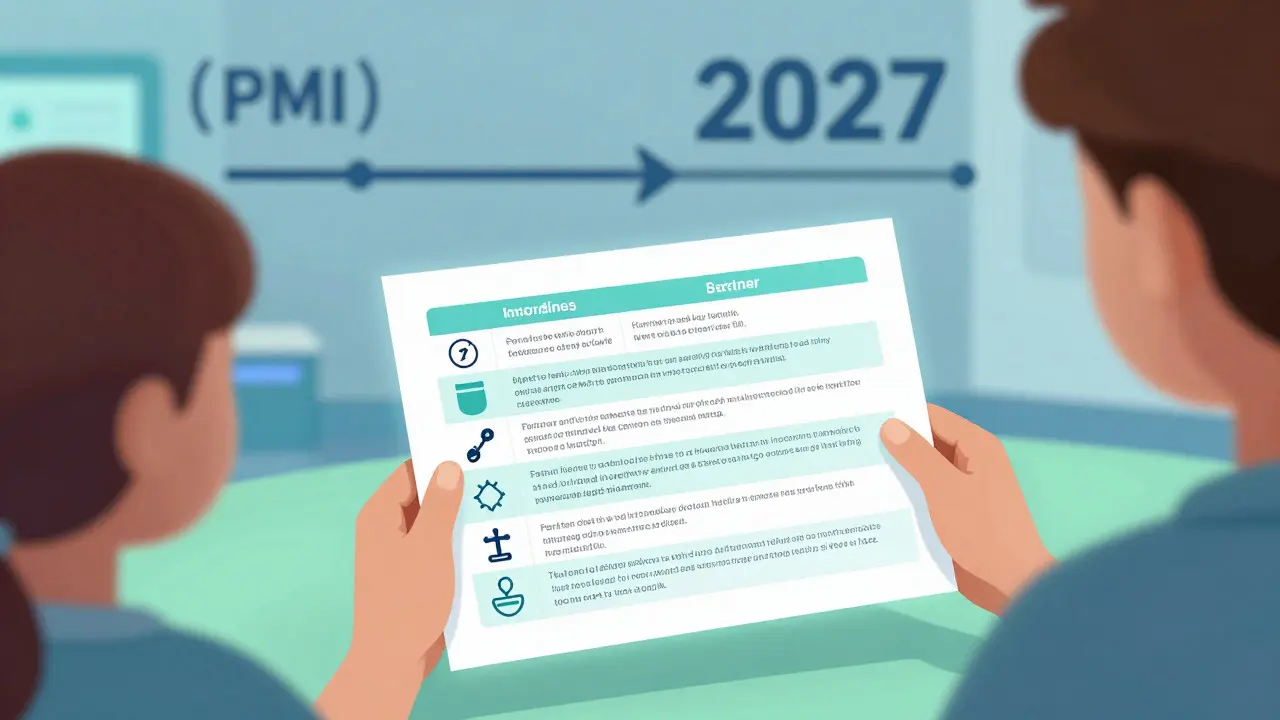
The current system of Medication Guides is undergoing a major overhaul. By 2027, the FDA plans to replace them entirely with a new format called Patient Medication Information (PMI), which is a standardized single-page document replacing variable-format Medication Guides.
Why the change? A 2019 Government Accountability Office report criticized the current guides for inconsistent formatting and low patient comprehension. The new PMI system aims to fix this by using a uniform layout across all drugs, making it easier for patients to find key information quickly.
FDA usability studies in 2022 showed that prototypes of the PMI improved patient comprehension by 37% compared to traditional Medication Guides. For pharmacies, this transition will cost between $2,500 and $15,000 per location to update their systems, according to the American Pharmacists Association. But for you, the consumer, it means clearer, more consistent safety information in the near future.
How to Handle Common Pharmacy Issues
Even with clear rules, things go wrong. Here is how to navigate common scenarios:
- The pharmacy says they ran out of guides. Under 21 CFR §208.24(b), manufacturers must provide sufficient numbers of guides to pharmacies. If a chain pharmacy claims they are out, it’s likely a supply chain glitch. Ask if they can print it electronically or call another location to transfer your script with the guide included.
- You received the wrong guide. Double-check the drug name on the guide against your prescription. If it’s for a different medication, return it immediately. This is a compliance error that could affect your understanding of side effects.
- The font is too small. While regulations mandate a minimum 10-point font, some guides still feel tiny. Request an electronic version to zoom in, or ask the pharmacist to highlight key sections for you.
Remember, you are the final checkpoint in your own healthcare. Pharmacists are busy, and systems fail. Knowing your rights empowers you to advocate for the information you need to stay safe.
Do I have to accept a Medication Guide?
Technically, yes, if you want the full legal protection and information. However, you can choose to receive it electronically instead of on paper. You cannot opt out of receiving the information entirely if the drug requires it, but you can decide the format. Refusing it doesn't void the pharmacy's obligation to offer it.
How do I know if my medication requires a Medication Guide?
You can check the FDA's official list of drugs requiring Medication Guides online. Alternatively, ask your pharmacist directly. They should be able to tell you instantly based on the drug's classification. About 5% of all prescription drugs require these guides.
Can I request an electronic Medication Guide?
Yes. Since May 2023, the FDA allows patients to request electronic delivery of Medication Guides in lieu of paper copies. This must be provided at the time of dispensing. You can choose email, patient portal, or other digital methods supported by your pharmacy.
What happens if the pharmacy forgets to give me the guide?
If the pharmacy fails to provide a required Medication Guide, it is a regulatory compliance issue. You can politely remind them of the requirement. If it happens repeatedly, you can contact the pharmacy manager or report it to the state board of pharmacy. The FDA also tracks compliance through inspections.
When will Patient Medication Information (PMI) replace Medication Guides?
The FDA estimates the transition to Patient Medication Information (PMI) will be completed by 2027. This new system will replace the current Medication Guides with a standardized, single-page format designed to improve clarity and patient comprehension.