
Did you know that nearly 90% of pregnant women in the United States take at least one medication during their pregnancy? It is a common reality, yet it comes with significant risks if not managed carefully. The landscape of pregnancy medication safety is a critical area of prenatal care focused on preventing fetal harm, birth defects, and pregnancy complications through informed drug selection and avoidance of teratogens. Since the thalidomide tragedy of the 1960s, which caused severe limb deformities in approximately 10,000 infants worldwide, regulatory bodies like the FDA have tightened controls. Today, understanding which drugs are dangerous and what safe alternatives exist is essential for maternal-fetal health.
The goal here is simple: protect the developing baby without compromising your own health. We will break down the specific medications you must avoid, explain why they are risky, and provide evidence-based alternatives for common issues like pain, allergies, and hypertension. This guide reflects the latest data up to mid-2026, including recent shifts in how we view even previously "safe" drugs like acetaminophen.
High-Risk Medications to Strictly Avoid
Some medications pose such a high risk of severe congenital anomalies or pregnancy loss that they should be discontinued immediately upon confirmation of pregnancy. These are not minor cautions; they are strict prohibitions backed by decades of clinical data.
- Isotretinoin (Accutane) is a retinoid medication used for severe acne that carries a greater than 25% risk of severe birth defects including craniofacial, cardiac, and central nervous system abnormalities. If you are taking this for acne, you must stop before trying to conceive. The FDA’s iPLEDGE program mandates strict contraception for users because the risk of major malformations is so high.
- ACE Inhibitors (such as lisinopril) and ARBs (such as valsartan) are blood pressure medications that can cause fetal renal failure, oligohydramnios (low amniotic fluid), and neonatal death. Studies published in the New England Journal of Medicine show a 30-50% risk of these severe outcomes. Switching to safer antihypertensives like methyldopa or labetalol is standard practice.
- Valproic Acid is an anticonvulsant used for epilepsy and bipolar disorder. Data from the NEAD study indicates a 10.7% risk of major congenital malformations compared to 2.8% in the general population. Women with epilepsy should consult their neurologist before conception to switch to safer options like lamotrigine or levetiracetam.
- Tetracyclines (like doxycycline) can cause permanent tooth discoloration and impaired bone growth in the fetus. They are generally avoided throughout pregnancy.
The NSAID Warning: Why Timing Matters
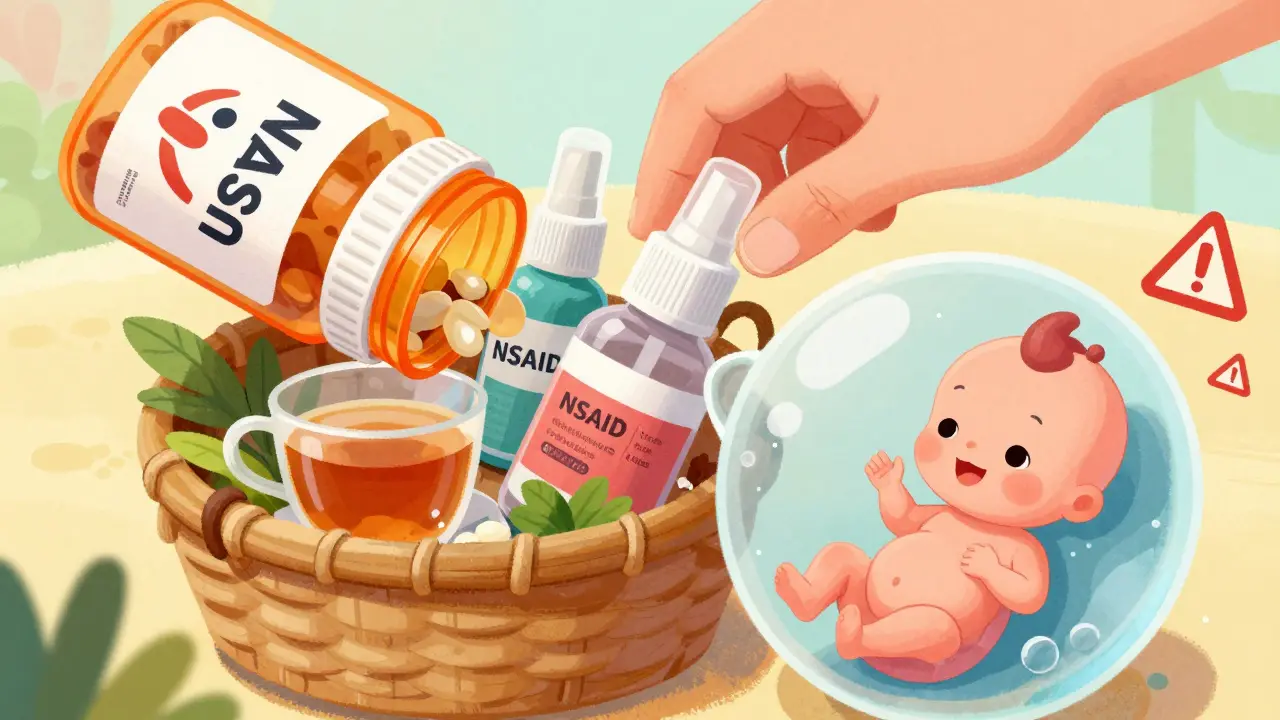
Non-steroidal anti-inflammatory drugs (NSAIDs) are common household remedies, but they carry specific timing-related risks during pregnancy. The FDA issued a strong warning in October 2020 advising against the use of NSAIDs at 20 weeks gestation or later.
Why 20 weeks? After this point, NSAIDs can cause fetal kidney failure, leading to oligohydramnios. A study in the American Journal of Obstetrics & Gynecology found a 1.5- to 2-fold increased risk of these complications. Common NSAIDs to avoid include:
- Ibuprofen (Advil, Motrin)
- Naproxen (Aleve)
- Aspirin (unless prescribed at low doses of 60-150 mg daily for preeclampsia prevention)
If you need pain relief before 20 weeks, short-term use may be considered under doctor supervision, but after the second trimester begins, these drugs are off-limits. Always check labels, as many multi-symptom cold medicines contain ibuprofen.
Reevaluating Acetaminophen: New Safety Concerns
For decades, Acetaminophen (Tylenol) was the preferred analgesic and antipyretic during pregnancy due to its perceived safety profile, though recent studies suggest potential neurodevelopmental risks with prolonged use. However, the narrative is shifting. In September 2025, the FDA issued a Notice to Physicians recommending minimizing acetaminophen use for routine low-grade fevers.
A 2021 JAMA Pediatrics study involving 95,000 mother-child pairs found a 28.6% increased risk of ADHD and a 20.4% increased risk of autism spectrum disorder with prolonged acetaminophen use. While the CDC notes that a direct causal relationship has not been definitively established, the precautionary principle now applies.
Does this mean you should never take it? Not necessarily. Dr. Sarah Obican, a maternal-fetal medicine specialist, points out that untreated high fever (≥102°F) poses a greater immediate teratogenic risk, increasing neural tube defect risk by 8.2-fold. The key is balance: use the lowest effective dose (325-650 mg) for the shortest duration necessary, and never exceed 3,000 mg daily. For minor aches, consider non-drug therapies first.
Safe Alternatives for Common Pregnancy Discomforts
You do not have to suffer through pregnancy symptoms when safe alternatives exist. Here is a breakdown of evidence-based options for common issues.
| Symptom | First-Line Alternative | Dosage/Guidance | Safety Notes |
|---|---|---|---|
| Pain/Fever | Acetaminophen | 325-650 mg every 4-6 hours; max 3,000 mg/day | Use sparingly; monitor for liver health |
| Allergies | Loratadine (Claritin) | 10 mg daily | Category B; no increased risk of birth defects in MotherToBaby registry |
| Allergies | Cetirizine (Zyrtec) | 10 mg daily | Category B; widely studied and considered safe |
| Nasal Congestion | Saline Sprays | As needed | Non-medicated; completely safe |
| Nasal Congestion | Pseudoephedrine (Sudafed) | 30-60 mg every 4-6 hours; max 120 mg/day | Avoid in first trimester; caution with high blood pressure |
| Constipation | Docusate Sodium (Colace) | 100 mg twice daily | Category B; stool softener |
| Constipation | Polyethylene Glycol (Miralax) | 17 g daily | Category B; osmotic laxative |
Managing Chronic Conditions: Depression and Epilepsy
Stopping medication abruptly can be more dangerous than continuing it. For example, untreated maternal depression increases the risk of preterm birth by 64% and low birth weight by 73%. The 2021 ACOG Committee Opinion #820 emphasizes individualized risk-benefit analysis.
While paroxetine (Paxil) carries a slightly higher risk of cardiac defects (1.5-2.0% vs 0.7% baseline), other SSRIs like sertraline (Zoloft) are often preferred. Dr. Lee Cohen’s 2016 JAMA study showed that while SSRIs increase the risk of persistent pulmonary hypertension of the newborn (PPHN) from 1-2 per 1,000 to 5-6 per 1,000, this must be weighed against the 20-25% risk of depression relapse if medication is stopped. Never discontinue psychiatric meds without consulting your provider.
Similarly, for epilepsy, switching from valproic acid to lamotrigine (which has a 2.2% major malformation rate) before conception is crucial. Preconception counseling is your best defense against medication-related birth defects.
Practical Steps for Medication Management
How do you navigate this complex landscape? Start by maintaining a complete list of all medications, supplements, and over-the-counter products you take. Share this with your obstetrician early in your pregnancy, ideally during preconception counseling.
Utilize trusted resources like the MotherToBaby service, operated by the Organization of Teratology Information Specialists. Their fact sheets have been accessed 2.3 million times annually because they provide clear, science-based answers. Remember that 78% of inquiries to MotherToBaby involve women who have already taken potentially harmful medications, highlighting the need for proactive education rather than reactive worry.
Always read the FDA’s Pregnancy and Lactation Labeling Rule (PLLR) documents for specific drugs. Unlike the old A-X categories, PLLR provides detailed narrative descriptions of risks, benefits, and dosing considerations. If you are unsure about a medication, call your pharmacist or doctor. Do not rely on internet forums or anecdotal advice.
Can I take ibuprofen in the first trimester?
While the FDA specifically warns against NSAIDs like ibuprofen after 20 weeks due to kidney risks, some doctors may allow short-term use in the first trimester. However, acetaminophen is generally preferred for pain relief throughout pregnancy. Always consult your healthcare provider before taking any NSAID.
Is Tylenol still safe during pregnancy in 2026?
Acetaminophen remains the preferred option for pain and fever, but recent FDA guidance suggests minimizing use for routine low-grade fevers due to potential links to ADHD and autism. Use the lowest effective dose for the shortest time possible, and prioritize treating high fevers to prevent neural tube defects.
What are safe allergy medications during pregnancy?
Second-generation antihistamines like loratadine (Claritin) and cetirizine (Zyrtec) are considered safe (Category B). Saline sprays are also excellent for nasal congestion. Avoid decongestants like pseudoephedrine in the first trimester and use them cautiously if you have high blood pressure.
Should I stop my antidepressants when I find out I'm pregnant?
No, do not stop antidepressants abruptly. Untreated depression poses significant risks to both mother and baby. Work with your psychiatrist and OB-GYN to evaluate the risks and benefits of continuing your current medication or switching to a safer alternative like sertraline.
What should I do if I accidentally took a banned medication?
Contact your healthcare provider immediately. Do not panic. Many exposures do not result in harm, especially if the exposure was brief or occurred outside critical development windows. Resources like MotherToBaby can help assess specific risks based on timing and dosage.