
When disaster strikes-whether it’s a wildfire, flood, or power outage-your first thought shouldn’t be, “Where are my pills?” Yet, for millions of Americans managing chronic conditions, that’s exactly what happens. In 2022, FEMA’s after-action report on Hurricane Ida found that 23% of evacuees ran out of critical medications within days. Cardiovascular drugs, insulin, and asthma inhalers were the most commonly depleted. These aren’t just inconveniences-they’re life-threatening gaps in care.
Why Your Go-Bag Needs More Than Water and Flashlights
Most people know to pack water, non-perishable food, and a flashlight. But if you take daily medication, your survival depends on more than just basics. The American Red Cross recommends a 7-day supply of prescription and over-the-counter drugs. Alert San Diego, responding to California’s frequent wildfires and earthquakes, pushes that to 14 days. Why the difference? It’s not arbitrary. In rural areas or after major disasters, pharmacies can be closed for weeks. Roads are blocked. Power is out. You can’t just drive to the corner drugstore.Consider this: 89% of Americans over 65 take at least one prescription. That’s nearly 30 million people. And yet, only 22% of U.S. households have a go-bag with adequate medication supplies. That’s not preparedness-that’s a waiting game with dangerous odds.
What Exactly Goes in Your Medication Go-Bag?
This isn’t a suggestion. It’s a checklist. Here’s what you need, based on guidelines from FEMA, the CDC, and the American Red Cross:- At least 7-14 days of all prescription medications-even if you think you won’t be gone that long. Disasters don’t follow schedules.
- Essential over-the-counter drugs: Pain relievers (acetaminophen or ibuprofen), antihistamines, antacids, laxatives, and anti-diarrheal meds.
- Medical devices: Inhalers, glucose monitors, insulin syringes, nebulizers, hearing aids with extra batteries, CPAP machines with backup power.
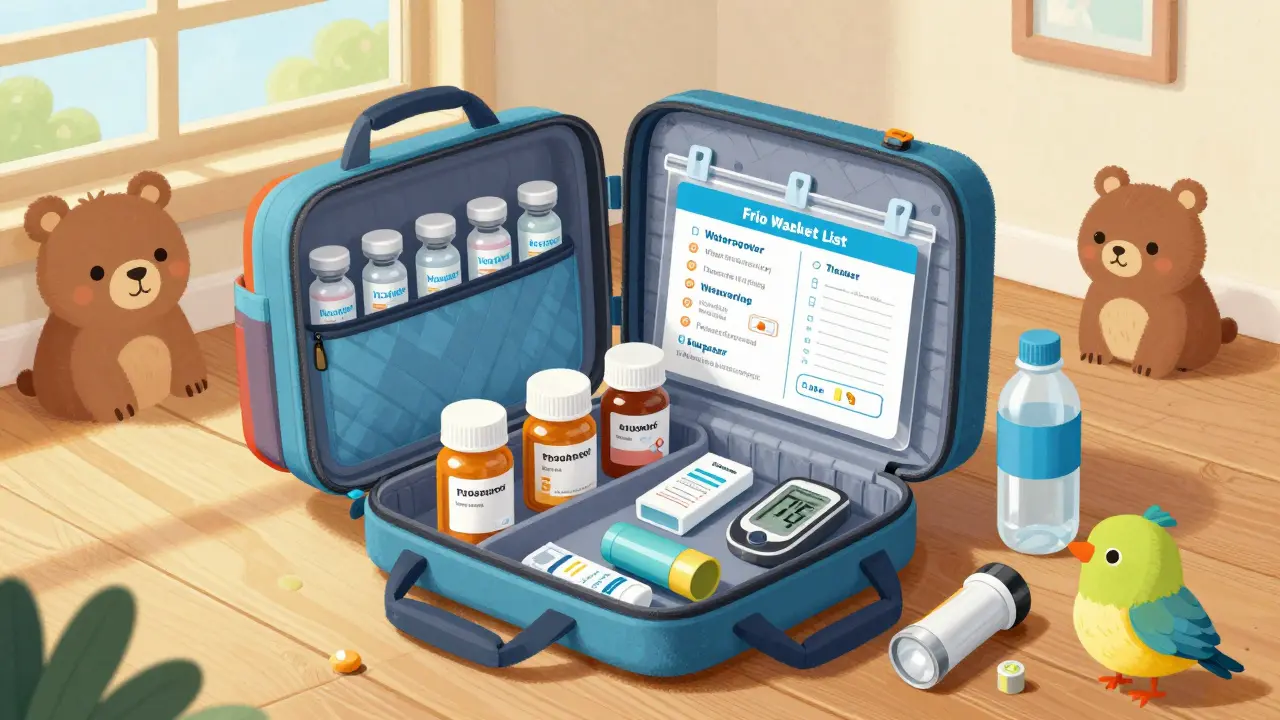
- Specialized cooling solutions: If you use insulin, epinephrine, or biologics, regular bags won’t cut it. Use an FDA-cleared cooling case like the Frio Wallet or MedAngel ONE, which keeps meds below 86°F for up to 48 hours without refrigeration.
- Written medical records: A list of every medication, dosage, frequency, and reason you take it. Include allergies, chronic conditions, and emergency contacts.
- Copy of your insurance card and ID: Hospitals and pharmacies may need this to dispense emergency refills.
- Extra batteries for devices and a manual backup method (like a blood pressure cuff if you’re diabetic).
Don’t rely on memory. Write it down. Put it in a waterproof pouch. If you’re rushed, responders need to know what you’re taking-and what you’re allergic to. One Reddit user, a nurse who evacuated during Hurricane Ian, said: “I had my meds, but no list. The ER had to guess my doses. I was lucky I didn’t overdose.”
How to Keep Medications Safe and Effective
Storing meds in a shoebox under your bed won’t cut it. Temperature, moisture, and light can destroy potency. Insulin, for example, loses effectiveness after just 24 hours at 90°F. Epinephrine auto-injectors can become useless if exposed to heat or freezing.Here’s how to protect your supply:
- Use original containers. Labels have vital info: drug name, strength, expiration date, prescribing doctor. Removing pills into random bags is risky.
- Store in a cool, dry place. A bedroom closet shelf is better than a bathroom cabinet or car trunk.
- Use cooling packs or temperature monitors. The MedAngel ONE device alerts your phone if your meds get too hot or cold. It’s FDA-cleared and works with Bluetooth.
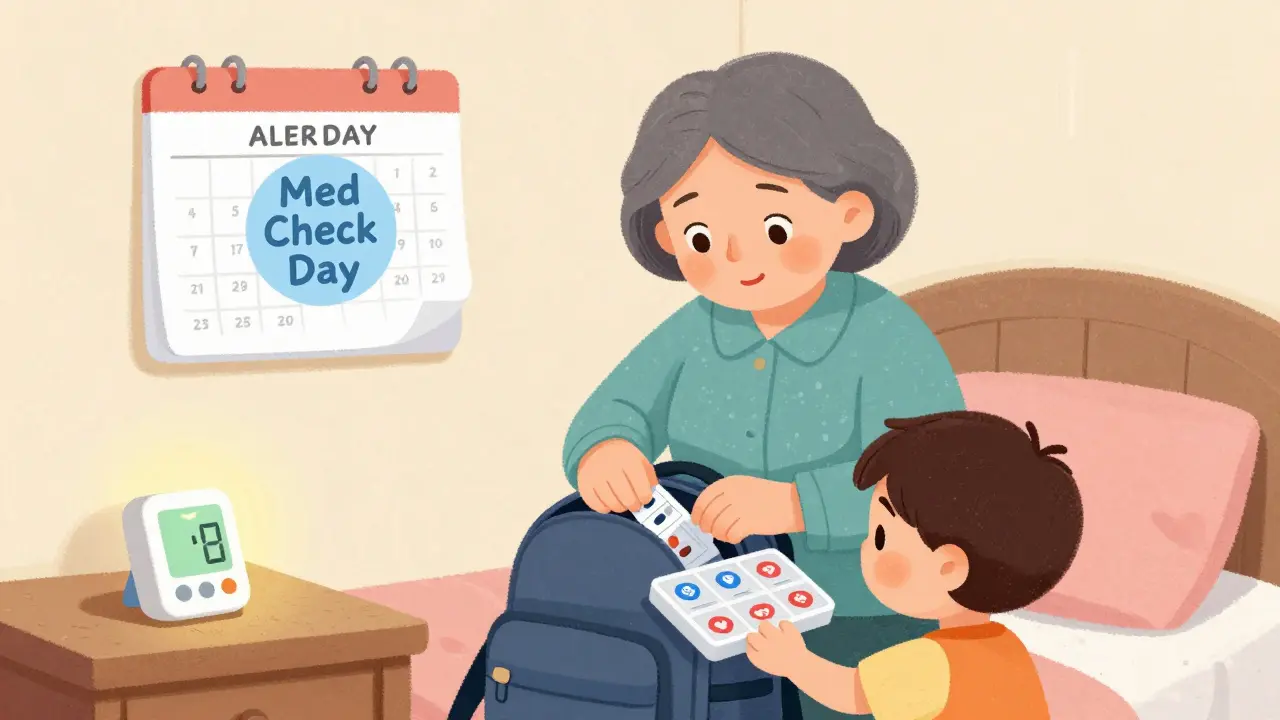
- Check expiration dates every 6 months. Set a calendar reminder. Expired epinephrine won’t save you. Expired antibiotics might not work-or could make you sick.
Pro tip: If you’re on insulin or other temperature-sensitive drugs, ask your pharmacist about extended-use formulations. Some newer insulin pens are stable at room temperature for up to 28 days.
How to Build and Maintain Your Go-Bag
Don’t wait for a storm to hit. Here’s how to build yours without stress:- Start with your prescriptions. Call your pharmacy and ask if you can get a 60- or 90-day supply instead of 30. Many insurers allow this for chronic conditions.
- Fill prescriptions on day one. Don’t wait until you’re down to your last pill. If your refill is due on the 15th, pick it up on the 1st.
- Rotate your stock. Every six months, take out your oldest meds and replace them with new ones. Use the old ones at home as your regular supply.
- Include a printed digital copy. Many doctors now offer electronic medication lists. Print it, laminate it, and put it in your bag.
- Keep it accessible. Store your go-bag near the door, in your car, or by your bed-not in the basement or attic.
It takes most people 2-3 tries to get it right. That’s normal. The goal isn’t perfection. It’s protection.
What About Kids, Seniors, and Complex Conditions?
Children and older adults are especially vulnerable. The CDC reports that 62% of insulin-dependent diabetics struggle to keep meds stable during power outages. For seniors on multiple drugs, confusion during chaos can lead to dangerous errors.For families:
- Use color-coded pill organizers labeled with pictures or names (e.g., “Blue = Blood Pressure”).
- Include a photo of the child or elder in the bag, along with their medical info. Emergency workers use photos to identify people who can’t communicate.
- If someone uses a feeding tube, ventilator, or dialysis, include backup power, extra tubing, and contact info for their home health provider.
And don’t forget mental health meds. Antidepressants, anti-anxiety drugs, and mood stabilizers are just as critical as heart or diabetes meds. Stopping them abruptly can trigger severe reactions.
Legal and Practical Hacks You Might Not Know
In 42 states, pharmacists can give you a 7-day emergency supply of most prescription drugs-even without a new prescription-if you’re caught in a disaster. But only if you can show proof you were taking them.That’s why your written list matters. It’s your legal ticket to emergency refills. Some pharmacies also offer mail-order refills during disasters. Ask yours if they have a disaster protocol.
Also, keep $100-$200 in small bills. ATMs may be down. Credit cards may not work. Cash is still king in emergencies.
Real Stories, Real Risks
In 2022, a man in California evacuated during a wildfire with his insulin-but left it in a hot car. By the time he reached shelter, the insulin had degraded. He ended up in the ER with diabetic ketoacidosis. He survived. But he didn’t need to.On the flip side, a woman in Florida evacuated during Hurricane Ian with her go-bag, including a Frio Wallet and detailed med list. Emergency staff at the shelter recognized her condition immediately, avoided a dangerous drug interaction, and got her refills within hours. She said: “That list saved me.”
What’s Changing in 2025?
The CDC is rolling out condition-specific go-bag templates in early 2024-for diabetes, heart disease, COPD, and epilepsy. FEMA aims to raise the percentage of households with proper medication kits from 22% to 35% by 2025. And tech is catching up: smart pill dispensers with GPS tracking and automated refill alerts are now available for high-risk users.But the biggest shift? Awareness. Pharmacists are now trained to ask patients: “Do you have a go-bag?” Not just during refill visits-but during every check-in. That’s new. And it’s saving lives.
Don’t Wait for the Emergency
You don’t need to be an expert to build a go-bag. You just need to start. Pick one medication today. Add it to a ziplock bag. Write down the name and dose. Tomorrow, add another. In a week, you’ll have half your bag done. In two weeks, you’re covered.Disasters don’t announce themselves. But your preparation can.
Can I just refill my prescriptions after a disaster?
Not always. Pharmacies may be closed, roads blocked, or power out. Even if open, they may be out of stock. In 42 states, pharmacists can give you a 7-day emergency supply without a new prescription-but only if you can prove you were taking the medication. That’s why you need a written list in your go-bag.
What if my medication needs refrigeration?
Insulin, epinephrine, and some biologics require cool storage. Use an FDA-cleared cooling case like the Frio Wallet or MedAngel ONE. These maintain safe temperatures for 48+ hours without ice or electricity. Never leave them in a hot car or unventilated bag. Test your cooling solution before you need it.
How often should I check my go-bag?
Every six months. Check expiration dates, replace used items, and update your medication list if your prescriptions changed. Set a calendar reminder-maybe on your birthday or the start of daylight saving time. It’s easier to remember if you tie it to a regular event.
Do I need a go-bag if I’m healthy?
Yes-even if you don’t take daily meds. You might need pain relievers, antihistamines, or anti-diarrheal meds after an injury or illness during a disaster. Also, if you’re helping others (kids, elderly neighbors), you’ll need supplies for them. A basic go-bag isn’t just for chronic conditions-it’s for anyone who wants to stay safe.
Can I use a regular backpack instead of a special kit?
Yes, but make sure it’s water-resistant and has compartments. A simple nylon backpack with a zipper is fine. The key isn’t the bag-it’s what’s inside. Just avoid cloth bags that can absorb moisture. Store meds in sealed plastic containers inside the bag for extra protection.
man i never thought about keeping my asthma inhaler in a go bag until now
just grabbed one and tossed it in my backpack right now
you people act like this is some revolutionary idea
it’s basic survival
if you need meds daily and you don’t have a plan you’re already dead
there’s something quietly heroic about the person who checks their insulin expiration date on their birthday
not because it’s trendy
but because they refuse to let chaos steal their dignity
you don’t need a fancy bag
just the stubbornness to keep showing up for yourself
even when the world forgets you exist
in Nigeria we call this "preparing for the next unknown"
we don’t wait for FEMA to tell us what to do
we learned this from power outages that last months
your meds are your lifeline
not a suggestion
not a checklist
your life depends on this
okay i’m doing it today
started with my blood pressure pills
put them in a ziplock with a sticky note
next week: insulin for my mom
we got this
one pill at a time
how pathetic is it that we have to rely on individual responsibility for systemic failures
why isn’t the government ensuring every citizen has access to emergency medication storage solutions
instead of shoving the burden onto the elderly
the disabled
the chronically ill
you call this preparedness
i call it neglect dressed up as empowerment
let me tell you about the time my neighbor’s CPAP machine died during a hurricane
he was on oxygen backup
no power
no batteries
no plan
he spent three days gasping in the dark
they found him semi-conscious in his own living room
the thing is
he had the device
he just never thought to check the batteries
or the charger
or the backup power bank
he thought "it’ll be fine"
and it wasn’t
don’t be him
check your damn batteries
every six months
set a reminder
your life is not a gamble
i... i didn’t realize how many things i needed to pack...
so many little things...
like... extra hearing aid batteries...
and... my list...
oh my god... i didn’t even have a list...
what if... what if something happened...
please tell me i’m not the only one who’s been ignoring this...
it’s just... so overwhelming...
and i’m so scared...
but... i’m going to start tomorrow...
i promise...
oh sweet jesus
you mean i can’t just toss my insulin in a sock and call it a day?
who knew you needed a *fda-cleared cooling case* to not die?
thank you for informing me that my shoebox strategy is basically a death sentence
and yes
i’m buying a frio wallet
right after i buy a life insurance policy
my dad is diabetic
he’s 78
he never listens
but i showed him this
he sat silent for 10 minutes
then he said
"son... i’ll do it tomorrow"
tomorrow is today
go pack his bag
now
why do people treat this like a hobby
like some kind of prepper trend
it’s not a craft project
it’s not a pinterest board
it’s not "getting organized"
it’s survival
if you don’t have your meds during a disaster you’re not prepared
you’re just lucky
and luck runs out
and then you die alone in a shelter wondering why no one warned you
and i’m tired of pretending this is optional
in my village in Nigeria, we say: "the storm doesn’t ask if you’re ready"
we don’t wait for manuals
we don’t wait for apps
we just act
if you need medicine
you carry it
if you need light
you carry batteries
if you need to survive
you carry everything
no one is coming to save you
you are your own first responder
to anyone feeling overwhelmed: start with one pill
just one
put it in a bag
write the name on a sticky note
that’s your victory today
tomorrow, add another
you don’t have to do it all at once
you just have to begin
and you’re already doing better than 78% of the country
that’s worth something
my grandma’s go-bag saved her life during the Texas freeze.
she had her meds, her list, her backup batteries.
they found her in the shelter with her meds still cool.
they said she was the only one who didn’t need emergency refills.
she didn’t make a big deal.
she just did it.
that’s the quiet kind of strength we need more of.