
When your liver fails, there’s no backup. No second chance. No pill that can replace what it does. Liver transplantation is the only real fix for end-stage liver disease. It’s not a simple operation-it’s a life-altering process that involves strict rules, complex surgery, and a lifetime of medication. But for thousands each year, it’s the difference between dying and living.
Who Gets a Liver Transplant?
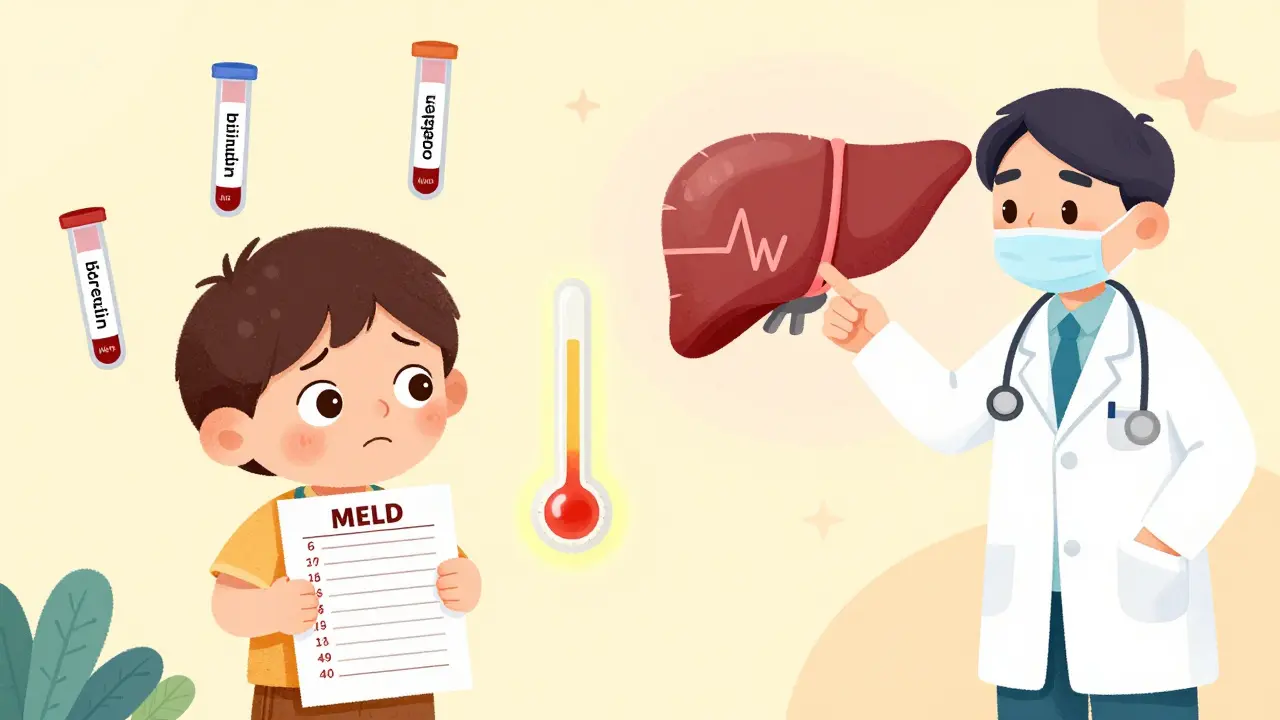
Not everyone with liver disease qualifies. The system is built to give organs to those who need them most-and who are most likely to survive. The key tool used to decide this is the MELD score. It’s calculated from three blood tests: bilirubin, creatinine, and INR. The higher the score, the sicker you are. Scores range from 6 to 40. If you’re at 30 or above, you’re near the top of the list. At 40, you’re in critical condition.But a high MELD score isn’t enough. You also need to be free of active drug or alcohol use. Most centers require at least six months of sobriety before listing. Some doctors argue this rule is too rigid. A 2023 study from Yale showed patients with just three months of abstinence had nearly the same five-year survival rates as those who waited six months. Still, most programs stick to the rule because relapse after transplant can destroy the new liver.
Cancer patients face different rules. If you have hepatocellular carcinoma (HCC), you must meet the Milan criteria: one tumor under 5 cm, or up to three tumors under 3 cm each-with no spread to blood vessels. If your tumor is bigger or has spread, you’re usually not eligible unless you get special approval. And if your alpha-fetoprotein (AFP) blood marker is above 1,000 and doesn’t drop below 500 after treatment, you’re typically excluded.
Psychosocial factors matter just as much as medical ones. Do you have someone to help you take your pills every day? Do you have stable housing? Can you afford transportation to weekly lab visits? If you’re homeless, struggling with mental health, or can’t follow complex instructions, you won’t be approved. Transplant centers don’t turn people away because they’re “unworthy”-they do it because without support, the transplant will fail.
The Surgery: What Happens During the Operation
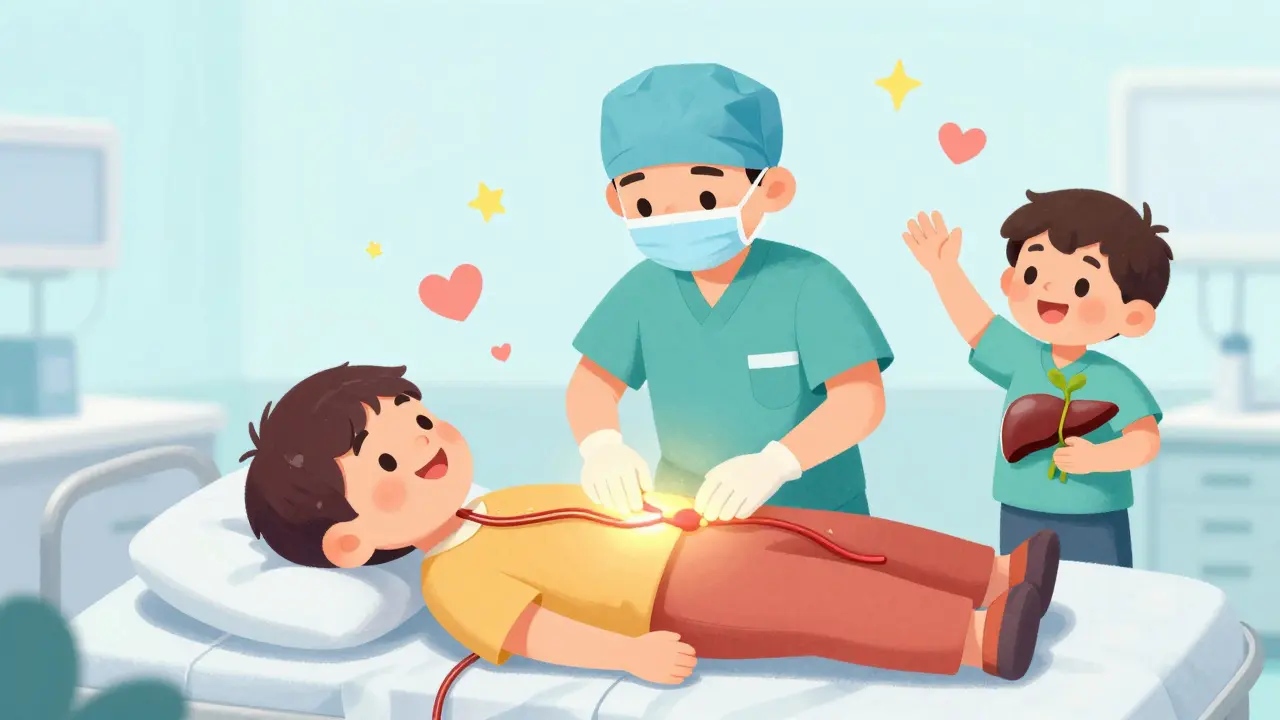
The surgery itself is long and intense. It takes between six and twelve hours. Surgeons remove your damaged liver, then carefully stitch in the donor liver. The most common technique used today is called the “piggyback” method. It keeps your inferior vena cava-the big vein that carries blood back to your heart-intact. This reduces bleeding and speeds up recovery.There are two types of donors: deceased and living. About 85% of transplants come from deceased donors. The rest come from living donors-usually a family member or close friend. In living donor transplants, surgeons remove 55% to 70% of the donor’s right liver lobe. The liver regenerates in both donor and recipient. Donors typically go home in 10 to 14 days and return to normal activity in six to eight weeks.
Living donor transplants have one big advantage: shorter wait times. While someone on the deceased donor list might wait over a year, a living donor transplant can happen in three months. But it’s not risk-free. Donors face a 0.2% chance of dying during surgery and a 20% to 30% chance of complications like bile leaks or infections. Still, for many families, the trade-off is worth it.
Geography plays a huge role in who gets a liver. In the Midwest (OPTN Region 2), patients with a MELD score of 25 to 30 wait about eight months. In California (Region 9), they wait 18 months. That’s not because one region is more efficient-it’s because organ availability varies wildly. Some areas have more donors. Others have more patients. The system tries to be fair, but it’s not perfect.
Immunosuppression: The Lifelong Trade-Off
Your body doesn’t know the new liver belongs to you. It sees it as an invader. That’s why you need immunosuppressants-for the rest of your life.Right after surgery, most patients get a short course of anti-rejection drugs like basiliximab or anti-thymocyte globulin. Then comes the daily routine: tacrolimus, mycophenolate, and often prednisone. Tacrolimus is the backbone. Doctors aim for blood levels between 5 and 10 ng/mL in the first year, then lower it to 4 to 8 ng/mL to reduce side effects. Mycophenolate prevents rejection too, but it can cause nausea, diarrhea, and low blood counts. Prednisone, a steroid, helps control inflammation but causes weight gain, bone loss, and diabetes.
Here’s the good news: 45% of U.S. transplant centers now use steroid-sparing protocols. They drop prednisone after just one month. This cuts the risk of new-onset diabetes from 28% to 17%. That’s a major win.
But even with the best drugs, rejection still happens. About 15% of patients have an acute rejection episode in the first year. It’s usually caught early through routine blood tests. The fix? Increase tacrolimus or add sirolimus. Most patients bounce back fine.
Long-term side effects are the real challenge. After five years, 35% of patients have kidney damage from tacrolimus. One in four develop diabetes. One in five get shaky hands or memory problems. Mycophenolate causes stomach issues in 30% and lowers blood cell counts in 10%. These aren’t rare side effects-they’re expected. That’s why regular checkups, blood tests, and communication with your transplant team are non-negotiable.
What Happens After You Go Home
You’re not done when you leave the hospital. In fact, the hardest part often starts now.For the first three months, you’ll go to the clinic every week for blood work. After that, every two weeks. By year one, it’s monthly. After that, quarterly. Each visit checks your liver function, kidney health, drug levels, and signs of infection.
Medication costs are high. On average, you’ll spend $25,000 to $30,000 a year just on anti-rejection drugs-not counting doctor visits, labs, or complications. Insurance coverage varies wildly. A 2023 national survey found 32% of transplant candidates were denied coverage for pre-transplant evaluations. That’s not a mistake-it’s a barrier.
You also need to learn what rejection looks like: fever above 100.4°F, yellowing skin, dark urine, extreme fatigue, or abdominal pain. These aren’t vague symptoms-they’re red flags. If you ignore them, you risk losing the transplant.
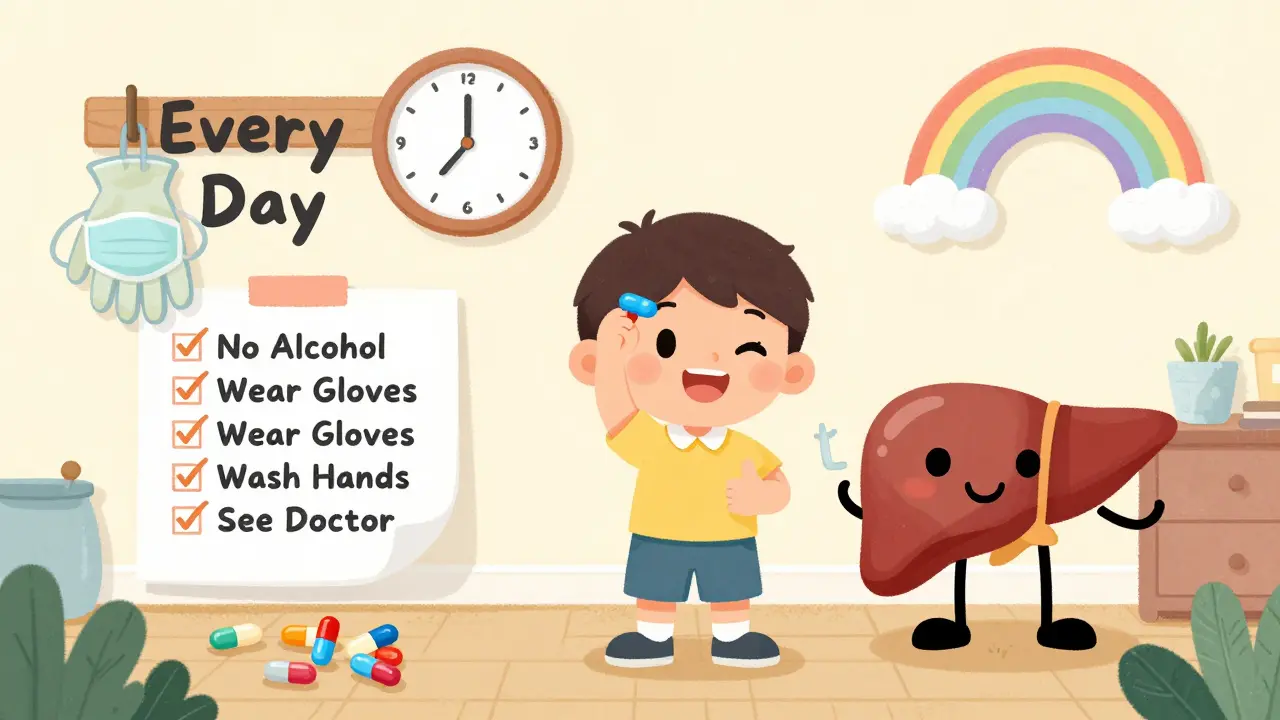
Infection risk stays high for years. You can’t go to crowded places without a mask. You can’t handle cat litter or gardening without gloves. You can’t eat raw fish or unpasteurized cheese. These aren’t suggestions-they’re survival rules.
New Trends and Future Hope
The field is changing fast. In June 2023, the FDA approved a portable liver perfusion device called Liver Assist. It keeps donor livers alive outside the body for up to 24 hours-double the old limit. That means more organs can be used, especially those from older or “marginal” donors.Some centers are now accepting donors with controlled high blood pressure or a BMI up to 32. In the past, these donors were turned away. Now, data shows their livers work just as well.
And there’s hope beyond drugs. Researchers at the University of Chicago have successfully weaned 25% of pediatric transplant patients off all immunosuppression by year five using regulatory T-cell therapy. It’s still experimental, but it’s a glimpse of a future where you don’t need lifelong pills.
Meanwhile, the rise of fatty liver disease (NASH) is changing who needs transplants. In 2010, only 3% of liver transplants were for NASH. By 2023, it was 18%. That’s the fastest-growing reason for transplant in the U.S. And with obesity rates still climbing, that number will only go up.
Some regions are making equity a priority. In British Columbia, new policies now include cultural support and modified abstinence requirements for Indigenous patients. It’s a small step-but it’s the kind of change that saves lives.
Is It Worth It?
The numbers don’t lie. Eighty-five percent of patients survive at least one year after transplant. Seventy percent make it five years. Many live 20, 30, even 40 years with a new liver. You can return to work. You can travel. You can watch your kids grow up.But it’s not a cure. It’s a reset. You’ll never be “normal.” You’ll always need pills. You’ll always be watched. You’ll always wonder if your body will reject the organ tomorrow.
Still, for those who have nothing left to lose-this is everything.
Can you live a normal life after a liver transplant?
Yes, most people return to work, travel, exercise, and enjoy family life. But you’ll always need to take immunosuppressants, avoid infections, and attend regular checkups. You can’t drink alcohol, smoke, or use drugs. You’ll need to be careful with certain foods and activities. It’s not the same as before your liver failed, but it’s a full, meaningful life.
How long is the wait for a liver transplant?
It varies by region and how sick you are. In high-MELD patients, the average wait is 12 months for a deceased donor liver. In areas with more donors, like the Midwest, it can be as short as 8 months. With a living donor, you can skip the wait entirely-often having surgery in 3 months or less.
Can you drink alcohol after a liver transplant?
No. Alcohol is toxic to the new liver and can cause immediate damage or rejection. Even small amounts increase your risk of liver scarring and failure. Most transplant centers require lifelong abstinence. This rule is strictly enforced.
What are the biggest risks of liver transplant?
The biggest risks are rejection, infection, and side effects from immunosuppressants. Rejection happens in 15% of patients in the first year. Infections are common because your immune system is suppressed. Long-term, you face higher risks of kidney damage, diabetes, high blood pressure, and certain cancers. Donor surgery also carries risks, including a 0.2% death rate.
How do they decide who gets a liver first?
The MELD score is the main factor-it predicts how likely you are to die in the next three months without a transplant. Higher scores get priority. Other factors include blood type match, body size, and time on the list. For liver cancer patients, the Milan criteria apply. Geographic location also affects wait times due to regional organ availability.
Can you be a living liver donor if you’re over 55?
Traditionally, donors are limited to ages 18-55. But some centers now consider donors up to 60 or even 65 if they’re in excellent health, have no liver disease, and pass rigorous testing. One case in 2023 involved a 58-year-old donor whose liver quality and anatomy made them an ideal candidate. Age alone doesn’t disqualify you-but overall health does.
What happens if your new liver fails?
If the transplanted liver fails, you can be relisted for another transplant. Many patients receive a second liver, and survival rates for retransplantation are still good-around 70% at one year. But it’s harder to get a second organ because priority goes to patients who’ve never had a transplant. You’ll need to prove you followed all rules and didn’t cause the failure through noncompliance.
i just saw a guy on the subway yesterday with a liver transplant sticker on his backpack-he was smiling while eating a burrito. i know alcohol’s banned, but i swear he had guacamole. if that’s not hope, i don’t know what is.
they say 0.2% donor death rate. that’s like 1 in 500. cool. now imagine being the 1 in 500 whose kid’s liver gets chopped up so some rich guy can go back to golfing.
the part about needing someone to help you take your pills... that hit me hard. my aunt made it through transplant, but she lost her husband two months after surgery. she forgot meds for three days. she almost lost the liver. thank god they caught it.
the living donor stats are wild-55-70% of the liver regenerates? that’s like nature’s version of a backup drive. and the fact that donors bounce back in 6-8 weeks? that’s not magic, that’s biology being awesome. we need more awareness around this. if you’re healthy, think about it.
also, the steroid-sparing protocols? huge win. my cousin went off prednisone after 4 weeks. no more moon face, no more insomnia. she’s back to hiking. that’s the kind of progress we should celebrate.
let’s be real-transplant centers are basically gatekeepers with spreadsheets. ‘You’re homeless? Nope. ‘You can’t afford transport? Sorry.’ ‘Your MELD’s 32 but you’re 62 and your knees are shot? Maybe next year.’
they say it’s about survival rates, but let’s not pretend it’s not also about who’s easiest to manage. the system’s not broken-it’s designed this way.
It is profoundly disingenuous to frame this as a 'life-altering process'-it is, in fact, a systemic failure of preventive medicine, a moral abdication by a healthcare apparatus that permits obesity, alcoholism, and NASH to reach epidemic proportions, then monetizes the consequences through exorbitant immunosuppressant regimens. This is not medicine; it is triage capitalism dressed in white coats.
While the article is comprehensive, it omits a critical point: the psychological toll of lifelong surveillance. Many patients describe the constant vigilance-not just for rejection, but for social judgment-as more draining than the physical symptoms. The fear of being ‘that person’ who ruined a donated organ is real, and rarely discussed.
in india, we don’t have a big donor system, so families often travel across states to find centers that accept living donors. my cousin’s sister gave part of her liver-he’s alive now, and she’s back to teaching yoga. it’s not perfect, but it’s love made into science.
also, i’ve seen people from villages walk 50km just for a blood test. the system’s unfair, but the will to live? that’s universal.
Oh, so now we’re celebrating ‘regulatory T-cell therapy’ as if it’s the second coming? Let’s not forget that 25% of pediatric patients were weaned off drugs-meaning 75% still need lifelong immunosuppression. We’re not curing anything-we’re just delaying the inevitable. This is not hope. This is a Band-Aid on a hemorrhage.
the thing no one talks about? the silence after the transplant. you’re supposed to be grateful, but sometimes you just feel… alone. like you’re living someone else’s miracle. i’ve been five years out. i take my pills. i avoid the raw fish. i go to my checkups. but sometimes i just sit and wonder: who was the person who died so i could breathe? and do they know i’m still here?