
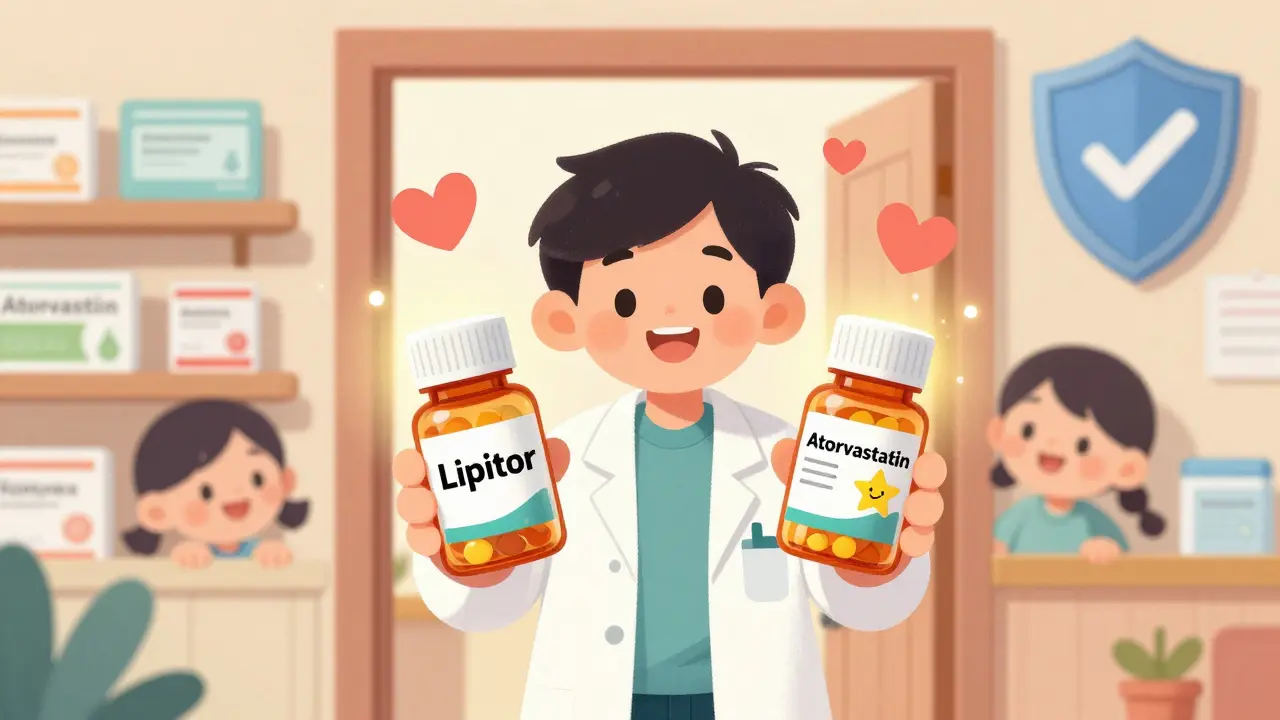
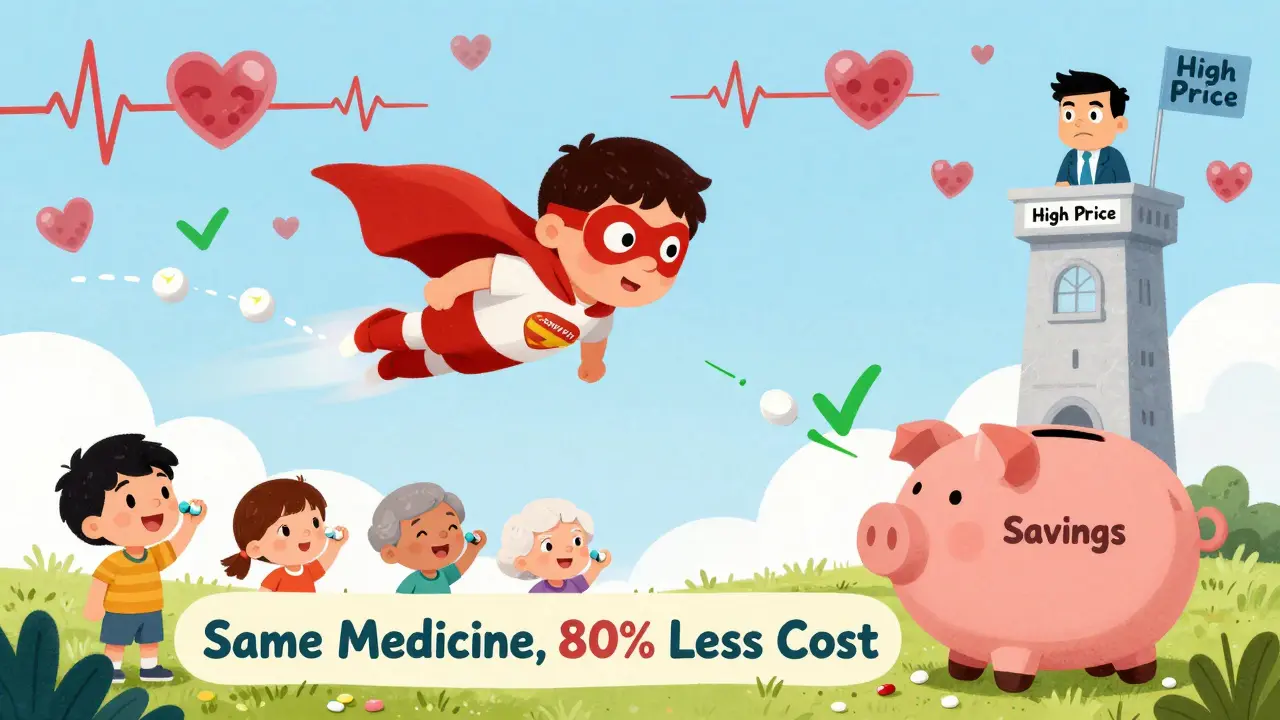
When you pick up a prescription, you might see two options: the name you recognize, like Lipitor or Synthroid, or a plain label with a generic name like atorvastatin or levothyroxine. The price difference is huge - sometimes 80% less. But is that savings worth the risk? Are generic drugs really as safe and effective as the brand-name versions? The answer isn’t simple, but the clinical evidence paints a clear picture: for most people, generic drugs work just as well. But there are exceptions - and they matter.
What does "equivalent" actually mean?
The U.S. Food and Drug Administration (FDA) doesn’t just approve generics because they look similar. To be approved, a generic drug must meet strict standards. It must contain the exact same active ingredient, in the same strength, in the same form (pill, injection, etc.), and work the same way in the body. That’s the pharmaceutical equivalence part. The real test is bioequivalence. This means the generic drug must be absorbed into your bloodstream at nearly the same rate and to the same extent as the brand-name version. The FDA requires that the amount of drug in your blood (measured by AUC and Cmax) falls within 80% to 125% of the brand’s levels. That’s not a wide gap - it’s tight enough to ensure the drug behaves the same way in most patients. And here’s the kicker: the FDA requires the same quality controls for generic manufacturing as it does for brand-name drugs. The same factories, same inspectors, same standards. In fact, many brand-name companies make their own generics once the patent expires.The numbers don’t lie - generics are just as safe
A 2020 study published in Nature Scientific Reports looked at over 1 million people in Austria over five years. It compared outcomes for 17 different drugs - including heart medications, antidepressants, and diabetes drugs. The results were striking. For 11 of the 17 drugs, patients taking generics had fewer major heart attacks, strokes, and deaths than those taking the brand-name versions. For example, with cardiovascular drugs, generic users had 40.6 deaths per 1,000 patient-years versus 45.8 for brand users. That’s not a small difference - it’s a 11% drop. Another study tracked 136,000 older adults in Canada after generics were introduced for three blood pressure medications. The researchers expected no change. Instead, they found a spike in adverse events - 8% more for losartan, 12% for valsartan, and 14% for candesartan. At first, this seems like proof generics are riskier. But the timing tells another story: these spikes happened right after the switch, when patients were suddenly on a different pill, different filler, different manufacturer. Once people stabilized on the generic, the risk dropped back to normal. This isn’t about the drug - it’s about the transition. The FDA’s own adverse event database (FAERS) from 2018 to 2022 shows nearly identical rates of reported side effects between generics and brands. For 15 common drugs, generics had 12.7 reports per million prescriptions; brands had 13.2. That’s not a meaningful difference.Where things get tricky - narrow therapeutic index drugs
Not all drugs are created equal. Some have what’s called a narrow therapeutic index - meaning the difference between a dose that works and one that’s toxic is very small. For these, even tiny variations in absorption can matter. That’s why doctors are extra careful with drugs like:- Warfarin (blood thinner)
- Levothyroxine (thyroid hormone)
- Phenytoin and carbamazepine (anti-seizure meds)
- Cyclosporine (immunosuppressant)
Why do some people feel different on generics?
It’s not all in their head. Generic drugs can have different inactive ingredients - fillers, dyes, preservatives - called excipients. For most people, these don’t matter. But for someone with a rare allergy or sensitivity, a dye in a generic pill might cause a rash. Or a different filler might change how fast the pill dissolves, leading to a slightly different effect. A 2013 review in the Journal of Clinical Pharmacy and Therapeutics found that about 30% of patients reported problems after switching from brand to generic. Some had side effects. Others felt the drug didn’t work as well. But here’s the twist: 30% also said they felt better on the generic. So why the split? It could be placebo effect, true physiological differences, or just the stress of change. The body doesn’t like surprise. Pharmacists report this too. A 2021 survey found 67% of community pharmacists had patients come in saying their generic medication “didn’t feel right.” The most common complaints? Psychiatric drugs, seizure meds, and thyroid pills. But again - when doctors checked blood levels or did controlled switches, most patients were fine.What does the data say about cost and access?
Generics make up 90% of all prescriptions in the U.S. but only 18% of drug spending. That’s billions saved every year. Without generics, millions of people couldn’t afford their meds. A 2023 study showed that after a generic enters the market, prices drop 80-85% within a year. After multiple generics come in, prices fall 90%. The FDA approved over 1,100 generic drugs in 2022 alone. That’s more than ever before. And the push for complex generics - like inhalers and topical creams - is growing. These are harder to copy, but the FDA is adapting its standards to make sure they’re just as safe.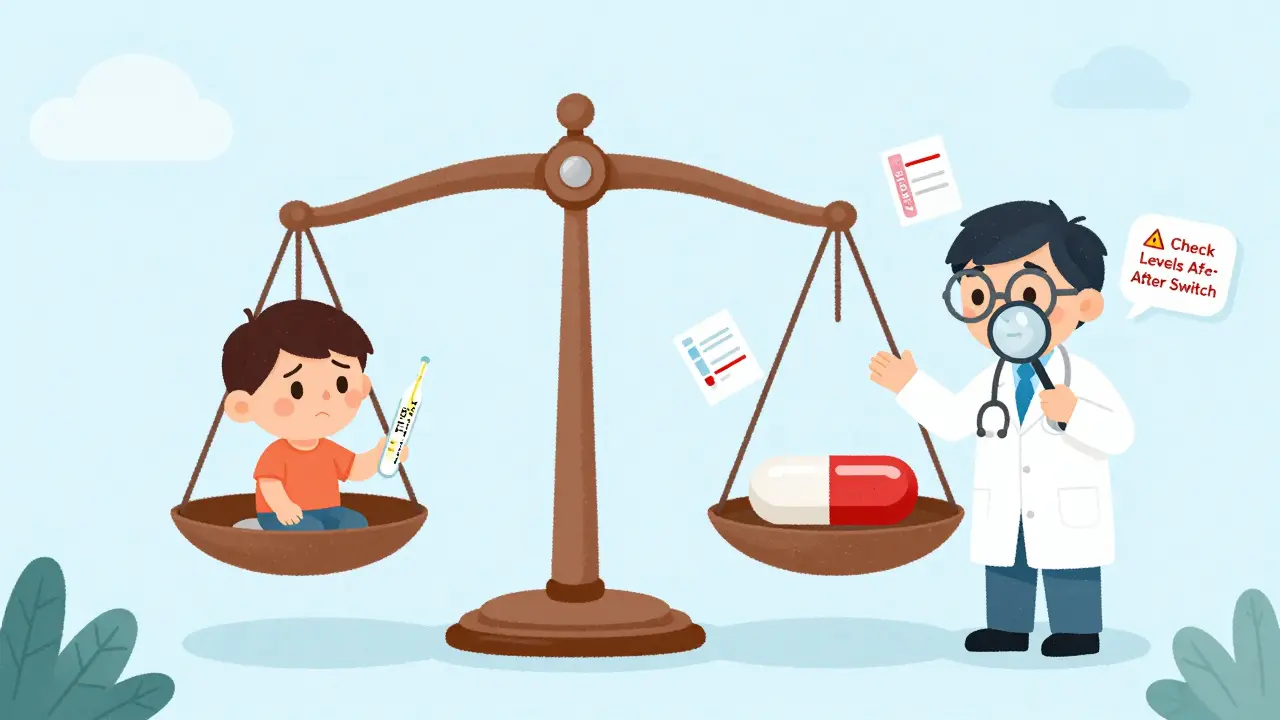
What should you do?
If you’re on a regular medication - statins, blood pressure pills, antibiotics - there’s no reason not to take the generic. The evidence is overwhelming: they work just as well, and they’re safer for your wallet. But if you’re on a drug with a narrow therapeutic index - levothyroxine, warfarin, seizure meds - talk to your doctor. Ask:- Is there a specific brand or generic you should stick with?
- Should I get my blood levels checked after a switch?
- Can I avoid switching unless absolutely necessary?
Bottom line
Generic drugs are not second-rate. They’re not cheap knockoffs. They’re rigorously tested, FDA-approved, and often safer than their brand-name counterparts. For the vast majority of people, they’re the smart, affordable choice. The exceptions exist - and they’re real. But they’re not the rule. The real risk isn’t in taking a generic. It’s in avoiding one out of fear. The data doesn’t support that fear. The science does.Are generic drugs as safe as brand-name drugs?
Yes, for the vast majority of drugs and patients, generic drugs are just as safe as brand-name versions. The FDA requires them to contain the same active ingredient, in the same strength and form, and to be absorbed into the body at nearly identical rates. Studies tracking hundreds of thousands of patients show no meaningful difference in adverse events or effectiveness for most medications. The FDA approves generics using the same quality standards as brand-name drugs.
Do generics have the same side effects as brand-name drugs?
Generally, yes. Side effects come from the active ingredient, which is identical in both. However, generics may use different inactive ingredients (like fillers or dyes), which can rarely cause reactions in sensitive individuals. In very few cases, differences in how quickly the drug is absorbed can lead to slightly different side effect patterns - especially with drugs that have a narrow therapeutic index. But overall, the rate of side effects is nearly identical between generics and brands.
Why do some people say generics don’t work for them?
Some patients report feeling different after switching - either less effective or more side effects. This can happen with drugs that have a narrow therapeutic index, like levothyroxine or warfarin, where small changes in absorption matter. It can also be due to psychological factors, like expecting the generic to be inferior. In rare cases, differences in inactive ingredients or manufacturing processes may play a role. If you notice a change, talk to your doctor - don’t assume the drug failed. Often, a simple blood test or switching back to the original brand can clarify things.
Should I avoid switching to a generic drug?
For most medications, no - switching to a generic is safe and saves money. But if you’re taking a drug with a narrow therapeutic index - such as thyroid hormone, blood thinners, or anti-seizure meds - talk to your doctor first. They may recommend sticking with one product (brand or generic) and avoiding switches. If you do switch, ask for a blood test a few weeks later to make sure your levels are still in range. Never stop or change your dose without medical advice.
Can I trust generics made overseas?
Yes, if they’re approved by the FDA. Many generic drugs - both brand and generic versions - are manufactured overseas, including in India and China. The FDA inspects these facilities just like U.S.-based ones. In 2022, the FDA issued 17 import alerts for generic drug manufacturers due to quality concerns, but these were targeted actions, not blanket bans. The FDA’s inspection rate for foreign facilities has increased significantly in recent years. If a generic is sold in the U.S., it has passed the same standards as any brand-name drug.
Generics work fine for most people. The FDA doesn't mess around. If your blood pressure med is generic and you're not dead, it's working. Stop overthinking it. I've been on generic lisinopril for 8 years. No issues. No drama. Just cheaper pills that do the job.
People who say 'it doesn't feel right' are either neurotic or got switched mid-cycle and panicked. The body doesn't need a brand logo to function.
Oh here we go again with the 'science says it's fine' mantra. As if the FDA is some infallible oracle. Have you ever read the actual inspection reports? Or do you just trust the PR bros at Big Pharma who now own the generic market? I’ve seen labs where the same facility churns out both brand and generic - same line, same batch, different label. The 'equivalence' is a statistical illusion.
And don't get me started on the fillers. Talc. Dyes. Corn starch from a supplier that got flagged in 2019. You think your thyroid doesn't care? Your liver doesn't notice? You're not a machine. You're a biological system with 37 trillion cells that don't give a damn about FDA guidelines.
I switched my mom from Synthroid to generic levothyroxine last year. She went from feeling fine to exhausted, foggy, weight gain. We tested her TSH - jumped from 1.8 to 7.1. Doctor said 'try switching back.' Did. Back to normal in 3 weeks. So yeah, it’s not all placebo. Some people are sensitive. Not everyone. But some. And if you’re one of them? You don’t want to find out the hard way.
For most drugs, generics are absolutely fine. But with warfarin, you don't just switch. You monitor. You track INR. You adjust. Same with phenytoin. The difference between 80% and 125% bioequivalence sounds small - until you're the one having a seizure or bleeding internally. The science says 'equivalent' - but clinical practice says 'caution.'
Don't fear generics. Respect the margins. And if you're on a narrow TI drug? Stick with one product. Period.
It’s heartbreaking, really… how we’ve been conditioned to distrust anything that doesn’t come with a fancy logo. I remember when my sister was switched from her brand-name antidepressant to a generic - she cried for three days. Not because she was irrational - because she felt… different. And then the world told her she was crazy. That her feelings weren’t valid. That the science was absolute. But science doesn’t live inside a human body. Emotions do. And sometimes, the body remembers the brand. The shape. The color. The ritual. The comfort. We’re not just chemistry. We’re narrative creatures. And when you change the story - even if the plot is identical - the soul feels it.
Anyone who says generics are unsafe is either a pharma shill or a hypochondriac. I’ve taken generic metformin, generic atorvastatin, generic sertraline. All worked fine. My bank account is happier. My doctor is happier. My insurance company is thrilled. Meanwhile, people are out here Googling 'can generic X cause anxiety' like it's a conspiracy. You're not special. Your thyroid is not a snowflake. Just take the pill.
So let me get this straight - the same company that makes Lipitor also makes atorvastatin. Same factory. Same machines. Same quality control. But somehow, the one with the $30 price tag is 'inferior' because it says 'Aurobindo' on it? We’ve been sold a myth. A marketing myth. A placebo for the wealthy.
And yet - people will pay $200 for a brand-name inhaler they can't afford… while complaining about 'big pharma' - but won't even try the generic that’s literally the same thing.
It's not about science. It's about identity. You're not buying a drug. You're buying a status symbol. And now you're mad because the symbol got cheaper.
Let’s talk about the real hero here - the Indian and Chinese manufacturers who make 70% of the world’s generics. They don’t have fancy ads. They don’t sponsor medical conferences. They just make pills. Good pills. Cheap pills. Pills that keep millions alive. And yet, we treat them like they’re shady. The FDA inspects them. They pass. They’re held to the same standard. Why do we still think 'made in China' means 'dangerous'? That’s not science. That’s colonial thinking wrapped in a white coat.
Generics are the quiet revolution. They’re not glamorous. But they’re saving lives. Every single day. Without fanfare. Without logos. Just chemistry. And humanity.
I’ve been a pharmacist for 22 years. I’ve seen it all. People come in screaming because their generic Adderall 'doesn’t work' - then we check the bottle and it’s a different manufacturer. They switched from Mylan to Teva. Suddenly, it’s 'not the same.'
Here’s the truth: the active ingredient is identical. The difference? Fillers. Coating. Dissolution time. Maybe 2-3% variation. But your brain? Your nervous system? It notices. It’s not placebo. It’s physiology. Your body adapts to a rhythm - pill shape, size, even the taste of the coating. Change that, and you get a weird adjustment period.
So don’t panic. Don’t stop. Just give it 2-3 weeks. If it’s still off? Switch back. Or ask for the original brand. But don’t assume it’s broken. It’s just… different. And different doesn’t mean dangerous.
Think about this: if generics are so identical, why does the FDA allow them to be 20% off in absorption? That’s not equivalence. That’s a loophole. And who benefits? The same corporations that own both the brand and the generic. They make more money because they control the market. They push the switch. They profit from the confusion. And you? You’re the lab rat. You’re the one who gets switched without consent. You’re the one who gets told you're 'imagining' side effects. But you know what? I’ve felt it. My heart raced. My sleep vanished. I didn’t believe it until I tested my blood levels. The generic had 18% lower Cmax. That’s not noise. That’s a clinical difference. And they’re still selling it as 'equivalent.'
My dad was on warfarin for 12 years. Brand. Then generic. Then another generic. Then back to brand. Each time, his INR went haywire. We had to adjust his dose three times. He nearly had a stroke. He’s fine now. But we learned: stick with one. Don’t switch. Ever. Even if it costs more. Your life isn’t a spreadsheet.
Generics are great. But some drugs? They’re not commodities. They’re lifelines. And sometimes, the smallest change - a different binder, a different dye - can be the difference between breathing… and not.