
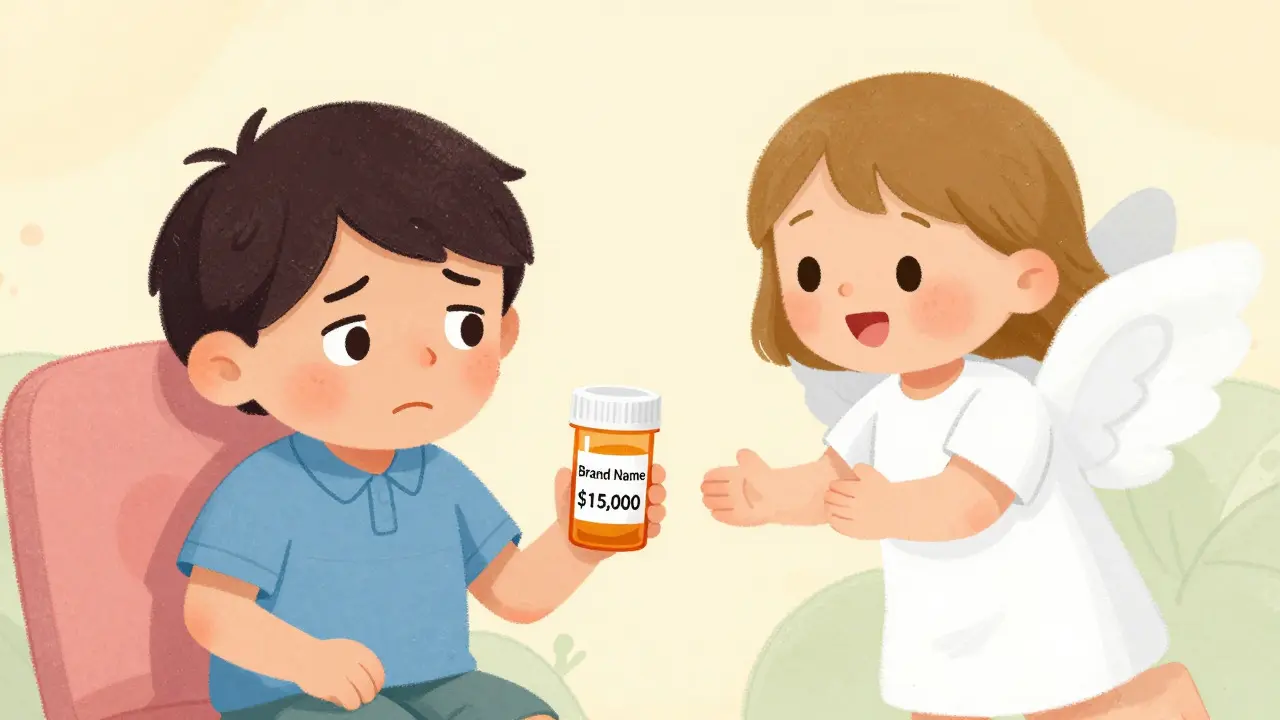
You get the prescription. The pharmacist tells you it’s a brand-name medication with no generic alternative available. Then comes the price tag: $15,000 for three months. Your insurance says you’re responsible for most of it because you haven’t met your deductible yet. Panic sets in. But there is a way out. It’s called a Patient Assistance Program (PAP) a financial support mechanism that provides free or low-cost medications to eligible patients.
PAPs are not just charity; they are structured systems designed by pharmaceutical companies and nonprofit foundations to keep people alive when their wallets can’t handle the bill. If you are stuck with a high-cost drug and no cheaper copycat version exists, understanding how to navigate these programs is the difference between staying on treatment and going broke.
Understanding the Landscape of Brand-Name Drug Costs
Why are some drugs so expensive? Usually, it’s because they are new treatments for complex conditions like cancer, HIV, or rare diseases. These are often called specialty drugs. Because no generic version exists-meaning other companies can’t make a cheaper copy-the original manufacturer holds a monopoly on the supply. This allows them to set prices that reflect the massive cost of research and development, but also, frankly, market power.
For years, these programs emerged during crises, like the HIV/AIDS epidemic in the 1980s, when life-saving antivirals cost thousands annually. Today, the landscape is vast. According to data from the Pharmaceutical Research and Manufacturers of America (PhRMA), there are about 1,500 active PAPs. Most are run directly by the drug makers themselves. Others are run by independent nonprofits. The goal is the same: reduce what experts call "financial toxicity"-the stress and physical harm caused by struggling to pay for medicine.
| Assistance Type | Average Savings | Eligibility Difficulty | Best For |
|---|---|---|---|
| Patient Assistance Program (PAP) | 100% (Free Drug) | High (Income limits, paperwork) | Uninsured or low-income patients with specialty drugs |
| Pharmacy Discount Cards (e.g., GoodRx) | ~8-10% for Specialty Brands | Low (Instant access) | Minor savings on generics; minimal help for expensive brands |
| State Pharmaceutical Assistance Programs (SPAPs) | Capped amounts (e.g., $400/mo) | Medium (Age/Residency based) | Elderly residents in specific states |
Who Qualifies for Patient Assistance?
The biggest hurdle isn’t finding a program; it’s proving you need it. Most manufacturer-sponsored PAPs have strict income guidelines. They typically use the Federal Poverty Level (FPL) as a benchmark. In many cases, you must earn less than 400% of the FPL to qualify. For an individual, that cap was around $60,000 annually in recent years, but this changes yearly.
You will generally fall into one of two buckets:
- The Uninsured: If you have no health insurance at all, manufacturer PAPs are your best friend. They often provide the drug completely free of charge if you meet the income criteria.
- The Underinsured: If you have insurance but face huge copays or deductibles, things get trickier. Many programs still help, but the rules are tighter. Some require proof that your insurance denied coverage or that your out-of-pocket costs exceed a certain percentage of your income.
Crucially, if you are on Medicare Part D, you likely cannot use manufacturer copay cards due to federal laws preventing kickbacks. However, you can apply for foundation-sponsored PAPs, which operate differently and are open to Medicare beneficiaries.
The Hidden Trap: Accumulator Adjustment Programs
Before you celebrate getting approved for a PAP, check your insurance plan for a nasty little clause called "accumulator adjustment." This is where the system tries to cheat you.
Here is how it works: You have a $5,000 deductible. Your drug costs $1,000 a month. A PAP pays the pharmacy $1,000. You pay $0. Sounds great, right? Wrong. Because the insurance company sees that the PAP paid the bill, they do not count that $1,000 toward your deductible. So, after five months, you’ve taken the drug, but your deductible hasn’t moved. You haven’t reached your out-of-pocket maximum. And then, suddenly, the PAP runs out of funds or your eligibility ends, and you are hit with the full bill.
This practice affects nearly 80% of major Pharmacy Benefit Managers (PBMs). If you have commercial insurance, ask your benefits administrator: "Does my plan use accumulator adjustments?" If yes, a standard manufacturer PAP might leave you paying thousands more in the long run. In these cases, look for nonprofit foundations organizations that provide grants for medical expenses instead, as their payments sometimes bypass these PBM tricks, or seek legal aid to challenge the policy.
Step-by-Step: How to Apply Successfully
Applying for a PAP is not like signing up for a credit card. It takes time, patience, and organization. Here is the practical workflow to get approved faster.
- Find the Right Program: Don’t guess. Go to NeedyMeds a database of patient assistance programs and resources or RxHope. Enter your drug name. These sites screen you instantly against hundreds of programs. This saves you from applying to ones where you don’t qualify.
- Gather Documentation Early: Do not wait until the last minute. You will need:
- Proof of income (W-2 forms, tax returns, or recent pay stubs).
- A signed prescription form from your doctor (often on official letterhead).
- Proof of insurance status (or a statement saying you are uninsured).
- Photo ID.
- Enlist Your Doctor’s Office: Doctors hate paperwork too, but they have staff who do this daily. Ask for a "medication access specialist" or a social worker. Studies show that applications handled by clinic staff have much higher approval rates and take less time because they know exactly which boxes to check.
- Submit and Follow Up: Manufacturer programs usually approve within 7-10 business days. Nonprofits can take 14-21 days. If you don’t hear back in two weeks, call. Persistence matters.
Alternatives When PAPs Fall Short
Sometimes, you don’t qualify for a PAP, or the processing time is too slow. What then?
Pharmacy Discount Cards: Tools like GoodRx or SingleCare are easy to use. You download an app, show a code, and get a discount. For generic drugs, this is amazing. For expensive brand-name drugs without generics? Not so much. You might save 10%, which on a $10,000 bill is only $1,000. Still better than nothing, but not a cure-all.
State Programs: Check if your state has a Pharmaceutical Assistance Program for the Elderly (PACE) or similar initiatives. These are funded by state taxes and often have different income limits than federal programs. For example, Pennsylvania’s PACE helps seniors with income under a specific threshold, regardless of whether they have private insurance.
Nonprofit Disease-Specific Foundations: Organizations like the Patient Access Network Foundation (PAN) or the HealthWell Foundation offer grants. Unlike manufacturer PAPs, these are not tied to a specific drug maker. They give you cash to pay for any necessary medical expense, including deductibles that PAPs ignore. This is crucial for beating the accumulator adjustment trap.
Common Mistakes to Avoid
I see people fail to get help because of simple errors. Avoid these pitfalls:
- Ignoring Renewal Dates: PAP approvals are rarely permanent. They usually last six months to a year. Mark your calendar. If you miss the renewal window, your drug supply stops, and restarting the process takes weeks.
- Using the Wrong Income Year: Some programs want your current year-to-date income; others want the previous year’s tax return. Read the instructions carefully. Submitting the wrong document causes automatic rejection.
- Not Checking Mail: Approval letters often come via regular mail, not email. If you move, update your address with the PAP administrator immediately. A lost letter means a lost drug.
What Experts Say About the System
The medical community loves PAPs for what they do but hates them for what they hide. Dr. Kao-Ping Chua from the University of Michigan notes that while PAPs cut out-of-pocket costs by over 90% for the uninsured, they allow drug companies to keep list prices artificially high. Essentially, the rich pay the inflated price, and the poor get a subsidy that keeps the status quo alive.
Despite this criticism, the utility is undeniable. A study in the Journal of Oncology Practice found that patients using PAPs were significantly less likely to skip doses due to cost. Skipping doses leads to worse health outcomes and higher emergency room visits. So, even if the system is imperfect, using it is the smartest move for your health right now.
How long does it take to get approved for a Patient Assistance Program?
Manufacturer-sponsored programs typically take 7 to 10 business days to process an initial application. Nonprofit foundations may take longer, averaging 14 to 21 days, due to additional verification steps. To speed this up, ensure all documents are complete and consider having your doctor's office submit the application for you.
Can I use a PAP if I have Medicare?
Generally, you cannot use manufacturer copay assistance cards if you are covered by Medicare Part D due to federal anti-kickback statutes. However, you can apply for foundation-sponsored PAPs and grants from nonprofits like PAN Foundation or HealthWell, which are allowed to assist Medicare beneficiaries.
What is an accumulator adjustment, and why should I care?
An accumulator adjustment is a policy used by many insurance plans where payments made by third parties (like a PAP) do not count toward your annual deductible or out-of-pocket maximum. This means you could receive free drugs for months but still be responsible for thousands of dollars once the PAP assistance expires, because you never technically "met" your deductible.
Where can I find a list of available Patient Assistance Programs?
The best resources are NeedyMeds.org and RxHope.com. Both platforms allow you to search by medication name and filter by your insurance status and income level to find relevant programs quickly. Your doctor's office may also have a dedicated financial counselor who maintains an internal list.
Do I need to repay the money received from a PAP?
No. Assistance provided through legitimate Patient Assistance Programs and nonprofit grants is considered charitable aid and is not taxable income. You do not have to pay it back. However, you must maintain your eligibility (income and residency) throughout the period of assistance.