
🩺 DPP-4 Inhibitor Risk Assessment Tool
Answer the following questions to gauge your individual susceptibility to pancreatitis while using gliptin-class medications. This tool uses data from recent meta-analyses and pharmacovigilance reports.
Your Personalized Risk Assessment
⚠️ Warning Signs to Watch For
- Persistent upper abdominal pain: Especially if it radiates to your back.
- Nausea & Vomiting: Often accompanying severe pain.
- Fever & Rapid Heartbeat: Signs of potential systemic inflammation.
Action Plan: If these symptoms occur, stop taking the medication temporarily and contact your healthcare provider immediately for lipase/amylase blood tests and imaging.
You are taking a daily pill to manage your blood sugar, likely because your doctor prescribed one of the "gliptin" drugs. These medications have become a staple in type 2 diabetes care because they are easy to take, don't usually cause weight gain, and rarely lead to low blood sugar. But beneath that convenient surface lies a question that keeps many patients and doctors up at night: can these pills hurt your pancreas?
The short answer is yes, but with a huge asterisk. DPP-4 inhibitors are a class of oral antidiabetic medications that work by blocking an enzyme called dipeptidyl peptidase-4, thereby increasing levels of incretin hormones like GLP-1 and GIP to enhance insulin secretion and reduce glucagon release. While generally safe for most people, there is a documented, albeit rare, link between this drug class and acute pancreatitis. Understanding the actual risk, the warning signs, and how it compares to other diabetes treatments is crucial for making informed decisions about your health.
What Are DPP-4 Inhibitors and How Do They Work?
To understand the side effects, you first need to know what these drugs actually do inside your body. When you eat, your gut releases hormones known as incretins. These hormones tell your pancreas to release more insulin (the hormone that lowers blood sugar) and less glucagon (the hormone that raises it). However, an enzyme called DPP-4 quickly breaks down these helpful hormones before they can do their job effectively.
Sitagliptin, Saxagliptin, Linagliptin, and Alogliptin are the four main FDA-approved agents in this class. They work by inhibiting the DPP-4 enzyme, allowing incretin levels to stay higher for longer. This results in better blood sugar control without the heavy dose of insulin spikes you might see with older sulfonylureas. Because they target the body's natural regulatory system rather than forcing insulin production artificially, they are often well-tolerated. Common minor side effects include headaches and stuffy noses (nasopharyngitis), which are far less disruptive than the serious risks we are discussing today.
The Pancreatitis Connection: What the Data Shows
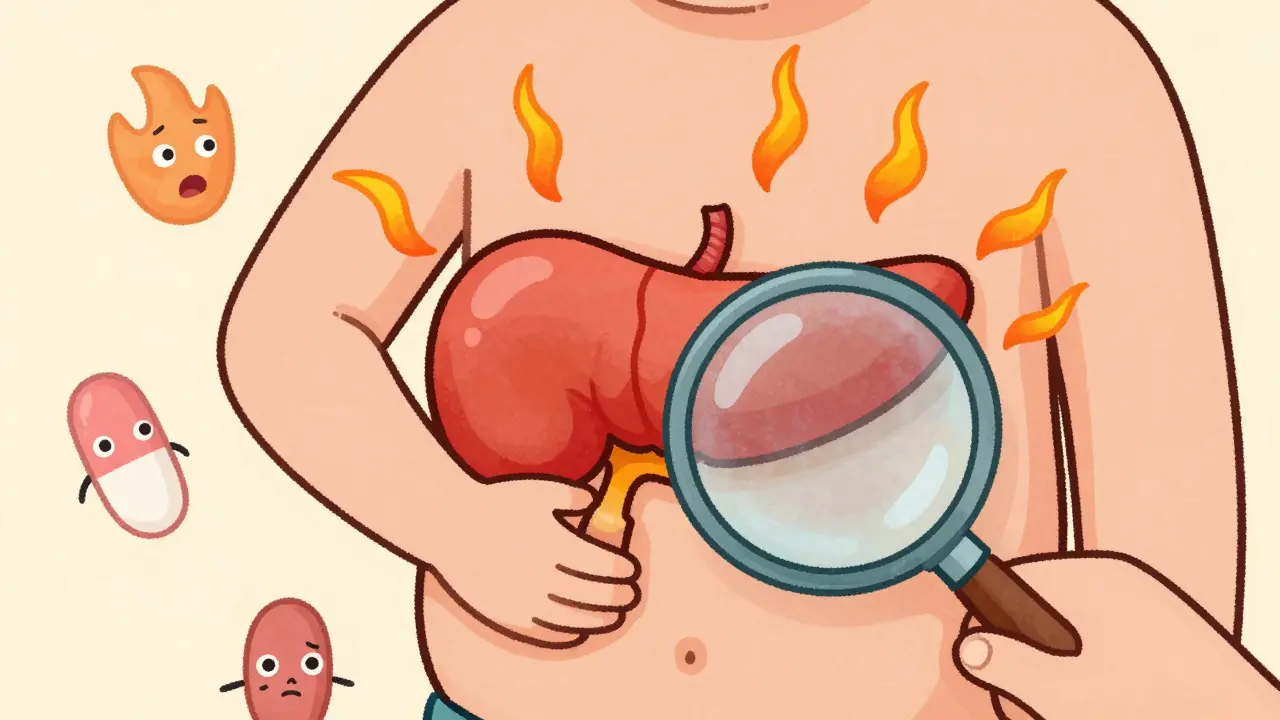
For years, the link between acute pancreatitis and DPP-4 inhibitors was debated. It wasn't until regulatory agencies like the UK’s MHRA and the US FDA reviewed post-market data that the association became undeniable. Acute pancreatitis is inflammation of the pancreas, causing severe abdominal pain that often radiates to the back, nausea, and vomiting. If left untreated, it can be life-threatening.
Here is where the numbers get specific. A comprehensive meta-analysis published in Diabetes Care in 2017 analyzed data from thousands of patients. The study found that the odds ratio for developing acute pancreatitis while on DPP-4 inhibitors was approximately 1.79. In plain English, this means patients on these drugs had an almost 80% higher relative risk compared to those not taking them. However, "relative risk" can be misleading if you don't look at the "absolute risk." The absolute increased risk was estimated at just 0.13%. That translates to roughly one or two extra cases per 1,000 patients treated over a period of two years.
A more recent 2024 study in Frontiers in Pharmacology reinforced these findings using real-world reporting data. It calculated a Reporting Odds Ratio (ROR) of 13.2, indicating a strong statistical association in spontaneous adverse event reports. While the ROR sounds alarming, it reflects the frequency of reports relative to expected background rates, confirming that the signal is consistent across different populations and timeframes.
| Metric Type | Value | Source/Context |
|---|---|---|
| Relative Risk Increase | ~75-80% | Meta-analyses of clinical trials (OR 1.79 - 1.81) |
| Absolute Risk Increase | 0.13% | Approx. 1-2 additional cases per 1,000 patients over 2 years |
| Reporting Odds Ratio (ROR) | 13.2 | Real-world pharmacovigilance data (2024) |
| Clinical Trial Event Rate | <1% | Few cases detected during initial development phases |
Why Is the Mechanism Still Unclear?
If the risk is established, why doesn't everyone who takes these drugs get pancreatitis? And why does it happen in the first place? Scientists are still working out the exact biological mechanism. Animal studies have been inconclusive; mice given high doses of DPP-4 inhibitors didn't consistently develop pancreatitis, suggesting the effect might be unique to humans or dependent on specific genetic factors.
One theory involves the incretin pathway itself. Since DPP-4 inhibitors boost GLP-1 levels, and GLP-1 receptors are present in the pancreas, excessive stimulation might theoretically trigger inflammation in susceptible individuals. Another factor complicating the picture is that type 2 diabetes itself is associated with a higher baseline incidence of pancreatitis compared to non-diabetic populations. Gallstones, high triglycerides, and alcohol use are also major independent risk factors. Therefore, when a patient on a gliptin develops pancreatitis, it can be difficult to determine if the drug was the sole cause or a contributing factor to an existing vulnerability.
How Does This Compare to Other Diabetes Drugs?
Pancreatitis isn't the only concern for diabetes medications, but it is a specific red flag for certain classes. When comparing DPP-4 inhibitors to other modern therapies, the landscape becomes clearer.
GLP-1 receptor agonists (like liraglutide or semaglutide) also carry a label warning for pancreatitis. However, a 2024 comparative analysis showed that SGLT2 inhibitors (like empagliflozin or dapagliflozin) had a significantly lower rate of acute pancreatitis reports compared to DPP-4 inhibitors. Among GLP-1 agonists, liraglutide has shown a stronger association with pancreatitis than some of its peers, but the overall risk profile remains distinct from the gliptins.
It is also worth noting that a large meta-analysis involving nearly 56,000 patients confirmed that neither GLP-1 agonists nor DPP-4 inhibitors increase the risk of pancreatic cancer. This is a critical distinction. While the inflammation (pancreatitis) is a real, acute risk, the long-term fear of cancer development linked specifically to these drugs has not been supported by robust evidence.
Who Should Be Most Cautious?
Not every patient faces the same level of danger. The decision to prescribe or continue a DPP-4 inhibitor requires weighing the benefits against individual risk factors. You should have a detailed conversation with your healthcare provider if you fall into any of these categories:
- History of Pancreatitis: If you have had an episode of acute pancreatitis in the past, the risk of recurrence may be higher with these drugs.
- Gallstones: Biliary disease is a leading cause of pancreatitis. If you have gallstones, your baseline risk is already elevated.
- High Triglycerides: Severe hypertriglyceridemia is another major trigger for pancreatic inflammation.
- Heavy Alcohol Use: Alcohol is a direct toxin to the pancreas and compounds the risk when combined with medication effects.
For patients without these comorbidities, the benefit-to-risk ratio usually favors treatment, especially since DPP-4 inhibitors are weight-neutral and carry a very low risk of hypoglycemia compared to insulin or sulfonylureas.

Recognizing the Warning Signs
Because the risk is rare, vigilance is key. The hallmark symptom of acute pancreatitis is persistent, severe upper abdominal pain that may radiate to your back. It is often accompanied by nausea, vomiting, and a swollen, tender abdomen. Fever and rapid heartbeat can also occur in severe cases.
Dr. Deepak L. Bhatt and colleagues emphasized in their 2017 review that clinicians should inform patients about these specific symptoms before starting therapy. If you experience even mild gastrointestinal discomfort that feels unusual or persists after eating, it is justified to seek medical attention. Your doctor will likely order blood tests to measure pancreatic enzymes (lipase and amylase) and perform an abdominal ultrasound to rule out gallstones or other structural issues.
In most reported cases, the pancreatitis resolved after discontinuing the DPP-4 inhibitor. However, about 17.7% of reported cases were classified as serious events, requiring hospitalization. This underscores the importance of not ignoring new abdominal symptoms.
Current Clinical Recommendations
Despite the pancreatitis risk, DPP-4 inhibitors remain a recommended option in the American Diabetes Association's Standards of Medical Care. They account for roughly 15% of all oral diabetes prescriptions in the US. Why? Because for the vast majority of patients, the drug works well, is affordable, and has a manageable safety profile.
Current best practices include:
- Pre-treatment Counseling: Ensure you understand the signs of pancreatitis.
- Risk Assessment: Discuss your history of gallstones, alcohol use, or high triglycerides with your doctor.
- Monitoring: Report any new abdominal pain promptly.
- Discontinuation: Stop the medication if pancreatitis is suspected and wait for medical evaluation.
- Reporting: If you experience a side effect, report it to the FDA Adverse Event Reporting System or your local equivalent (like the UK Yellow Card scheme) to help track long-term safety trends.
As newer classes of drugs like SGLT2 inhibitors and GLP-1 agonists grow in popularity due to added cardiovascular and renal benefits, DPP-4 inhibitors are shifting toward second-line or alternative options for patients who cannot tolerate the other classes. Yet, their role in managing type 2 diabetes remains vital, particularly for those who need oral therapy without the risk of weight gain or hypoglycemia.
Is the risk of pancreatitis from DPP-4 inhibitors high enough to avoid them entirely?
Generally, no. The absolute risk is very low, adding only about 1-2 cases per 1,000 patients over two years. For most patients without pre-existing pancreatic risk factors, the benefits of stable blood sugar control outweigh this small risk. However, if you have a history of pancreatitis, gallstones, or high triglycerides, your doctor might prefer a different class of medication.
Which DPP-4 inhibitor has the lowest risk of pancreatitis?
Currently, there is no definitive evidence that one specific gliptin (sitagliptin, saxagliptin, linagliptin, or alogliptin) carries a significantly lower risk than the others. The risk appears to be a class effect. Regulatory agencies monitor each drug individually, but the general caution applies to the entire group.
Do DPP-4 inhibitors cause pancreatic cancer?
Large-scale studies involving tens of thousands of patients have found no significant increase in the risk of pancreatic cancer associated with DPP-4 inhibitors. The primary concern remains acute inflammation (pancreatitis), not malignancy.
What should I do if I feel stomach pain while taking a gliptin?
If the pain is mild and transient, it may be unrelated. However, if you experience persistent, severe upper abdominal pain, especially if it radiates to your back or is accompanied by vomiting, contact your doctor immediately. They will likely test your lipase and amylase levels to check for pancreatic inflammation.
Are DPP-4 inhibitors safer than GLP-1 injections regarding pancreatitis?
Both classes carry a warning for pancreatitis. However, recent data suggests that SGLT2 inhibitors have a lower reporting rate of pancreatitis than both DPP-4 inhibitors and GLP-1 agonists. Between DPP-4s and GLP-1s, the risk profiles are similar, though specific agents within the GLP-1 class vary. Your doctor will choose based on your overall health needs, including cardiovascular and kidney goals.
the duality of the pill is a modern paradox. we seek control over the chaos of glucose yet invite a storm into the organ that manages it. this is the price of convenience in our mechanistic age. the body rebels against the artificial harmony we impose upon its wild rhythms. consider the irony of trying to fix nature with more chemicals. the pancreas does not ask for permission to inflame. it simply reacts to the imbalance. we are merely observers of our own biological failures. the data suggests a link but the mechanism remains a ghost. perhaps the drug is not the cause but the catalyst for an existing weakness. we must look beyond the molecule to the whole system. the absolute risk is low but the fear is high. this is the human condition in a tablet form.
I actually feel so much better knowing that the risk is only about 1 or 2 cases per 1000 people! It puts things in perspective for me. My doctor has been on my case about watching for back pain and I was getting really worried. This article helped me see that it is rare. I think we just need to listen to our bodies more often. If something feels off, you should call your doc right away. Do not let fear stop you from taking your meds though. Managing diabetes is hard enough without adding stress. Keep up the good work everyone!
I have been on sitagliptin for three years now... and honestly, I haven't had any issues at all. But I did read somewhere that gallstones can make the risk higher... which is true for most things, I suppose. The part about the ROR being 13.2 sounded scary at first... until I read that it's just a reporting ratio. It makes sense that people report side effects more when they are on a new drug... than when they are on older ones. We should probably be careful, but not panic. Just keep an eye on your stomach... and talk to your doctor if anything weird happens.
The mechanism is unclear because biology is complex. We cannot reduce the human body to a simple equation. The drug interacts with the incretin pathway. This pathway is vital for natural regulation. To blame the drug alone is to ignore the host. Diabetes itself changes the landscape. The pancreas is already under strain. The medication may be the straw that breaks the camel's back. Or it may be entirely innocent. We need more nuanced understanding. Not just binary yes or no answers. The truth lies in the individual variation.
so why do they even sell these pills? i mean sure the risk is low but my cousin got sick from something similar and she never fully recovered. doctors always say "rare" like that means nothing. if you are on one of these you should be checking your blood every week not just once a year. it is a big deal and people underestimate how bad pancreatitis can be. stop acting like everything is fine just because the stats look okay on paper
It is important to remember that context matters significantly in medical statistics. While the relative risk increase sounds substantial, the absolute risk remains quite manageable for most patients. This allows us to make informed decisions without succumbing to undue anxiety. We should view this information as a tool for better health management rather than a source of fear. By understanding the specific warning signs, we empower ourselves to act promptly if needed. Let us approach our health with both caution and confidence. A balanced perspective leads to better outcomes for all.
Oh my goodness, I almost stopped taking mine last week after reading some scary forum posts! This is such a relief. I am glad to know that the cancer thing is basically a myth based on big studies. I guess I just need to watch out for that back pain. Thanks for clearing that up, it was bugging me so much. Now I can go back to enjoying my day without worrying about my pancreas exploding. Cheers!
I think the comparison to SGLT2 inhibitors is really helpful here. I switched to those a while ago because of the heart benefits, but it is nice to know the gliptins aren't the devil they are sometimes painted as. Just another tool in the box. It depends on what works best for your specific situation. No one size fits all in diabetes care.
honestly the typo in the title made me laugh but then the content hit me hard. "gliptin" drugs sound like something from a sci-fi movie. i love how they break down the numbers though. 1-2 extra cases per 1000 people is actually pretty chill compared to other risks we face daily. like driving to the pharmacy to get the pills is way more dangerous lol. just keep an eye on that belly pain and you should be golden. dont let the fear mongers get to you.
The distinction between relative and absolute risk is crucial in this discussion. Many people misinterpret the odds ratio of 1.79 as a guarantee of harm, when in fact the baseline probability is very low. This statistical nuance often gets lost in public discourse. Understanding the actual magnitude of the risk allows for rational decision-making. It also highlights the importance of individual risk factors like gallstones or alcohol use. These comorbidities likely drive the majority of the observed cases. Therefore, a blanket ban on DPP-4 inhibitors would be medically unsound. Instead, targeted counseling and monitoring are the appropriate clinical responses. This approach respects both patient autonomy and scientific evidence. It balances safety with therapeutic efficacy. We should trust the process of continuous pharmacovigilance. It ensures that our understanding evolves with new data. Ultimately, the goal is optimal patient care. This requires a sophisticated grasp of epidemiological concepts. Let us strive for clarity in our health discussions.
i agree with the point about reporting side effects. it helps track trends over time. my mom reported a headache and they found a bigger issue early. small things matter. keep it up
omg i cant believe i didnt know this before i started taking my meds like two months ago and i was so scared every time i felt a little tummy ache thinking it was gonna be the end of me but apparently its super rare right? like 1 in 1000 which is basically nothing compared to the chance of getting struck by lightning or winning the lottery or whatever but still its scary to think about your insides getting inflamed because of a little white pill you swallow every morning without even thinking about it and i just hope that the doctors will tell us more clearly what to look for next time because the instructions in the bottle were so tiny and boring i barely read them and now i feel a bit stupid for worrying so much but at least i learned something today thank you for writing this post it really helped me calm down a lot
Good point. Awareness saves lives. Simple check-ins help.
They don't want you to know the real danger. The pharma lobby buries the deep data. Look at the ROR again. 13.2 is huge if you adjust for reporting bias. They push these drugs because they're cheap to make and profitable. The 'absolute risk' stat is a distraction. In my experience, the liver takes a hit too, but they hide that. Stay vigilant. Don't trust the official narrative. Check independent sources. The truth is in the shadows.