
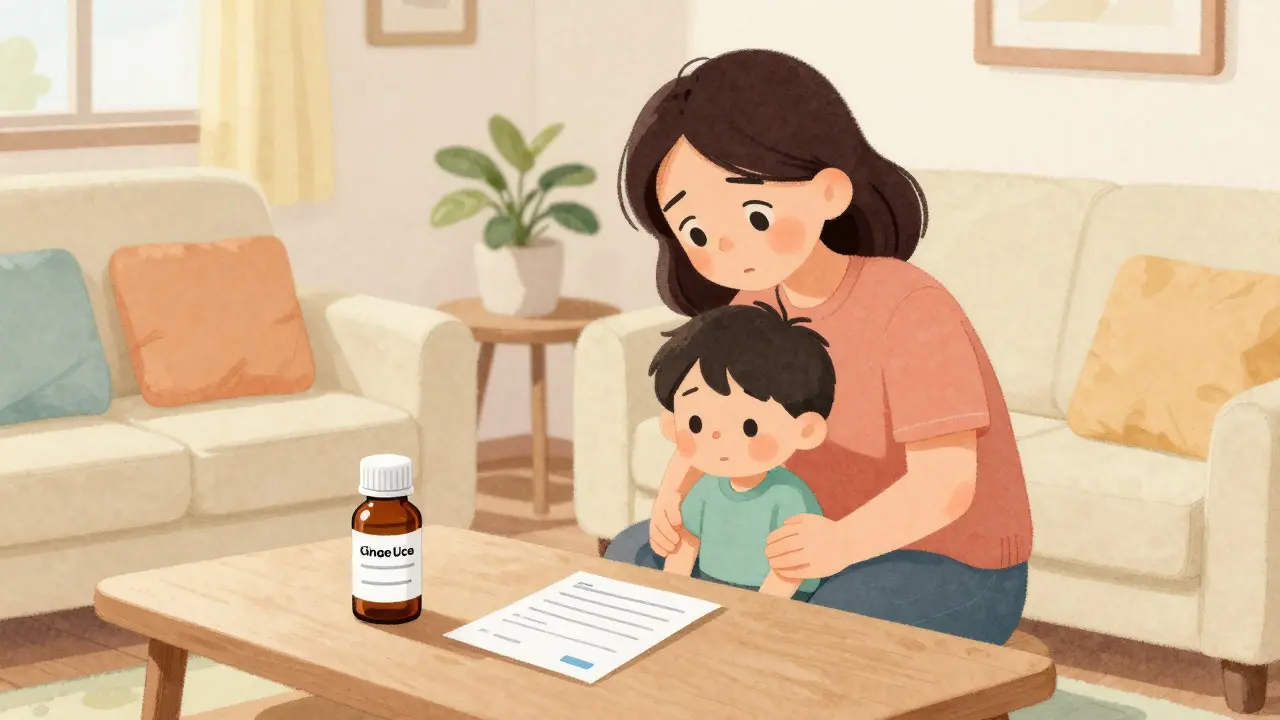
Imagine handing your child a liquid medicine that isn’t available on any pharmacy shelf. It was made just for them, in a small batch, by a pharmacist who mixed the ingredients specifically because your child couldn’t swallow a pill or had an allergy to a common dye. This is the reality of compounded medications, which are custom-formulated pharmaceutical products created by licensed pharmacists to meet specific patient needs that cannot be addressed by commercially available FDA-approved drugs. For many parents, this solution feels like a miracle. But it comes with a hidden catch: these drugs are not approved by the Food and Drug Administration (FDA). The FDA does not verify their safety, effectiveness, or quality before they reach your home.
This lack of federal oversight creates a unique set of risks, especially for children. According to data from the Institute for Safe Medication Practices (ISMP), between 14% and 31% of pediatric patients experience medication errors, with dosage and administration mistakes being the most common. When you add the complexity of custom mixing into the equation, the stakes get even higher. As a parent, you need to know exactly how to navigate this landscape to keep your child safe.
When Is Compounding Actually Necessary?
Before diving into safety protocols, it helps to understand why we use compounded meds at all. Commercially available drugs are designed for the average adult. They come in standard strengths-like a 500mg tablet-and often contain fillers, dyes, or preservatives that can cause issues for sensitive kids.
Compounding bridges this gap. It is essential when:
- Your child cannot swallow pills and needs a liquid form of a drug that only comes as a tablet.
- Your child has allergies to lactose, gluten, artificial colors, or preservatives like benzyl alcohol.
- You need a specific dose strength that doesn’t exist commercially, such as a tiny fraction of an adult dose for a neonate.
- The drug tastes terrible, and adding a flavoring mask improves tolerance and compliance.
However, experts warn against unnecessary compounding. The FDA explicitly states that using compounded drugs when an FDA-approved alternative exists exposes patients to serious health risks. If a ready-made, unit-dose syringe or a premixed liquid is available, always choose that option. It is significantly safer than a manually compounded version.
The Hidden Dangers: Why Kids Are More Vulnerable
Children are not just small adults. Their bodies process drugs differently, and their lower body mass means that a tiny error in calculation can have devastating consequences. A study highlighted by BD’s 2025 publication notes that "a small dosing error in these patients could be detrimental."
The risk isn’t just about the math; it’s about the process. Traditional compounding relies on measuring ingredients by volume (using spoons or graduated cylinders) or weight on scales that may not be precise enough for microscopic doses. This method leaves room for human error. We saw the tragic results of this in 2006, when two-year-old Emily Jerry died from a preventable compounding error during chemotherapy. Her death sparked a movement advocating for better technology, but adoption remains slow.
Recent data paints a concerning picture. The FDA’s Adverse Event Reporting System documented over 900 cases of adverse health events linked to compounded semaglutide and tirzepatide through late 2024, including 17 deaths. While these were largely weight-loss drugs, the underlying issue-quality control and dosing accuracy-is universal. Pediatric patients are disproportionately affected by gastrointestinal complications and dosing errors that lead to hospitalization.
Choosing a Pharmacy: Accreditation Matters
Not all compounding pharmacies are created equal. In the United States, there are over 7,200 compounding pharmacies, but only about 1,400 hold accreditation from the Pharmacy Compounding Accreditation Board (PCAB), which is an organization that sets rigorous standards for compounding practices. This distinction is critical for your child’s safety.
Here is what you should look for when selecting a pharmacy:
- State Licensing: Ensure the pharmacy is licensed and regulated by their state’s pharmacy board. This is the bare minimum requirement.
- PCAB or NABP Accreditation: Look for accreditation from the PCAB or the National Association of Boards of Pharmacy (NABP). These organizations inspect facilities for cleanliness, equipment calibration, and staff training.
- Specialized Training: Ask if the pharmacists have completed specialized training in pediatric dose calculations. The American Society of Health-System Pharmacists (ASHP) recommends 40+ hours of such training.
If a pharmacy cannot provide proof of accreditation or refuses to answer questions about their safety protocols, take your business elsewhere. Your child’s health is worth the extra effort to find a reputable provider.
| Feature | Non-Accredited Pharmacy | PCAB/NABP Accredited Pharmacy |
|---|---|---|
| Inspection Frequency | Varies by state, often infrequent | Rigorous, regular third-party audits |
| Staff Training | Basic licensing requirements only | Advanced certification in sterile/non-sterile compounding |
| Error Prevention Tech | Often manual measurement | More likely to use gravimetric analysis |
| Traceability | Limited ingredient sourcing records | Full chain-of-custody for raw materials |

Technology That Saves Lives: Gravimetric Compounding
One of the most effective ways to prevent dosing errors is through gravimetric compounding, which uses high-precision digital balances to measure ingredients by weight rather than volume. Weight is far more accurate than volume, especially for viscous liquids or powders.
Despite its proven efficacy, this technology is underutilized. Only 7.7% of US hospitals adopted gravimetric compounding as of 2024, according to ISMP data. The barriers include cost ($25,000-$50,000 per station) and the need for extensive technician training. However, hospitals that do implement it report a 75% reduction in pediatric dosing errors.
As a parent, you should ask your pharmacist: "Do you use gravimetric analysis for my child’s medication?" If they don’t, consider asking your doctor to prescribe from a facility that does, especially for high-risk drugs like chemo agents, thyroid hormones, or potent painkillers.
Practical Steps for Parents at Home
Once the medication arrives, the responsibility shifts to you. Here is how to handle it safely:
1. Verify the Concentration
Never assume you know the strength. Always check the label against the prescription. Miscommunication about concentration units (e.g., mg/mL vs. mcg/mL) causes 68% of pediatric compounding errors, according to SafeMedicationUse.ca. If the numbers don’t match, call the pharmacy immediately.
2. Double-Check Instructions
Verify dosing instructions with both the prescriber and the pharmacist. Dr. Robert Shmerling of Harvard Medical School noted that inadequate instruction can lead to patients giving themselves 20 times the appropriate dose. Write down the exact time, amount, and method of administration.
3. Proper Storage
Compounded medications often lack the preservatives found in commercial drugs. This means they spoil faster. Store them exactly as directed-some need refrigeration, others must stay at room temperature. Discard them after the expiration date printed on the bottle, which is usually much sooner than store-bought meds.
4. Watch for Side Effects
Because the formulation is custom, your child might react differently than expected. Monitor for nausea, vomiting, rash, or unusual behavior. If you suspect an adverse reaction, stop the medication and contact your healthcare provider right away.
Navigating the Gray Area of Regulation
The regulatory landscape for compounding is complex. The Drug Quality and Security Act of 2013 (DQSA) distinguishes between traditional compounding pharmacies (Section 503A) and outsourcing facilities (Section 503B). While outsourcing facilities face some FDA inspection, traditional pharmacies are primarily regulated by state boards.
This gap allows some bad actors to exploit drug shortages by producing massive batches of non-FDA-approved drugs, even after shortages end. Senator Todd Young highlighted this issue in March 2025, noting that exceptions for compounded drugs were never intended for mass production. Stay vigilant. If a pharmacy seems to be selling a popular compounded drug (like GLP-1 agonists) without a specific prescription for your child’s unique needs, proceed with caution.
Frequently Asked Questions
Are compounded medications safe for children?
They can be safe when necessary and prepared by accredited pharmacies using strict safety protocols. However, they carry higher risks than FDA-approved drugs due to lack of federal verification. Always use them only when no commercial alternative exists.
What is gravimetric compounding?
Gravimetric compounding is a method where ingredients are measured by weight using high-precision balances instead of volume. It significantly reduces dosing errors and is considered the gold standard for pediatric sterile preparations.
How do I know if a compounding pharmacy is reputable?
Look for accreditation from the Pharmacy Compounding Accreditation Board (PCAB) or the National Association of Boards of Pharmacy (NABP). You can verify this status on their websites. Also, ask about their staff training and whether they use gravimetric technology.
Why aren't compounded medications FDA-approved?
The FDA does not approve compounded drugs because they are made in small batches for individual patients based on a prescription. The agency focuses on regulating large-scale manufacturers. Instead, compounding is regulated by state pharmacy boards and voluntary accrediting bodies.
What should I do if I suspect a dosing error?
Stop administering the medication immediately. Contact your child’s doctor and the compounding pharmacy to verify the concentration and dose. If your child shows signs of distress, seek emergency medical attention and bring the medication bottle with you.