

Medication safety isn't just a background process; it is a fast-moving global conversation that directly impacts patient outcomes. If you are a healthcare professional, a pharmacist, or even an engaged patient, staying ahead of the curve on drug safety requires more than just checking a few websites occasionally. The landscape has shifted significantly by 2025 and into 2026, with new digital tools, stricter international regulations, and a coordinated push to close the massive gap in side-effect reporting. You need a reliable system to filter the noise and find the signal.
The core problem is simple: less than 10% of adverse drug reactions are ever reported globally. That means for every side effect you hear about, dozens go unrecorded, leaving hidden risks in the pipeline. To stay informed effectively, you must tap into the specific channels where this data flows-from the World Health Organization’s policy shifts to the grassroots campaigns led by the Uppsala Monitoring Centre. This guide breaks down exactly how to build your personal medication safety intelligence network.
Key Takeaways
- Subscribe to Core Alerts: Sign up for WHO Medicines Safety updates and register for UMC’s #MedSafetyWeek materials early (August) to get November campaign resources.
- Use Mobile Reporting Tools: Download the UK’s Yellow Card app or your country’s equivalent to report and view real-time adverse event trends instantly.
- Follow Annual Reports: Mark your calendar for March (ECRI/ISMP Top 10 Issues) and September (World Patient Safety Day) for major industry benchmarks.
- Adopt Best Practices: Implement ISMP’s 2025-2026 Targeted Medication Safety Best Practices, specifically focusing on weight-based dosing and vaccine protocols.
- Beware of Misinformation: Treat social media claims with skepticism; ECRI lists medical misinformation as a top patient safety threat for 2025.
Understanding the Global Safety Ecosystem
To know where to look, you first need to understand who is talking. The global medication safety ecosystem is not a single entity but a network of interconnected organizations. At the center sits the World Health Organization (WHO), which sets the high-level policies and tracks progress across nations. Their recent release of comprehensive guidelines on controlled medicines in May 2025 highlights their role in balancing access with safety, particularly for opioids and benzodiazepines.
Working alongside the WHO is the Uppsala Monitoring Centre (UMC). This organization coordinates the WHO Programme for International Drug Monitoring, connecting over 150 countries. They are the engine behind data collection and public awareness campaigns like #MedSafetyWeek. On the practical, operational side, you have groups like the Institute for Safe Medication Practices (ISMP) and the Emergency Care Research Institute (ECRI), which focus on reducing errors in clinical settings through actionable best practices and annual risk reports.
These entities do not work in isolation. For instance, when the WHO releases a guideline, national bodies like the US Food and Drug Administration (FDA) or the European Medicines Agency (EMA) adapt these into local regulations. Understanding this hierarchy helps you prioritize information. WHO updates signal long-term policy shifts, while ISMP alerts often address immediate, tactical risks in pharmacies and hospitals.
Primary Channels for Real-Time Updates
Relying on memory is not enough. You need automated feeds that bring critical safety news to your inbox or dashboard. Here are the most effective ways to stay connected:
- WHO Medicines Safety Email Alerts: Subscribe directly to the WHO’s updates. These emails provide summaries of new safety signals, regulatory actions, and global health threats. Given the volume of data, these digests are curated to highlight only the most significant changes.
- National Pharmacovigilance Portals: Every country has a primary agency. In the US, this is the FDA’s Sentinel Initiative, which monitors 300 million patient records. In the UK, it is the Medicines and Healthcare products Regulatory Agency (MHRA). Check their weekly newsletters or RSS feeds for localized safety warnings.
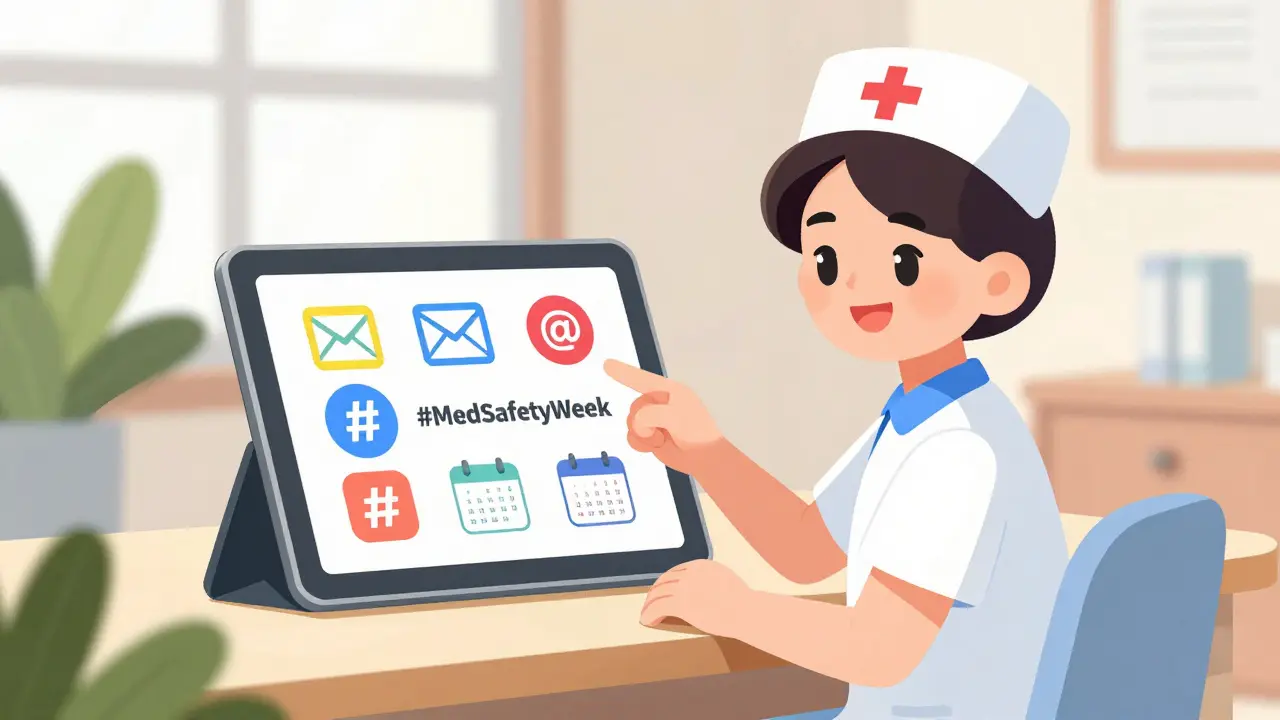
- Social Media Campaigns: Do not dismiss social media as noise. During specific windows, it becomes a powerful tool. Follow hashtags like
#MedSafetyWeek,#ReportSideEffects, and#patientsafety. The UMC uses these platforms to share infographics and quick tips that are highly shareable among professionals. - Clinical Decision Support Databases: If you work in a clinical setting, ensure your organization uses tools like Medi-Span. These databases integrate safety data directly into prescription workflows, alerting you to interactions or contraindications in real-time.
Pro Tip: Set aside 15 minutes every Monday morning to scan these feeds. Consistency beats intensity. A brief daily check prevents information overload and ensures you catch emerging trends before they become widespread issues.
Leveraging Key Annual Events and Campaigns
The medication safety calendar is predictable. By aligning your learning with these annual events, you can deepen your knowledge without feeling overwhelmed. These events serve as natural checkpoints for reviewing current best practices.
| Event / Campaign | Typical Timing | Organizer | Key Focus Area |
|---|---|---|---|
| #MedSafetyWeek | First week of November | Uppsala Monitoring Centre (UMC) | Increasing side-effect reporting rates globally |
| World Patient Safety Day | September 17 | World Health Organization (WHO) | Annual theme-specific safety initiatives (e.g., newborn care) |
| Top 10 Patient Safety Issues Report | March | ECRI & ISMP | Identification of critical risks like AI errors and cyberattacks |
| Targeted Medication Safety Best Practices | March (Biennial) | Institute for Safe Medication Practices (ISMP) | Actionable protocols for community pharmacy and hospital use |
| World Standards Week | October | US Pharmacopeia (USP) | Standards for pharmacogenomics and compounding safety |
For example, the 2025 #MedSafetyWeek campaign marked its 10th anniversary with a focus on "we can all help make medicines safer." It mobilized 117 countries and 131 organizations. If you missed the live tweets, the UMC archives these materials on their website. Reviewing them gives you insight into what other countries are prioritizing. Similarly, the ECRI/ISMP report released in March 2025 highlighted AI in clinical settings and medical misinformation as top threats. Reading this report annually helps you anticipate where risks are shifting.
Practical Steps for Healthcare Professionals
If you are working in a pharmacy or hospital, passive reading is not enough. You need to implement active strategies. The gap between knowing about a safety issue and preventing it lies in workflow integration.
Start by conducting a gap analysis against the ISMP’s 2025-2026 Targeted Medication Safety Best Practices. This document provides specific worksheets for areas like weight-based dosing verification and return-to-stock processes. Many pharmacists report that implementing these protocols prevented fatal errors, such as pediatric dosing mistakes. Don’t just file the PDF away; schedule a team meeting to review one section per month.
Next, master your reporting tools. The UK’s Yellow Card scheme is a prime example of effective mobile reporting. The app allows instant submission of adverse drug reactions. Even if you are outside the UK, similar apps exist in many jurisdictions. Encourage your staff to use them. Data shows that facilities using mobile reporting see a 25% increase in staff engagement with safety protocols.
Finally, train your team on recognizing misinformation. With social media spreading false claims about vaccines and treatments, patients arrive with incorrect expectations. ECRI notes that misinformation increased adverse event reports by 18% in some regions. Equip your staff with fact-checking resources from authoritative sources like the WHO or CDC to counter these narratives professionally and empathetically.
The Role of Technology and AI in Safety Monitoring
Technology is changing how we detect and respond to safety issues. In 2025, we saw the beta testing of AI-powered symptom checkers integrated into national reporting systems. These tools can flag potential adverse events faster than manual review alone. However, technology also introduces new risks.
Cyberattacks on health data are now listed as a top patient safety issue. When electronic health records are compromised, safety monitoring breaks down. Ensure your organization has robust cybersecurity measures in place. Additionally, AI algorithms used in clinical decision support, like those being developed for Medi-Span, promise to reduce medication errors by another 15-20% by 2027. But these systems require continuous validation. Always verify AI suggestions with established clinical guidelines.
Interoperability is another key trend. The US Pharmacopeia is pushing for standards that allow different health systems to talk to each other seamlessly. As these standards mature, you will see fewer data silos and a clearer picture of drug safety across populations. Keep an eye on USP’s World Standards Week announcements for updates on these technical developments.
Addressing Global Disparities in Safety Infrastructure
It is crucial to acknowledge that medication safety is not uniform worldwide. High-income countries average 350-400 adverse event reports per million people, while low-income countries report only 5-10. This disparity means that safety signals from certain regions may be delayed or missing entirely.
The WHO is addressing this through its Global Patient Safety Action Plan, aiming to boost pharmacovigilance capacity in 50 additional low- and middle-income countries by 2030. As a global stakeholder, you can support this by advocating for equitable access to safety data and resources. When evaluating global news, consider the source’s geographic context. A safety signal emerging from a region with limited infrastructure might be underreported until it reaches critical mass elsewhere.
Building Your Personal Safety Intelligence Routine
Staying informed does not have to be a chore. Integrate these steps into your existing routine:
- Monday: Scan WHO and FDA email alerts. Spend 10 minutes reviewing any new safety communications.
- Wednesday: Check social media for trending safety hashtags. Engage with posts from reputable organizations like UMC or ISMP.
- Monthly: Review your organization’s incident reports. Compare them against the latest ISMP best practices to identify gaps.
- Annually: Read the full ECRI/ISMP Top 10 report and the WHO Global Patient Safety Report. Use these to set safety goals for the coming year.
By creating this rhythm, you transform fragmented information into a coherent understanding of the global safety landscape. You will be better equipped to protect your patients and contribute to the collective effort of making medicines safer for everyone.
What is the most reliable source for global medication safety news?
The World Health Organization (WHO) is the primary global authority for high-level policy and safety guidelines. For practical, day-to-day safety alerts, national agencies like the US FDA or UK MHRA, along with specialized bodies like the Uppsala Monitoring Centre (UMC) and Institute for Safe Medication Practices (ISMP), provide the most actionable information.
When is #MedSafetyWeek held, and why is it important?
#MedSafetyWeek is held during the first week of November annually. Coordinated by the Uppsala Monitoring Centre, it aims to raise awareness about side effects and encourage reporting. It is important because less than 10% of side effects are currently reported globally, and this campaign helps bridge that gap by mobilizing over 100 countries and organizations.
How can I report an adverse drug reaction?
You can report adverse reactions through your country’s national pharmacovigilance center. In the UK, use the Yellow Card app or website. In the US, use the FDA’s MedWatch program. Many other countries have similar online portals or mobile apps designed for easy, anonymous reporting by both professionals and patients.
What are the top patient safety issues for 2025?
According to the joint ECRI and ISMP report released in March 2025, the top issues include the use of AI in clinical settings, cyberattacks on health data, medical misinformation on social media, missed diagnoses, and healthcare-associated infections. These reflect both emerging technological risks and persistent systemic challenges.
Is there a difference between medication safety and patient safety?
Yes, though they overlap significantly. Medication safety focuses specifically on preventing errors related to drugs, including prescribing, dispensing, and administration mistakes, as well as monitoring adverse effects. Patient safety is a broader concept that includes medication safety but also covers issues like surgical errors, falls, infections, and diagnostic mistakes.
How does AI impact medication safety monitoring?
AI enhances monitoring by analyzing large datasets to detect safety signals faster than human review. It powers symptom checkers and clinical decision support tools. However, it also introduces risks, such as algorithmic bias or cyber vulnerabilities. Experts predict AI could reduce medication errors by an additional 15-20% by 2027 if implemented correctly.