
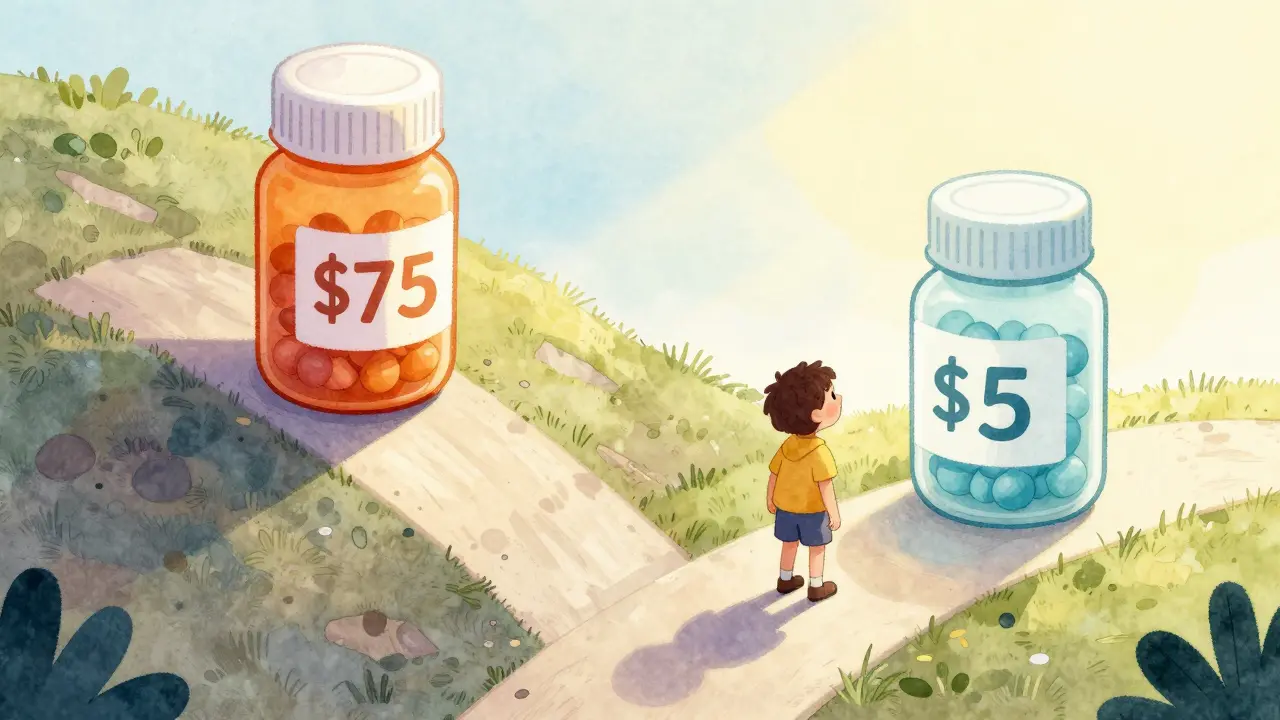
Imagine being told you have two choices for your heart medication. One costs $75 per month. The other does the exact same job for $5. You pick the cheaper one, but then life gets busy, or maybe the pharmacy line is long, or perhaps you just forget. Now imagine that same scenario, but both options cost $100. Suddenly, that forgotten pill feels heavier. It’s not just about memory; it’s about money. When patients face high out-of-pocket costs, they don’t just skip pills-they change their entire relationship with their health.
We often think of medication adherence as a personal failing-a lack of discipline or forgetfulness. But the data tells a different story. Research consistently shows that cost is one of the biggest barriers to taking medicine as prescribed. In fact, a massive review of 160 studies found that in 85% of cases, increasing patient medication costs directly led to worse adherence. This isn't a minor hiccup; it's a systemic issue that drives up emergency room visits, hospitalizations, and overall healthcare spending. The good news? Switching to lower-cost generic drugs is one of the most effective ways to fix this.
The Hidden Cost of Skipping Pills
Let’s talk numbers because they paint a stark picture. Medication non-adherence isn’t just an inconvenience; it’s expensive. Estimates suggest that failing to take medications correctly accounts for up to 50% of all treatment failures. That translates to over 100,000 preventable deaths annually in the United States alone. More immediately, it generates between $100 billion and $300 billion in unnecessary healthcare costs every year. Why? Because when people skip doses of blood pressure meds, insulin, or statins, their conditions worsen. They end up in the ER. They get hospitalized. And those bills are far higher than the cost of the prescription.
The relationship between cost and adherence follows what experts call a 'dose-response' pattern. Think of it like gravity: the heavier the financial burden, the harder it is to stay on track. A systematic review published in the *Journal of Managed Care & Specialty Pharmacy* (JMCP) in 2022 confirmed this link. For every $10 increase in out-of-pocket costs, adherence rates drop by 2-4%. If you’re managing diabetes with GLP-1 receptor agonists, a study in *Diabetes Care* (2023) found that each $10 hike in cost reduced the likelihood of adherence by 3.7%. The result? A 5.2% spike in emergency department visits among those who couldn’t afford to keep up.
| Cost Increase | Adherence Drop | Healthcare Consequence |
|---|---|---|
| $10 | 2-4% | Mild condition progression |
| $10 (GLP-1 Drugs) | 3.7% | 5.2% increase in ER visits |
| $100+ (Brand vs Generic) | Up to 20% | High risk of hospitalization |
Why Generics Are the Smart Choice
If brand-name drugs are the problem, generics are the solution. But there’s a common misconception that "generic" means "lesser quality." That simply isn’t true. The Food and Drug Administration (FDA) requires generic drugs to contain the same active ingredient, strength, dosage form, and route of administration as their brand-name counterparts. They must also demonstrate bioequivalence, meaning they perform within 80-125% of the brand-name drug’s pharmacokinetic profile. In plain English: they work the same way in your body.
So why the price difference? Brand-name companies spend billions on research, development, and marketing. Once patents expire, generic manufacturers can produce the same drug without those initial R&D costs. This competition drives prices down dramatically. According to FDA data, generic drugs typically cost 80-85% less than brand-name equivalents. From 2009 to 2019, generic drugs generated $643 billion in healthcare savings for the U.S. system. Today, generics make up 90% of all prescriptions filled, yet they account for only 23% of total prescription spending. That’s efficiency at scale.
But here’s the kicker: even when priced similarly, adherence rates for generic medications are 15-20% higher than for brand-name drugs. Why? Partly because of psychological factors-patients feel smarter choosing the value option-but mostly because the lower absolute cost removes friction. When a copay is $5 instead of $50, you’re less likely to hesitate, less likely to ration pills, and more likely to fill the prescription on time.
Real Stories, Real Results
Data is powerful, but human stories drive home the reality. Consider u/HeartHealthJourney, a user on Reddit’s r/healthinsurance community. In March 2024, they shared how switching from brand-name Crestor ($75 copay) to generic rosuvastatin ($5 copay) transformed their routine. "I went from missing 3-4 doses weekly to perfect adherence for 11 months straight," they wrote. It wasn’t that they suddenly became more disciplined. It was that the barrier disappeared.
This sentiment echoes in broader surveys. A 2023 survey in *JAMA Network Open* of 2,131 adults revealed that 32.7% reported cost-related medication nonadherence (CRN). This included skipping doses, splitting pills, delaying refills, or even using someone else’s medication to save money. Among those struggling with costs, 78.1% said that if actual prices exceeded estimates, it would affect their decision to continue treatment. Another 54.2% admitted they’d be upset if doctors used pricing tools but didn’t discuss costs openly. Patients want transparency. They want partners in their care, not bill collectors.
Academic research backs this up. Dr. Andrew Kesselheim at Harvard Medical School conducted studies showing that high medication costs negatively impact adherence across multiple conditions. Similarly, Dr. Deborah Hershman at Columbia University found that breast cancer patients on brand-name aromatase inhibitors had higher discontinuation rates (22.3%) compared to those on generics (17.8%). Higher copays directly correlated with stopping life-saving treatments. These aren’t edge cases; they’re widespread patterns.
How Insurance Plans Shape Behavior
Your insurance plan plays a huge role in what you pay-and therefore, whether you take your meds. Most plans use tiered formularies. Tier 1 usually includes preferred generics with low copays (often $10-$30). Tier 2 might include non-preferred generics or some brand names ($30-$60). Tier 3 and above are specialty or non-preferred brands, sometimes costing $100+ per month. This structure creates invisible walls. If your doctor prescribes a Tier 3 drug, you might skip it entirely, even if it’s medically necessary.
But when plans intervene, results improve. A landmark study by Dr. Jie Chen in 2012 looked at Medicare Part D beneficiaries. When brand-name statins like atorvastatin were moved from Tier 2 to Tier 1, adherence-as measured by Proportion of Days Covered (PDC)-jumped by 5.9%. That’s significant. It shows that policy changes, not just patient willpower, drive behavior. The Inflation Reduction Act of 2022 took this further, capping insulin costs at $35/month and eliminating the catastrophic coverage gap in Medicare Part D by 2025. These moves aim to protect vulnerable populations from financial ruin while keeping them healthy.
Tools That Make a Difference
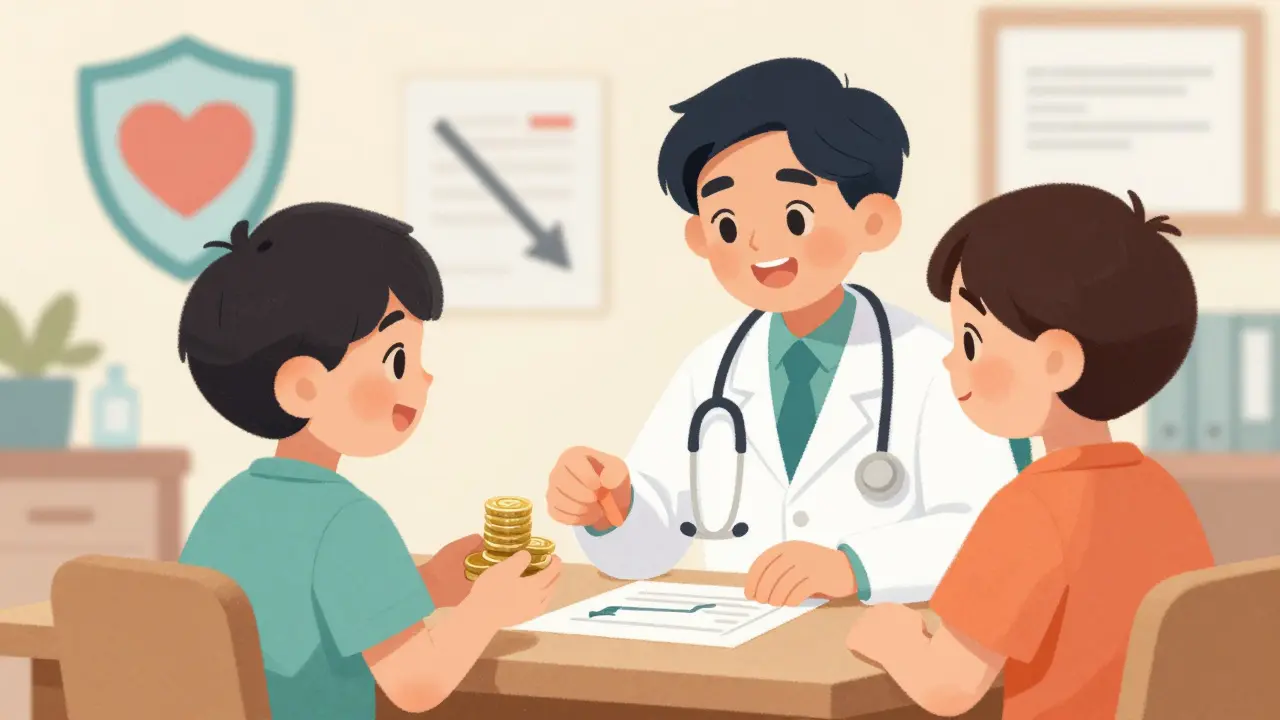
Technology is helping bridge the gap between prescribing and affordability. Real-time benefit tools (RTBTs) integrate with electronic health records (EHRs) to show doctors exactly what a patient will pay before they write the script. Pilot programs using RTBTs, such as Magellan Healthcare’s inforMED Pharmacy Program, have seen 12-15% improvements in adherence. How? By allowing providers to switch to lower-cost alternatives instantly. If a patient can’t afford a brand-name drug, the doctor can pivot to a generic right then and there. No awkward conversations later. No skipped doses.
Patients also have resources. Apps like GoodRx let you compare prices across pharmacies in real time. Sometimes, paying cash for a generic at one pharmacy is cheaper than your insurance copay at another. Knowledge is power. And education matters too. The FDA’s "It’s Okay to Use Generics" campaign helps combat myths about efficacy. When patients understand that generics are rigorously tested, they’re more willing to trust them.
The Bigger Picture: Value-Based Care
We’re moving toward a model called value-based insurance design (VBID). Instead of setting copays based solely on drug cost, VBID aligns payments with clinical value. High-value medications-those that prevent serious complications-get lower copays, even if they’re expensive. Low-value drugs get higher copays. Early pilots show promise: an 18.3% improvement in adherence for high-value diabetes and cardiovascular drugs. This approach recognizes that spending a little more on prevention saves a lot more on cure.
Looking ahead, the FDA’s 2023 Generic Drug User Fee Amendments (GDUFA III) commit $1.1 billion to streamline generic approvals. This could bring 1,500+ new generics to market by 2027, maintaining the 80-85% cost advantage over brands. Meanwhile, therapeutic duplication-prescribing multiple drugs for the same condition-still wastes 20-30% of preventable medication costs. Medication therapy management programs can help identify and eliminate these redundancies, saving money and reducing side effects.
In short, lowering generic prices isn’t just about saving pennies at the pharmacy counter. It’s about building a system where patients can actually follow their treatment plans. When we remove financial barriers, we see better adherence, fewer emergencies, and healthier communities. It’s a win-win that doesn’t require miracles-just smart policy, transparent pricing, and a willingness to choose value over branding.
Are generic drugs really as effective as brand-name drugs?
Yes. The FDA requires generic drugs to have the same active ingredient, strength, dosage form, and route of administration as brand-name drugs. They must also prove bioequivalence, meaning they work in the body within 80-125% of the brand-name drug's performance. Clinically, they provide identical outcomes.
How much can I save by switching to generics?
Generic drugs typically cost 80-85% less than brand-name equivalents. For example, a brand-name statin might cost $75 per month, while the generic version costs $5-$10. Over a year, that’s hundreds of dollars saved per prescription.
What is cost-related medication nonadherence (CRN)?
CRN occurs when patients alter their medication use due to cost concerns. This includes skipping doses, splitting pills, delaying refills, or not filling prescriptions at all. A 2023 JAMA study found that 32.7% of adults experienced CRN.
Do insurance tiers affect my medication choices?
Absolutely. Insurance plans use tiered formularies to control costs. Tier 1 drugs (usually generics) have the lowest copays. Tier 3+ drugs (often brands) have much higher copays. Moving a drug to a lower tier can significantly improve adherence, as shown in Medicare studies.
Can technology help me find cheaper medications?
Yes. Real-time benefit tools (RTBTs) allow doctors to see your exact copay before prescribing. Apps like GoodRx let you compare cash prices across pharmacies. Some insurers offer predictive analytics to identify at-risk patients and offer assistance proactively.