
When a pharmacist pulls a prescription off the system, they’re not just filling a bottle-they’re making a decision that affects safety, cost, and patient trust. The difference between a brand-name drug and its generic version isn’t just in the label. It’s in the generic drugs code, the NDC number, the TE code, and how the system is configured to handle them. Get it wrong, and you risk patient harm. Get it right, and you save money without sacrificing care.
Why Generic vs Brand Identification Matters
Every day, over 90% of prescriptions filled in the U.S. are for generic drugs. That’s not because patients prefer them-it’s because they’re cheaper, and systems are built to push them. But here’s the catch: just because a drug is generic doesn’t mean it’s automatically interchangeable. The FDA says generics must match brand-name drugs in active ingredients, strength, dosage form, and bioequivalence. But bioequivalence doesn’t always mean identical in every way. Take warfarin, for example. A 2021 ISMP report found 147 adverse events over 18 months from inappropriate generic substitutions. Why? Because even tiny variations in how the body absorbs the drug can throw off blood thinning levels. The same goes for thyroid medications like levothyroxine. One patient might do fine switching from Synthroid to a generic. Another might have palpitations, fatigue, or weight changes. That’s not the generic’s fault-it’s the system’s failure to account for individual response. The real issue isn’t whether generics work. They do. The issue is whether your pharmacy system knows which ones to swap, when to stop, and how to tell the difference between a true generic, an authorized generic, and a branded generic-all with the same active ingredient but different packaging, marketing, and patient perception.The Three Types of ‘Generic’ Drugs You Need to Know
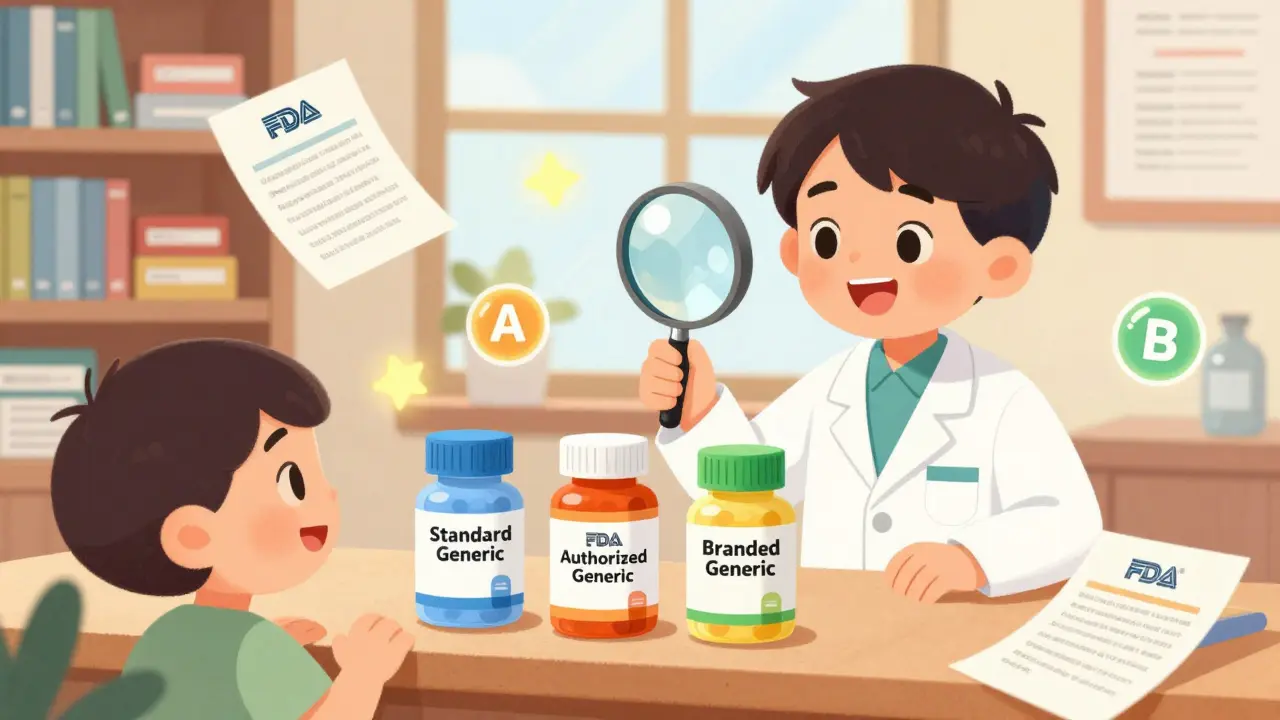
Not all generics are created equal. Pharmacy systems need to distinguish between three key types:- Standard generics: These are FDA-approved copies of brand-name drugs made by different manufacturers. They have a unique NDC and an ‘A’ Therapeutic Equivalence (TE) code in the FDA Orange Book. Example: generic lisinopril.
- Authorized generics: These are the exact same drug as the brand, made by the brand company but sold under a generic label. They’re chemically identical, down to inactive ingredients. Example: generic finasteride made by Merck, identical to Propecia.
- Branded generics: These are generics with a brand name-often used for drugs like birth control or antidepressants. They went through the ANDA process but were given a marketing name. Example: Errin, Jolivette, or Cryselle, which are all generic norethindrone tablets.
How Pharmacy Systems Identify Drugs: NDC, TE Codes, and the Orange Book
The backbone of drug identification in the U.S. is the National Drug Code (NDC). Every drug package-brand or generic-has a unique 10- or 11-digit NDC. But the NDC alone doesn’t tell you if it’s interchangeable. That’s where the FDA’s Orange Book comes in. The Orange Book lists every approved drug and assigns a Therapeutic Equivalence (TE) code. An ‘A’ code means the drug is therapeutically equivalent to the brand-name reference. ‘B’ means it’s not. Pharmacists rely on this code to decide if substitution is allowed. But here’s the problem: many pharmacy systems don’t automatically pull the latest Orange Book data. The FDA updates it monthly, but some systems lag by weeks. That means a newly approved generic might not show up as an option-even though it’s legally available. Systems like Epic, Cerner, and Rx30 integrate the Orange Book, but only if configured correctly. A 2022 ASHP survey found that 37% of independent pharmacies still use outdated databases that don’t reflect recent approvals. That’s dangerous. In 2022, the FDA approved 3,257 new generic drugs. If your system doesn’t know about them, you’re not offering the best, cheapest options to patients.Handling Narrow Therapeutic Index (NTI) Drugs
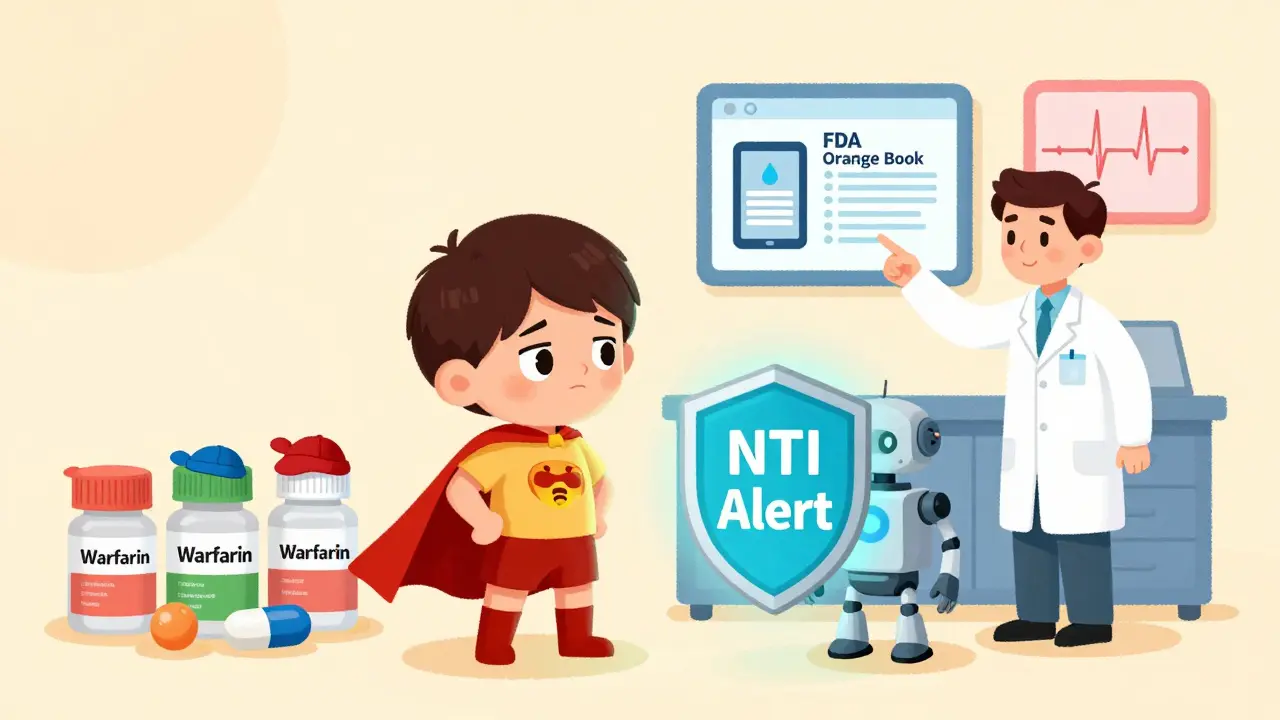
Some drugs can’t be swapped without risk. These are called Narrow Therapeutic Index (NTI) drugs. Small changes in blood levels can cause serious side effects-or make the drug ineffective. Common NTI drugs include:- Warfarin (blood thinner)
- Phenytoin (seizure control)
- Levothyroxine (thyroid replacement)
- Cyclosporine (organ transplant)
- Lithium (bipolar disorder)
What’s Missing: Inactive Ingredients and Patient Perception
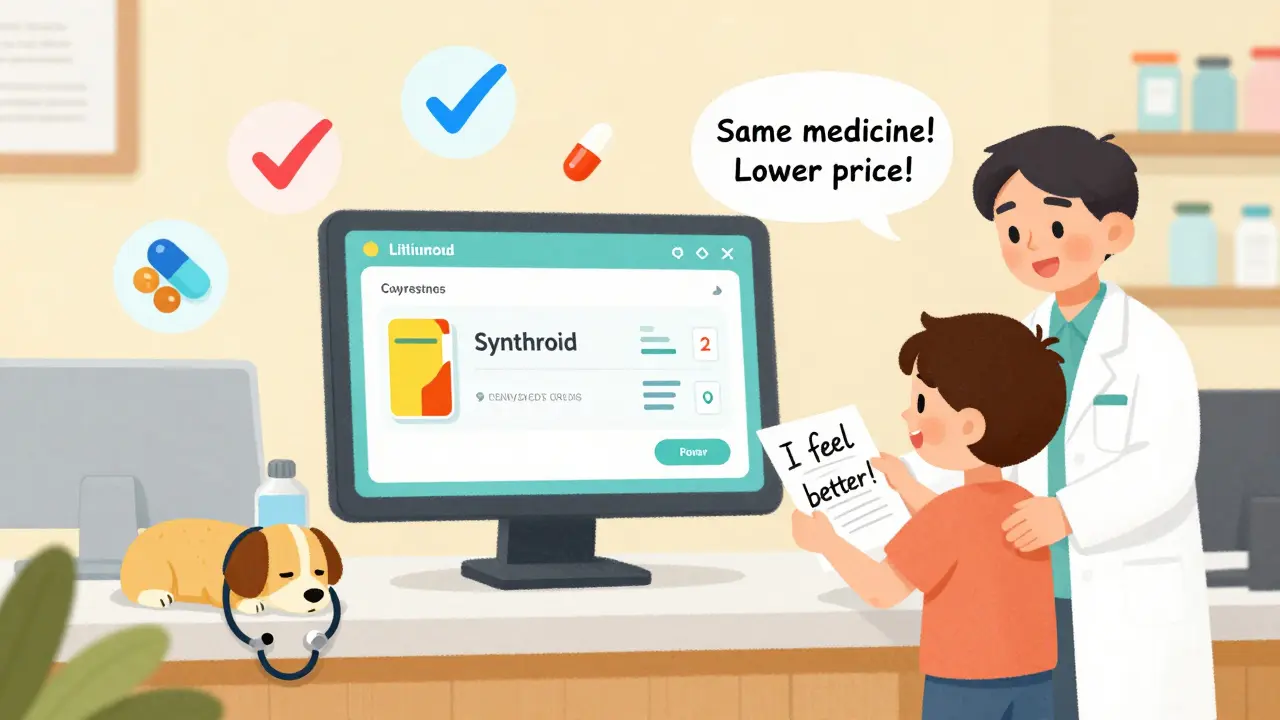
Here’s something most systems ignore: inactive ingredients. The FDA only requires generics to match the active ingredient and bioequivalence. But fillers, dyes, and preservatives can differ. For some patients, that matters. A 2019 study in U.S. Pharmacist found 0.8% of patients switching from brand to generic antiepileptic drugs reported increased seizures or side effects. No one knows why. Maybe it’s a dye. Maybe it’s a binding agent. But the system didn’t flag it. It just swapped the drug. And then there’s perception. A 2022 Consumer Reports survey showed 89% of patients were satisfied with generics-when they were explained. But only 63% were satisfied when the switch happened silently. That’s a communication gap. Patients think “generic” means “cheap,” not “equivalent.” Kaiser Permanente fixed this with a simple tool: a Medication Comparison page in their patient portal. It shows the brand name, the generic alternative, and a note: “Same active ingredient. Same effect. Lower cost.” Result? A 37% drop in patients asking to stay on brand.Implementation Best Practices
So how do you get this right? Here’s what works:- Default to generics: Configure your system to show generic names first. Only show brand names if the prescriber specifically requests them or if the drug is NTI.
- Integrate the FDA Orange Book API: Make sure your system pulls updates monthly. Don’t rely on manual uploads.
- Train staff on drug types: Pharmacists and techs need to know the difference between authorized, branded, and standard generics. One Walgreens pharmacist told Reddit, “Our system lists 17 lisinopril generics but doesn’t say which are authorized.” That’s a failure of training and system design.
- Use TE codes, not just NDC: NDC tells you what the drug is. TE code tells you if it’s interchangeable.
- Build patient education into the workflow: Print a one-pager. Show a video in the waiting room. Ask, “Do you know this is a generic?”
- Document exceptions: If a patient needs to stay on brand, document why. California law requires it. Even if your state doesn’t, do it anyway. It protects you.
State Laws and Compliance
Substitution rules vary by state. In 49 states, pharmacists can substitute therapeutically equivalent generics without prescriber approval. But rules around documentation differ:- California: Must document reason if brand is requested.
- Texas: No documentation required.
- New York: Requires pharmacist to notify prescriber if substitution is made for NTI drugs.
Tools That Work
Some pharmacy software stands out:- LexID: Used by 2.1 billion prescription transactions yearly. 99.98% accuracy in drug identification.
- Medi-Span: Powers 75% of U.S. hospital pharmacy systems. Real-time updates from FDA and DailyMed.
- Humana’s system: Uses “therapeutic interchange” logic-suggests a generic, notifies the prescriber, and logs the change. Result: 22% more generic use without safety issues.
The Future: AI, Pharmacogenomics, and Real-Time Updates
The FDA’s 2023 Orange Book modernization will move to a real-time API, cutting the 2-3 week lag between approval and system updates. That’s huge. The 21st Century Cures Act now requires EHRs to distinguish between reference drugs, authorized generics, and branded generics in structured data fields. That means your EMR will soon auto-populate this info-no more guesswork. And in the next five years, we’ll see pharmacogenomics integrated into pharmacy systems. If a patient has a genetic variant that affects how they metabolize levothyroxine, the system could flag that they might need the brand version-even if the generic is technically equivalent. This isn’t speculation. The FDA’s Precision Medicine Initiative is already testing this.Final Thought: It’s Not About Brand vs Generic. It’s About Accuracy.
The goal isn’t to push generics. The goal is to make sure the right drug gets to the right patient at the right time-with full transparency. A generic isn’t a downgrade. It’s a choice. And that choice should be informed-not automatic, not hidden, not confusing. If your system can’t tell the difference between an authorized generic and a branded one-if it doesn’t block substitutions for warfarin-if it doesn’t explain the switch to the patient-you’re not just failing compliance. You’re failing care. Start with the data. Train your team. Talk to your patients. Let the system do the heavy lifting-but never let it make the final call without oversight.Are generic drugs really as effective as brand-name drugs?
Yes. The FDA requires generic drugs to have the same active ingredient, strength, dosage form, and bioequivalence as the brand-name version. Studies show they work the same way in the body. The only differences are in inactive ingredients, packaging, or price-not effectiveness.
Can pharmacists substitute generic drugs without a doctor’s approval?
In 49 U.S. states, yes-if the generic is rated therapeutically equivalent (TE code starting with ‘A’) and the prescription doesn’t say “Dispense as Written.” However, some states require documentation or notification to the prescriber, especially for narrow therapeutic index drugs like warfarin or levothyroxine.
What’s the difference between a generic and an authorized generic?
A standard generic is made by a different company using the same formula as the brand. An authorized generic is made by the original brand manufacturer but sold under a generic label. It’s chemically identical-same active and inactive ingredients. Authorized generics are often the best choice when patients are concerned about quality.
Why do some patients react poorly after switching to a generic?
In rare cases, differences in inactive ingredients (like dyes or fillers) can cause reactions in sensitive patients. For narrow therapeutic index drugs like levothyroxine or phenytoin, even small variations in absorption can cause symptoms. Systems should flag these cases and require pharmacist review-not automatic substitution.
How do I know if my pharmacy system is up to date with generic identification?
Check if your system pulls live data from the FDA Orange Book API and updates monthly. Ask your vendor if your TE codes are current and if your system distinguishes between authorized generics, branded generics, and standard generics. If you’re using a system from 2020 or earlier, it’s likely outdated. Upgrade or demand an update.
Should I always choose the cheapest generic?
Not necessarily. If a patient has had issues with a previous generic, or if the drug is narrow therapeutic index, the brand or authorized generic may be safer-even if it costs more. The goal is clinical effectiveness, not just cost savings. Always consider the patient’s history and preferences.
Next Steps for Pharmacists and Pharmacy Teams
Start today:- Review your system’s TE code settings. Are they current?
- Run a report: How many NTI drugs were substituted last month? Were there overrides?
- Train your staff on the three types of generics. Use real examples from your pharmacy.
- Create a patient handout: “Why We Switched to a Generic-and Why It’s Safe.”
- Ask your software vendor: “Do you support the FDA’s new Orange Book API?” If not, it’s time to upgrade.
Man, I seen this in my cousin's pharmacy in Delhi-same pills, different color, and old ladies freak out like they got switched to poison. No one explains it. Just hand 'em the box and walk away. Guess what? They don't take it. Then they come back mad. Simple fix: one poster, one sentence. 'Same medicine. Less money.' Done.
While I appreciate the comprehensive overview of therapeutic equivalence and NDC infrastructure, I must emphasize that systemic non-compliance with FDA Orange Book updates constitutes a material breach of the standard of care in outpatient pharmacy practice. The 37% of independent pharmacies operating on outdated databases are not merely inefficient-they are endangering public health through negligent pharmacovigilance. This is not a technical issue; it is an ethical failure.
Let’s be real-this whole generic vs brand thing is just capitalism in a pill bottle. We’ve turned medicine into a game of musical chairs where the patient is the chair. Who cares if the inactive ingredients differ? The real question is: why are we letting corporations dictate what ‘equivalent’ means? The FDA doesn’t test for patient perception. They don’t test for the emotional weight of a blue pill vs a white one. And that’s the crisis. We’re not just swapping chemicals-we’re swapping trust. And trust? You can’t quantify that in an API.
The assertion that generics are bioequivalent is statistically valid but clinically reductive. Bioequivalence is defined as 80-125% AUC and Cmax range-this is not therapeutic equivalence. The FDA’s ‘A’ rating is a legal construct, not a physiological guarantee. For NTI drugs, even a 10% variation in absorption can precipitate toxicity or therapeutic failure. The current system relies on population-level averages to make individualized decisions. That is not science-it is actuarial risk management disguised as clinical practice.
the part about patient perception... i cried. seriously. i work in a clinic and i've seen so many older folks refuse meds because they 'look different'. we started printing little cards with the brand name, the generic, and a smiley face saying 'same medicine, less $$'. now 80% of them take it. small things matter.
Wow, another article pretending generics are perfect. Newsflash: I switched from Lexapro to generic escitalopram and got panic attacks for three weeks. Your 'bioequivalence' doesn't mean squat when your brain is screaming.
Look, I get it. Everyone wants to save money. But let’s not pretend this is just about cost. The real problem is that pharmacy systems are built by software engineers who think a pill is a pill. They don’t know what an NDC is, they don’t know what TE codes mean, and they certainly don’t know that levothyroxine isn’t like switching from Coke to Pepsi. I’ve seen systems auto-substitute NTI drugs because the pharmacist didn’t click the right box. And no one gets fired for it. Why? Because it’s not illegal. It’s just dangerous. And the worst part? The vendors charge hospitals $200k a year to maintain these systems, and half of them still don’t auto-update from the FDA. It’s a joke. We’re not just failing patients-we’re failing the entire infrastructure. And the worst part? No one’s talking about the fact that authorized generics are often the same pill as the brand, just cheaper. But the system doesn’t tell you that. So you get a patient who thinks they’re getting a knockoff when they’re actually getting the exact same thing. That’s not transparency. That’s deception by omission.
This is exactly why we need more pharmacists in community clinics-not just techs pushing buttons. I trained my team using real patient stories: 'Mrs. Gupta had seizures after switching generics'-now we always check TE codes, we always ask, 'Have you taken this before?' We don’t assume. We listen. And guess what? Patients feel seen. That’s not just good practice-it’s healing.
It's fascinating how the industry commodifies therapeutic equivalence while ignoring pharmacodynamic heterogeneity. The Orange Book is a relic of 20th-century pharmacokinetic reductionism. Until we integrate pharmacogenomic biomarkers into NDC metadata, we're merely optimizing cost-efficiency at the expense of individualized pharmacotherapy. This is not innovation-it's institutionalized therapeutic nihilism disguised as efficiency.
lol so you're telling me i shouldn't switch my cheap generic adderall because my brain might hate it? bro i've been on 5 different generics and they all feel the same. stop overcomplicating shit. if it works, it works.
When I worked in Johannesburg, we had patients who’d cry because they couldn’t afford the brand-even though the generic was approved. One woman said, 'My husband died on the brand. I don’t want to be the reason my child loses me too.' That’s not a pharmacy issue. That’s a justice issue. No algorithm fixes that. We need to stop pretending this is about science. It’s about dignity.