
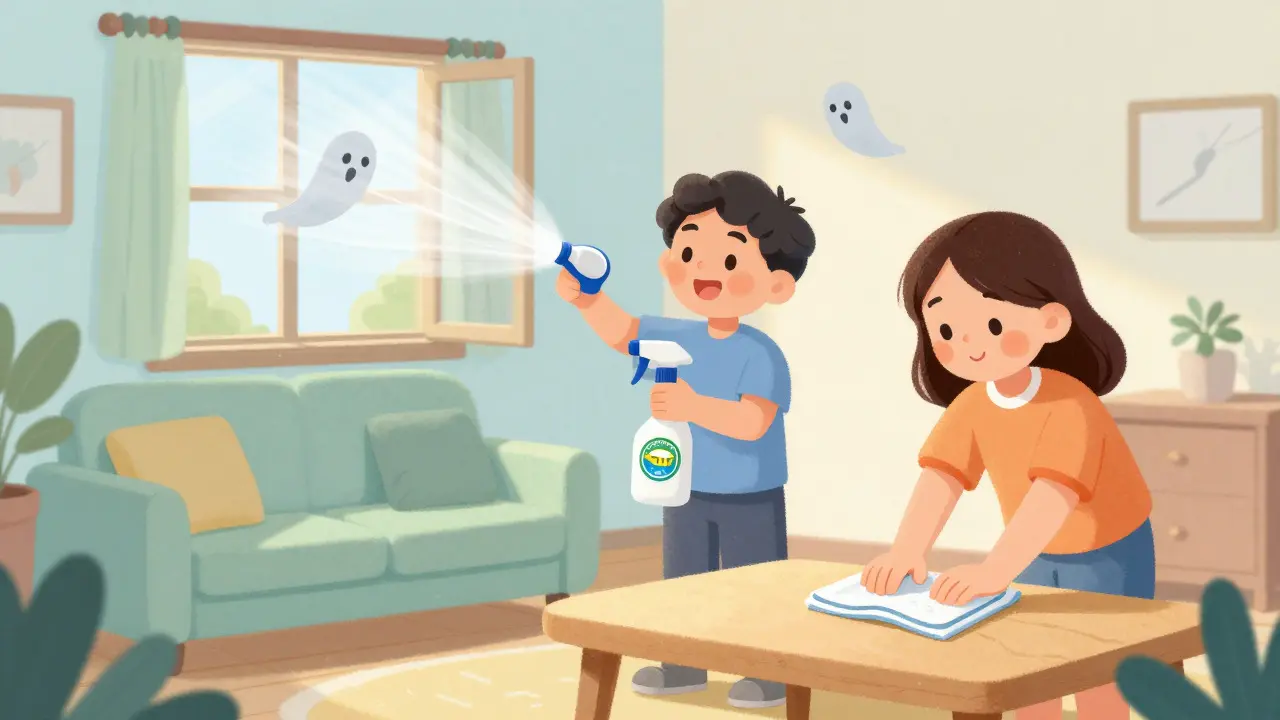
Does your house smell clean but still make you sneeze? You are not imagining it. For millions of people with allergies or asthma, a spotless home can actually be a health hazard. Standard cleaning sprays often contain volatile organic compounds (VOCs) and synthetic fragrances that irritate the lungs. In fact, research published in the European Respiratory Journal showed that frequent use of conventional cleaning sprays increases the risk of adult-onset asthma by 51%. It is time to rethink what "clean" means for sensitive households.
The good news is that effective, allergy-friendly cleaning products exist. These are not just marketing gimmicks; they are scientifically formulated to remove triggers like dust mites and pet dander without releasing harmful chemicals into the air you breathe. This guide breaks down exactly which products work, how to spot the fakes, and the specific techniques you need to keep your home truly safe.
What Makes a Cleaner Truly Allergy-Friendly?
Not every bottle labeled "natural" or "green" is safe for allergy sufferers. The term "hypoallergenic" is largely unregulated, meaning companies can slap it on almost anything. According to Dr. Stephanie Leeds, Chief Medical Officer at the Asthma and Allergy Foundation of America, only 37% of products marketed as hypoallergenic actually meet clinical standards for reduced allergen exposure. So, how do you know if a product is legit?
You need to look for third-party certifications. The gold standard is the Asthma & Allergy Friendly® certification program. Established in 2015 and updated in March 2024, this rigorous testing ensures that a product removes over 85% of common allergens-including dust mite debris, pet dander, and pollen-from hard surfaces. Crucially, these certified products must maintain VOC emissions below 0.5 parts per million. If a bottle does not display this seal or similar independent verification, proceed with caution.
Beyond certifications, check the ingredient list. Effective allergy-friendly formulations rely on specific, gentle ingredients rather than harsh chemicals. Look for:
- Potassium cocoate: Derived from coconut oil, this acts as a surfactant (the part of soap that lifts dirt) at concentrations of 5-15%.
- Potassium citrate: Found at 2-8%, this helps soften water and bind minerals, improving cleaning power without irritation.
- Ethanol solvents: Renewable corn-based ethanol (10-20%) effectively degreases surfaces safely.
- Hydrogen peroxide: Used at 3-5% concentration, this is a safer oxidizing agent compared to the bleach or ammonia found in conventional cleaners.
Avoid products listing "fragrance" or "parfum" without further breakdown. A 2024 study revealed that many "green" labeled products still contain undisclosed fragrance compounds that trigger reactions in 18% of sensitive individuals. Even "unscented" wipes can be problematic; a 2022 study in the Journal of Allergy and Clinical Immunology found that 68% of participants with fragrance sensitivity reacted to unscented wipes due to hidden masking agents.
Top Certified Products That Actually Work
With so many options on the shelf, choosing the right brand can feel overwhelming. Based on independent testing and user feedback, here are the top performers in the allergy-friendly category.
| Brand/Product | Certification | Key Benefit | Avg. Price (32oz) |
|---|---|---|---|
| Renegade Brands Sweat-X Free & Clear | Asthma & Allergy Friendly® | 92% allergen removal efficiency | $5.75 |
| Seventh Generation Free & Clear | Asthma & Allergy Friendly® | Reduces eczema flare-ups significantly | $5.50 |
| Attitude Eco-Friendly Cleaners | EWG Verified / Asthma Friendly | Plant-based, low-VOC formula | $5.25 |
| Generic "Natural" Spray | None | Lower cost, but variable efficacy | $3.25 |
Renegade Brands' Sweat-X Free & Clear detergent stands out for its performance. Independent testing at the Rochester Institute of Technology demonstrated a 92% allergen removal efficiency, compared to just 76% for standard "natural" cleaners. Users report fewer symptoms within weeks of switching.
Seventh Generation Free & Clear is another powerhouse, particularly for laundry. On Reddit’s r/asthma community, users frequently cite this detergent for reducing child eczema flare-ups by up to 70% within three weeks. Its lack of dyes and perfumes makes it ideal for sensitive skin and respiratory systems.
Attitude offers a comprehensive range of household cleaners that are both EWG Verified and Asthma & Allergy Friendly. Their plant-based formulas avoid the harsh synthetics found in cheaper alternatives, providing peace of mind for families with severe sensitivities.
The Cost of Safety: Is It Worth It?
Let's address the elephant in the room: price. Certified allergy-friendly products cost more. As of Q2 2024, non-certified "natural" cleaners averaged $3.25 per 32oz, while certified products averaged $5.75. That is a significant jump for a full-home transition, which can cost between $75 and $150 initially.
However, consider the alternative. Poor indoor air quality costs the U.S. an estimated $58 billion annually in healthcare expenses, according to CDC 2023 data. For allergy sufferers, the savings go beyond money. In the Asthma and Allergy Foundation's 2023 "Healthy Home Project," 45 families with children suffering from severe allergies switched to certified cleaning protocols. The result? A 41% reduction in emergency room visits for asthma exacerbations over 12 months. When you factor in medical bills, missed school days, and lost work hours, the investment in better cleaners pays for itself quickly.
Additionally, the market is growing rapidly. The global hypoallergenic cleaning products market reached $4.2 billion in 2024, with projections hitting $7.1 billion by 2028. As demand rises, competition is driving innovation and potentially lowering prices. Concentrates and refill systems are also growing at 18% annually, offering a more sustainable and cost-effective way to maintain your supply.
Cleaning Techniques Matter More Than You Think
Buying the right product is only half the battle. How you clean determines whether you are removing allergens or just spreading them around. Conventional dry wiping techniques fail to remove peanut powder, milk, and egg residues from 87% of tested surfaces, even after multiple wipes, according to the Food Standards Agency's 2024 literature review.
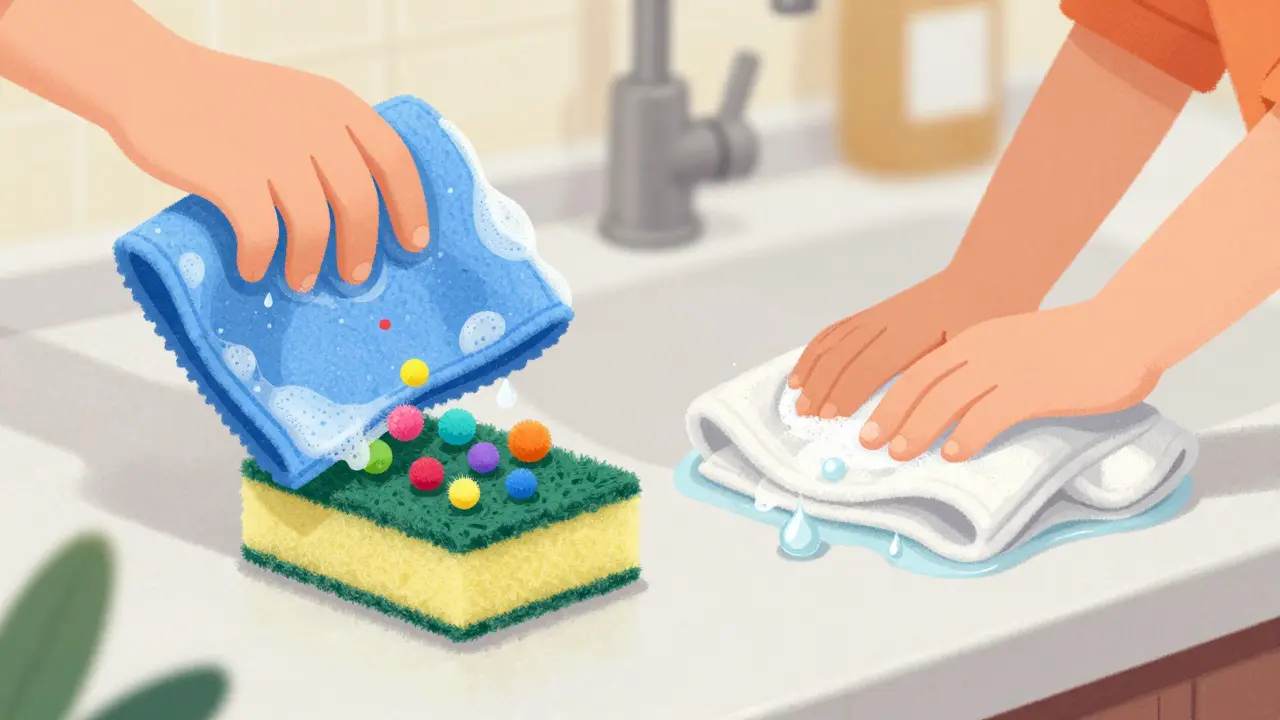
To maximize the effectiveness of your allergy-friendly products, adopt the "two-cloth method." Research published in the Indoor Air Journal in 2023 found that using one damp cloth with cleaning solution followed by a second damp cloth with water only reduces airborne allergen resuspension by 63% compared to single-cloth methods. Here is how to implement it:
- Damp, not wet: Use microfiber cloths lightly dampened with your certified cleaner. Microfiber traps particles better than cotton.
- Wipe once: Clean the surface with the solution-soaked cloth.
- Rinse immediately: Follow up with a second cloth dampened with plain water to remove any chemical residue.
- Air dry: Let surfaces air dry completely to prevent mold growth.
Establish a consistent schedule targeting high-allergen areas. Bedding should be washed weekly in hot water (at least 130°F) to kill dust mites. Floors should be vacuumed with a HEPA-filter vacuum and damp-mopped bi-weekly. A 2024 University of Michigan study noted that most households adapt to these new routines within 2-3 weeks, after which the process becomes second nature.
Homemade Solutions: Vinegar vs. Certified Cleaners
Many allergy sufferers turn to homemade solutions, particularly vinegar and water, to save money and avoid chemicals. Dr. Claudia Miller of UT Health San Antonio advocates for a 1:1 vinegar-water solution for 83% of household cleaning needs. It is cheap, accessible, and generally safe.
However, there is a catch. The Food Standards Agency warns that homemade solutions lack standardized efficacy against food allergens. Testing shows that vinegar solutions remove only 67% of peanut residue, compared to 89% for certified products. If you have severe food allergies, relying solely on vinegar might leave dangerous traces behind. For general dust and light grime, vinegar is fine. For deep cleaning kitchens and bathrooms where allergens accumulate, stick to certified products with proven removal rates.
Future Trends in Allergy-Safe Homes
The landscape of allergy-friendly cleaning is evolving fast. Recent innovations include electrostatic sprayers calibrated specifically for hypoallergenic solutions. Launched in January 2024, these devices reduce product usage by 65% while improving allergen capture by 28%, according to independent testing at UL Solutions. They charge particles so they cling to surfaces rather than bouncing off, making cleaning more efficient.
Regulatory changes are also pushing the industry forward. The EU's 2023 mandate now requires disclosure of all fragrance ingredients, forcing transparency. The European Chemicals Agency's 2025 roadmap targets the elimination of 17 common irritants from household cleaners. These global shifts are accelerating the development of plant-based surfactants and safer formulations worldwide.
Enterprise adoption is following suit. As of 2024, 63% of U.S. hospitals use certified hypoallergenic products in patient areas, up from 31% in 2020. This institutional validation reinforces the science behind these products, giving consumers greater confidence in their choice.
Are "unscented" cleaning products safe for asthma?
Not necessarily. Many "unscented" products contain masking agents to cover up the smell of raw ingredients. A 2022 study found that 68% of people with fragrance sensitivity reacted to unscented wipes. Always look for "fragrance-free" or products with the Asthma & Allergy Friendly® certification to ensure no hidden irritants are present.
Is vinegar as effective as certified allergy cleaners?
For general dust, yes. But for food allergens like peanuts or milk, no. Vinegar removes only 67% of peanut residue, whereas certified products remove up to 89%. If you have severe food allergies, rely on certified cleaners for kitchen surfaces.
How much does it cost to switch to allergy-friendly cleaning?
A complete home transition typically costs between $75 and $150 initially. While individual bottles cost more ($5.75 vs $3.25), the long-term savings from reduced medical visits and improved health often outweigh the upfront expense.
What is the best technique for cleaning surfaces with allergies?
Use the "two-cloth method": wipe with a damp microfiber cloth soaked in certified cleaner, then follow with a second damp cloth rinsed in plain water. This reduces airborne allergen resuspension by 63% compared to single-cloth methods.
Which certification should I look for on cleaning products?
The Asthma & Allergy Friendly® certification is the gold standard. It verifies that a product removes over 85% of common allergens and keeps VOC emissions below 0.5 ppm. Other reputable labels include EWG Verified.