
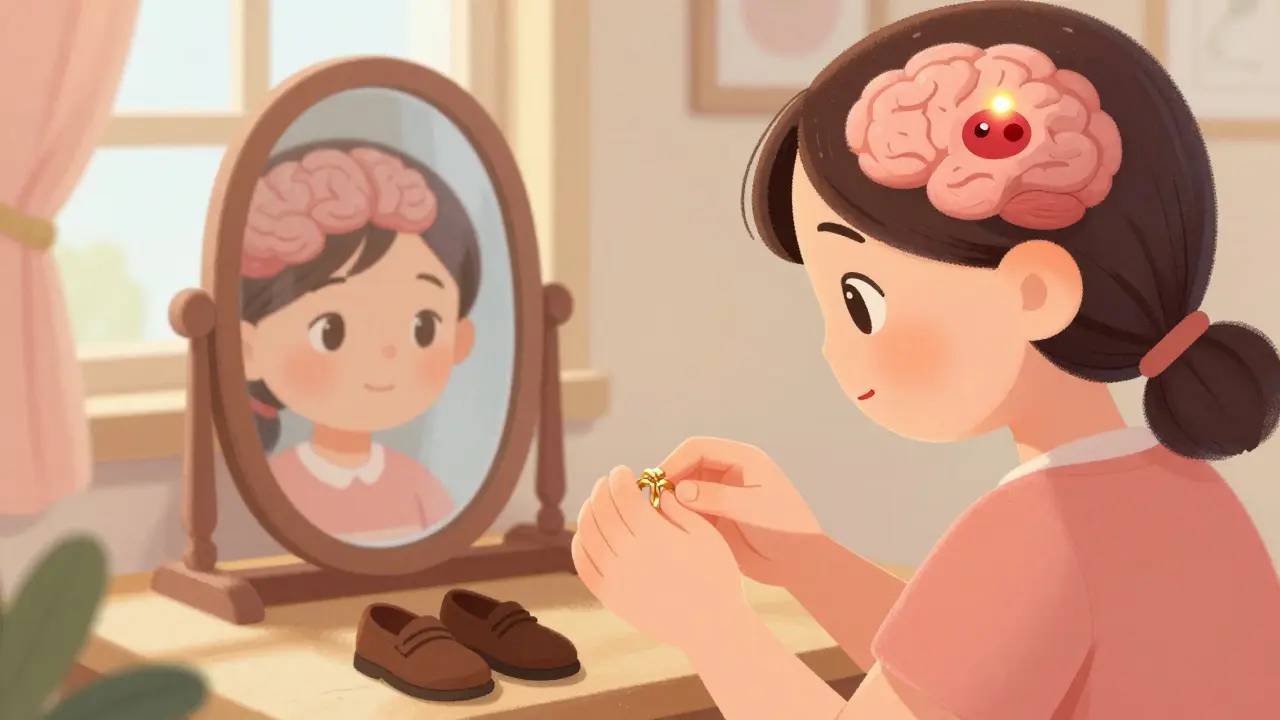
Acromegaly isn’t something you wake up with overnight. It creeps in slowly-your rings don’t fit anymore, your jaw feels bigger, your feet keep growing. At first, you blame aging, weight gain, or worn-out shoes. But when your glove size jumps two sizes in a year, or your voice drops noticeably, something’s off. This isn’t just physical change. It’s your body being reshaped by too much growth hormone, and if left unchecked, it can shorten your life.
What Acromegaly Really Is
Acromegaly happens when your pituitary gland, a pea-sized gland at the base of your brain, starts pumping out too much growth hormone. This isn’t normal. In adults, growth plates have already closed, so instead of getting taller, your bones thicken, your soft tissues swell, and your organs grow larger. The excess hormone triggers a chain reaction: your liver produces too much IGF-1, which drives the damage. This is why acromegaly looks different from gigantism-gigantism happens in kids before their bones stop growing, and they get tall. Acromegaly happens in adults, and it makes your hands, feet, jaw, and tongue grow out of proportion.
Over 95% of cases come from a benign tumor on the pituitary gland-a noncancerous growth called a pituitary adenoma. These tumors aren’t aggressive, but they’re sneaky. They grow slowly, often for years, before symptoms become obvious. By the time most people are diagnosed, they’ve had the condition for 7 to 10 years. That’s why acromegaly is often called a silent disease. A 2023 survey from Seeing Differences UK found that nearly 7 out of 10 patients saw 10 or more doctors before getting the right diagnosis.
How It Shows Up-The Physical Signs
The changes are unmistakable once you know what to look for. Your hands swell. You notice your wedding ring doesn’t slide off anymore. Your shoes feel tighter, even if you haven’t gained weight. Your jaw juts forward, your forehead bulges, and your nose and lips thicken. People start saying, “You look different,” but they can’t put their finger on why.
Inside your body, the damage is just as real. About 90% of patients have enlarged hands and feet. Eighty-five percent show facial changes. Seventy percent develop thick, oily skin. Your voice gets deeper because your vocal cords thicken. Joint pain hits 79% of people-knees, hips, spine-often mistaken for arthritis. Carpal tunnel syndrome affects nearly half, causing numbness and tingling in the hands. Sleep apnea is common, too, with around 60% of patients struggling to breathe at night.
It’s not just appearance. Your heart thickens-60% of untreated patients develop myocardial hypertrophy. High blood pressure affects 30 to 50%. Diabetes shows up in up to a third of cases. Thyroid problems, headaches, and vision loss from tumor pressure on the optic nerve are also common. Men often face erectile dysfunction and low libido. Women may have irregular periods. Fatigue is relentless, even after treatment.
How Doctors Diagnose It
There’s no single test for acromegaly, but there’s a clear path. First, your doctor checks your IGF-1 level. This is the most reliable marker because it stays steady, unlike growth hormone, which spikes and crashes throughout the day. If IGF-1 is high, the next step is the oral glucose tolerance test. Normally, sugar intake suppresses growth hormone. In acromegaly, it doesn’t. If your GH level stays above 1 μg/L after drinking a glucose solution, that’s a strong indicator.
Then comes the MRI. About 90% of patients have a visible pituitary tumor. Tumors are classified as microadenomas (under 10 mm) or macroadenomas (10 mm or larger). Macroadenomas are more likely to press on nerves and cause vision problems. A 2023 study from Penn Medicine showed that patients with macroadenomas often have additional hormone deficiencies because the tumor squeezes out other pituitary functions.
Early detection matters. The longer you go without treatment, the higher your risk of heart disease, stroke, and early death. A 2012 study in PMC found that people with untreated acromegaly are two to three times more likely to die prematurely. But here’s the good news: if you get treated, your life expectancy can return to near-normal levels.

Treatment Options-What Actually Works
There are three main ways to treat acromegaly: surgery, medication, and radiation. The goal isn’t just to shrink the tumor-it’s to get your IGF-1 level back to normal and keep it there. Studies from Penn Medicine show that when IGF-1 is normalized, mortality drops to match that of the general population.
Surgery is the first-line treatment for most people. The procedure, called transsphenoidal surgery, removes the tumor through the nose. It’s minimally invasive and has a high success rate-80 to 90% for small tumors, 40 to 60% for larger ones. Recovery takes about 2 to 4 weeks. But not everyone is cured. Some tumors are too big or too close to critical structures to remove completely. That’s where meds come in.
Medications come in three types:
- Somatostatin analogs (octreotide, lanreotide, pasireotide): These block growth hormone release. Monthly injections are common. Octreotide LAR costs between $6,200 and $7,800 per dose in 2023. A new quarterly version, Signifor LAR, was approved in July 2023.
- Dopamine agonists (cabergoline): Less effective than somatostatin analogs, but cheaper-around $150 to $300 a month. Best for people with mild disease or small tumors that also produce prolactin.
- Growth hormone receptor antagonist (pegvisomant): This doesn’t reduce tumor size, but it blocks growth hormone from acting on tissues. It’s powerful-often normalizes IGF-1 even when other drugs fail. But it’s expensive: $12,000 to $15,000 a month. Insurance often fights coverage, with 32% of U.S. patients reporting delays longer than 30 days.
Some patients combine treatments. The upcoming SONICS trial is testing pegvisomant with octreotide for hard-to-control cases. Early results look promising.
Radiation is the last resort. It’s used when surgery and meds don’t work. It can take 5 to 10 years to fully work, and it carries a 30 to 50% risk of destroying other pituitary hormones. That means lifelong hormone replacement for cortisol, thyroid, and sex hormones. Many patients avoid it unless they have no other options.
Life After Diagnosis-What to Expect
Even when treatment works, recovery isn’t quick. One Reddit user, ‘GrowthHormoneSurvivor,’ shared that after surgery, their ring size dropped from 13 to 10 in 18 months-but joint pain took three years to ease. That’s not unusual. Tissue changes take time to reverse. Fatigue often lingers, even with normal hormone levels. A 2023 European study found that 58% of patients still felt exhausted.
Monitoring is lifelong. You’ll need IGF-1 blood tests every 3 to 6 months. If you had radiation or surgery that damaged your pituitary, you’ll need regular checks for adrenal insufficiency, low thyroid, or sexual hormone deficits. Missing a dose of replacement hormones can be dangerous-adrenal crisis can kill you.
Access to care is uneven. Patients treated at high-volume centers (those doing over 25 acromegaly surgeries a year) report 74% satisfaction. At low-volume centers, it’s only 49%. Rural patients wait 40% longer for diagnosis than those in cities. Insurance battles over drug costs are common. Many patients end up paying thousands out of pocket.

New Hope on the Horizon
Technology is helping catch acromegaly earlier. The AcroPEARL study in 2023 used AI to analyze facial photos and detect subtle changes with 89% accuracy. Imagine a future where your phone app flags unusual facial growth before you even see a doctor. That could cut diagnosis delays from years to months.
Biosimilar versions of somatostatin analogs are approved in Europe and could lower costs in the U.S. soon. New drugs targeting specific receptors are in early trials. The global market for acromegaly treatments is projected to hit nearly $3 billion by 2030, meaning more options are coming.
But the biggest win isn’t a new drug-it’s awareness. When you know what to look for, you can push for testing. When doctors know the signs, they don’t dismiss your complaints as “just aging.”
What You Can Do Right Now
If you suspect you or someone you know has acromegaly:
- Track your symptoms: Note changes in ring size, shoe size, facial appearance, joint pain, snoring, or fatigue.
- Ask for an IGF-1 test. Don’t wait for a specialist-start with your primary doctor.
- If results are abnormal, request an MRI of the pituitary.
- Find a pituitary center. Look for hospitals that perform more than 25 acromegaly surgeries a year.
- Keep records. Bring your symptom log and test results to every appointment.
Acromegaly isn’t curable, but it’s manageable. With the right care, you can live a full, active life. The key is acting before the damage becomes permanent. Don’t wait for your face to change. Don’t wait for your joints to give out. If something feels off, push for answers. Your future self will thank you.
Can acromegaly be cured?
Acromegaly can be controlled, but it’s rarely fully cured. Surgery can remove the tumor and normalize hormone levels in many cases-especially with small tumors. But for larger tumors or those that can’t be fully removed, lifelong medication is needed. Even with normal hormone levels, some physical changes like joint damage or thickened skin may not reverse completely. The goal is long-term control to prevent complications and restore near-normal life expectancy.
Is acromegaly hereditary?
In over 95% of cases, acromegaly is not inherited. It’s caused by a spontaneous mutation in a pituitary cell that leads to a benign tumor. Rare genetic syndromes like multiple endocrine neoplasia type 1 (MEN1) or familial isolated pituitary adenoma (FIPA) can increase risk, but these account for less than 5% of cases. If you have a close relative with a pituitary tumor, genetic testing may be recommended.
Can lifestyle changes help manage acromegaly?
Lifestyle changes won’t fix the hormone imbalance, but they can help manage complications. Losing weight improves sleep apnea and insulin resistance. Regular exercise reduces joint pain and helps control blood pressure. Quitting smoking lowers cardiovascular risk. Eating a balanced diet supports overall health, especially if you’re on steroids or other hormone replacements. But these steps are supportive-they don’t replace medical treatment.
What happens if I don’t treat acromegaly?
Untreated acromegaly leads to progressive damage. Your heart thickens, raising the risk of heart failure. High blood pressure and diabetes become harder to control. Sleep apnea worsens, increasing stroke risk. Joint destruction can lead to permanent disability. Tumors can grow large enough to cause vision loss or compress the brain. Mortality rates double or triple compared to the general population. The longer you wait, the harder it is to reverse the damage-even with treatment later.
Why does treatment take so long to show results?
Hormone levels can drop quickly, but your body’s tissues don’t shrink overnight. Swollen joints, thickened skin, and enlarged organs take months or years to improve. Some changes, like bone growth, are permanent. Medications and surgery stop further damage, but recovery is slow. Many patients notice better sleep and energy within weeks, but joint pain and facial changes may take 2-3 years to soften. Patience and consistent follow-up are key.
Can women with acromegaly get pregnant?
Yes, but it’s risky without proper management. Acromegaly often causes infertility due to hormonal imbalances. If IGF-1 and growth hormone are normalized before pregnancy, conception is possible. During pregnancy, hormone levels naturally rise, so doctors must closely monitor both mother and baby. Some medications, like pegvisomant, are not safe during pregnancy. Most women switch to safer options like bromocriptine or stop treatment under medical supervision. Delivery may require a C-section due to pelvic bone changes.
Are there any new drugs on the horizon?
Yes. A new quarterly somatostatin analog, Signifor LAR, was approved in mid-2023, reducing injection frequency. Several oral drugs targeting growth hormone pathways are in Phase 2 trials. A new combination therapy using pegvisomant with a long-acting octreotide is being tested in the SONICS trial, with results expected in 2024. Researchers are also exploring gene therapies and targeted molecular inhibitors, though these are still years away from clinical use.
How do I find a specialist for acromegaly?
Look for endocrinologists who specialize in pituitary disorders. Ask if they work with a multidisciplinary team that includes neurosurgeons, radiologists, and sleep specialists. Hospitals that perform more than 25 acromegaly surgeries per year are considered high-volume centers and have better outcomes. The Pituitary Network Association and the Endocrine Society offer directories of specialists. Don’t hesitate to travel for care-this is a complex condition that needs expert management.
My uncle had this and no one caught it for years. He thought his shoes were just getting old. By the time they diagnosed him, his jaw was already reshaped. It’s wild how slow it creeps up on you.
So the IGF-1 test is the real key? I always thought it was GH levels... makes sense why they're so inconsistent. I wonder if primary docs even know to order it. Most just shrug and say 'you're getting older.'
I read somewhere that the facial recognition AI tools being tested could be game-changers. Imagine your phone noticing your jawline’s changing before you do. Scary and kind of amazing at the same time.
They say it’s manageable but let’s be real - you’re never the same person after this. Your body betrays you, then you spend years begging insurance for meds that cost more than your car. And don’t even get me started on the fatigue that sticks around even when the numbers look ‘normal.’ You’re not cured. You’re just surviving. And everyone expects you to just ‘get over it.’
Man, this hits different when you’ve seen it in your own family. I remember my cousin’s hands - they looked like they’d been carved from oak. The doctors laughed at first. ‘You’re just heavy,’ they said. But no, it was the tumor. And now? He’s on pegvisomant, paying $15K a month out of pocket. The system is broken, but the science? It’s beautiful. We’re learning how to outsmart the body’s own machinery.
Let’s not romanticize this… the ‘near-normal life expectancy’ claim is misleading. Sure, if you’re rich, white, and live near a top-tier hospital, maybe. But for the rest of us? You’re stuck choosing between rent and your quarterly injection. And don’t get me started on radiation - it’s not a ‘last resort,’ it’s a death sentence disguised as treatment. Who even approves this? Pharma lobbyists? The system is designed to keep you sick and paying.
I work in endocrinology and can confirm: early IGF-1 testing is critical. We’ve had patients come in with 10-year histories because their primary care doctor didn’t know the signs. The new quarterly somatostatin analogs are a huge win - fewer injections mean better adherence. Also, pegvisomant’s cost is outrageous, but there’s a patient assistance program that covers 80% if you apply correctly. Just ask your nurse - they know the hacks.
wait so if i get my ring size changed its acromegaly?? omg i just bought new boots and they feel tight i think im dying
Who funded this article? The pharma companies selling octreotide? The numbers are cherry-picked. Radiation isn’t ‘last resort’ - it’s the only permanent solution. And yes, it destroys your pituitary. So what? Better than paying $12,000 a month forever. Also, AI facial analysis? That’s surveillance disguised as healthcare. You’re being tracked before you even walk into a clinic. This isn’t medicine - it’s control.