
When you have darker skin, a pimple doesn’t just go away-it leaves a dark mark that can stick around for months. A cut from shaving turns into a stubborn brown patch. Even a mild rash can leave behind a shadow that feels impossible to erase. This isn’t just a cosmetic issue. For many people with skin of color, these changes affect confidence, daily routines, and even how they’re seen by others. And it’s not just hyperpigmentation. Raised, itchy scars called keloids can grow after minor injuries, turning a small scrape into a permanent, uncomfortable bump. Both conditions are more common, more severe, and harder to treat in people with darker skin tones-but understanding why and how to manage them makes all the difference.
Why Hyperpigmentation Hits Harder in Skin of Color
Melanin is what gives skin its color, and people with darker skin naturally have more of it. That’s not a flaw-it’s a protective feature. But that same protection can backfire. When the skin gets irritated-whether from acne, a burn, a scratch, or even aggressive exfoliation-the melanocytes (pigment-producing cells) go into overdrive. Instead of stopping once the injury heals, they keep pumping out extra melanin. The result? Dark spots that linger long after the original problem is gone. This is called post-inflammatory hyperpigmentation, or PIH. Unlike lighter skin, where redness fades quickly, darker skin doesn’t show redness the same way. Instead, it shows brown or gray discoloration. That’s why PIH is so common in skin of color: the inflammation doesn’t disappear-it just changes form. A 2022 study in the Journal of Clinical and Aesthetic Dermatology found that facial hyperpigmentation affects nearly 65% of people with Fitzpatrick skin types IV to VI, compared to under 15% in lighter skin tones. And it’s not just acne. Eczema, psoriasis, folliculitis, and even hair removal can trigger it. Melasma is another major player. It shows up as symmetrical, patchy brown or gray discoloration, usually on the cheeks, forehead, or upper lip. It’s not caused by trauma-it’s driven by hormones. Pregnancy, birth control pills, and hormone replacement therapy can all trigger it. Sunlight makes it worse, and the heat from screens (blue light) can too. That’s why tinted sunscreens with iron oxides are now recommended-they block more than just UV rays.Keloids: When Scars Don’t Know When to Stop
While hyperpigmentation leaves flat dark spots, keloids are the opposite: they rise up. These are thick, rubbery scars that grow beyond the edges of the original wound. They can form after piercings, surgeries, acne, or even minor insect bites. People with African, Asian, or Hispanic ancestry are up to 15 times more likely to develop keloids than those with lighter skin. They’re not cancerous, but they can be painful, itchy, and restrict movement if they form over joints. What makes keloids so tricky is that they’re not just about healing-they’re about over-healing. The body keeps producing collagen long after the wound should’ve closed. And once they form, they rarely go away on their own. In fact, if you try to cut one out without proper treatment, it often comes back bigger than before.What Works: The Right Skincare Routine
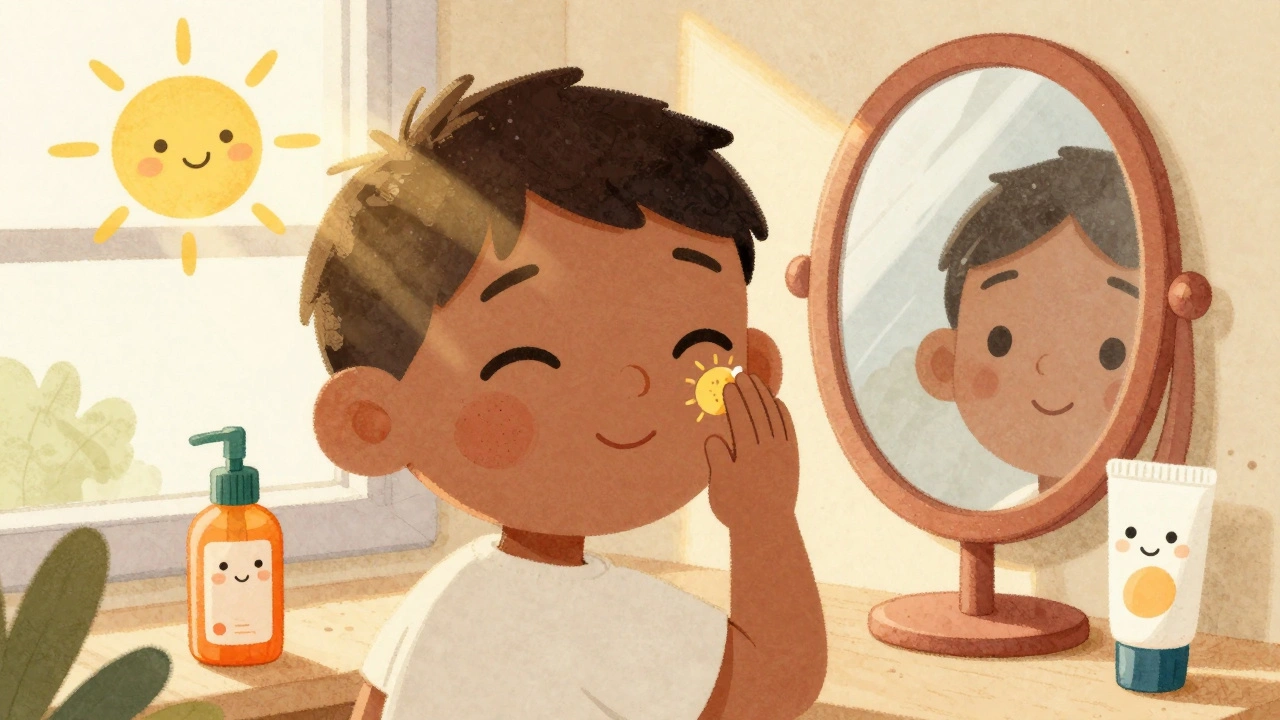
The first step in treating hyperpigmentation isn’t a laser or a chemical peel-it’s prevention. Sunscreen isn’t optional. It’s the foundation. You need a broad-spectrum SPF 30 or higher, applied every morning, even on cloudy days. And because blue light from phones and laptops can darken skin, look for sunscreens that include iron oxides. Tinted versions blend better with darker skin tones and offer extra protection. After sun protection, the next layer is brightening agents. Hydroquinone has been the gold standard for decades, but it’s not for everyone. Some people develop irritation or a condition called ochronosis, where the skin turns gray-black with long-term use. That’s why dermatologists now often start with gentler options: vitamin C, azelaic acid, kojic acid, or niacinamide. These work slower but are much safer for daily use in darker skin. Retinoids like tretinoin are also key. They don’t lighten pigment directly-they speed up skin cell turnover, helping fade dark spots over time. They also help unclog pores, which reduces acne and prevents new PIH from forming. But they can be drying. Start with a low concentration every other night, and always follow with moisturizer. Newer treatments like tranexamic acid (in cream or oral form) and 5% cysteamine cream are showing strong results in clinical studies. Tranexamic acid blocks the signals that trigger melanin production, while cysteamine reduces oxidative stress in the skin. Both are well-tolerated in skin of color and have fewer side effects than hydroquinone.
When to See a Dermatologist
If you’ve been using topical treatments for 3-4 months and see no change, it’s time to consult a dermatologist who specializes in skin of color. Not all dermatologists understand the unique risks. Some may recommend aggressive chemical peels or lasers that can cause more pigmentation problems than they fix. For keloids, early intervention is critical. A dermatologist might recommend corticosteroid injections to shrink the scar, silicone gel sheets to flatten it, or cryotherapy to freeze the tissue. Pressure earrings or garments can help prevent keloids after piercings or surgeries. In some cases, laser therapy can reduce redness and smooth the surface-but only if done by someone experienced with darker skin.What Doesn’t Work-and Can Make Things Worse
Many people turn to over-the-counter bleaching creams, lemon juice, or DIY scrubs. These are dangerous. Lemon juice is acidic and can burn darker skin, leading to even more hyperpigmentation. Hydroquinone creams sold without a prescription often contain unsafe levels or additives that cause irritation. Even physical scrubs can trigger PIH if they’re too harsh. Light-based treatments like IPL or intense pulsed light are risky in skin of color. They can cause burns, blisters, or permanent darkening. Even some lasers, like the Q-switched Nd:YAG, need careful settings. Always ask: “Have you treated patients with my skin tone before?” and request to see before-and-after photos.
Living With It: Beyond the Cream
Managing hyperpigmentation and keloids isn’t just about products. It’s about mindset. These conditions can be emotionally draining. You might avoid mirrors, skip social events, or feel self-conscious in short sleeves. That’s valid. But you’re not alone. Support groups, online communities, and dermatologists who specialize in skin of color can help you feel seen. Consistency matters more than speed. You won’t see results in a week. It takes 8-12 weeks for skin cells to turn over. Stick with your routine. Track progress with monthly photos. Celebrate small wins-a fainter spot, a softer scar, less redness after shaving. And remember: your skin doesn’t need to be perfect to be beautiful. Treatment is about control, not erasure. The goal isn’t to match someone else’s tone-it’s to feel comfortable in your own.Can hyperpigmentation go away on its own?
Sometimes, but not always. Mild cases of post-inflammatory hyperpigmentation can fade over 6-12 months if the trigger (like acne or irritation) is removed and sun protection is used daily. But deeper or long-standing pigmentation often requires treatment. Without intervention, it can last years-or become permanent.
Are keloids hereditary?
Yes. If one or both of your parents had keloids, you’re much more likely to develop them. Genetics play a strong role in how your skin responds to injury. People with African, Asian, or Hispanic ancestry are at higher risk, and the tendency often runs in families. If you know you’re prone to keloids, avoid unnecessary piercings, tattoos, or skin trauma whenever possible.
Is hydroquinone safe for long-term use in dark skin?
Long-term use of hydroquinone (over 6 months) carries a risk of ochronosis-a rare condition where the skin turns blue-gray or black. Because of this, many dermatologists now limit hydroquinone to 3-4 months at a time, then switch to alternatives like azelaic acid, tranexamic acid, or retinoids. Always use it under a doctor’s supervision and never buy high-strength hydroquinone online without a prescription.
Can sunscreen prevent keloids?
No. Sunscreen doesn’t prevent keloids because they’re caused by excess collagen production, not melanin. But sun exposure can darken keloids, making them more noticeable. Using sunscreen on keloids helps them blend better with surrounding skin and reduces redness. It’s not a cure, but it’s part of managing appearance.
What’s the fastest way to fade dark spots?
There’s no quick fix. The fastest results come from combining topical treatments (like tretinoin + azelaic acid) with professional procedures like low-dose chemical peels or non-ablative lasers-done by a specialist experienced in skin of color. Even then, it takes 3-6 months. Patience and consistency beat any miracle product.
Next Steps: What to Do Today
If you’re dealing with hyperpigmentation or keloids, start here:- Apply a broad-spectrum SPF 30+ with iron oxides every morning, even indoors.
- Stop using harsh scrubs, lemon juice, or unregulated bleaching creams.
- Start a simple routine: gentle cleanser, vitamin C or niacinamide serum, moisturizer, sunscreen.
- If you have acne or eczema, treat it-don’t wait for the dark spots to fade on their own.
- Book a consultation with a dermatologist who has experience treating skin of color. Ask to see their work with patients like you.
Been dealing with PIH since my teens. Started using niacinamide + SPF 30 daily and it’s been a game changer. No magic pills, just consistency. Took 6 months but my cheeks finally look even. 🙏
LOL at people thinking sunscreen stops keloids. Bro, keloids are your collagen going full anime villain. Sunscreen just makes them less noticeable. Don’t lie to yourself.
I’m Nigerian-American and this post got me in my feels. My mom used shea butter and prayed over my scars. We didn’t have dermatologists. Now I’m in therapy for the shame I carried for years. This isn’t just skin-it’s legacy. Thank you for naming it.
It’s wild how the same biology that protects us also becomes the thing we’re told to fix. Melanin isn’t the problem. The system is. We’re told to lighten up while being told to stay in our place. 🤷♂️
Hydroquinone is a government tool to control Black beauty. Look up the FDA’s 1982 ‘safety review’-it was pushed by cosmetic lobbyists. They want you dependent on toxic creams so you keep buying. Don’t fall for it.
They say lasers are dangerous but they’re not telling you the real reason-derms don’t want to treat us because it’s harder and pays less. They’d rather you just cover it with makeup and shut up
Just started tretinoin 0.025% three times a week. My skin is peeling like a snake but the dark spot on my chin? Gone in 8 weeks. You don’t need a fancy clinic. You need patience and a good moisturizer. Trust the process.
Stop using hydroquinone. It’s not safe. You’ll turn gray. I’ve seen it. My cousin did it for 2 years. Now her face looks like a shadow. No one talks about this. The dermatology industry hides it.