
What Is Shingles, and Why Does It Hurt So Much?
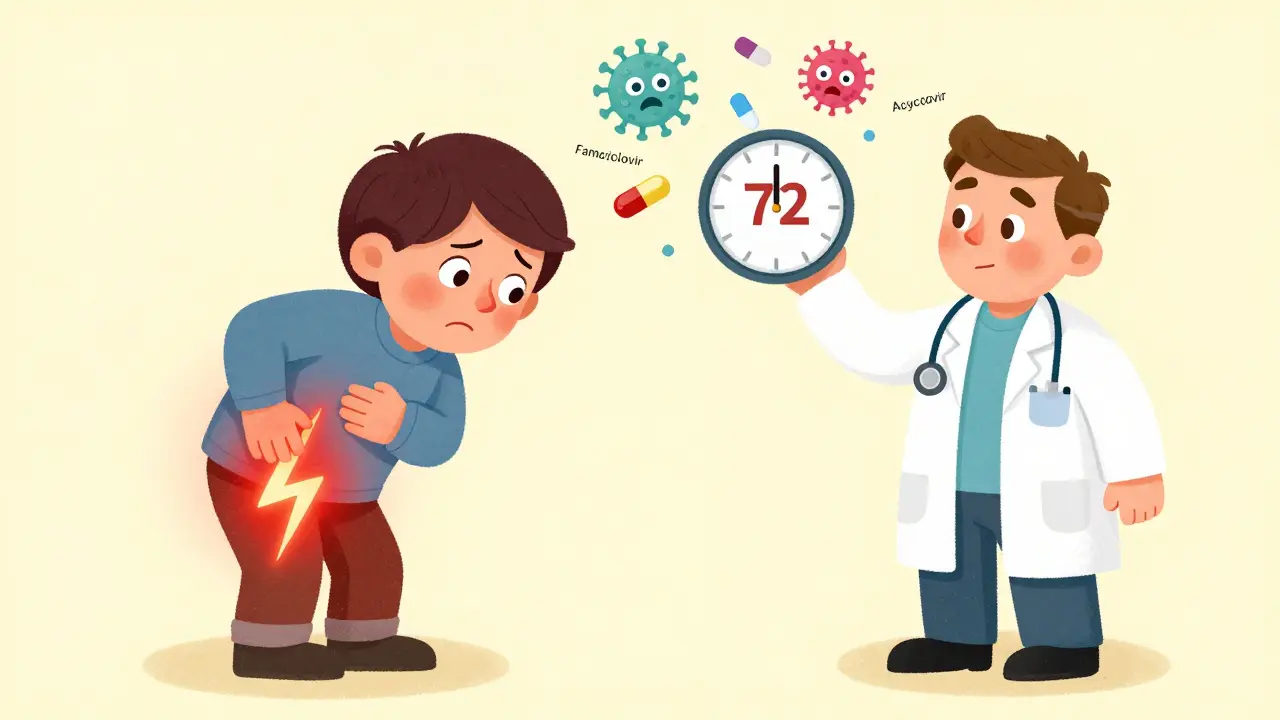
Shingles isn’t just a rash. It’s a viral explosion in your nerves, triggered when the chickenpox virus, which has been sleeping in your body for decades, wakes up. If you had chickenpox as a kid - and most people did - you’re at risk. About 1 in 3 Americans will get shingles in their lifetime, and the odds go up sharply after age 50. The pain? It’s not like a sunburn. It’s sharp, burning, or electric, often before the rash even shows up. Some people say it feels like their skin is on fire. Others describe it as a deep, aching throb that won’t quit.
Why Timing Is Everything: The 72-Hour Window
If you think you’re getting shingles - tingling, burning, or pain on one side of your body or face - don’t wait. Don’t check Reddit. Don’t wait to see if the rash appears. Go to your doctor within 72 hours. That’s the magic window. After that, the virus has already done most of its damage in your nerves. Antiviral drugs work best when they hit the virus early, before it spreads too far. Studies show starting treatment within 48 hours can cut your illness short by 40 to 50%. Waiting until day 4 or 5? You might still get some benefit, but it’s like closing the barn door after the horse is gone.
The Three Antivirals: Acyclovir, Famciclovir, Valacyclovir
Your doctor will likely prescribe one of three antivirals: acyclovir, famciclovir, or valacyclovir. All three stop the virus from multiplying. But they’re not all the same.
- Valacyclovir (Valtrex): 1,000 mg three times a day for 7 days. Easiest to take - fewer pills. Studies suggest it reduces pain more than acyclovir.
- Famciclovir (Famvir): 500 mg three times daily for 7 days. Also convenient, with good absorption.
- Acyclovir (Zovirax): 800 mg five times a day for 7 to 10 days. Harder to stick with because of the frequent dosing.
Side effects? Mild. Headache (13%), nausea (9%), dizziness (7%). But here’s the thing: even if you feel fine, finish the full course. Stopping early can let the virus bounce back.
Does It Prevent Long-Term Pain? The PHN Question
Post-herpetic neuralgia (PHN) is the nightmare after shingles. It’s nerve pain that lasts months - sometimes years - after the rash clears. About 1 in 10 shingles patients get it. For those over 60? That jumps to 1 in 3. So does taking antivirals stop PHN? The answer is messy.
A major Cochrane review says acyclovir doesn’t reduce PHN at 6 months. But other studies, including a 2011 review of 14 trials, show early antiviral use cuts acute pain by 30% and may lower PHN risk. Real-world data from PatientsLikeMe shows 62% of users who started antivirals early never developed chronic pain. But 38% still did. That’s why doctors push for early treatment: it doesn’t guarantee you’ll avoid PHN, but it gives you the best shot.
When Shingles Hits the Eye: A Silent Emergency
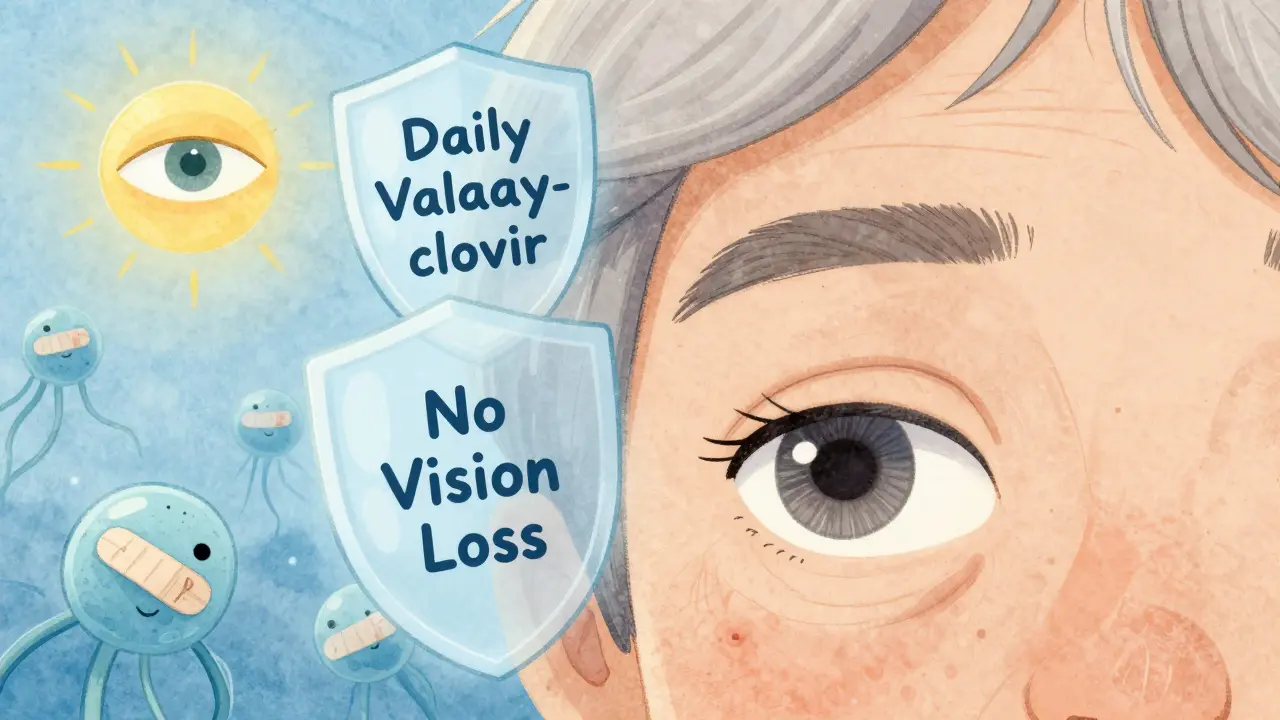
If the rash appears near your eye - forehead, nose, eyelid - treat it like a medical emergency. Ophthalmic shingles (HZO) can cause blindness. The Zoster Eye Disease Study (ZEDS), presented in October 2023, proved something groundbreaking: long-term, low-dose valacyclovir (500 mg daily) cut new or worsening eye problems by 26% over 18 months. It also reduced flare-ups by 30% and lowered the need for pain meds like gabapentin by 22%. For patients with eye involvement, doctors now consider prescribing daily antivirals for months, even after the rash is gone. This isn’t standard everywhere yet, but it’s becoming the new standard of care for high-risk cases.
Pain Management: Beyond the Antivirals
Antivirals stop the virus. They don’t fix the damaged nerves. That’s where pain management comes in - and it’s not just popping Advil.
- Gabapentin or pregabalin: These are anti-seizure drugs that calm overactive nerves. Start low - 300 mg at night - and slowly increase. Dizziness and drowsiness are common, especially in older adults.
- Amitriptyline: An old-school antidepressant that works wonders for nerve pain. Take 25-75 mg at bedtime. It helps you sleep and reduces pain. Side effects? Dry mouth, constipation, weight gain.
- Lidocaine patches: Stick one on the painful area for 12 hours, then take it off for 12. Safe, non-addictive, and works well for localized pain.
- Capsaicin cream (0.075%): Made from chili peppers. It burns at first - then numbs the nerves. Apply 3-4 times daily. Not for open skin.
- Opioids: Only for severe, short-term pain. They don’t work well for nerve pain long-term and carry addiction risks. Use only if nothing else helps.
The Vaccine That Changes Everything
Shingrix is the only shingles vaccine recommended in the U.S. today. Two shots, 2 to 6 months apart. It’s over 90% effective at preventing shingles. Even if you get it after the vaccine, the outbreak is usually mild. And if you’ve already had shingles? Still get it. The vaccine lowers your chance of getting it again. If you’re 50 or older, you’re a candidate. If you’re immunocompromised? Even more important. The CDC says Shingrix is safe for people on low-dose steroids, with HIV, or after chemotherapy. Skip Zostavax - it’s outdated and less effective.

What About Steroids? The Controversial Add-On
Some doctors add prednisone - a steroid - to antivirals in the first week. The idea? Reduce swelling around nerves to cut pain. A few studies show a small benefit in pain relief during the acute phase. But steroids weaken your immune system. That’s risky if you’re older or have other health issues. The Mayo Clinic says it’s optional and should be used cautiously. Most experts don’t recommend it routinely. But for patients with severe pain and no other options? It might be worth a short trial under close supervision.
Cost, Convenience, and Real-World Impact
A 7-day course of antivirals costs $85 to $150, depending on insurance. That sounds steep. But the Journal of Managed Care & Specialty Pharmacy found early treatment saves $487 per patient by preventing ER visits, hospitalizations, and long-term pain meds. That’s a net gain. And if you avoid PHN? You’re saving yourself years of suffering and thousands in ongoing care.
What Happens If You Ignore It?
Shingles doesn’t just go away on its own. Without treatment, the rash lasts longer - 5 weeks instead of 3. Pain is worse. Your risk of PHN jumps. You’re more likely to get bacterial infections in the blisters. And if it’s near your eye? You could lose vision. Delayed treatment doesn’t just mean more discomfort. It means more complications, more doctor visits, and a higher chance of permanent damage.
When to Call Your Doctor - Even If You’re Not Sure
You don’t need a test to diagnose shingles. A doctor can spot it by the rash pattern - a stripe of blisters on one side of your body or face. But if you’re unsure, here’s when to call:
- Pain before the rash appears
- Rash near your eye or nose
- Fever, chills, or feeling very sick
- Weakness or numbness in your limbs
- Immunocompromised - even if the rash looks mild
Don’t wait for confirmation. Call now. Get the antiviral. Your future self will thank you.
Can shingles be cured?
No, there’s no cure for shingles. The virus stays in your body forever. But antiviral treatment can stop the outbreak from getting worse, speed up healing, and lower your risk of long-term pain. The goal isn’t to eliminate the virus - it’s to control the damage it causes.
How long does shingles pain last?
The rash usually clears in 2 to 4 weeks. But nerve pain can linger. For most people, it fades within a few months. For 10-18% of patients, especially those over 60, it becomes chronic - called post-herpetic neuralgia. That pain can last years. Early antiviral treatment and proper pain management improve your odds of avoiding this.
Is shingles contagious?
You can’t catch shingles from someone else. But if you’ve never had chickenpox or the vaccine, you can catch chickenpox from someone with shingles - through direct contact with their open blisters. Once the blisters scab over, you’re no longer contagious. Cover the rash and wash your hands often.
Can I get shingles more than once?
Yes, it’s possible. About 1 in 3 people who get shingles once will get it again. That’s why the CDC recommends Shingrix even if you’ve had shingles before. The vaccine cuts your risk of recurrence by more than 90%.
What’s the best pain reliever for shingles?
Over-the-counter painkillers like ibuprofen or acetaminophen help a little, but they don’t touch nerve pain. For real relief, you need meds that target damaged nerves: gabapentin, amitriptyline, lidocaine patches, or capsaicin cream. These are the most effective tools. Opioids are rarely helpful and risky.
Should I get the shingles vaccine if I’m over 50?
Absolutely. Shingrix is recommended for everyone 50 and older, no matter if you had chickenpox, the old vaccine, or even shingles before. It’s 90%+ effective. Side effects? Sore arm, fatigue, headache - but they last 1-3 days. The protection lasts at least 10 years. It’s one of the most effective vaccines you can get.
Man, I got shingles last year at 52 and I swear I thought I was dying. That burning felt like someone was pouring acid on my ribs. Got to the doc within 48 hours, started valacyclovir, and honestly? It saved my sanity. The pain didn’t vanish, but it didn’t own me either. Don’t wait like I almost did.
So… are we sure the virus isn’t being used to track us? I mean, why do they push antivirals so hard? And why is Shingrix suddenly everywhere after the pandemic? I read somewhere that nerve pain is just the body’s way of resisting surveillance tech embedded in vaccines. Just saying.
Hey Catherine - I get where you’re coming from, but let’s not go full X-Files here. Shingrix isn’t a government plot, it’s science. My mom got it after shingles and hasn’t had a recurrence in 4 years. The vaccine works. The antivirals work. The pain meds work. We’ve got tools. Use them.
Important clarification: the Cochrane review on acyclovir and PHN is outdated. The 2021 meta-analysis in JAMA Dermatology, which included over 12,000 patients, showed a statistically significant 34% reduction in PHN risk with early valacyclovir use. Also, lidocaine patches are not ‘just numbing cream’ - they’re FDA-approved neuropathic pain modulators. Please stop calling them ‘magic stickers.’
I had shingles twice. The first time, I cried for three weeks. The second time, I just stared at the ceiling and wondered why my body hates me so much. No one understands how heavy the pain is. Not until you’ve felt it.
Shingles is just nature’s way of reminding us that entropy is inevitable. The virus doesn’t care about your schedule, your insurance, or your will to live. It’s a cosmic glitch - a biological sigh. The antivirals? A temporary patch on the fabric of decay. We are all just borrowed time wrapped in skin.
Actually, you’re all missing the point. Valacyclovir’s bioavailability is only 54%-and that’s assuming you’re not taking it with a high-fat meal, which reduces absorption by up to 28%. Also, famciclovir’s half-life is 2.5 hours, not 3.5 as commonly misstated. And if you’re over 65, you should be on 1,500 mg of valacyclovir, not 1,000-per the 2019 IDSA guidelines, which, for some reason, no one cites. Also, gabapentin? Terrible for renal clearance. Pregabalin’s superior. And why are you all ignoring the 2022 Lancet paper on topical capsaicin’s neurotrophic effects?!
Look, I’ve seen shingles take down warriors-men who fought in wars, lifted cars off kids, survived plane crashes-but this little virus? It turns ‘em into sobbing puddles. I’ve seen a 70-year-old grandpa beg for the pain to stop, and I’ve seen a 22-year-old college kid get it from stress and a bad breakup. This ain’t just a rash, fam. It’s the body screaming, ‘I’ve been holding this in too long.’ Antivirals? They’re not magic. But they’re the first step to silence the scream. And Shingrix? That’s your armor. Put it on. Don’t wait till your nerves are ash.