
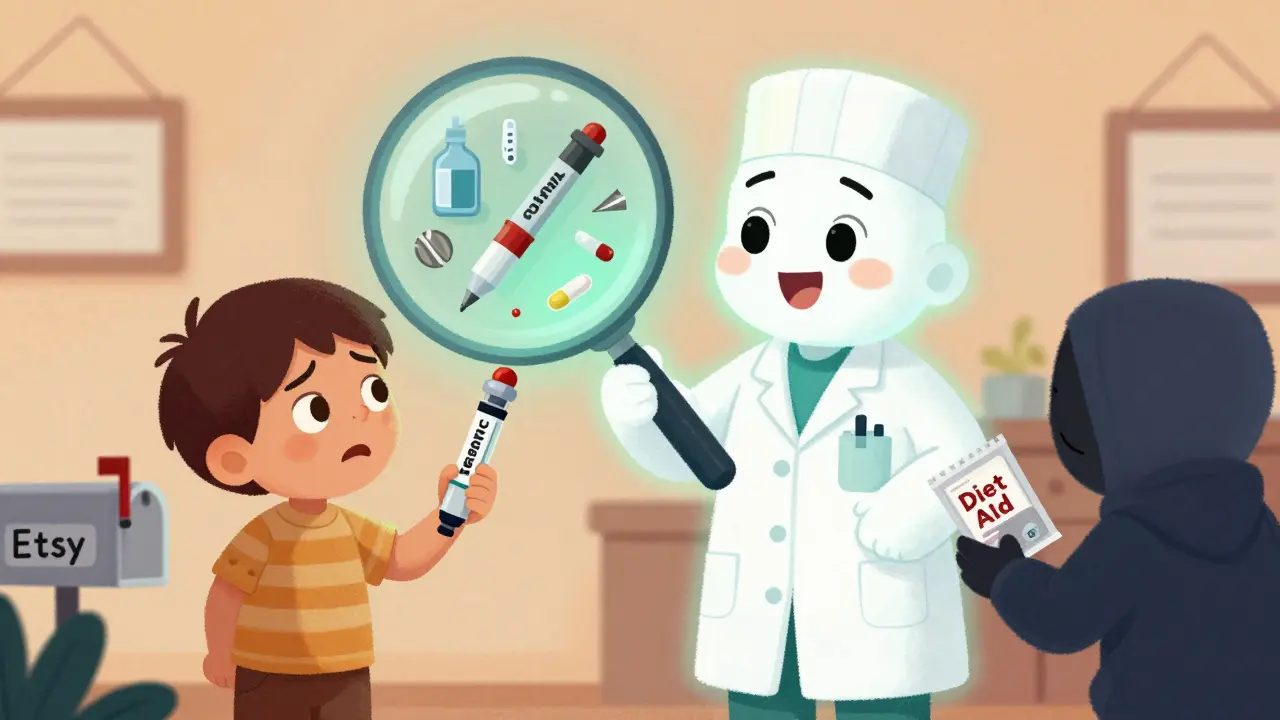
Every year, millions of fake pills, injectables, and vials make their way into the hands of unsuspecting patients. These aren’t just poor imitations-they’re dangerous, sometimes deadly, and often impossible to tell apart from the real thing. In 2025, U.S. Customs and Border Protection seized over 16,740 counterfeit pre-filled injectable pens in a single operation, mostly containing fake versions of popular weight-loss drugs like Ozempic and Wegovy. These weren’t isolated cases. Across the globe, law enforcement agencies intercepted more than 50 million doses of counterfeit medicines in just one month during Interpol’s Pangea XVI operation. The problem isn’t shrinking. It’s evolving.
What Gets Counterfeited-and Why
Counterfeiters don’t target random drugs. They go after high-demand, high-margin products. The most common fake medications in 2025 fall into three categories: weight-loss injectables, erectile dysfunction pills, and cosmetic injectables like Botox and dermal fillers. Why? Because they’re expensive, easy to replicate in packaging, and sold without prescriptions. GLP-1 agonists like semaglutide and tirzepatide are now the #1 target. A single pen can sell for $1,200 on the black market. Counterfeit versions? They cost $15 to make and go for $80 online.HIV treatments and insulin are also being faked, but less frequently-mostly because they’re harder to replicate without lab-grade equipment. Still, when they are, the consequences are catastrophic. In 2024, the FDA received over 1,200 reports of adverse events linked to suspected counterfeit medications, a 43% jump from the year before. Most involved weight-loss drugs and cosmetic products. One patient in Arizona developed severe cellulitis after injecting a fake dermal filler bought off Etsy. The product looked real. The packaging matched. But inside? Industrial solvents and metal particles.
Where the Fakes Come From
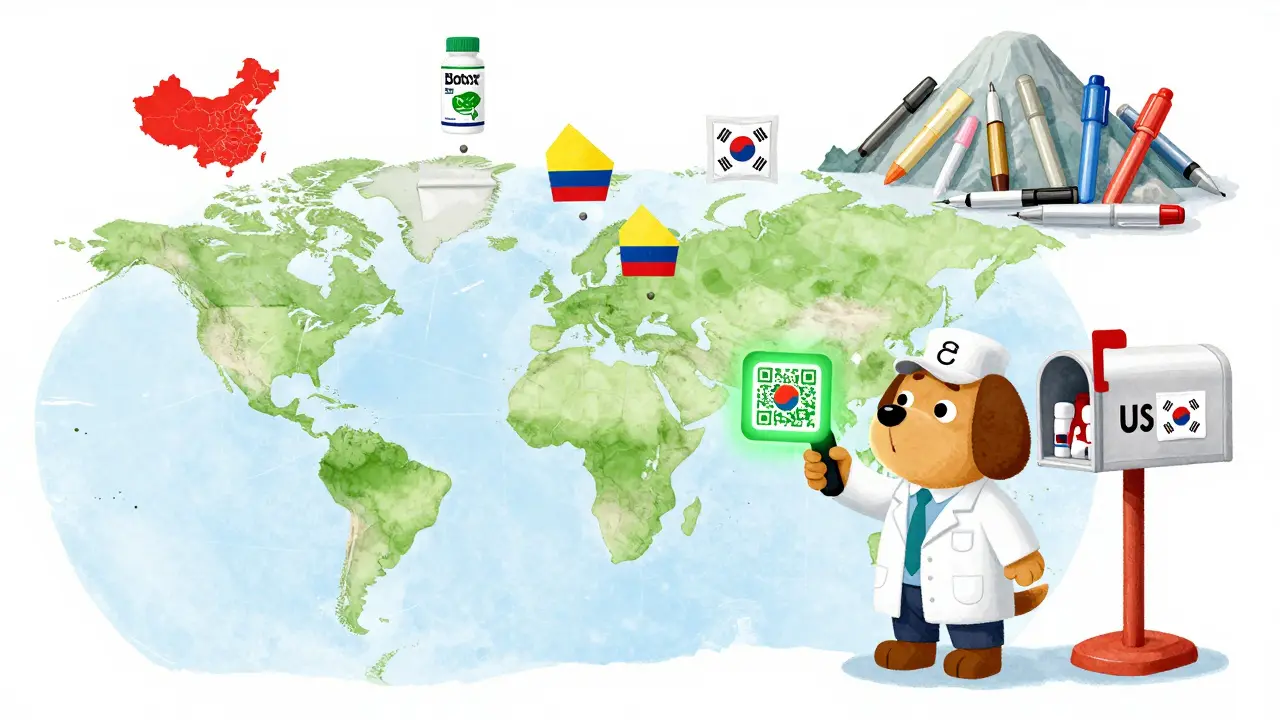
The supply chain for counterfeit drugs is global and highly organized. In 2024, the U.S. Customs and Border Protection found that 32% of seized counterfeit injectables came from Hong Kong, 28% from mainland China, 19% from Colombia, and 11% from South Korea. These aren’t basement labs. They’re factory-scale operations with quality control teams, packaging designers, and logistics networks that mirror legitimate pharmaceutical distribution.What’s changed is how they get to you. In 2021, 70% of counterfeit drugs entered the U.S. through large commercial shipments. Now, 65% arrive in small parcels-via USPS, FedEx, or DHL-often disguised as “cosmetic supplements” or “dietary aids.” This shift makes detection harder. Customs can’t seize a package just because it violates U.S. drug laws. They can only act if it’s confirmed as counterfeit: wrong label, missing batch number, mismatched ink, or packaging that doesn’t match the manufacturer’s official specs.
Online marketplaces are the biggest distribution channels. According to the National Association of Boards of Pharmacy (NABP), 47% of counterfeit GLP-1 drugs are sold on Etsy. Another 31% come from direct orders from illegal manufacturers, often via Telegram or WhatsApp. Only 22% come from foreign pharmacies. What’s worse? Many of these sellers use fake reviews, professional-looking websites, and even cloned logos from real clinics to appear legitimate.
How Law Enforcement Is Fighting Back
The scale of the problem means enforcement can’t keep up alone. But coordinated efforts are making a difference. Interpol’s Pangea XVI operation in 2025 involved 90 countries, leading to 769 arrests and the shutdown of 13,000 illegal websites. In the U.S., CBP teamed up with the DEA and FDA to target freight containers from known counterfeit hubs. One August 2025 bust in Cincinnati seized $3.5 million in fake drugs, including insulin, HIV meds, and Botox.But there’s a legal blind spot. As Dr. Carmen Catizone of NABP pointed out in 2025, “CBP cannot seize medications that violate only the Federal Food, Drug, and Cosmetic Act-they must be counterfeit to be seized.” That means a drug could be expired, unapproved, or improperly labeled-but if the packaging and active ingredients match the real thing, it can still enter the country. That loophole is being exploited.
Pharmaceutical companies are stepping in. Pfizer has trained over 10,000 law enforcement officers across 183 countries on how to spot fakes-checking for tiny font differences, color shifts in packaging, or mismatched holograms. Some companies are using blockchain to track each pill from factory to pharmacy. Pilot programs with this tech reduced counterfeit incidents by 37% in two years. It’s promising, but not yet widespread.
What’s Inside the Fake Pills
It’s not just about missing ingredients. Some fake drugs contain nothing at all. Others contain dangerous substances. Lab tests on seized counterfeit Ozempic pens in 2025 revealed:- 42% had zero semaglutide
- 28% contained industrial solvents like ethylene glycol
- 19% had heavy metals (lead, arsenic)
- 11% were laced with fentanyl
That last one is terrifying. The DEA seized 61.1 million fake pills in 2024-most were made to look like oxycodone or Adderall, but nearly a third contained fentanyl. People think they’re taking a prescription painkiller. Instead, they’re getting a dose strong enough to kill. In Phoenix, three overdose deaths in early 2025 were traced to fake pills bought off Instagram.
Even “natural” remedies are being faked. In Nigeria, NAFDAC shut down a facility producing fake herbal HIV treatments. In South Africa, counterfeit insulin was found in rural clinics. These aren’t just scams-they’re public health emergencies.
Lessons Learned-What Needs to Change
The patterns are clear. Counterfeiters are smart, adaptive, and well-funded. They’re not going away. Here’s what we’ve learned-and what must change:- Regulations need closing the loophole. Customs should be able to intercept unapproved drugs, not just counterfeits. That’s a policy gap costing lives.
- Online platforms must be held accountable. Etsy, Facebook, and Instagram aren’t just marketplaces-they’re distribution networks. They need real-time monitoring tools and legal responsibility for what’s sold on their sites.
- Patients need better education. If you’re buying a weight-loss shot or Botox online, you’re gambling with your life. No legitimate provider sells these without a prescription and in-person consultation.
- Global cooperation is non-negotiable. Counterfeiters move faster than borders. Law enforcement, pharmaceutical companies, and postal services need real-time data sharing.
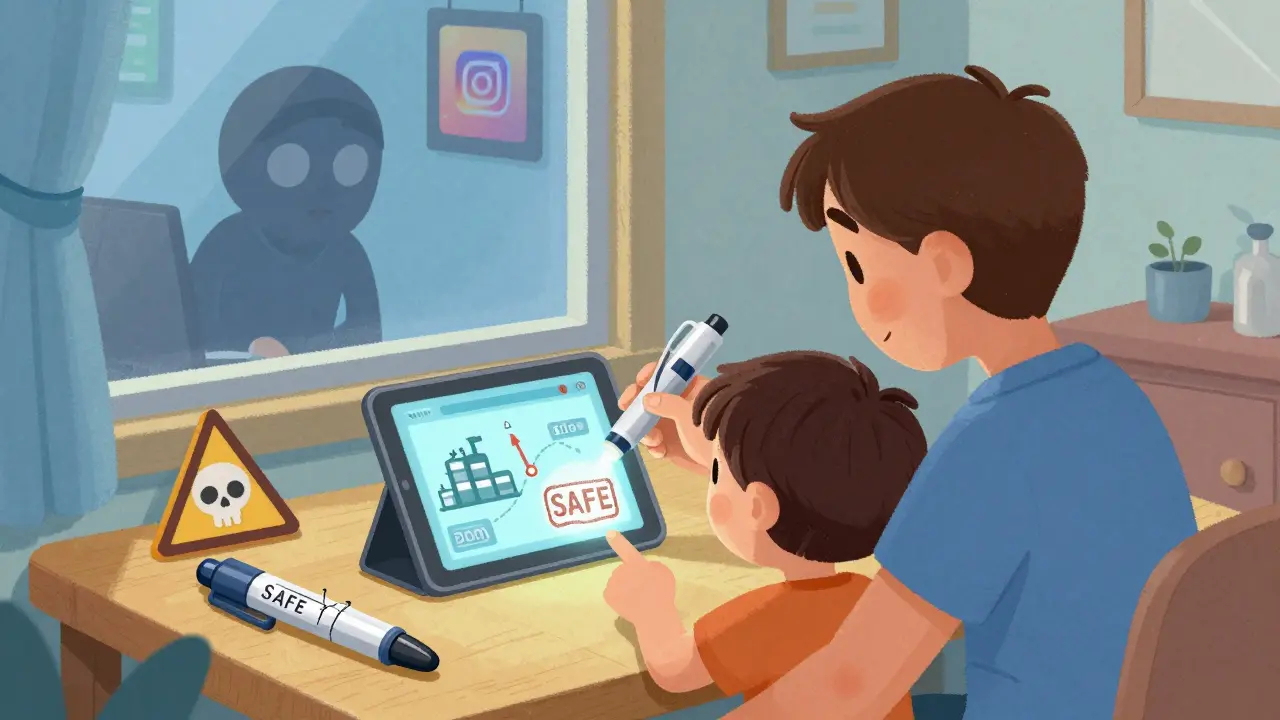
- Authentication tech must become standard. QR codes, tamper-evident seals, and blockchain tracking aren’t luxuries anymore. They’re essential. Patients should be able to scan a package and instantly verify its origin.
One pharmacy in Iowa was fined $25,000 in 2025 for selling counterfeit Ozempic. That’s a slap on the wrist. The real penalty should be jail time-not a fine-for anyone knowingly distributing fake medicine.
How to Protect Yourself
If you’re prescribed a medication-especially a high-cost injectable-here’s what to do:- Only fill prescriptions at licensed pharmacies. Use the NABP’s Verified Internet Pharmacy Practice Sites (VIPPS) list to check legitimacy.
- Never buy injectables from social media, Etsy, or Amazon. Even if the seller claims it’s “from Canada” or “a friend’s pharmacy.”
- Check the packaging. Real Ozempic pens have a unique serial number, a specific shade of blue, and a smooth, matte finish. Fakes often have glossy labels or blurry text.
- Ask your pharmacist to verify the batch number with the manufacturer. Most will do it for free.
- Report suspicious products to the FDA’s MedWatch program. One report could stop a shipment before it reaches your town.
Counterfeit drugs aren’t a distant problem. They’re in your neighborhood, your mail, and your friend’s Instagram DMs. The tools to fight them exist. What’s missing is the will to use them.
How can I tell if my medication is counterfeit?
Look for inconsistencies in packaging: mismatched fonts, blurry logos, incorrect batch numbers, or unusual color shades. Real insulin or GLP-1 pens have a smooth, matte finish and precise laser etching. If the packaging feels cheap or the label looks off, don’t use it. Ask your pharmacist to verify the product with the manufacturer using the batch number.
Are fake pills really that dangerous?
Yes. In 2024, the DEA seized over 61 million fake pills, and nearly a third contained fentanyl-a synthetic opioid 50 times stronger than heroin. People think they’re taking a painkiller or ADHD med, but they’re getting a lethal dose. Even non-opioid fakes can contain heavy metals, industrial solvents, or no active ingredient at all, leading to treatment failure or organ damage.
Why are weight-loss drugs like Ozempic being counterfeited so much?
Because they’re expensive, in high demand, and sold without prescriptions. A single pen costs $1,200 at a pharmacy but can be made for $15. People desperate to lose weight are willing to buy them online, making this a prime target for criminals. Over 47% of counterfeit GLP-1 drugs are sold on Etsy and similar platforms.
Can I get counterfeit drugs from a U.S. pharmacy?
It’s rare, but it happens. In 2025, an Iowa pharmacy was fined for selling counterfeit Ozempic. Licensed pharmacies are regulated, but some still get compromised through shady distributors. Always verify your pharmacy is VIPPS-certified and ask to see the original packaging before taking the medication home.
What should I do if I think I’ve taken a fake drug?
Stop using it immediately. Contact your doctor and report it to the FDA’s MedWatch program at fda.gov/medwatch. Save the packaging and any receipts. If you feel unwell-especially if you experience sudden nausea, dizziness, or skin reactions-seek emergency care. These symptoms could signal toxic contaminants in the fake product.
What Comes Next
The fight against counterfeit drugs isn’t won by seizures alone. It’s won by transparency, technology, and accountability. The next big step? Making authentication features mandatory on all high-risk medications. Imagine scanning a QR code on your insulin pen and instantly seeing its journey-from factory to your pharmacy-with timestamps, locations, and verification seals. That’s possible today. But it’s not required.Until it is, patients remain vulnerable. The criminals aren’t waiting. Neither should we.