
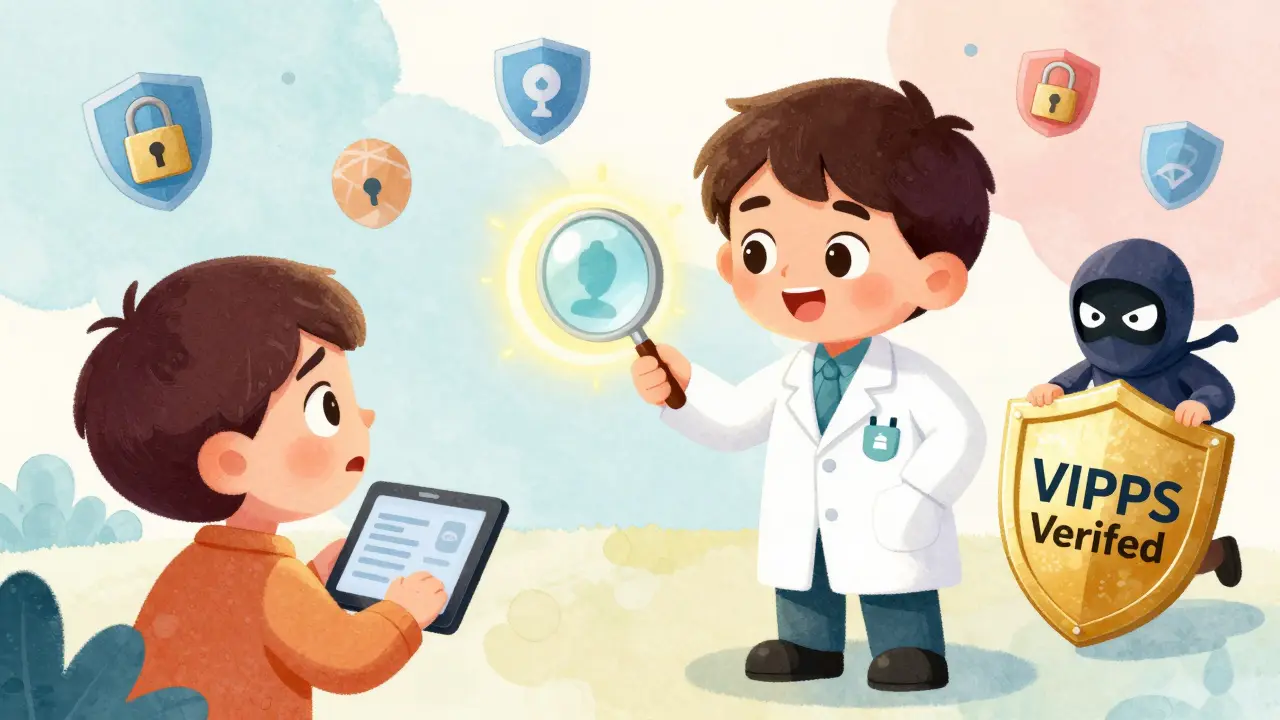
When you order medication online, you’re not just buying pills-you’re handing over your medical history, insurance details, credit card info, and even your home address. And if the website isn’t secure, that data could end up in the hands of scammers, hackers, or shady marketers within hours. In 2025, online pharmacies are more popular than ever, but so are the risks. A recent report found that 96% of websites selling prescription drugs online break the law. That means if you’re not careful, you could be putting your health-and your identity-at serious risk.
What Makes an Online Pharmacy Safe?
Not all online pharmacies are the same. The difference between a legitimate site and a dangerous one comes down to verification. The only reliable way to tell if a pharmacy is safe is to look for two key markers: the VIPPS seal and the .pharmacy domain.VIPPS stands for Verified Internet Pharmacy Practice Sites. It’s a certification from the National Association of Boards of Pharmacy (NABP). To earn it, a pharmacy must pass 21 strict checks-everything from having licensed pharmacists on staff to encrypting your data properly. As of February 2025, only 68 pharmacies in the entire U.S. had this seal. That’s not many. But here’s the thing: those 68 sites had a 98.7% compliance rate with privacy laws. Compare that to non-accredited sites, where only 36.2% followed the rules.
The .pharmacy domain works the same way. It’s not just a fancy web address. To get it, a pharmacy must prove it’s licensed in every state it operates in, has a real physical location, and follows federal privacy laws. Only verified pharmacies can use it. If you see a site ending in .com or .net claiming to be a pharmacy, be suspicious. Legit ones end in .pharmacy.
How Your Data Gets Stolen (And Why It’s So Easy)
Most people don’t realize how much personal data they give away when ordering online. You enter your name, birthdate, diagnosis, prescriptions, insurance ID, and payment details. If the site doesn’t use strong encryption, that data is basically sitting out in the open.Here’s what compliant pharmacies are required to do in 2025:
- Use 256-bit AES encryption to protect data stored on their servers
- Use TLS 1.3 encryption to protect data while it’s being sent over the internet
- Require multi-factor authentication for all staff accessing patient records
- Keep audit logs of every time someone views your file-for at least six years
- Scan their systems for vulnerabilities every 30 days
- Run full security penetration tests once a year
Now here’s the scary part: according to NABP’s 2024 report, 78% of illegal online pharmacies don’t even use proper encryption. And 63% don’t control who can access your records. That means if a hacker breaks in, they can download your entire medical file in minutes.
And it’s not just hackers. Many fake pharmacies sell your data to marketing companies. Reddit users have reported getting unsolicited calls from telemarketers within 24 hours of ordering medication. One user on r/pharmacy said they got a call offering "discounted diabetes meds"-even though they’d only ordered blood pressure pills. That’s not coincidence. That’s data theft.
What the Law Says in 2025
Federal rules are tightening fast. The DEA updated its telemedicine rules on March 21, 2025, and now requires pharmacists to verify your identity using a government-issued ID with biometric checks before filling any controlled substance prescription from a telehealth visit. That’s new. Before, many online pharmacies would just ask for a PDF prescription and ship it out.New York State’s e-prescription mandate, which started January 1, 2025, means every prescription-whether it’s for antibiotics or insulin-must be sent electronically. This cuts down on forged prescriptions by 37%, according to Mediserv Pharmacy. But it also means pharmacies must upgrade their systems, and many can’t afford it. That’s why smaller, unlicensed sites are disappearing-they can’t meet the new standards.
And it’s not just the DEA. The Department of Health and Human Services (HHS) proposed new HIPAA Security Rule changes in January 2025. By September 2025, all pharmacies must require multi-factor authentication for remote access. By 2026, they’ll need annual third-party security audits. These aren’t suggestions. These are legal requirements. Pharmacies that ignore them face fines up to $10,000 per violation.
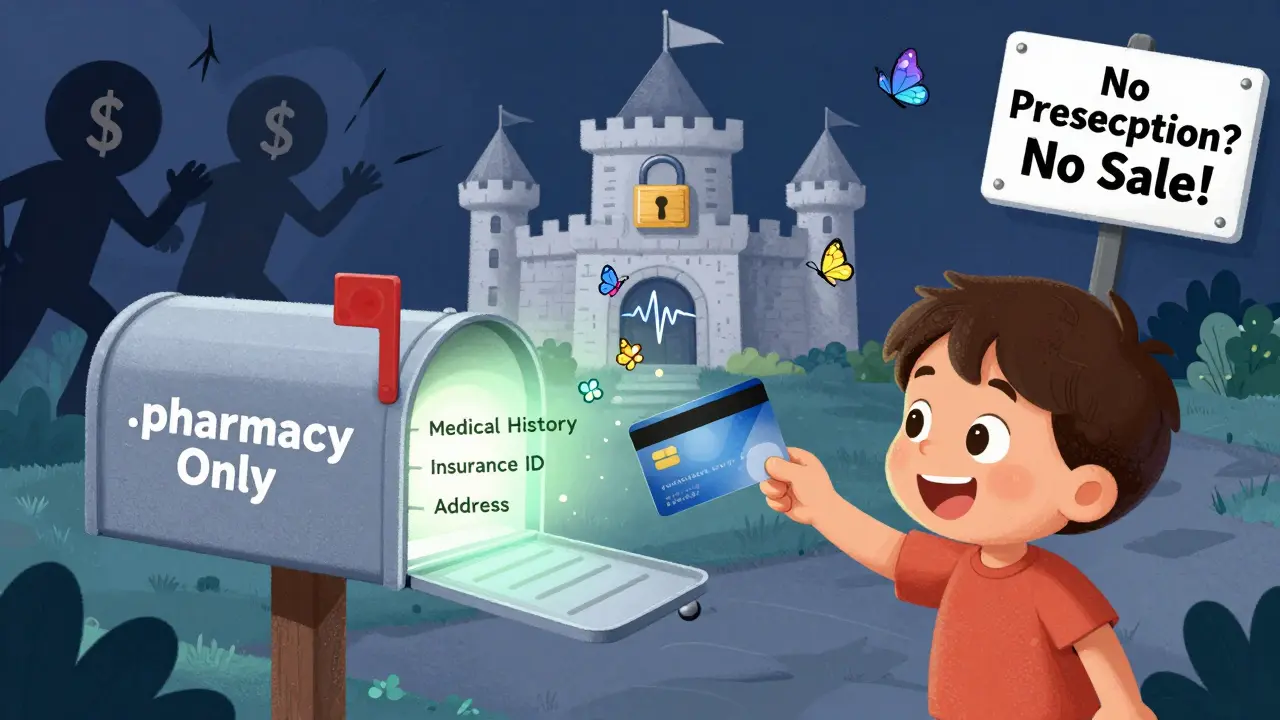
How Brick-and-Mortar Pharmacies Compare
You might think your local pharmacy is just as risky. But the numbers say otherwise. According to HHS enforcement data, 94.3% of physical pharmacies comply with HIPAA privacy rules. Online pharmacies? Only 58.1%. That’s a huge gap.Why? Because brick-and-mortar pharmacies have face-to-face interactions. You hand your prescription to a licensed pharmacist. They ask you questions. They check your history. They know who you are. Online, there’s no human check. Just a form. And that’s where fraud thrives.
Plus, physical pharmacies don’t rely on automated systems that can be hacked. Their records are often stored offline. Even if a cyberattack hits, your data isn’t always exposed.
What You Can Do to Protect Yourself
You don’t have to be a tech expert to stay safe. Here’s what works:- Only use .pharmacy or VIPPS-certified sites. Click the seal. It should link to the NABP verification page. If it doesn’t, it’s fake.
- Never buy from sites that offer "no prescription needed." That’s illegal. Period.
- Check the physical address. Legit pharmacies list their full address, phone number, and license number. Look it up on your state’s pharmacy board website.
- Use a burner email. Don’t use your main email for pharmacy accounts. Create a new one just for this.
- Avoid direct bank transfers. Use a credit card. It gives you fraud protection. Debit cards and wire transfers don’t.
- Watch for weird follow-ups. If you start getting calls or emails about "special deals" on your medication, that’s a red flag. Report it to the DEA’s Diversion Control Division.
One user on r/Privacy said they started using a separate email and credit card for all pharmacy orders. They haven’t had a single spam call since. Simple changes make a big difference.
The Bigger Picture: Why This Matters
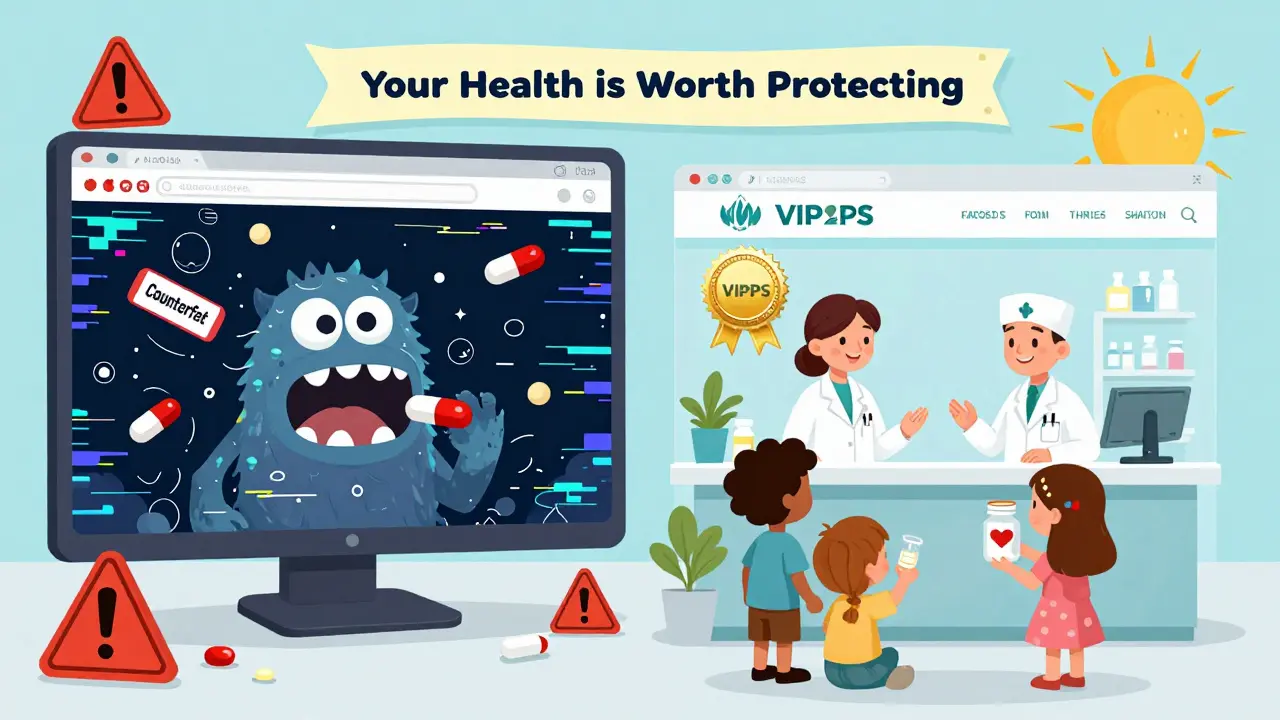
This isn’t just about spam emails or identity theft. Fake online pharmacies sell counterfeit drugs-pills with no active ingredient, or worse, toxic chemicals. The DEA says 28% more counterfeit medicine cases were reported in 2024 than in 2023. Many of those came from unsecured online sites.And the cost? Gartner predicts pharmacy-related data breaches will cost the U.S. healthcare system $2.4 billion in 2025. That’s not just money. It’s lives. Someone taking a fake version of their heart medication could have a stroke. Someone getting counterfeit insulin could go into diabetic shock.
There’s a reason the DEA, NABP, and HHS are cracking down. The convenience of online pharmacies is real. But convenience shouldn’t come at the cost of your safety.
What to Do If You’ve Been Compromised
If you think your data was stolen from an online pharmacy:- Change your password on that site immediately
- Place a fraud alert on your credit report through Experian, Equifax, or TransUnion
- Report the pharmacy to the NABP at nabp.pharmacy (use their official reporting form)
- File a complaint with the DEA’s Diversion Control Division
- Monitor your bank and insurance statements for unusual charges
You can also call the Federal Trade Commission at 1-877-FTC-HELP. They track these cases and can help you recover lost funds.
How do I know if an online pharmacy is legitimate?
Look for the VIPPS seal or a .pharmacy domain. Click the seal to verify it links to the NABP’s official site. Also check that the pharmacy requires a valid prescription, lists a physical address you can verify, and has a licensed pharmacist available to answer questions.
Is it safe to use a debit card at an online pharmacy?
No. Debit cards offer little to no fraud protection. If your card number is stolen, the money is gone immediately. Use a credit card instead-it gives you time to dispute charges and protects your bank account.
Can I trust an online pharmacy that offers very low prices?
Probably not. Legitimate pharmacies follow pricing rules and can’t undercut prices by 70% or more. If a site offers brand-name drugs at 80% off, it’s likely selling counterfeit or stolen medication. The DEA warns that extremely low prices are one of the top signs of illegal pharmacies.
Why do some online pharmacies ask for my medical records?
Legitimate pharmacies need your medical history to ensure the medication is safe for you. They should only ask for what’s necessary and encrypt the files. If they ask for unrelated details like your social security number or employment history, that’s a red flag.
Are all telemedicine pharmacies unsafe?
No. Only those that don’t follow DEA rules are unsafe. Since March 2025, legal telemedicine pharmacies must verify your identity with government ID, check your state’s prescription monitoring program, and require a valid prescription. If they skip any of these steps, walk away.
I ordered my blood pressure meds from a .pharmacy site last month. No spam calls, no weird emails. Just pills and peace of mind. Seriously, it’s that simple.
People are literally gambling with their lives and they don’t even know it. This isn’t just about privacy-it’s about moral decay. We’ve turned healthcare into a click-and-buy carnival, and now we’re surprised when the carnival tent collapses on someone’s chest? Wake up. The system is broken, and we’re all complicit.
It is imperative to note that the verification mechanisms such as VIPPS and .pharmacy domain are not merely procedural formalities but constitute the foundational pillars of regulatory compliance in the digital pharmaceutical ecosystem. Failure to adhere to these standards constitutes a violation of both statutory and ethical obligations under international data protection frameworks.
For anyone new to this-start with the NABP website. Type in the pharmacy name or URL and check if it’s listed. I used to panic every time I ordered online, but now I just verify first. Takes 2 minutes. Saves your whole life. You don’t need to be tech-savvy, just careful.
in india we have a lot of fake sites too. people think cheap = good. i told my uncle to stop buying heart pills from a site with a .xyz domain. he almost died from fake atorvastatin. now he only uses a local pharmacy with online delivery. simple.
The fact that 96% of online pharmacies are illegal reveals a systemic failure in consumer education and regulatory enforcement. The absence of mandatory public awareness campaigns in the U.S. is not an oversight-it is negligence. Citizens are being deliberately exposed to avoidable risk due to institutional inertia.
OMG I JUST REALIZED I USED A .COM PHARMACY LAST WEEK 😭 I’M SO SCARED. I’M GOING TO CHECK MY CREDIT RIGHT NOW. MY EMAIL IS PROBABLY SOLD TO 500 MARKETERS. I’M CRYING. WHY DIDN’T SOMEONE TELL ME?? 😭😭😭
It’s fascinating how we’ve outsourced trust to domain extensions and seals. We’ve created this illusion of safety through bureaucratic symbols-VIPPS, .pharmacy, TLS 1.3-as if encryption is a moral guarantee rather than a technical tool. But what happens when the seal is real and the person behind the screen isn’t? What if the licensed pharmacist is just a screen name in a call center in Manila? The system looks secure, but the human element has been erased. And isn’t that the real vulnerability? Not the server, not the encryption-but the absence of accountability that only a face-to-face interaction can provide. We traded presence for convenience, and now we’re surprised when the ghost in the machine steals our data.
Look I’ve been doing this for 15 years and I’ve seen it all. You want to be safe? Use a credit card. Use a burner email. Only use .pharmacy. That’s it. No need for 10-page essays. No need to overthink it. The rules are simple. The danger is real. And if you’re still using a debit card or clicking on a .net site because it’s cheaper then you’re not being smart-you’re being stupid. Stop making excuses. Your life isn’t a gamble.
So… I just got a call from some guy offering me ‘discounted insulin’… after I ordered my thyroid meds from a site that looked legit… I thought it was a fluke… but now I’m reading this and I’m like… HOLY SHIT. I didn’t even realize I was putting my life on the line. I’m changing my passwords. I’m calling the FTC. I’m gonna report that site. This is terrifying. I feel violated. I feel like I just walked into a dark alley and handed my wallet to a stranger and didn’t even know it.
thank you for writing this. i was scared to order online after my sister got scammed. but now i know what to look for. i’m using a separate email and a credit card. i even called my local pharmacist and asked them to check the site i wanted to use. they said yes it’s legit. i feel so much better now. you saved me from panic