
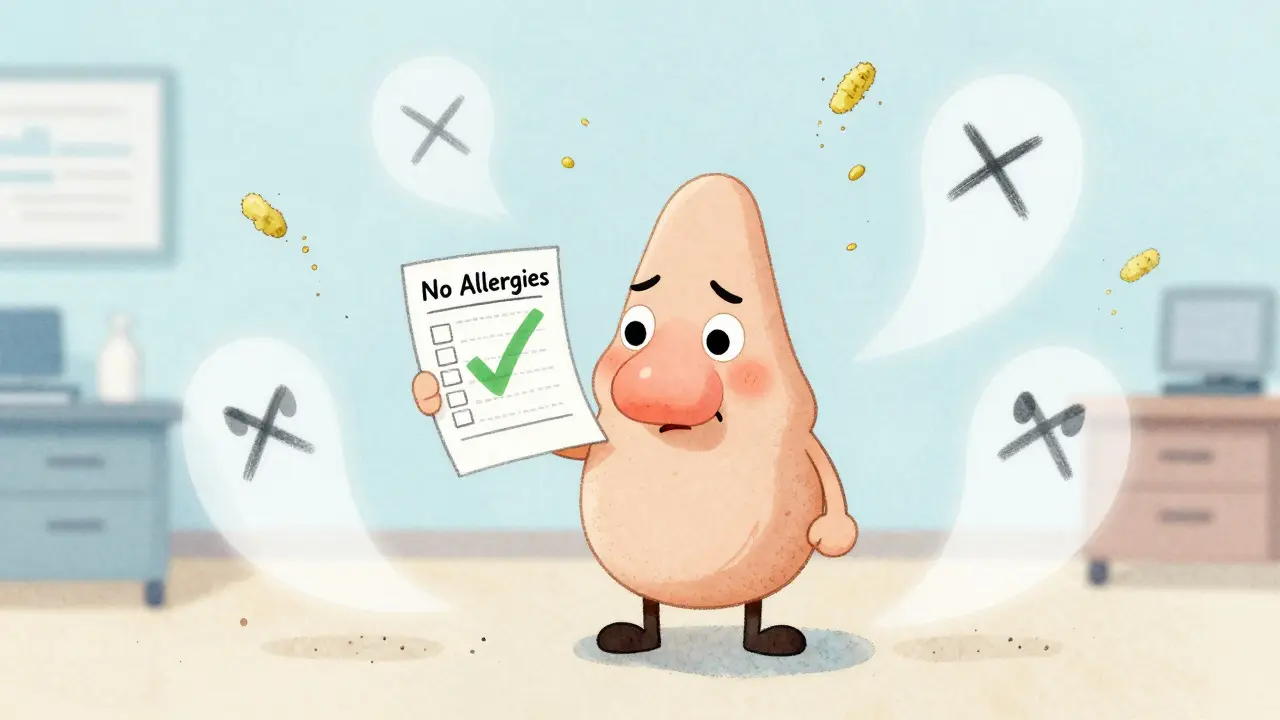
You blow your nose, but the runny nose doesn't stop. You take an antihistamine, but it does nothing. Your doctor runs allergy tests, and they come back completely negative. If this sounds familiar, you might not have allergies at all. You likely have nonallergic rhinitis, a condition that affects roughly 17-23% of adults in Western countries but is often misunderstood or misdiagnosed.
Unlike allergic rhinitis, which is driven by an immune response to pollen or pet dander, nonallergic rhinitis is triggered by physical irritants and nervous system responses. It accounts for about 80% of all chronic rhinitis cases, yet many patients spend years searching for relief because standard allergy treatments simply don't work. Understanding what actually causes your symptoms-and how to manage them without relying on ineffective antihistamines-is the key to getting your life back.
Understanding Nonallergic Rhinitis vs. Allergic Rhinitis
The biggest hurdle in treating nonallergic rhinitis is the confusion with allergic rhinitis. Both conditions share similar symptoms: a runny nose (rhinorrhea), congestion, sneezing, and post-nasal drip. However, the underlying mechanisms are entirely different. Allergic rhinitis involves IgE antibodies reacting to allergens, while nonallergic rhinitis involves dysregulation of the autonomic nervous system in the nasal mucosa.
In nonallergic rhinitis, specifically the most common subtype known as vasomotor rhinitis, there is increased parasympathetic activity and decreased sympathetic tone. This leads to vascular engorgement and increased permeability in the nasal passages. Research shows that transient receptor potential (TRP) channels, particularly TRPV1, are overexpressed in these patients-up to 3.2 times higher than in healthy controls. These channels act like sensors that react to non-allergic triggers such as temperature changes, humidity shifts, and chemical irritants.
| Feature | Allergic Rhinitis | Nonallergic Rhinitis |
|---|---|---|
| Cause | IgE-mediated immune response to allergens (pollen, dust mites) | Nervous system dysregulation and irritant sensitivity |
| Diagnostic Test | Positive skin prick test or serum-specific IgE | Negative allergy tests; diagnosis by exclusion |
| Key Symptoms | Sneezing, itchy eyes/nose, clear discharge | Runny nose, congestion, no itching |
| Effective Treatment | Antihistamines, allergen immunotherapy | Nasal steroids, ipratropium bromide, trigger avoidance |
| Nasal Cytology | Eosinophil predominance | Neutrophil predominance (65-75%) |
If you’ve been taking oral antihistamines for years with little to no relief, it’s time to reconsider the diagnosis. Misdiagnosis occurs in 30-40% of cases, leading to unnecessary medication use. A proper diagnosis requires negative allergy testing and often involves ruling out structural issues via nasal endoscopy.
Common Irritant Triggers and Subtypes
Nonallergic rhinitis isn’t a single disease but a collection of subtypes, each with specific triggers. Identifying your specific subtype is crucial for effective management. The eight recognized subtypes include vasomotor, drug-induced, gustatory, hormonal, occupational, senile, atrophic, and idiopathic rhinitis.
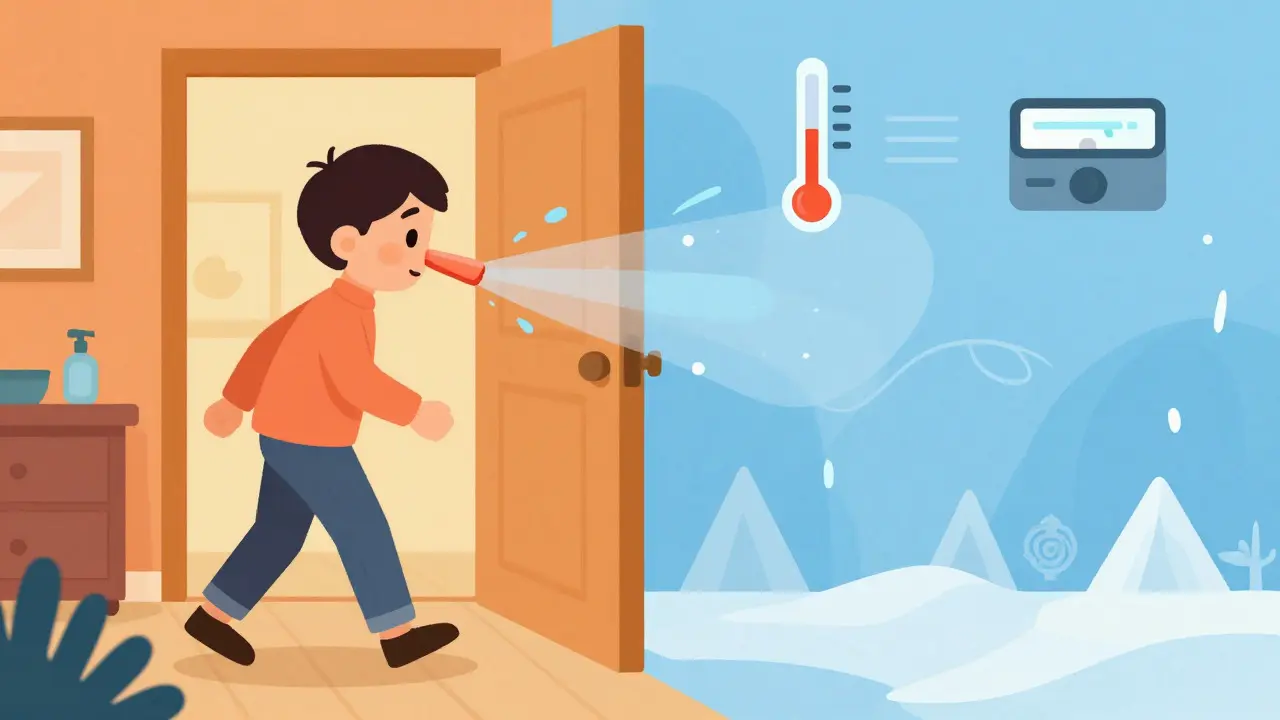
Vasomotor rhinitis is the most prevalent, accounting for 60-70% of cases. Its triggers are environmental and physical. You might notice symptoms flaring up when you walk into a cold room from a warm one, or when humidity drops sharply. Specific thresholds matter here: temperature changes exceeding 5°C within an hour, or humidity shifts greater than 20%, can activate those sensitive TRP channels. Other environmental irritants include tobacco smoke (triggering symptoms at concentrations above 0.05 mg/m³), strong perfumes, and paint fumes.
Other subtypes have distinct triggers:
- Gustatory Rhinitis: Triggered by eating, especially spicy foods containing capsaicin. This affects 55-60% of individuals over age 65. The heat from the food stimulates nerve endings, causing immediate runny nose.
- Hormonal Rhinitis: Common during pregnancy (affecting 20-30% of women), puberty, or thyroid dysfunction. Symptoms usually emerge in the second trimester and resolve within two weeks after birth.
- Drug-Induced Rhinitis: Caused by medications like ACE inhibitors (20% of users) and beta-blockers (15% of users). Also includes rhinitis medicamentosa, caused by overusing decongestant sprays like oxymetazoline.
- Occupational Rhinitis: Triggered by workplace exposures like flour dust, latex particles, or chemical vapors. Symptoms typically worsen throughout the workweek.
Keeping a detailed symptom diary for 4-6 weeks can help identify patterns. Track variables like temperature, humidity, and what you ate or where you were. This data is invaluable for pinpointing your personal trigger thresholds.
First-Line Management: Avoidance and Saline Irrigation
Before reaching for prescription medications, start with trigger avoidance and mechanical clearance. These strategies are low-risk and highly effective for many patients.
Air quality improvements can reduce symptoms by 35-40%. Using HEPA filters that capture 99.97% of particles 0.3 µm and larger helps remove airborne irritants. Avoiding strong scents, including perfumes and cleaning products, can further reduce symptoms by 25-30%. For those with gustatory rhinitis, modifying diet-such as reducing spice intake-can cut symptoms by 40-50%.
Nasal saline irrigation is another cornerstone of treatment. Using isotonic (0.9%) or hypertonic (3%) saline solutions helps flush out irritants and thin mucus. Studies show it provides symptom relief in 60-70% of patients. Twice-daily use is significantly more effective than once-daily, offering 45% greater efficacy. Devices like neti pots or squeeze bottles are commonly used. Proper technique is essential: lean forward, tilt your head sideways, and let the water flow through one nostril and out the other. Use distilled, sterile, or previously boiled water to avoid infection risks.
Pharmacological Treatments That Work
When avoidance and saline aren’t enough, targeted medications can provide significant relief. Unlike allergic rhinitis, oral antihistamines are generally ineffective for nonallergic rhinitis. Instead, focus on intranasal therapies.
Intranasal corticosteroids, such as fluticasone propionate, are first-line pharmacological treatments. They reduce inflammation and congestion, demonstrating 50-60% symptom reduction in moderate to severe cases. However, patience is key: peak efficacy takes 2-4 weeks of consistent daily use. Side effects like nosebleeds occur in 15-20% of users, so proper spraying technique (aiming away from the septum) is important.
For persistent runny nose (rhinorrhea), ipratropium bromide nasal spray is highly effective. It works by blocking parasympathetic nerve signals that cause glandular secretion. Clinical trials show it reduces nasal discharge by 70-80% within 48 hours, with maximum effect at two weeks. A newer 0.03% formulation approved by the FDA in 2023 offers 20% greater efficacy with fewer side effects compared to the standard 0.06% version.
Azelastine, an antihistamine nasal spray, can also help, providing 30-40% symptom reduction despite being less effective than in allergic rhinitis. It works within 1-2 hours but may cause a bitter taste in 30-40% of users.
If you’re suffering from rhinitis medicamentosa due to decongestant overuse, a structured withdrawal protocol is necessary. Stopping the decongestant abruptly leads to severe rebound congestion. Using intranasal corticosteroids during the 7-10 day withdrawal period helps manage symptoms and achieves successful resolution in 85-90% of cases.

Future Directions and Emerging Therapies
Research into nonallergic rhinitis is evolving rapidly. Current treatments address symptoms but not the underlying neural mechanisms. Scientists are investigating TRPV1 antagonists, which block the overactive receptors responsible for irritant sensitivity. Phase 2 trials have shown 50-60% symptom reduction in refractory cases, and new formulations are entering clinical development.
Neurostimulation devices are another promising avenue. Pilot studies using transnasal electrical stimulation have shown 45% symptom reduction by modulating nasal autonomic nerves. While still experimental, these approaches offer hope for patients who don’t respond to traditional therapies.
The global market for rhinitis treatments is growing, driven by better diagnosis rates and novel therapies. However, access remains a challenge. Insurance coverage for specialized treatments like ipratropium bromide often requires prior authorization, and only 40-45% of patients receive guideline-concordant care. Advocacy and patient education are critical to improving outcomes.
Practical Steps for Diagnosis and Management
Getting diagnosed and managed correctly takes time and effort. Here’s a practical roadmap:
- Seek Specialist Evaluation: See an allergist or ENT specialist. Expect 2-3 visits over 4-6 weeks for comprehensive testing, including skin prick tests and possibly nasal endoscopy.
- Keep a Symptom Diary: Track triggers, severity, and timing for at least 4 weeks. Note temperature, humidity, food, and activities.
- Start Conservative Measures: Begin nasal saline irrigation twice daily and improve indoor air quality with HEPA filters.
- Try First-Line Medications: Under medical guidance, start intranasal corticosteroids. Give them 2-4 weeks to work.
- Add Targeted Therapy if Needed: If runny nose persists, ask about ipratropium bromide. For congestion, consider azelastine.
- Review Medications: Discuss any current drugs with your doctor, especially blood pressure medications, to rule out drug-induced rhinitis.
- Follow Up: Reassess effectiveness after 6-8 weeks. Adjust treatment based on response and side effects.
Remember, nonallergic rhinitis is manageable. It requires a different approach than allergies, focusing on trigger identification and targeted neural modulation rather than immune suppression. With the right strategy, you can significantly reduce symptoms and improve your quality of life.
Is nonallergic rhinitis the same as sinusitis?
No, they are different conditions. Sinusitis involves inflammation or infection of the sinuses, often causing facial pain, thick discolored mucus, and fever. Nonallergic rhinitis affects the nasal lining without involving the sinuses directly, characterized by clear discharge and congestion without infection signs.
Can nonallergic rhinitis be cured?
There is currently no permanent cure for nonallergic rhinitis. However, symptoms can be effectively managed and controlled through trigger avoidance, nasal irrigation, and appropriate medications. Many patients achieve significant relief and maintain good quality of life with consistent management.
Why do antihistamines not work for nonallergic rhinitis?
Antihistamines block histamine, which drives allergic reactions. Since nonallergic rhinitis is not mediated by histamine or IgE antibodies, antihistamines have minimal effect. Instead, treatments target nerve signals (like ipratropium) or reduce general inflammation (like nasal steroids).
How long does it take for nasal steroids to work?
Intranasal corticosteroids typically take 2-4 weeks of consistent daily use to reach maximum efficacy. Some patients notice slight improvement within a few days, but full benefits require patience and regular application. Do not stop using them prematurely.
What is the best treatment for a constantly runny nose?
Ipratropium bromide nasal spray is considered the most effective treatment for isolated rhinorrhea (runny nose) in nonallergic rhinitis. It reduces nasal discharge by 70-80% within 48 hours. For combined congestion and runny nose, a combination of nasal steroids and ipratropium may be recommended.