
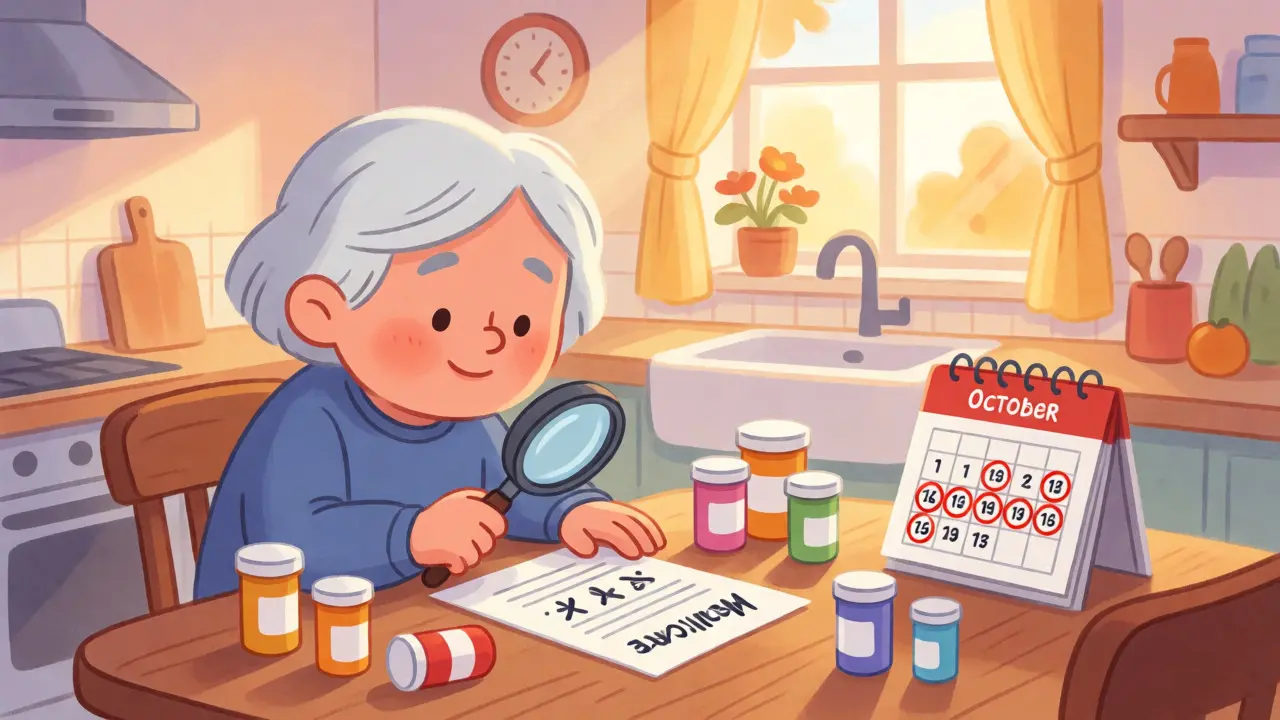
Did you know that simply ignoring your Medicare plan details during the fall could cost you over $500 a year? It sounds extreme, but Justice in Aging’s 2025 analysis found that beneficiaries who actively compare plans save an average of $532 annually on prescription drugs alone. Yet, many people treat the Annual Open Enrollment Period (AEP) as a chore they can skip if their health hasn't changed drastically. That is a dangerous assumption. Plans change their formularies, networks, and costs every single year. A medication covered at Tier 2 last year might jump to Tier 4 this year, instantly increasing your out-of-pocket costs by 25% or more.
The window for making these critical decisions is tight. For the upcoming 2026 coverage year, the period runs from October 15, 2025, through December 7, 2025. Any changes you make take effect on January 1, 2026. If you miss this deadline, you are locked into your current plan for another twelve months, regardless of how much your premiums spike or which doctors leave your network. This guide breaks down exactly how to navigate this process without getting overwhelmed by jargon or hidden fees.
Understand What You Can Actually Change
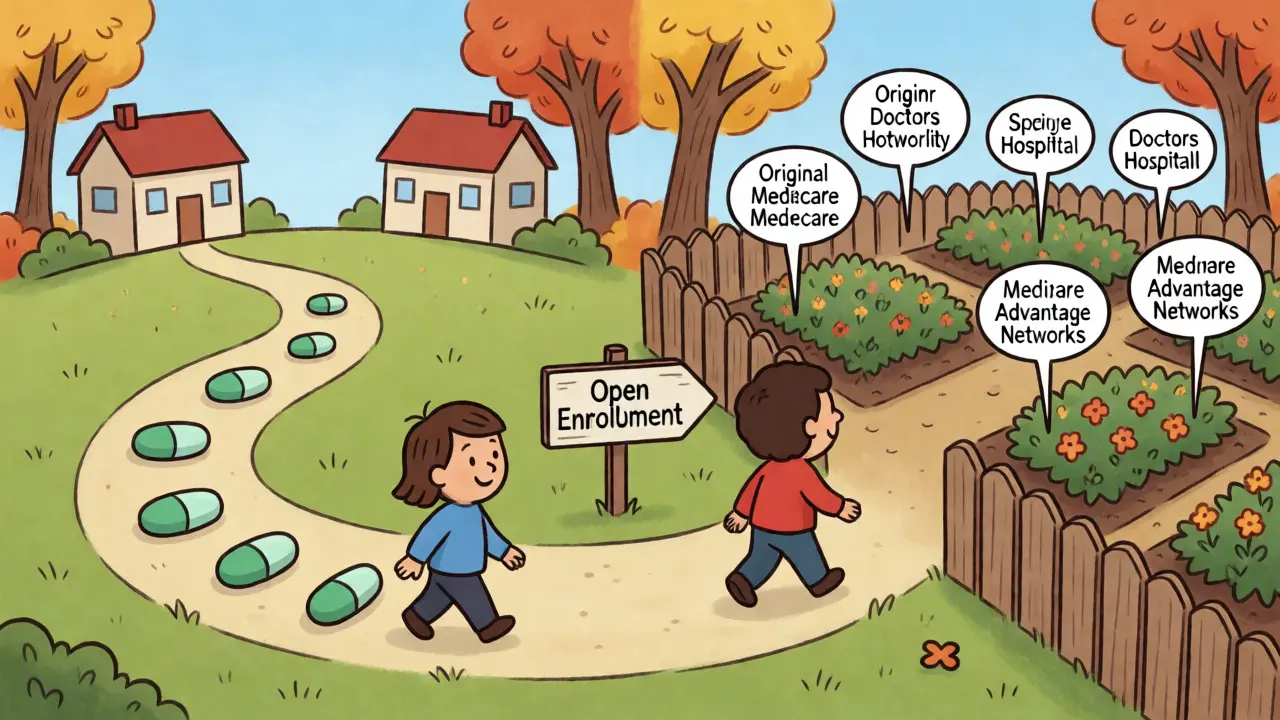
Before you start comparing prices, you need to know what switches are legal and logical during this specific window. The Centers for Medicare & Medicaid Services (CMS) allows you to make several specific moves between October 15 and December 7. You can switch from Original Medicare to a Medicare Advantage plan (Part C), move back to Original Medicare from a Medicare Advantage plan, or swap one Medicare Advantage plan for another. If you stick with Original Medicare, you can join, switch, or drop a standalone Part D prescription drug plan.
Be careful with dropping Part D entirely. If you go without creditable coverage for 63 days or more, you may face a permanent late enrollment penalty later in life. Also, note that switching Medicare Advantage plans has different rules than switching Part D plans. During the separate Medicare Advantage Open Enrollment Period (January 1-March 31), you can only make one switch. But during the annual AEP in the fall, you have more flexibility to choose the best option for your medications and budget.
Gather Your Medical Data Before You Look
You cannot compare apples to apples if you don’t know what you’re buying. Start this process in early October, before the official enrollment window even opens. Your first job is to create a precise list of every medication you take. Don’t just write down "blood pressure meds." Write down the generic name, the brand name, the dosage, and how often you take it. Include any supplements your doctor has prescribed, as some plans cover certain vitamins while others do not.
Next, locate two documents sent to you by your current insurance provider: the Annual Notice of Change (ANOC) and the Evidence of Coverage (EOC). The ANOC tells you exactly what is changing in your current plan for next year. Did your preferred pharmacy get dropped from the network? Did your insulin copay increase? Reading this document first prevents you from shopping around unnecessarily if your current plan remains the best option. According to user feedback data from the Medicare Rights Helpline, 68% of callers needed help understanding formulary changes affecting their specific medications. Having your ANOC in hand puts you ahead of the curve.
Use the Right Tools to Compare Costs
Once you have your medication list, head to Medicare.gov and use the Plan Finder tool. This is the most reliable source because it pulls data directly from CMS. Do not rely solely on advertisements or broker flyers; they often highlight low premiums while hiding high deductibles or restrictive networks.
When using the Plan Finder, enter your zip code and your full list of medications. The tool will generate a list of plans ranked by estimated total cost. Pay close attention to the following metrics:
- Monthly Premium: In 2025, Part D premiums ranged from $7.20 to $117.10. A lower premium usually means higher costs when you actually buy drugs.
- Annual Deductible: Some plans have no deductible, while others allow up to $590 for Part D in 2025. You pay this amount out-of-pocket before the plan starts covering costs.
- Tier Placement: Check which tier each of your drugs falls into. Tiers range from 1 (generic) to 5 (specialty). Moving from Tier 2 to Tier 4 can triple your copay.
- Pharmacy Network: Ensure your local pharmacy is listed as "preferred." Using a non-preferred pharmacy can significantly increase your copays.
| Feature | Original Medicare + Part D | Medicare Advantage (Part C) |
|---|---|---|
| Prescription Drug Coverage | Requires separate Part D plan | Usually included (90% of plans) |
| Out-of-Pocket Maximum | No limit on medical costs | Capped at $8,000 (2025 standard) |
| Provider Network | Any doctor who accepts Medicare | Limited to plan's network (HMO/PPO) |
| Flexibility | High freedom to see specialists | Often requires referrals |
| Supplemental Benefits | Not included | May include dental, vision, hearing |
Watch Out for Hidden Restrictions
A low monthly premium is attractive, but it often comes with strings attached. One major pitfall is utilization management. This includes prior authorization, step therapy, and quantity limits. Prior authorization means your doctor must prove to the insurer that the drug is necessary before they pay for it. Step therapy requires you to try cheaper alternatives before approving your preferred brand-name drug. Quantity limits restrict how many pills you can buy per month.
KFF’s analysis of 2025 plan data shows that 47% of Part D plans applied utilization management requirements to approximately 50% of covered drugs. If your regimen involves specialty drugs like biologics or GLP-1 agonists (like Ozempic), check these restrictions carefully. A plan might cover the drug, but if it requires a lengthy approval process, you could face delays or denied claims. Always read the fine print regarding "preferred pharmacies" too. If your regular CVS or Walgreens isn't preferred, you might pay double for the same pill compared to someone using a preferred location.

Verify Your Doctors and Hospitals
If you choose a Medicare Advantage plan, your choice of healthcare providers becomes restricted. Unlike Original Medicare, where you can see any doctor who accepts Medicare, Medicare Advantage plans typically operate within a network of hospitals and physicians. Only 43% of Medicare Advantage plans offered out-of-network coverage in 2025, according to KFF. This means if your cardiologist leaves the network, you might have to find a new one or pay significantly more to stay.
Don't assume your current doctors are still in-network just because they were last year. The Medicare Rights Center warned that 78% of Medicare Advantage plans changed their provider networks between 2023 and 2024. Use the Plan Finder tool to verify that your primary care physician, specialists, and preferred hospital are listed under the specific plan you are considering. If you travel frequently or live in a rural area, ensure the network covers the regions you visit.
Make the Final Decision and Enroll
Once you’ve narrowed down your options, take a deep breath and look at the big picture. Are you saving money on premiums but risking high costs if you get sick? Or are you paying a higher premium for peace of mind and broader access? There is no single "best" plan for everyone; there is only the best plan for your specific situation right now.
Enroll online via Medicare.gov, call the number on your plan’s website, or work with a licensed broker. If you need free, unbiased advice, contact your state’s State Health Insurance Assistance Program (SHIP). SHIP counselors are trained specifically to help seniors navigate these choices without selling you a product. They can help you interpret complex formulary tables and explain penalties. Remember, the clock stops on December 7. Once you submit your application, keep the confirmation number safe. Your new coverage begins automatically on January 1, so there is nothing else to do until then unless you want to make another change during the special periods.
What happens if I miss the Annual Open Enrollment Period?
If you miss the October 15-December 7 window, you generally cannot change your Medicare Advantage or Part D plan until the next annual cycle. However, if you are enrolled in a Medicare Advantage plan, you can make one switch between January 1 and March 31 during the Medicare Advantage Open Enrollment Period. Standalone Part D users typically have fewer options outside of AEP unless they qualify for a Special Enrollment Period due to moving or losing other coverage.
Will my medication be covered if I switch plans?
Not necessarily. Each plan has its own formulary, which is a list of covered drugs categorized into tiers. A drug covered in Tier 2 on one plan might be excluded or placed in Tier 4 on another. Always use the Plan Finder tool to check the specific status of your medications on any new plan before enrolling. Approximately 60% of Part D plans change at least one medication's formulary status annually.
Is Medicare Advantage always cheaper than Original Medicare plus Part D?
It depends on your usage. Medicare Advantage plans often have lower monthly premiums and may include extra benefits like dental or vision. However, they usually have narrower provider networks and may require copays for services that Original Medicare covers differently. If you have frequent specialist visits or prefer seeing any doctor who accepts Medicare, Original Medicare with a Medigap policy might offer better financial predictability despite higher upfront premiums.
Do I need to re-enroll if I want to keep my current plan?
No, enrollment is automatic if you do nothing. If you are happy with your current plan and do not take action during the Annual Open Enrollment Period, you will remain in that plan for the next year. However, you should still review the Annual Notice of Change to ensure the plan’s terms haven’t become unfavorable for your needs.
What is the 'donut hole' and does it still apply?
The 'donut hole' was a coverage gap where beneficiaries paid a higher share of drug costs after reaching a certain spending threshold. Thanks to the Inflation Reduction Act, the donut hole is effectively closed for most beneficiaries starting in 2025. Now, once you reach the catastrophic phase, you pay no more than 5% of the cost for covered drugs, and the plan pays the rest. This makes high-cost medications more predictable.
its absurd that people ignore this until its too late
if you dont check your plan every year you are basically gambling with your health and wallet
the insurance companies change formularies specifically to catch people off guard
you have a moral duty to yourself and your family to do the homework
ignoring it is just lazy and selfish
do not let them trick you again
Hey everyone! 👋 Just wanted to say this guide is super helpful for anyone feeling overwhelmed 🤯
Don't stress if you miss the first few days of October, you still have plenty of time to gather your docs 💪
Remember to check those tier levels carefully because they can sneak up on you 📉
You've got this! Let's make sure we save some money for the holidays 🎁💰
typical american complexity designed to confuse the elderly so they pay more
i mean look at this jargon utilization management step therapy it is all nonsense invented by bureaucrats who have never filled a prescription in their lives
we should just have one system like everyone else but no america has to be special and inefficient
the fact that you need a computer tool to figure out what you are paying is a failure of the system not the user
simple vocabulary would help but they want you dependent on brokers
it is pathetic really
While the guide is decent, it fails to address the predatory nature of these broker fees.
The real issue isn't just formulary changes but the opaque pricing structures that hide administrative bloat.
Consumers are treated as data points rather than patients which leads to suboptimal outcomes regardless of enrollment timing.
We need systemic reform not just better individual planning tools.
omg wait did u guys notice that the window is exactly 53 days long?? that is suspiciously specific isnt it?? i bet they picked that number based on some astrological alignment or secret meeting between pharma lobbyists and congressmen who get kickbacks from big insurance!! 😱😱😱
and why does the article mention $532 savings?? that is an average right?? averages lie!! they always lie!! if ur neighbor saved $10k then u technically saved $5k even if u lost money!!! its all rigged to make us think were winning when actually the house always wins!!! 🏠🃏
also the part about dropping part d having a penalty... thats not a penalty thats a hostage situation!! they hold our health ransom!! if u leave for 63 days they punish u forever?? thats medieval torture disguised as healthcare policy!!! ⛓️⛓️⛓️
im telling u now the formularies change randomly just to keep us guessing and confused so we dont realize theyre swapping out good drugs for cheaper generics that dont work as well!! its a conspiracy to lower quality while raising prices!! 👀👀👀
read between the lines people!! the fine print is where the monsters live!! 🐉🐉🐉
This analysis lacks emotional depth. It treats healthcare decisions as purely financial transactions, ignoring the anxiety and fear beneficiaries feel when facing potential coverage gaps. The tone is clinical and detached, failing to acknowledge the human cost of bureaucratic inefficiency. We are not just numbers on a spreadsheet; we are vulnerable individuals navigating a complex system with high stakes. The lack of empathy in such guides contributes to the very disengagement they criticize.
hmm interesting point about the utilization management
i wonder if there is a way to appeal those step therapy requirements easier ?? 🤔
also does anyone know if the ship counselors help with the appeals process too ?? 🙏
would love to hear more thoughts on this !!
appeals are a waste of time if you didn't read the fine print first
ship helps but they cant fix bad choices made during enrollment
stop looking for shortcuts and start doing the reading
that is how adults handle responsibility