
When you’re receiving chemotherapy at home, the biggest worry isn’t just the treatment itself-it’s what happens after. You’ve taken the pill, administered the IV, or applied the patch. Now, what do you do with the empty bottle, the used gloves, the soiled tissue? Chemotherapy disposal isn’t like tossing out your painkillers. These drugs don’t just disappear. They stay active. They can harm children, pets, waste workers, and even water supplies if handled wrong.
Why Chemotherapy Waste Is Dangerously Different
Most medications can go in the trash with coffee grounds or cat litter. Not chemotherapy. These drugs are designed to kill fast-growing cells-cancer cells. But they don’t know the difference between a tumor and your hair follicles, your gut lining, or a developing fetus. Even tiny amounts left on a glove, in urine, or in a pill bottle can cause DNA damage, birth defects, or long-term health risks. The American Cancer Society says active chemotherapy compounds can remain in your body fluids-urine, feces, vomit, sweat-for up to 72 hours after treatment. That means every bathroom trip, every wipe, every used tissue is potentially hazardous. The EPA found detectable levels of cyclophosphamide, a common chemo drug, in 67% of U.S. waterways. That’s not from hospitals. That’s from homes. And it’s getting worse. Since 2019, home-based cancer treatments have jumped 37%. More people are taking chemo orally, managing side effects at home, and handling waste without proper training. A 2022 Stericycle report found 41% of patients dispose of chemo meds incorrectly-twice the rate of regular pills.What You Must Never Do
There are three absolute no-gos with chemotherapy waste:- Never flush it. Even if the bottle says "flush if no take-back program," that rule doesn’t apply to chemo. The FDA explicitly says no chemotherapy drugs should ever go down the drain.
- Never crush pills. Crushing opens the drug powder into the air. Inhaling it or touching it with bare skin is dangerous. Oral chemo pills are coated for a reason.
- Never throw it in a regular trash bag. Single-bag disposal increases exposure risk by 92% compared to double-bagging, according to Mayo Clinic testing.
How to Properly Dispose of Chemotherapy Medication at Home
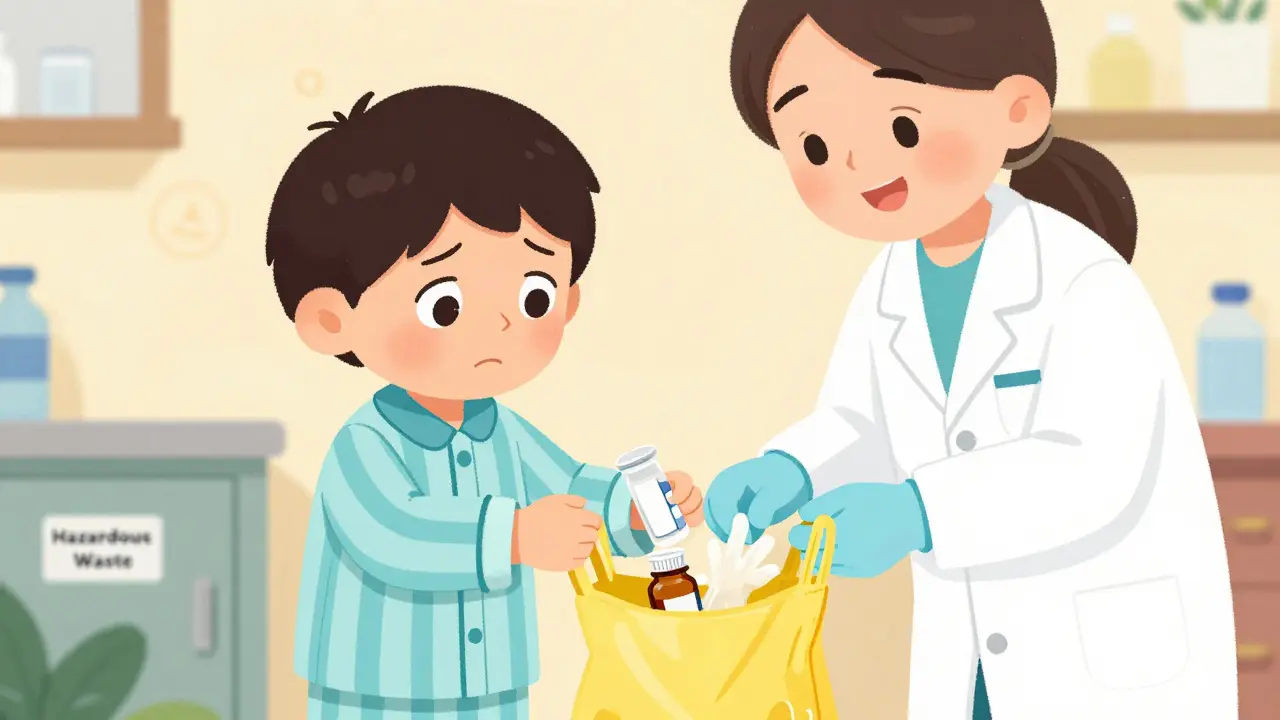
The safest method follows a clear, step-by-step process backed by the Cancer Institute of New Jersey (CINJ) 2022 guidelines. You don’t need special tools-just the right materials and discipline.- Wear nitrile gloves. Use gloves that are 0.07-0.15mm thick (about 6 mil). Latex won’t protect you. These gloves are usually provided by your clinic, but if you run out, buy them at a pharmacy or medical supply store.
- Place all used items in an inner bag. This includes empty pill bottles, used syringes, IV tubing, gloves, wipes, tissues, pads, and even the plastic packaging from the medication. Everything that touched the drug goes here.
- Seal the inner bag tightly. Use a zip-tie or heat-seal it if possible. Don’t just twist it. Leakage is the biggest risk.
- Place the sealed inner bag into a second, identical leak-proof bag. This double-bagging step is non-negotiable. It’s the single most effective way to prevent exposure.
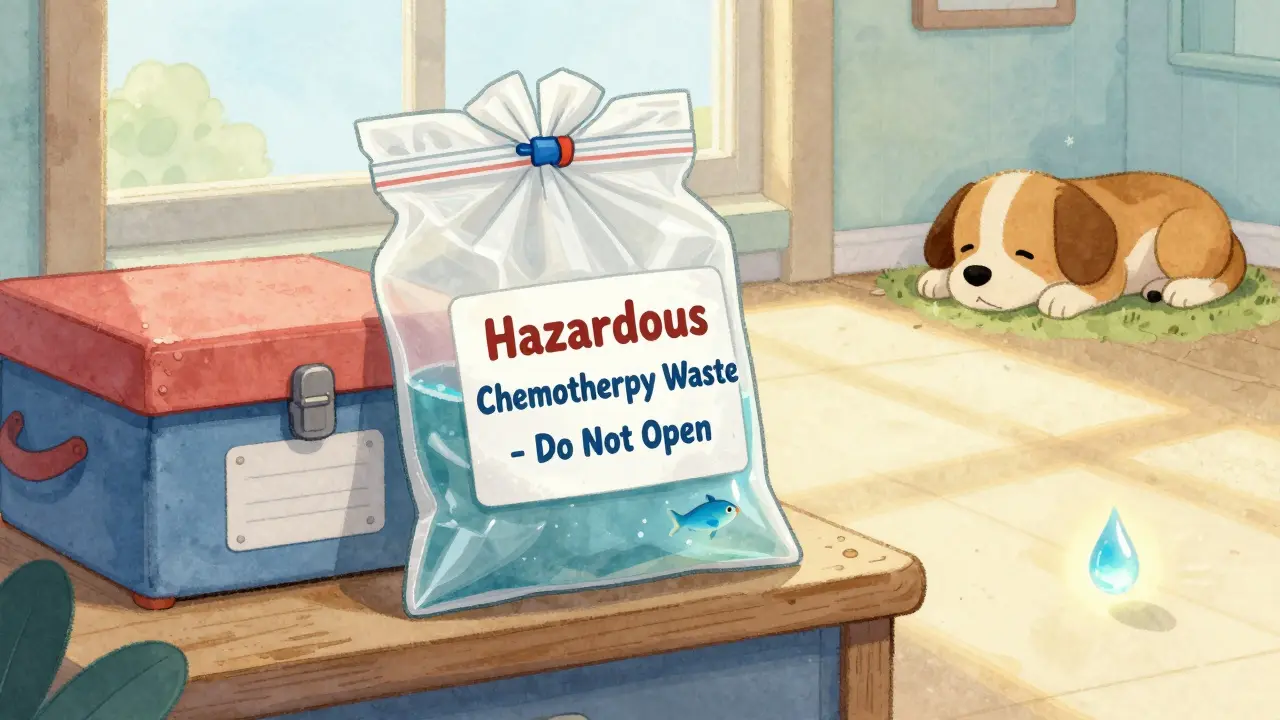
- Seal the outer bag. Again, use a zip-tie or heat-seal. Label it clearly: "Hazardous Chemotherapy Waste - Do Not Open."
- Store it safely until pickup. Keep the double-bagged waste in a locked cabinet, out of reach of children and pets. Do not store it near food or medicine.
Special Cases: Patches, Liquids, and Spills
Different forms of chemo need different handling:- Transdermal patches: After removing, fold the patch so the sticky sides stick together. Place it immediately in the inner bag. Even a used patch can still deliver a dangerous dose.
- Liquid chemo: If you spill it, don’t wipe it with a regular towel. Use disposable cloths provided by your clinic. Wear gloves, a gown, and a mask. Soak up the spill, then double-bag everything. Clean the area with water and mild soap afterward.
- Oral liquids: Pour them into a disposable cup with an absorbent material like cat litter or coffee grounds. Let it sit for 10 minutes, then seal it in the inner bag. Never pour liquid chemo down the sink.
What About Take-Back Programs?
You might have seen MedDrop kiosks at pharmacies. They’re great-for regular meds. But only 63% of chemotherapy drugs are accepted. Some, like IV bags or certain oral agents, are excluded due to their potency. Only 28% of U.S. pharmacies offer mail-back envelopes specifically for chemo waste. And most community take-back events won’t touch it because of safety rules requiring law enforcement presence. The Deterra® system? It works for opioids and antidepressants. But the manufacturer says outright on their website: "Not approved for hazardous chemotherapy agents." That means, for most people, home disposal using the double-bag method is still the standard-and the safest option if done correctly.How Long Do You Keep Taking Precautions?
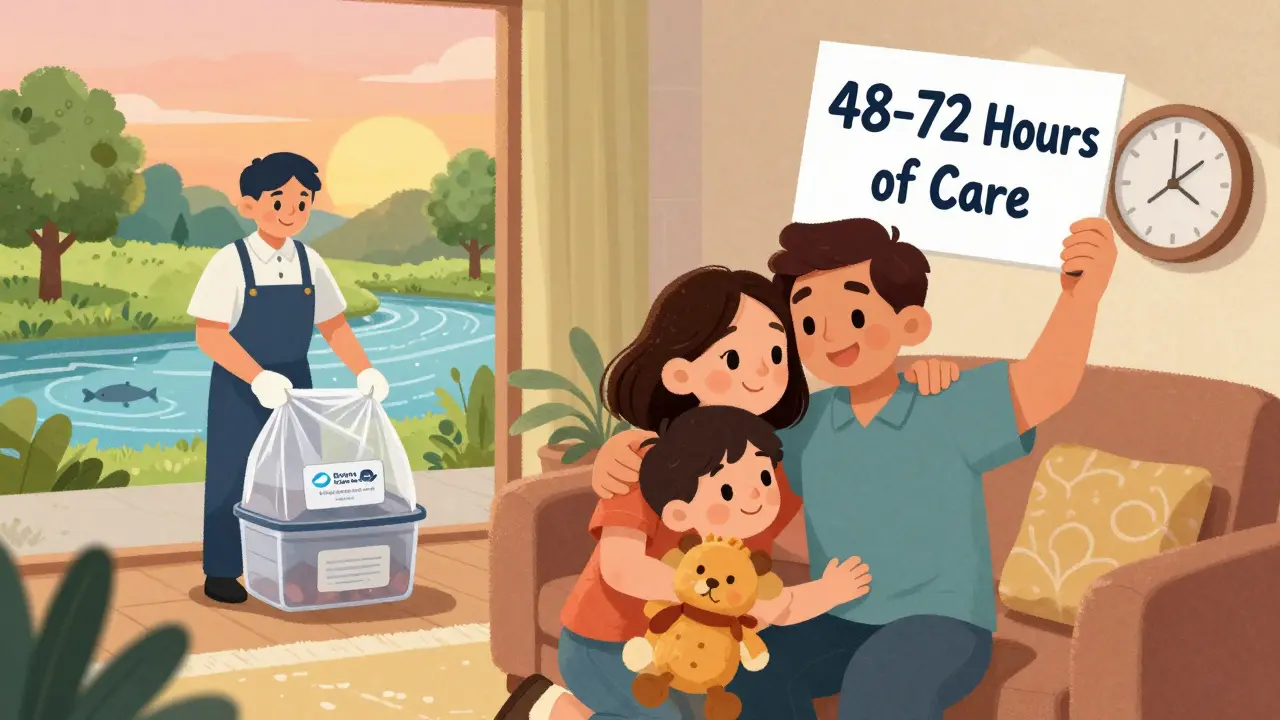
You can’t just stop after one day. The risk lasts 48-72 hours after each dose. During that time:- Use separate towels and washcloths.
- Flush the toilet twice after each use.
- Wash your hands thoroughly after using the bathroom.
- Wear gloves when handling laundry that might be contaminated.
- Keep children and pets away from the bathroom for at least an hour after you use it.
What Supplies Do You Need?
Your oncology team should give you:- Disposable nitrile gloves
- Leak-proof plastic bags (1.5 mil minimum thickness)
- Yellow hazardous waste containers (for solid waste like syringes)
- Spill cleanup kits
What If You Make a Mistake?
If you spill chemo, don’t panic. Follow this:- Put on gloves, gown, face shield, and mask.
- Use disposable cloths to soak up the spill.
- Place all cleanup materials in the inner bag.
- Wash the area with water and mild soap.
- Double-bag everything.
- Call your oncology nurse for further instructions.
Why So Many People Get It Wrong
A 2022 CancerCare survey found 68% of patients needed multiple training sessions just to get the disposal steps right. It’s complicated. It’s scary. It’s not intuitive. And most clinics don’t have enough time to walk through it properly. Memorial Sloan Kettering scores 9.2/10 on clarity of disposal instructions. The industry average? 6.8/10. That gap is dangerous.What’s Changing?
The FDA now requires all oral chemotherapy drugs to include disposal instructions on the label-147 medications as of March 2023. The EPA has allocated $4.7 million to research better disposal methods. Two new devices-ChemiSafe and the Oncology Waste Management Unit-are in FDA review and could change everything in the next two years. But until then, the rules stay the same: double-bag, don’t flush, wear gloves, and wait 72 hours.Final Reminder: This Is About More Than You
Disposing of chemotherapy safely isn’t just about protecting yourself. It’s about protecting your family, your neighbors, the janitor who empties your trash, the worker at the wastewater plant, and the fish in the river. One mistake can ripple far beyond your home. Follow the steps. Use the bags. Ask questions. If your provider doesn’t give you clear instructions, demand them. Your life-and others’-depends on it.Can I throw chemotherapy pills in the regular trash?
No. Chemotherapy pills must never go into regular trash. They must be double-bagged in leak-proof plastic bags, sealed with a zip-tie, and labeled as hazardous waste. Crushing or mixing them with cat litter or coffee grounds is unsafe and increases exposure risk.
Is it safe to flush chemotherapy drugs down the toilet?
Never. The FDA explicitly prohibits flushing any chemotherapy medication, even if it’s on the general flush list for other drugs. Flushing contaminates water systems and has been linked to detectable levels of cancer drugs in U.S. rivers and lakes.
How long do I need to keep using gloves after taking chemo?
You must continue using gloves and taking precautions for 48 to 72 hours after each dose. Active chemotherapy compounds remain in your urine, sweat, and vomit during this time. This includes changing linens, cleaning the bathroom, and handling any waste.
Can I use the Deterra system for chemotherapy waste?
No. The Deterra® Drug Deactivation System is not approved for chemotherapy or other hazardous drugs. It’s designed for common medications like opioids and antidepressants. Using it for chemo could leave dangerous residues and increase exposure risk.
What should I do if I spill chemotherapy liquid?
Immediately put on gloves, a gown, face shield, and mask. Use disposable cloths to soak up the spill. Do not use paper towels or regular cleaning rags. Place all cleanup materials in an inner leak-proof bag, seal it, then place it in a second bag. Wash the area with water and mild soap. Call your oncology nurse for further guidance.
Are there any mail-back programs for chemotherapy waste?
Yes, but they’re rare. Only 28% of U.S. pharmacies offer chemotherapy-specific mail-back envelopes. Most standard mail-back programs won’t accept them. Check with your oncology provider-they may supply a specialized envelope or direct you to a certified disposal service.
Why do I need two bags for chemo waste?
Double-bagging reduces exposure risk by 92% compared to single-bag disposal, according to Mayo Clinic safety testing. The inner bag contains the waste; the outer bag acts as a backup barrier in case of leaks or punctures. This is the minimum standard for safe home disposal.
Can I recycle empty chemotherapy bottles?
No. Empty chemo bottles are still contaminated. Even if they look clean, trace amounts of the drug can remain. Place them in the inner leak-proof bag with other waste. Do not put them in household recycling.
What if I don’t have access to nitrile gloves?
Nitrile gloves are essential-they block chemotherapy chemicals better than latex or vinyl. If you don’t have them, contact your oncology clinic immediately. Many provide them free of charge. Never handle chemo waste bare-handed. If you must, use two layers of household gloves as a temporary measure, but replace them with proper nitrile gloves as soon as possible.
Will my trash collector handle chemotherapy waste safely?
They’re not trained to handle hazardous medical waste. That’s why you must double-bag and label it clearly. Never put it in your regular curbside bin. Some areas have special medical waste pickup-ask your local health department. If not, keep it stored safely until you can drop it off at a certified collection site or use a mail-back service.


