

Most people think liver damage happens overnight or only to those who have drank heavily for decades. In reality, your liver can start changing within just 72 hours of a heavy drinking binge. The scary part? For the first few stages, you won't feel a thing. By the time you notice your skin turning yellow or your stomach swelling, the damage has often progressed from simple fat buildup to permanent scarring. Understanding alcohol-associated liver disease is about knowing where you stand on the spectrum and realizing that while some stages are fully reversible, others require a lifelong battle for stability.
The First Domino: Hepatic Steatosis
The journey usually begins with Hepatic Steatosis is the early stage of alcohol-associated liver disease characterized by the accumulation of fat in the liver cells. You might have heard this called "fatty liver." It is incredibly common-about 90% of people who drink heavily develop this. To put that in perspective, consuming more than 4 units of alcohol a day (roughly 32 grams of pure alcohol) can trigger this process.
Here is the catch: 95% of people in this stage have zero symptoms. You aren't tired, you aren't in pain, and you aren't jaundiced. Doctors usually only find it during routine blood tests when they notice liver enzymes (AST and ALT) are slightly elevated. The good news? This stage is like a warning light on a dashboard. If you stop drinking completely for 4 to 6 weeks, about 85% of people see their liver return to normal. It is the only stage of this disease that is truly, fully reversible.
When Inflammation Hits: Alcohol-Associated Hepatitis
If you keep drinking through the fatty liver stage, you risk sliding into Alcohol-Associated Hepatitis is an inflammatory condition of the liver resulting from alcohol abuse, often involving the death of liver cells and swelling. This isn't the kind of hepatitis you get from a virus; it's a chemical reaction to toxins in the alcohol. This happens to about 30-35% of heavy drinkers.
Unlike fatty liver, this stage often announces itself. You might experience jaundice-that telltale yellowing of the eyes and skin-which appears in 85% of moderate to severe cases. Some people might develop ascites (fluid buildup in the abdomen) or even hepatic encephalopathy, where toxins build up in the brain and cause confusion.
Doctors use a tool called the Maddrey Discriminant Function (mDF) to see how bad things are. If your score is 32 or higher, it's considered severe, and the short-term risk of death can jump to 30-40%. While mild cases can improve if you stop drinking immediately, severe cases often require steroids like prednisolone to bring the inflammation down, though this is a high-stakes gamble as not everyone responds to the treatment.
| Stage | Primary Characteristic | Reversibility | Common Symptoms |
|---|---|---|---|
| Hepatic Steatosis | Fat accumulation (>5-10% liver weight) | Highly Reversible | Usually none (Asymptomatic) |
| Alcoholic Hepatitis | Liver inflammation and cell death | Partially Reversible | Jaundice, fatigue, abdominal swelling |
| Cirrhosis | Extensive fibrosis (scar tissue) | Irreversible (but manageable) | Mental confusion, internal bleeding, edema |
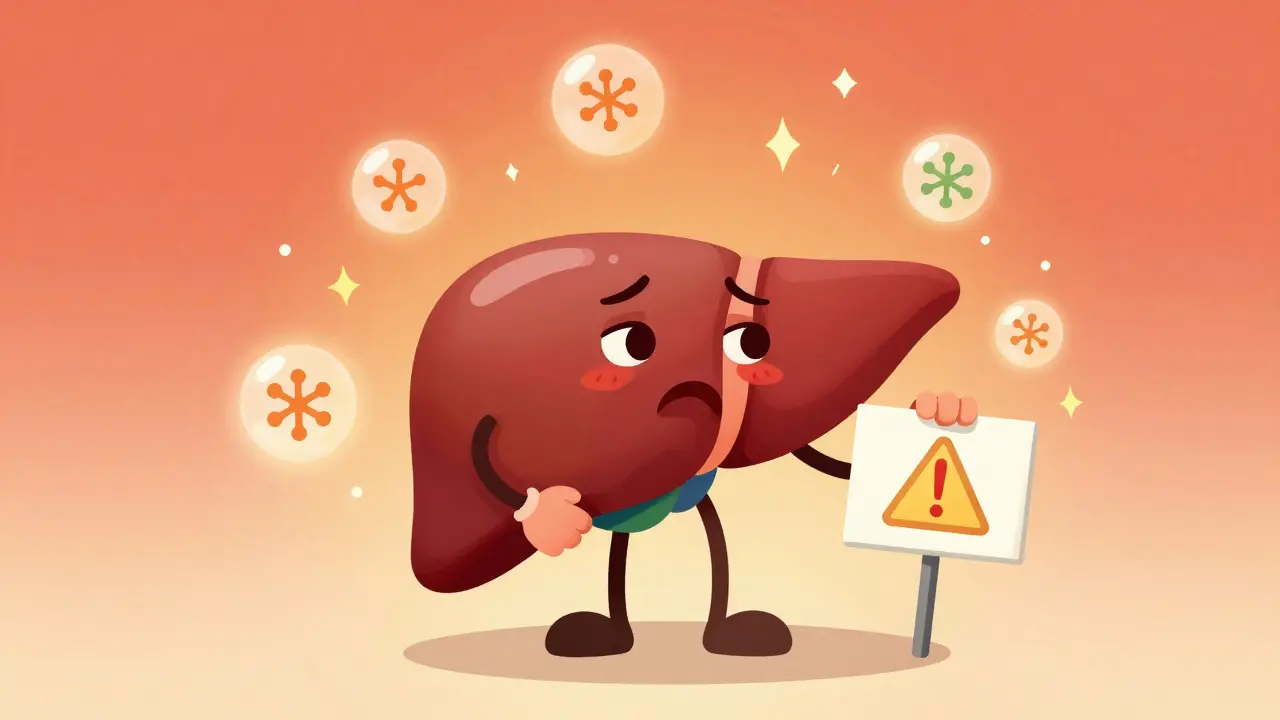
The Point of No Return: Liver Cirrhosis
The final and most dangerous stage is Cirrhosis is the end-stage of liver scarring where healthy liver tissue is replaced by permanent fibrous scar tissue. At this point, more than 75% of your liver's normal architecture is gone, replaced by hard knots of scar tissue. In clinical terms, this is known as Metavir F4 fibrosis.
Cirrhosis is generally irreversible. You can't "un-scar" the liver. However, the *type* of cirrhosis matters. "Compensated" cirrhosis means your liver is scarred but still doing its basic job. If you stop drinking now, you can stabilize the condition and potentially increase your 5-year survival rate from 30% to as high as 90%. But once you hit "decompensated" cirrhosis-where you experience variceal bleeding (vomiting blood) or kidney failure-the prognosis drops sharply. Without a transplant, the 2-year mortality rate for decompensated patients is about 50%.
Why Some People Crash Faster Than Others
You might know two people who drink the same amount, but one develops cirrhosis while the other seems fine. Why is that? It isn't just luck. Your genetics play a massive role. Specifically, variations in the PNPLA3 and TM6SF2 genes can make some people far more susceptible to liver damage.
Gender is another huge factor. Women often develop ALD after much less alcohol exposure than men because of how their bodies metabolize alcohol. Additionally, if you already have metabolic syndrome (like obesity or type 2 diabetes), your liver is already under stress, making alcohol's impact far more destructive. It's a compounding effect-alcohol adds fuel to a fire that might have already been burning.
Modern Detection and Treatment
For a long time, the only way to know for sure what was happening in your liver was a biopsy-literally sticking a needle into the organ to pull out a piece of tissue. Today, we have Transient Elastography, better known as a FibroScan. This is essentially an ultrasound for stiffness. It can detect significant fibrosis with about 85-90% accuracy without a single incision.
Treatment has shifted toward a more holistic approach. While steroids help some with hepatitis, the gold standard for cirrhosis is managing complications. Propranolol is often used to prevent the veins in the esophagus from bursting (variceal bleeding), and lactulose helps clear toxins from the blood to prevent mental confusion. For those in end-stage failure, a liver transplant is the only cure, though most hospitals require at least six months of proven abstinence before you can even get on the waiting list.
Can a cirrhotic liver ever fully recover?
No, the scar tissue (fibrosis) in cirrhosis is generally permanent. However, a liver can still function reasonably well if the remaining healthy tissue is protected. Complete abstinence from alcohol can stop the progression and prevent the liver from moving from a "compensated" state to a "decompensated" state, which significantly extends life expectancy.
How much alcohol causes fatty liver?
While it varies by person, clinical data suggests that consuming more than 4 units of alcohol per day (about 32 grams of pure alcohol) puts you at high risk. In some cases, heavy binge drinking can cause fat accumulation to begin within just 72 hours.
What are the early warning signs of alcoholic hepatitis?
The most common sign is jaundice, where the skin and whites of the eyes turn yellow. Other signs include profound fatigue, loss of appetite, and a swollen abdomen (ascites). Because the early fatty liver stage is silent, these symptoms are often the first time a person realizes they have liver damage.
Do I need a biopsy to diagnose liver disease?
Not necessarily. While biopsies are the "gold standard," many doctors now use non-invasive tools like FibroScan (transient elastography) and blood panels (AST/ALT ratios) to assess the stage of fibrosis and inflammation with high accuracy.
Is alcohol-associated liver disease the same as NAFLD?
No. NAFLD (Non-Alcoholic Fatty Liver Disease) is caused by factors like obesity and diabetes without significant alcohol use. However, they can coexist. If someone with NAFLD starts drinking moderately, their liver scarring can progress three times faster than in someone who doesn't drink.
Next Steps for Recovery
If you suspect your drinking is affecting your liver, the most critical move is to get a baseline assessment. Start with a simple blood panel to check your liver enzymes and ask your doctor about a FibroScan to see if any scarring has begun.
For those in the fatty liver stage, a strict 6-week window of abstinence can often reset the clock. For those in more advanced stages, the focus should be on a dual-track approach: combining a hepatologist (liver specialist) with an addiction specialist. Data shows that this integrated care increases long-term abstinence rates from 35% to 65%. Whether it's through medication, support groups, or clinical intervention, the goal is to stop the damage from sliding into the next, more permanent stage.
The mention of the PNPLA3 gene is a really important detail here because it explains why some people seem "invincible" while others crash quickly. I've seen a lot of patients who drink moderately but have a genetic predisposition that makes their liver way more fragile than average.
Tjis is so importnat to know!! i didn't realize that the first stage is actualy reversable if you stop in time. Thanks for sharing this info ❤️
Sure, let's just trust the "gold standard" FibroScan and not the corporate-funded pharma companies pushing these diagnostic tools to create a permanent patient class. It's almost too convenient how we're told a biopsy is "outdated" just as these expensive ultrasound machines hit the market. But please, continue believing that a few weeks of abstinence is a magic reset button for your biology. Absolute comedy.
big pharma hides the real cures for cirrhosis to keep us paying for lactulose
The tragedy of the modern age is that people treat their bodies like disposable trash and then act surprised when the machine breaks down. We have traded temperance for a culture of bingeing and immediate gratification, ignoring the fundamental truth that discipline is the only path to true freedom. If you lack the willpower to put down the bottle before your skin turns yellow, you are essentially choosing a slow suicide. It is a moral failing as much as a medical one. We don't need more "integrated care" as much as we need a return to a society that values self-control and the sanctity of health over the hedonism of a Friday night bender. True strength is found in the ability to say no to the impulse, yet most prefer to wait until they are vomiting blood to find their motivation. It's a pathetic display of human weakness that we've normalized into a lifestyle choice. We should stop pitying the results and start condemning the lack of discipline that leads to such a predictable collapse. The liver doesn't lie, even when the drinker does.
It's really encouraging to see that the fatty liver stage is so reversible. For anyone feeling overwhelmed, just remember that taking that first step toward sobriety is the most powerful medicine you can give your body right now. You've got this!
Alcohol consumption is a social plague that erodes the moral fabric of any civilized society. It is disgraceful that such toxins are legally available while the state ignores the catastrophic health consequences mentioned in this text. One must adhere to a strict code of purity and discipline to maintain the dignity of the human form and the honor of one's nation.
Wow, the 72 hour thing is wild! 😱 Definitely a wake up call for a lot of people 🍷🚫
I must say that the level of detail regarding the transition from compensated to decompensated cirrhosis is absolutely gripping, and it honestly makes me think about the sheer fragility of our internal organs in a way that is almost poetic, yet deeply terrifying, especially considering how many of us just drift through life without a second thought about the silent biological wars being waged inside our own abdomens every time we decide to have just one more drink during a celebratory weekend!