
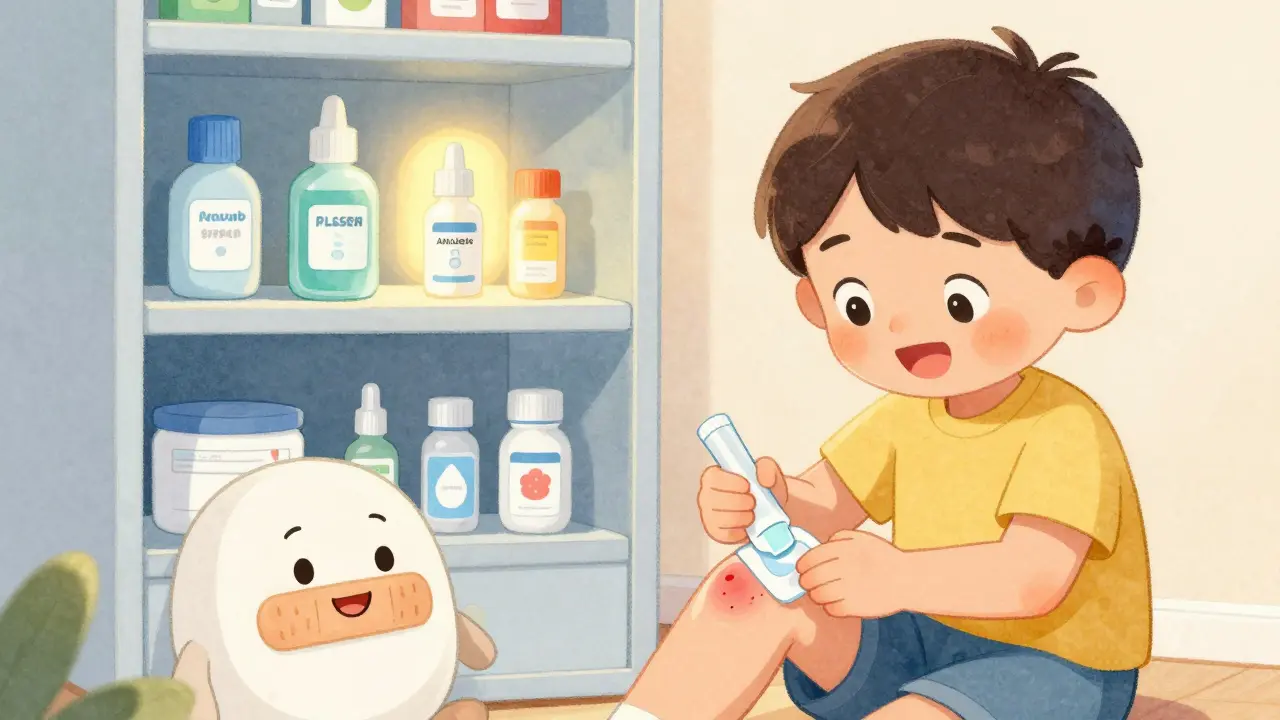
When you scrape your knee, burn your finger, or get a headache, you don’t always need to rush to the doctor. That’s where over-the-counter (OTC) first aid medications come in. These are the everyday products you keep in your medicine cabinet or first aid kit - simple, effective, and designed to handle minor injuries before they become something worse. But not all OTC meds are created equal. Using them wrong can do more harm than good. Knowing exactly what each one does - and how to use it properly - can make all the difference.
Antiseptics: Clean the Area, Not the Wound
Antiseptics are your first step in wound care. Their job is simple: kill germs on the skin around a cut or scrape. But here’s the twist - you shouldn’t pour hydrogen peroxide or rubbing alcohol directly into an open wound. That’s a common mistake, and it actually slows healing.
Hydrogen peroxide (3%) and isopropyl alcohol (60-70%) are the most common. They work fast, but they’re harsh on living tissue. Studies show they can damage the cells that help your skin repair itself. Instead, clean the skin around the wound with a pad or cotton ball, then gently rinse the wound with clean water. If you need something stronger, povidone-iodine (5-10%) is a better choice. A 2022 study in the Journal of Wound Care found it kills 99.8% of bacteria on wound surfaces - better than hydrogen peroxide’s 92.3%. The downside? It stains skin and clothing.
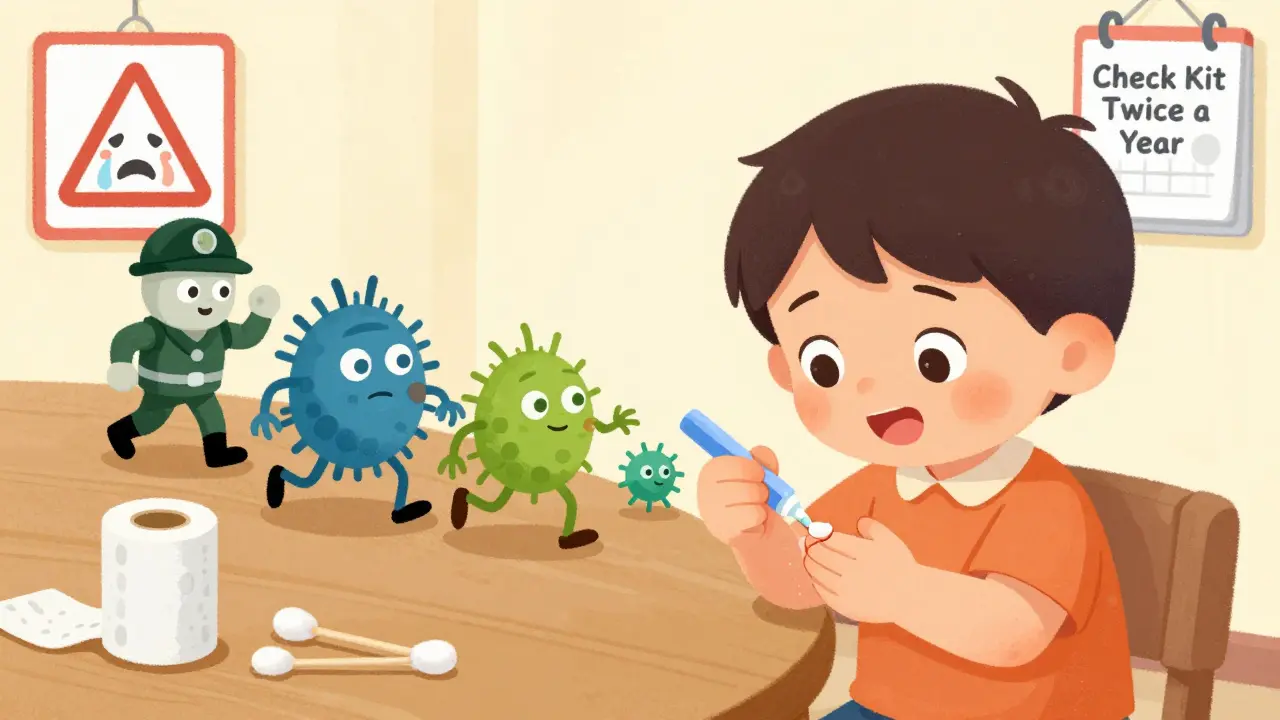
Storage matters too. Hydrogen peroxide loses half its power within 30 days after opening. Keep it in a dark, sealed bottle. Alcohol wipes dry out if left uncapped. The American Red Cross recommends checking your first aid kit twice a year - maybe when you change your smoke detector batteries. About 73% of home kits have at least one expired product, according to Mary Washington Healthcare’s 2022 survey.
Antibiotic Ointments: Stop Infection Before It Starts
After cleaning, the next step is protection. Antibiotic ointments create a barrier against bacteria that could sneak into a wound. The gold standard? Triple antibiotic ointment with bacitracin, neomycin, and polymyxin B. Brands like Neosporin dominate the market - 68% of consumers recognize the name, based on 2023 IQVIA sales data.
A Mayo Clinic study of over 1,200 minor wounds found Neosporin prevented infection in 92.7% of cases. That’s significantly better than single-antibiotic options, which only worked about 78% of the time. But here’s the catch: 5.2% of people are allergic to neomycin. Symptoms? Itching, redness, swelling - sometimes worse than the original cut.
If you’ve had a reaction before, skip the triple formula. Bacitracin-only ointments are just as effective for most minor scrapes and don’t carry the same allergy risk. Apply a thin layer after cleaning, then cover with a bandage if needed. The Journal of the American Academy of Dermatology confirms this method works in 94% of cases when done correctly.
Don’t forget shelf life. Once opened, antibiotic ointments lose about 15% of their strength every year. The University of Nebraska-Lincoln Health Center recommends replacing them every 12 months, even if they still look fine. Heat degrades them faster - keep them away from windowsills or car glove boxes.
Pain Relief: Know Which One to Reach For
Pain relief isn’t one-size-fits-all. The right OTC painkiller depends on what’s hurting and why.
Acetaminophen (Tylenol) is the go-to for headaches, fever, or general aches. It doesn’t reduce inflammation, but it’s gentle on the stomach. Dose? 325-1,000 mg per use, max 4,000 mg per day. But here’s the danger: exceeding 3,000 mg daily can seriously damage your liver. The FDA has tracked hundreds of overdose cases from people stacking pills - taking Tylenol for a headache, then a cold medicine that also has acetaminophen. Always check the Drug Facts label.
Ibuprofen (Advil, Motrin) is better for pain tied to swelling - sprains, muscle soreness, menstrual cramps. It’s an NSAID, which means it tackles inflammation. A 2022 Princeton study found it’s 68% effective for inflammatory pain, compared to 42% for acetaminophen. But it’s not harmless. About 1.2% of regular users develop stomach bleeding. Don’t take it on an empty stomach, and avoid long-term use.
Aspirin has two uses: pain relief and heart attack prevention. Chewable aspirin (325 mg) can save a life during a heart attack - studies show it cuts mortality by 30% if taken within 30 minutes. But it’s not for kids or teens due to Reye’s syndrome risk. Also avoid if you’re prone to ulcers or take blood thinners.
Naproxen sodium (Aleve) lasts longer - up to 12 hours per dose - but comes with higher risks. It’s linked to increased heart attack and stroke risk, especially if you have high blood pressure or heart disease. Use it sparingly and only for short-term relief.
Princeton University Health Services compared effectiveness: acetaminophen wins for non-inflammatory pain (73% success), while ibuprofen dominates for swelling-related pain. Know your pain type - it guides your choice.
What to Keep in Your First Aid Kit
Experts agree: every home should have these three essentials.
- Antiseptic: Povidone-iodine wipes or alcohol pads (for skin around wounds)
- Antibiotic ointment: Triple antibiotic OR bacitracin-only (for minor cuts)
- Pain relief: Acetaminophen + ibuprofen (covers most common needs)
Also include: sterile gauze, adhesive bandages, medical tape, and a calibrated dosing spoon. Never guess a dose. A tablespoon isn’t 15 mL - it’s often more. Use the tool that came with the bottle.
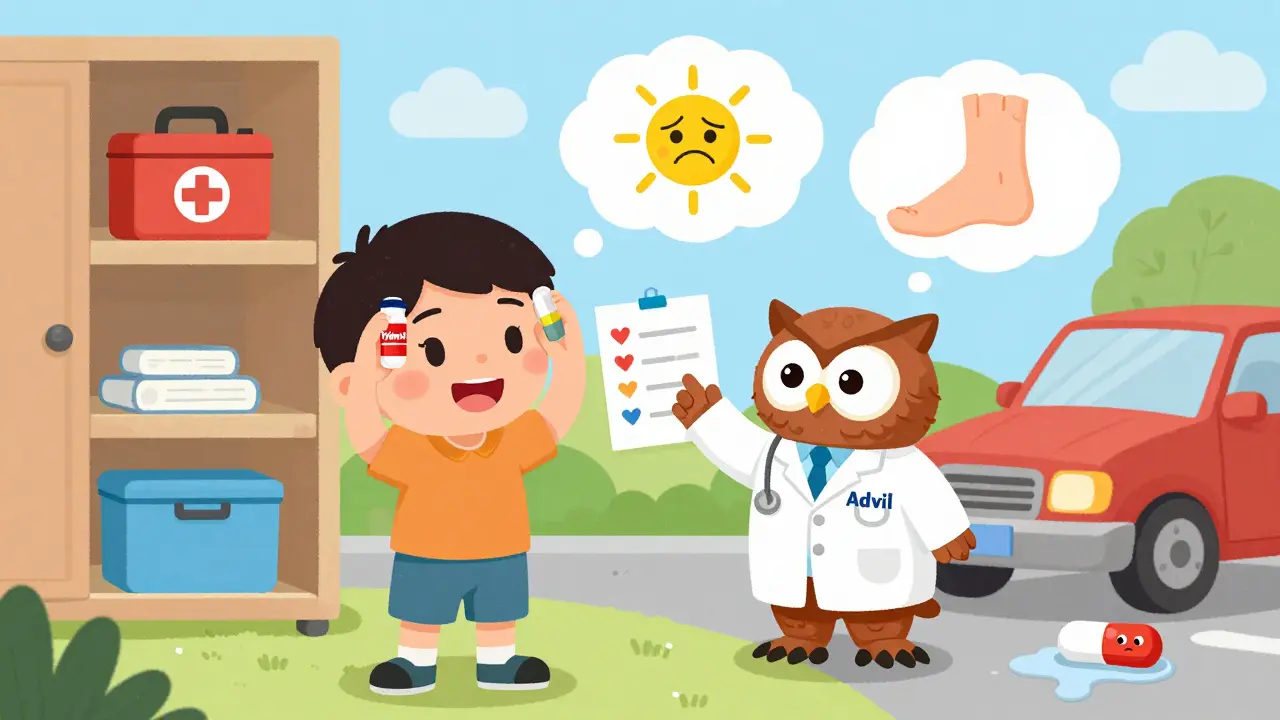
Store everything in a cool, dry place. Heat kills potency. If your medicine cabinet gets hotter than 86°F (30°C) for over two weeks, acetaminophen can lose 35% of its strength. A small plastic bin in a closet works better than a bathroom shelf.
When to Skip the OTC and See a Doctor
OTC meds are for minor stuff. If you’re still hurting after 7 days, if the wound looks red, swollen, or oozing, or if you have a fever - it’s time to call a provider. Same goes for pain that wakes you up at night or doesn’t respond to two different OTC options.
Dr. Sarah Johnson from the Cleveland Clinic says it plainly: “Read the Drug Facts label. Never take more than directed.” Sixty-eight percent of OTC errors come from people doubling up or ignoring limits. And if you find yourself needing pain relief daily? That’s not normal. As Dr. Michael Chen of Princeton puts it: “If you feel you need to take these regularly, you should see a healthcare provider.”
What’s Changing in OTC First Aid
The market is evolving. Johnson & Johnson rolled out extended-release topical ibuprofen patches in early 2023 - no swallowing, just stick and go. Harvard Medical School is testing probiotic-infused ointments to fight antibiotic resistance. But the basics haven’t changed. Clean, protect, relieve. The science behind them is solid. What changes is how we use them.
More Americans are getting it right now than ever before. In 2023, 68% of households had all three categories in their first aid kits - up from 52% in 2018. That’s progress. But the real win isn’t owning them. It’s knowing how to use them right.
Can I use hydrogen peroxide directly on a cut?
No. Hydrogen peroxide damages healthy tissue and delays healing. Use it only to clean the skin around the wound, not inside it. Rinse the wound with clean water instead.
Is Neosporin the best antibiotic ointment?
Neosporin is effective and widely used, but it contains neomycin, which can cause allergic reactions in about 5% of people. If you get redness or itching after using it, switch to a bacitracin-only ointment. It works just as well for most minor cuts.
Which pain reliever is safest for long-term use?
None are meant for long-term daily use. Acetaminophen is safest for occasional headaches, but over 3,000 mg a day risks liver damage. Ibuprofen can cause stomach bleeding. If you need pain relief daily, see a doctor - there may be an underlying issue.
How often should I check my first aid kit?
Check it twice a year - like when you change your smoke detector batteries. Expired antiseptics, ointments, and pain relievers lose potency. About 73% of home kits have at least one expired item, according to health surveys.
Can I keep OTC meds in my car?
Not recommended. Temperatures inside a car can hit over 120°F in summer. Heat degrades medication. Acetaminophen loses 35% of its strength after two weeks in a hot car. Store meds in a cool, dry place like a closet or drawer.


