

Bisphosphonate & Calcium Timing Calculator
How to Use This Calculator
Enter the time you plan to take your bisphosphonate medication (like alendronate or risedronate). This tool will calculate the earliest time you can take calcium to avoid reducing the medication's effectiveness by up to 90%.
Important: Bisphosphonates must be taken on an empty stomach with water. Wait at least 30-60 minutes before eating, drinking anything other than water, or taking calcium or other medications.
Recommended Calcium Timing
Earliest time to take calcium:
This is after your bisphosphonate dose
For maximum effectiveness, take calcium 30-60 minutes after your bisphosphonate medication.
Why this timing matters: If calcium and bisphosphonates are taken together, they bind in your stomach and form an insoluble compound. This blocks absorption of both medications, potentially reducing bisphosphonate effectiveness by up to 90%.
When you’re prescribed a bisphosphonate for osteoporosis, you’re not just getting a pill that strengthens your bones. You’re getting a precise medical tool-one that only works if you use it correctly. And one of the biggest mistakes people make? Taking their calcium supplement at the same time. It sounds harmless. Maybe even smart. But doing that can cut the effectiveness of your bisphosphonate by up to 90%. That’s not a small detail. That’s the difference between preventing a fracture and ending up in the hospital.
How Bisphosphonates Actually Work
Bisphosphonates like alendronate, risedronate, and zoledronic acid aren’t just bone builders. They’re bone protectors. These drugs stick to areas in your skeleton where bone is being broken down-places where osteoclasts, the cells that eat away at bone, are active. Once they latch on, they shut down those cells. Not by killing them, but by messing with their energy supply. They block a key enzyme called FPPS, which osteoclasts need to survive. Without it, the cells detach and die off. The result? Less bone loss, more density.
Studies show that over three years, bisphosphonates reduce the risk of spinal fractures by about 40-50% and hip fractures by 20-25%. But here’s the twist: the amount of bone density they add doesn’t fully explain that drop in fractures. New research from 2023 suggests these drugs also improve the quality of bone structure by affecting osteocytes-the tiny cells that act like sensors inside bone. Think of them as the nervous system of your skeleton. When they’re healthy, your bones become tougher, not just denser.
Why Calcium Is Non-Negotiable
You can’t fix a leaky roof if you don’t have bricks. Bisphosphonates slow down bone loss, but your body still needs raw materials to rebuild. That’s where calcium comes in. Every major clinical trial on bisphosphonates-like FIT and VERT-required patients to take extra calcium. Without it, the drugs just don’t perform as well.
The standard recommendation? Get 500-1,000 mg of supplemental calcium each day, on top of what you get from food. Most people don’t hit that number through diet alone. A cup of yogurt has about 300 mg. A glass of fortified milk? Around 300 mg. Add in a few servings of greens and you’re still short. That’s why supplements are part of the plan.
But here’s the catch: calcium and bisphosphonates don’t get along in your gut. When they meet, they form a hard, insoluble compound. Your body can’t absorb either one properly. It’s like pouring milk into a bowl of cereal and then trying to drink it through a straw-you’ll get almost nothing.
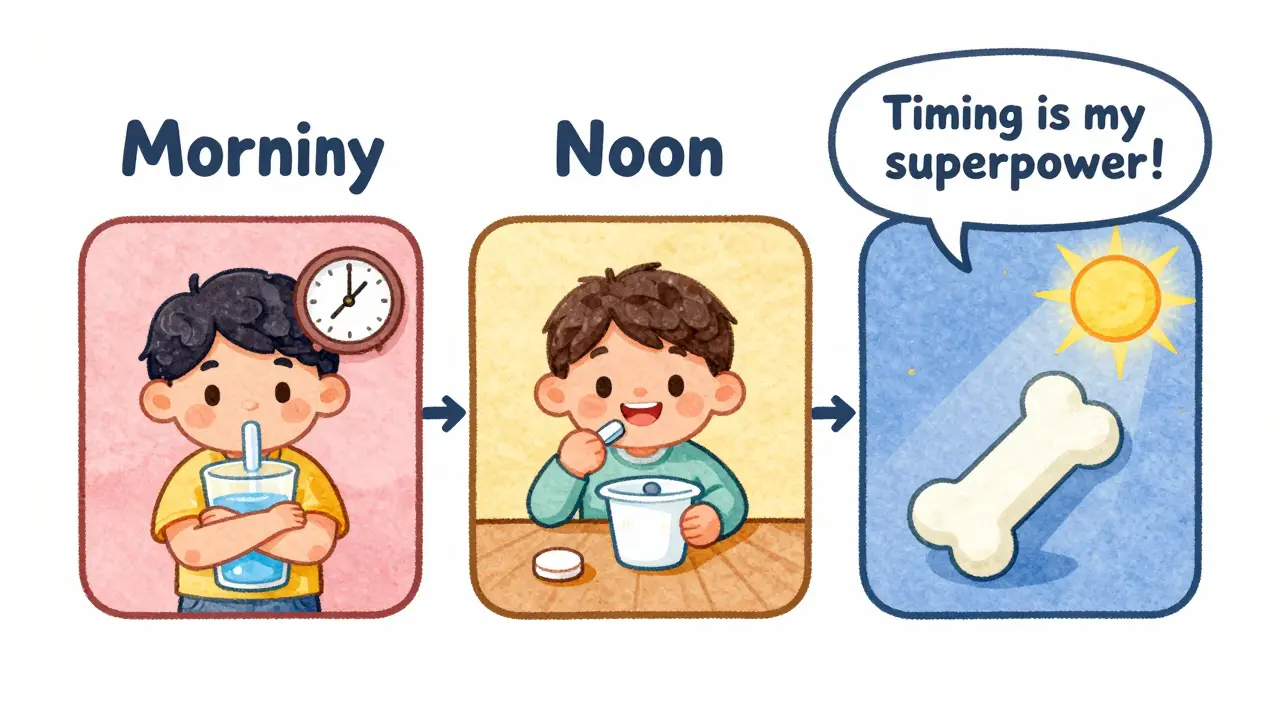
The Timing Rule: 30 to 60 Minutes Before Anything Else
This is the single most important thing to remember. Bisphosphonates must be taken on an empty stomach, with a full glass of plain water. No coffee. No juice. No food. And absolutely no calcium, iron, or antacids. You have to wait at least 30 minutes-ideally 60-before eating, drinking anything else, or taking another pill.
Why? Because your stomach is the only place where bisphosphonates can be absorbed. Once they move into your intestines, they’re done. Calcium in your food or supplement? It grabs onto the drug and locks it up. Studies show that if you take calcium even 15 minutes after your bisphosphonate, absorption drops by more than half. Do it right before? You might as well not have taken the pill.
And it’s not just a theory. A 2006 study by Procter & Gamble found that 40% of patients were taking calcium at the same time as their bisphosphonate. That’s a huge number. And it’s not because they’re careless. Most didn’t even know the rule. Doctors often assume patients will read the label. But labels are confusing. Instructions like “take on an empty stomach” don’t tell you how long to wait after eating yesterday’s dinner.
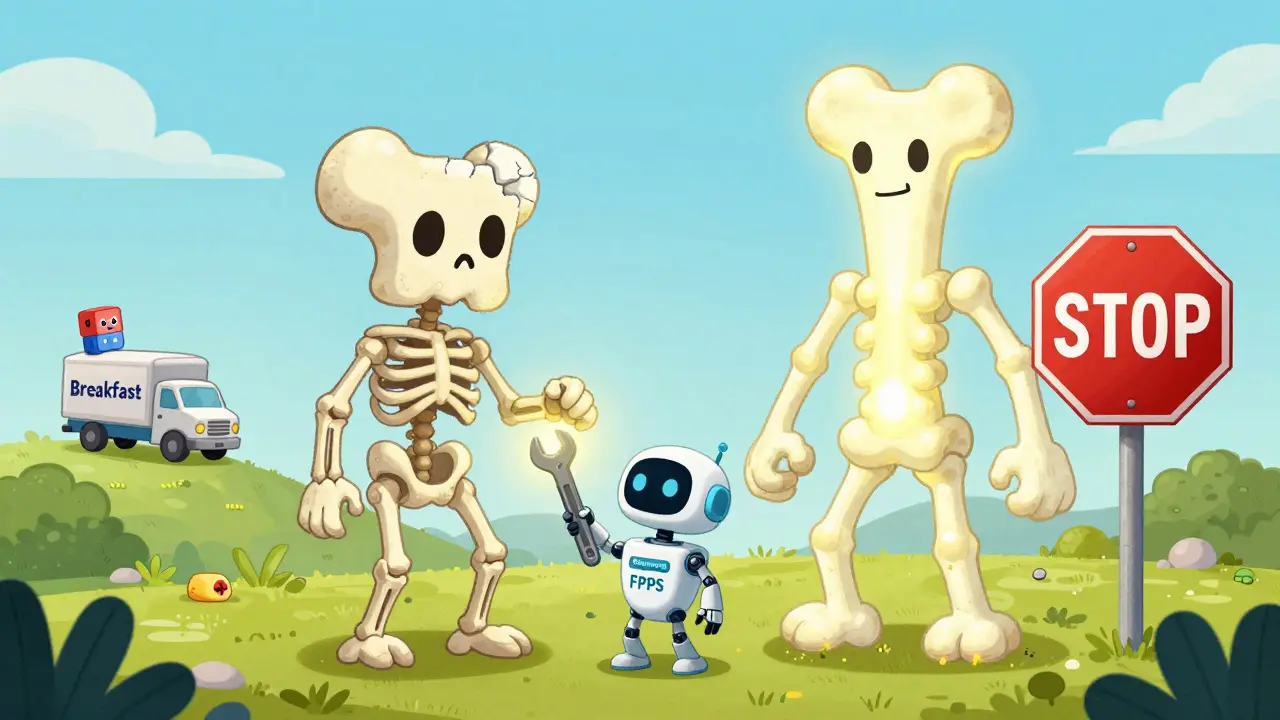
Real-Life Mistakes and How to Avoid Them
On Reddit’s r/Osteoporosis forum, over 67% of users said they messed up the timing at first. Common mistakes:
- Taking calcium with breakfast right after the morning bisphosphonate
- Swallowing the pill with tea or orange juice
- Forgetting and taking the bisphosphonate after a snack
- Using a pill organizer that mixes everything together
One woman in Phoenix, 68, told her doctor she was “doing everything right” until she realized she’d been taking her calcium tablet 10 minutes after her alendronate. She’d been doing it for two years. Her bone density hadn’t improved. Once she fixed the timing, her next scan showed a 3% increase in spine density.
There are tools to help. The Actonel with Calcium combo pack includes one risedronate tablet and six calcium tablets in one blister pack, labeled with clear morning/night instructions. Users gave it a 4.2 out of 5 rating. Why? Because it removes guesswork. The calcium tablets are meant to be taken with meals. The bisphosphonate? Only with water, first thing in the morning.
What About Vitamin D?
You can’t absorb calcium without vitamin D. That’s basic biology. Most guidelines now recommend 800-1,000 IU of vitamin D daily alongside calcium. Many people in the U.S. are low in vitamin D, especially in winter or if they don’t get much sun. A simple blood test can check your levels. If you’re deficient, your doctor may prescribe a higher dose temporarily.
Don’t assume your multivitamin is enough. Most have only 400 IU. You need more. And don’t take vitamin D with your bisphosphonate-it’s not a problem like calcium, but it’s still best taken with food for better absorption.
The Bigger Picture: Risk vs. Reward
Some people worry about rare side effects like jaw bone death (osteonecrosis) or unusual thigh fractures. These sound scary. But the numbers tell a different story. For every 10,000 people taking bisphosphonates for three years, only about 1-2 might develop osteonecrosis of the jaw. Compare that to hip fracture rates: one in five people over 65 who break a hip die within a year. That’s not a risk. That’s a death sentence.
The number needed to treat (NNT) to prevent one hip fracture over three years is 44. That means if you treat 44 high-risk people, one fracture is prevented. The number needed to harm for serious side effects? Over 10,000. The math is clear: the benefit far outweighs the risk.
Doctors now talk about “drug holidays.” If you’ve taken bisphosphonates for 3-5 years and your fracture risk is low, you might pause treatment. Your bones still hold onto the drug for years. But if your risk goes up again-say, after a fall or a drop in bone density-you restart. It’s not an all-or-nothing deal.
What If You Forget?
If you miss your morning dose? Don’t take it later in the day. Don’t take it with food. Just skip it. Wait until the next day. Taking it with food or calcium ruins it. And if you accidentally take calcium too soon? Don’t panic. Just wait until the next day and reset your routine. Consistency matters more than perfection.
Set a phone alarm. Write it on your bathroom mirror. Use the combo pack. Do whatever it takes. Because this isn’t about taking a pill. It’s about protecting your ability to walk, stand, and live without fear.
Final Checklist: Your Bisphosphonate Routine
- Morning: Take bisphosphonate with 6-8 oz of plain water, standing or sitting upright. Wait 30-60 minutes before eating, drinking, or taking other meds.
- After breakfast: Take calcium supplement (500-1,000 mg) with food.
- Evening: Take another calcium dose if needed (split doses improve absorption).
- Daily: Take 800-1,000 IU of vitamin D with a meal.
- Never: Take bisphosphonate with coffee, juice, milk, antacids, iron, or calcium.
Can I take bisphosphonates and calcium together if I swallow them at the same time?
No. Calcium and bisphosphonates bind together in your stomach and form an insoluble complex. This blocks absorption of both. Even if you swallow them together, your body absorbs less than 10% of the bisphosphonate. You might as well not have taken it. Always separate them by at least 30-60 minutes.
Is it okay to take calcium at night and bisphosphonates in the morning?
Yes, that’s actually ideal. Taking calcium with meals-lunch or dinner-helps your body absorb it better. Taking bisphosphonates on an empty stomach in the morning ensures maximum absorption. This timing pattern is used in many successful treatment plans and is recommended by the Endocrine Society and the International Osteoporosis Foundation.
What if I forget and take my bisphosphonate after eating?
Skip that dose. Don’t try to make up for it later. Taking it after food reduces absorption so drastically that it’s not worth the risk. Wait until the next day and take it correctly. Consistency over time matters more than perfect daily execution.
Do I need calcium if I’m on IV bisphosphonates like zoledronic acid?
Yes. Even though IV bisphosphonates bypass the gut, your bones still need calcium to rebuild. Without enough calcium, your body will pull it from your bones, undermining the drug’s effect. The same 500-1,000 mg daily recommendation applies. Vitamin D is just as important.
Can I get too much calcium from supplements?
Yes. Total daily calcium intake (from food + supplements) should not exceed 1,200-1,500 mg for most adults. Higher doses-especially above 2,000 mg/day-have been linked to increased risk of kidney stones and possibly heart issues in some studies. Stick to the recommended 500-1,000 mg supplemental dose. Get the rest from food.
Optimizing your bisphosphonate and calcium routine isn’t about following rules for the sake of rules. It’s about making sure your treatment works. One pill, taken correctly, can mean the difference between staying active and being confined to a wheelchair. The science is clear. The timing is non-negotiable. Your bones don’t care how busy you are. They only care if you give them what they need-and when.


